Desert Online General Trading LLC
Dubai, United Arab Emirates
Desert Online General Trading LLC
Dubai, United Arab Emirates


Full description not available
T**S
A Chilling Journey Into the Projects
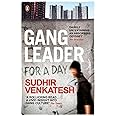
Some time ago The Economist ran an article about the market for drugs, describing the sophisticated marketing strategies adopted by sellers - entry level products, loss leaders, special offers - in order to reel in the punters. Only at the end did the piece carry the reminder that oh, by the way, all of this is also illegal.In a reversal of the process, Sudhir Venkatesh presents a largely jargon-free account of his ten-year sociological study of urban poverty, and particularly the attendant gang culture, in the projects of Chicago.Moving to the city as a graduate student in 1989, Venkatesh wants quickly to make a name for himself and to that end walks unknowingly into the territory of the Black Kings (BKs) to ask the folks therein what it's like to be black and poor. Initially suspected of being a spy for a rival gang and incarcerated overnight on a urine-soaked stairwell by the BKs, Venkatesh soon becomes in quick succession a source of entertainment for, potential immortaliser of, and most unlikely confidant to gang leader JT.JT himself is both compellingly charismatic and chillingly brutal in the disposition of his duties as a Director of the local BK enterprise. Venkatesh finds himself constantly conflicted by the activities he witnesses, fascinated by JT's leadership abilities and nauseated by some of his methods. On the pivotal Day for which Venkatesh becomes "Gang Leader" he is given an intimate view of JT's day as he resolves dilemmas many managers will recognise - agency problems, motivational issues, supplier relationships - sometimes in ways most of us as managers don't (often, at least!) resort to.But this is about more than gangs. Venkatesh also details the complex social network that exists within the projects: the role the gangs play as enforcers in the absence of the police, the mutual support that exists particularly among the women, the operation of the informal economy, and the role of the various power brokers, official and self-appointed.Sadly, the whole fragile structure unravels before our eyes as the authorities, in the name of progress, demolish the projects without the mitigation of providing an alternative for the powerless residents.Through all this the author is both the key witness and also a vital participant: as with any research, it is impossible for him to have no impact on his subjects, and that impact is sometimes benign, sometimes detrimental. But there is little sense of excessive self-regard for his own role, and in fact he is quite open about his own inadequacies when confronted by the day-to-day challenges of project life.All of this adds up to a compelling and sometimes disturbing peek into a life most of us will hopefully never have to experience. Venkatesh has done a good job of relating the tale, and at the end I found myself joining him in wringing hands with frustration that the world's most powerful economy has as yet shown neither the ability nor the will to eradicate the poverty that is all too prevalent within its own borders.
P**R
Sociology Never Seemed So Utterly Compelling
I came across this book through a radio interview with its author. He came across well and the people on the programme couldn't praise it highly enough. Even then the thought of reading a sociological book about gang culture in Chicago still seemed a bit of risk. After all sociology is a bit, well, 80's.Well this is one gamble that pays off. You do get a decent ammount of idea about how Prof. Venkatesh went about his study and also something about the process he should (and sometimes didn't) follow in order to get his research done. You also get an awful lot more. Orwell's "Road To Wigan Pier" and "Down & Out In Paris & London" evoked a clear sense of their surroundings and "Gang Leader For A Day" does just that.Although not quite on a level with Orwell, Venkatesh's writing style is vivid, readable, and also very cinematic. This book is clearly aimed at an audience who may not usually read sociological tomes and the style is refreshingly free of a good deal of academic language. Reading this you do start to mentally cast the film version as the characters simply come to life off the page. Also, considering this is really meant to be academic research it has a wonderful driving plot. It would have been easy to have sat and read it all in one sitting. For not only are you fascinated by the information, you also want to know what is going to happen next.Prof. Venkatesh has said that he doesn't believe anyone else could have been party to what he saw. Being of Indian descent is something of a novelty in the Chicago housing projects and so he had no cultural baggage in the eyes of his subjects. This gave him the chance to show the rest of the world what it is like to live in these conditions. It is not a pretty, or entirely hopeful story. This is the story of people getting by and making do by any means they have. That it turns out to be both compelling and moving at times is largely due to the wonderful writing talents of a very gifted individual.This is a very interesting and powerful work will stand up with anything written in any genre you may read this year. This book is an amazing achievement, go seek it out.
P**N
Very good and enjoyable Read
Enjoyable read and a fascinating viewpoint of public housing in the US in the early 90s. There are some chapters and one in particular where the author's naivety is incredible, almost unbelievably so but the good of this book far outweighs the negatives.
W**S
A Great Read
I bought this as a read for my Sociology A level students. A fascinating read, that keeps you on the edge of your seat, whilst giving an insight into sociological research. A great learning tool.
L**L
really interesting
i’ve learnt so much from this book so interesting and informational i had to read this for my sociology module and this book is worth it
B**3
Fascinating, upsetting and even a little laugh-out-loud humour
This book was referred to in a Sociology class I took in relation to covert participant observation. I am so glad that I decided to find it and consequently read it.Venkatesh does come across as quite naive at times, quite frequently actually, but this makes the reader feel like they are right alongside him experiencing a Chicago gang for the first time. He touches on the social, economic and political aspects of the time (1980's/90's) which really helps you understand how the BK gang members and the community around them got to the physical and emotional states that Venkatesh observes them in.Almost unwillingly I empathised with many of the criminals he meets, as does Sudhir. You get to follow the gang at its height and at its eventual lows while meeting an array of people that I would definitely never get too meet myself.Overall I would definitely recommend this book to anyone and everyone who finds the premise and free sample interesting, it won't disappointed. It has even helped me consider going into Sociology myself in the future.
Trustpilot
3 weeks ago
3 weeks ago