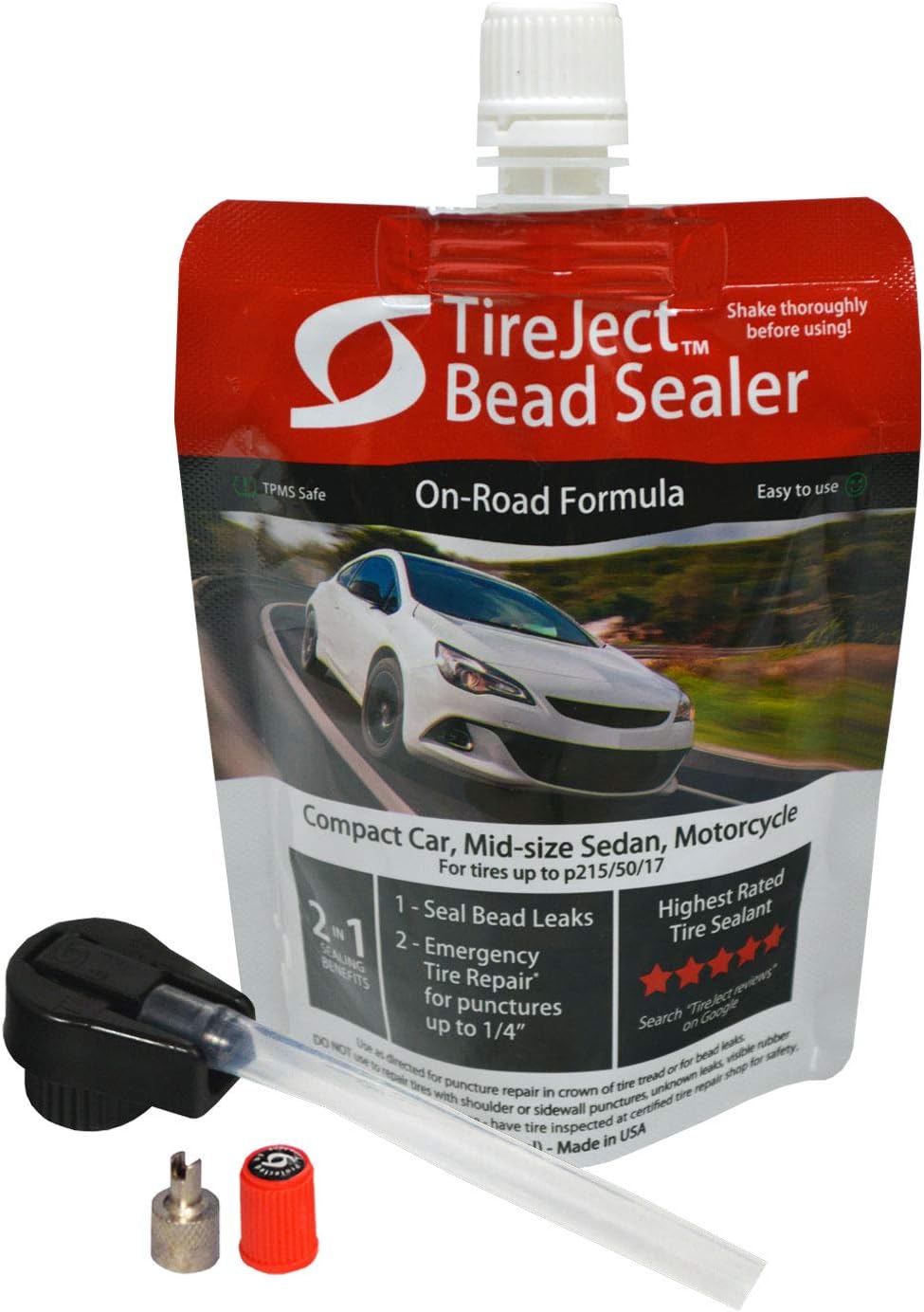
🛞 Seal the deal before your tire deflates your plans!
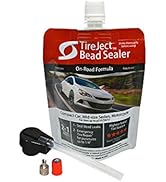
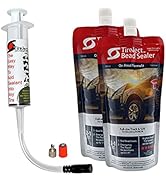
TireJect Compact Car 2-in-1 Tire Sealant & Bead Sealer Kit offers a permanent, easy-to-apply solution for sealing tire leaks and punctures up to 1/4 inch. Safe for tire pressure monitoring systems and rims, it fits tires up to P215/50/17 and comes with a dispensing cap and hose for hassle-free installation. Highly rated and trusted by users for quick, reliable tire repair on compact cars, mid-size sedans, and motorcycles.


| ASIN | B07L24ZMK1 |
| Best Sellers Rank | #7,275 in Automotive ( See Top 100 in Automotive ) #169 in Tire Repair Tools |
| Brand | TireJect |
| Brand Name | TireJect |
| Customer Reviews | 4.5 out of 5 stars 2,490 Reviews |
| Included Components | Dispensing cap for easy install, Metal valve core remover tool, TireJect stem |
| Item Height | 10 inches |
| Manufacturer | TireJect |
| Set Name | TireJect Automotive Tire Sealant & Bead Sealer Kit |
| UPC | 759195977450 |
| Unit Count | 1 Count |
D**.
Works once again!
Third time using TireJect on a vehicle, and it's worked perfectly each time. First was the off-road formula for leaking motorcycle tire beads.... then this formula my light SUV with a slow leak until I could get the tire replaced. This was for a stubborn tire that had a leak SOMEWHERE, and usually would lose 10-15 psi overnight after a fill-up. Two days later, still fully inflated and no signs of trouble. This is great because this formulation is also okay for tire pressure sensors. Will continue to purchase this product for similar issues going forward. High quality, durability, and easy to use.
J**E
TireJECT cannot work miracles
TireJECT is a surprisingly thin fluid that supposedly contains fibers that must help stop up holes. Frankly I'm still confused as to how this stuff can plug a leak, but apparently it does. Tons of reviews say so. I say apparently because the product did not completely stop a slow leak in my tire, but that's OK. I knew it likely wouldn't. I'll have to replace the tire unfortunately. I had a garage install four nearly-new tires on my car. After installing, a heavy leak was discovered in one of them. They took the tire off again and found a small tear near the rim/bead of the sidewall. Since the tear would be flat against the rim, they suggested to let them try and repair it with tire patch adhesive and lots of bead sealer. They were confident, so I went for it. It seemed to work, but it went flat a few days later. TireJECT seemed like the perfect solution to the slow leak since I wouldn't have to disturb the repair. I bought the kind without the syringe and regretted it immediately upon trying to use it. First, the valve stem removal tool broke as it loosened it. I had to buy a new tool down the road. When I went to inject, I squeezed as hard as I could but it just wouldn't flow past the TPM. It also kept leaking out of the flex joint of the nozzle. I had a huge syringe on hand, so I sucked up the rest from the bag, ziptied the hose on both ends and got the rest of the product into the tire. HURRAY! The tire pressure had fallen considerably by the next morning. BOOOoo. I contacted TireJECT, and after several emails (and long waits in between). They determined their product was not suitable for my use case. They refunded what I paid without me even asking. I really appreciated that. That said, before injecting, the tire would go flat overnight. So, TireJECT does work to a good degree. I'm half tempted to overdose the tire with another package. Give TireJECT a try! Though, be sure your situation matches their criteria. If you have a TPM, opt for the package that comes with a syringe. You will need it. Also, throw the cast pot metal, tire stem tool out and get a decent machined one before you do the repair. Thank me later.
T**Y
TireJect works! Only three or four months on ATV and truck tires, but it works!
This stuff keeps the air in your tires! I first used TireJect product on my ATV using their product for ATV tires. All four tires chronically leaked down to 2 psi, from 6.5 psi, with no punctures and two very new front tires, on a 2004 Polaris 700 EFI twin, with factory steel wheels; since installing the TireJect product, all four stand proud like a teenagers pride & joy at a drive-in movie! Probably going on four months now summer fall, and winter. So I bought the on Road tire formula for the two front tires on my 2000 Toyota tundra with factory aluminum wheels – no amount of breakdowns, buffing , and black tire sealant would keep 36 psi in the front tires, which are veteran Firestone Destination AT2s. After applying the 10 ounce packets in the two packet order, both tires are like the ATV tires. And I run a snow bear electric lift snow plow on the front of that truck now still standing tall! People warned against putting goop in your tires, and said only do it if it was the last set of tires you were going to run- whether I replace them or not, I find this product works as advertised! And I am a 66-year-old Irishman who doesn’t like anything!
R**6
Forget the gooey stuff, this product WORKS! See UPDATES 1 and 2
I've had a slow leak in one of my tires for some time. It's a common thing with chrome plated alloy wheels, they get corrosion on the bead area where the tire seals and then you get a slow leak. This was the only product which is water soluble so it's not going to make a permanent mess inside the tire; additionally, it contains tiny bits of Tufsyn which is the material some tires are made from. So it's not just a liquid that is sealing the leak, it's tiny bits of rubber. I was putting 5 or 6 lbs of air in my tire every few days, and I could see that the tire was getting low. I installed this TireJect per the instructions a week ago and the tire appears to be doing great, despite the fact that we've had some very cold weather. (I didn't want to check it with a gauge while it was this cold out because just in case the tire's valve didn't seal all the way; I'll check with a gauge when this cold snap is past.) While I can't say for 100% sure that there is no more leak, I suspect that the leak has been sealed up completely. This is a product unlike the others and I think it's worth the price. FIRST UPDATE: It has been two months and I haven't had to add any air at all to the tire where I used this product. There was a slow rim leak which was losing about a pound or so per day and it has been totally fixed. The car has sat for several days a few times, including in single digit cold weather, as well as driven regularly otherwise, and the tire hasn't lost any air. I think it's the micro Tufsyn fibers in this product which seal leaks better than some goopy glue stuff other brands are made of. I totally recommend this product! SECOND UPDATE - it's been eleven months since I added this to my tire with the slow rim leak and I have not had to add air a single time. Not once. THIS STUFF WORKS. Forget the slime and foam and get this.
J**M
Seems to have done a great job.
One of our cars has suffered from rim leaks and was driving me nuts. Constantly being asked by my wife to top off the tires on her car. When I replaced a damaged rim I asked the tire shop to look for the source of the leaks. They said the "alloy" rims had started to corrode and did their best to get them to seal but warned me they would likely leak again. This spring when I removed her snow tires I found 3 of her 4 tires had gone completely flat in storage. The fourth was the new rim which was fine. I considered buying new rims that won't have this problem but wanted to wait until her times need to be replaced. The batteries in the TPMS sensors are getting very low so likely these will need to be replaced as well. I thought to try some sort of sealant. Most of the products I saw were not rated for automotive systems and offered warnings about risk to the TMPS sensors. This seemed to be the only product rated for my application and claimed it would not harm our car's sensors. So I gave it a shot. I ordered the SUV package that came with an injector and two 8-oz bottles. I put 4 oz in each tire per the instructions. Overall the process was easy except the valve core extractor broken on one of the tires. I had to pick up a replacement at a local auto parts store. Also, injecting the sealant creates a small amount of pressure in the tire that, if one doesn't release by drawing out the plunger, will burp a small amount of sealant onto the rims. Fairly easy to clean up with WARM water and easier to avoid after the first experience. Drove the car around at a variety of speeds for 10-15 minutes (had errands to run) and waited to see what happened. Great results. Weeks later and the tires still have the correct pressure. I am not sure how long this will last but hopefully for the remaining life of the tires at least. I took one star off for easy of use / easy to install because the valve core extractor is made of extremely cheap aluminum and I am sure others will have a poor experience with it. Be forewarned and consider buying one before you start jacking up your car and letting the air out of the tires only to find you break the tool on a sticky valve core and are unable to complete the job without a trip to the auto parts store. I'll update this review in about a year to report on the long-term outlook for this product.
D**N
It works perfectly!
Deserves well over five stars. I did not realize that fix a flat was temporary and had used it as a permanent solution for many many decades. Plugged a tire on one of my Porsches and could not figure out why I still had a slow leak. Soapy water revealed nothing so I decided to give this a try. Drained the air out of the tire by removing the valve core, jacked the corner of the car up to be able to more easily add the liquid, added it to the tire, reinstall the core pump. Pumped it up with air. Drove it for 10 minutes and never had the slow leak return. Very, very, very happy with this product. It’s not cheap, but unlike so many other things the extra cost is worth it and you won’t be disappointed.
T**E
Better than the green goo
Recently, while I was at work, I noticed that I had at some point run over a nail with my car. Normally, you'd take your car to the tire shop and let them plug the hole for you. Well, the only problem was that the nail decided that it was going to poke my tire where the sidewall meets the tread, and most shops will refuse to plug a tire when it's punctured there. Makes sense, it's a liability issue for them, so I can't blame them. That still leaves me with the problem of having a tire with a nail in it. So, I could either replace the tire with either a new or used tire, which is expensive or I can try using a sealant to try and get as many miles out of my tire as I can. In the past, I had tried using the green goo sealant on nail holes, and while it works to get you 15 miles down the road, that's about it. Now, while TireJect doesn't recommend using their product on punctures on the shoulder of the tire, I decided that I'd give it a try to see if it would work. And as of writing this review, it's been about 10 days since I put TireJect in my tire, and so far, it hasn't leaked any air, despite it not being meant for the shoulder. When money isn't so tight, I'll probably go ahead and replace the tire, especially since there's only about 4/32 tread depth left, but for the time being, I'll keep running it, and hopefully it keeps holding pressure properly like it has been. Now, as for how easy it is to use, the only tools you will need that aren't provided, is an air compressor to allow you to re-inflate the tire. The kit comes with everything else you will need, including a valve core removal tool and a syringe to add the sealant to your tire. To use this product, you will first need to carefully remove the valve core with the provided tool, careful not to lose the core, since it doesn't come with a replacement core. After that, thread the hose on the syringe on to your valve stem, and then carefully add the required amount of sealant to the syringe. If you accidentally spill some, wipe it off before it dries, so that it doesn't stain anything. From there, just push the goo into the tire with the plunger, adding more to the syringe as necessary. When you're all done, re-install the valve core into the valve stem snuggly, careful not to over-tighten, and air up the tire to the recommended PSI with your compressor. After all that is done, go take a short, slow drive to distribute the sealant, and then recheck your air pressure.
M**A
Saved $250
I had a new tire and when the car returned from a bad dealer it had a new 1 1/2" screw in the shoulder ( not really the bottom and not really the side). No one would repair it because of the puncture location. I order this sealant, jacked the car to round the tire, depressurized the tire and inserted the sealant through the stem. I added just a few lbs of pressure and left it with the puncture at the bottom after rotating the tire a few times. In the morning I removed the cardboard I had placed under the tire and noticed a very little spot of sealant on it. I pressurized the tire to spec and rode the next 15,000 miles leak free. Eventually the tire developed a very small leak and I purchased the same stuff again and followed the same procedure as before. It worked flawlessly again. I finally replaced all 4 tires with over 35.000 miles on the subject tire. Savings $250. Sorry to wait so long to write this review but my original order was in February 2022 and I just had the 4 tires replaced. Good stuff. Try it!
Trustpilot
1 month ago
2 days ago