
DOWNLOAD THE APP


Customer Services
Copyright © 2025 Desertcart Holdings Limited
DOWNLOAD THE APP

Full description not available
P**N
A pledge fulfilled...
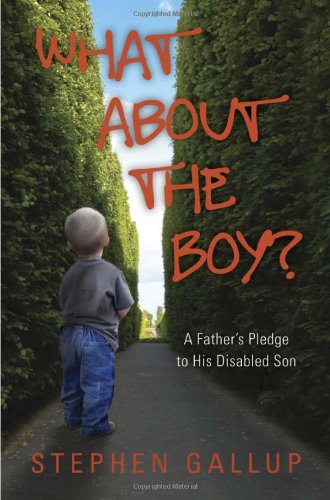
Steve and Judy are a young American couple starting out in life. They're college-educated, middle class, responsible, upbeat. They have a child and before they take the baby (Joseph) home, they are told that he has an abnormal brain structure. Then the baby doesn't achieve to the normal markers (movements, attempts to crawl, to turn over) at the normal time junctures. The reader can't help but get caught up in this memoir as Steve and Judy go from doctor to doctor in a fruitless search for answers as to what exactly is wrong with their son and how it should be treated and overcome. The doctors they encounter seem to counsel only acceptance or a `wait and see' (how he progresses) philosophy.But Steve and Judy are fighters. They refuse to accept these healers' low expectations for their son and so they seek out alternative treatments. They hear of a place where great strides have been made in helping brain injured children. A trip to the Institutes for the Achievement of Human Potential in Philadelphia ensues. Steve and Judy come away from their orientation at the Institutes with hope AND, more importantly, a plan of action. Steven Gallup's powerful memoir propels you along as he and his wife Judy embark on the mission that the Institutes has crafted for them to bring their son to wellness. The Institutes believes that children such as Joseph can progress to a point where they catch up with `healthy' children. As I followed Steve and Judy in their efforts on Joseph's behalf I was impressed with their strength and determination, but troubled by how expensive and time consuming the program was for them and other parents of brain injured children. I was also troubled by what seems to be cult-like behavior and talk at the Institutes', with some parents parroting Glenn Doman or other trainers words and maxims. However, despite my misgivings, the Institutes relentless regimen of creeping, crawling, re-breathing maskings, crawling ramps and overhead ladder training all pay off big time when Joseph begins walking.After the exhausting Spartan-like campaign Steve and Judy pursued to achieve this breakthrough, they take a well-deserved `time out' and slow down. This interlude was, for me, the most powerful part of the memoir: Steve and Judy get word that Lidwina, the most helpful of the trainers at the Institutes, has quit in what sounds like some kind of clash of wills. Joseph's progress seems to slow and he starts public school for learning-disabled children. Judy gets sick, perhaps from all the strain. This is a memoir, and life foreshadows what is to come. Judy is forced to live for herself again as she begins her healing. Steve and Joseph also start to relax and savor life more. Joseph learns some skills at school, notably how to point to a menu board of icons to indicate his wants, something the Institutes, as Steve knows, would never approve of and would see as, `accommodating to the disability.' Steve joins a men's support group of fathers of disabled children. But too many of these fathers seem to give up, putting their kids in wheel chairs and losing themselves in front of the TV, beer in hand. Steve drifts away in seeming disgust.This honeymoon slowdown ends as the family gears up for the next big campaign -- to get Joseph to speak. Soon the reader begins to sense that...Much more happens in this riveting account, but I don't want to give anything away. This is life, not fiction, and it's life lived to the maximum. As someone says in this sad, but motivational and true story, `you have suffered greatly... so have I. That makes us simpatico.' At the end of the book you'll be more familiar with the truth of the old saying, that which doesn't kill you makes you stronger.A wonderful true story of love, heroic struggle, and coming face-to-face with the Great Mystery.
L**N
A Family's Walk with Courage, Passion, Frustration, and Reflection
Stephen and Judy Gallup's son, who was born with abnormalities to the brain, is the object of his parents' passionate, creative, all-encompassing quest for a cure. Stephen Gallup's account of their excrutiating guilt, tireless search for help, and faith in certain remedial approaches is detailed and weighty, almost paralleling their sometimes cumbersome quest to reach the lofty goals he and his wife made for their son.Reading Gallup's book as a parent and special educator, I "walked" with the Gallups on their long, arduous journey toward a wellness goal for their boy. When I graduated with a Master's in Special Education, I remember feeling as if I were not ready to leave school, thinking I didn't yet know enough [i.e., How could I cure someone's learning disabilities if I did not understand how to get to the part(s) of the brain where there were problems?] I recognized, from my course work, some of the approaches the Gallups took with Joseph. These practices are not applicable to school settings, but unfortunately at this time, neither is the concept that severe injuries to the brain can be cured.Until I retired from teaching, my job as a special education teacher evolved into a fervent search for successful ways to teach concepts and skills in individualized ways and to find and/or devise accommodations that help individuals reach specified goals. Every person is worth the effort.As a parent, I was forced to strive for a balance between my intimate knowledge of the needs of each of our children and the available resources for their education. Ultimately, that seems to be the best option for many parents, even for those who seek perfect solutions to challenges.Whether the reader believes that this is a nonfiction account of the obsessive and admirable quest of a family to find a perfect wellness cure for their son; a cautionary story about "putting all eggs in one basket"; or a book that generates thought-provoking discussions about medicine's and education's limitations, alternative therapies, and faith, reading Stephen Gallup's book compelled me to write this review. It is not a literary work, but it may "hit a nerve" with interested readers.
B**9
A Father's Journey
Stephen Gallup takes on the daunting task of writing a memoir with the same passion and perseverance with which he and his wife Judy tackled a series of difficult choices while raising their son, Joseph. The traditional medical community had nothing to offer but discouragement, telling the parents that they should just accept the status quo, that Joseph's options would always be severely limited.The story continues through years of hope and bewilderment as the couple decides on alternative treatment for their son. What About the Boy is packed with intimate details, with clear and honest descriptions of the day-to-day life of a father who refuses to give up, who refuses to lower his standards. As you read the story, you feel certain the author is not one to take shortcuts or sugarcoat the truth.This is a memoir that follows the tradition of the reluctant hero's journey. The narrator, when catapulted into unknown territories, charts his travails. The story follows sacrifices, tribulation, small and huge triumphs, and the countless noble and generous deeds of those who want only the best for Joseph.
A**R
Some interesting perspectives
I suppose I finished the book feeling rather like the author - that some conclusion was missing. Actually I think the writing itself represents the energy of the story itself - the initial chapters are determined and purposeful. Once the structured treatment program is abandoned, the book loses structure and energy, much as it seems the author did. I skimmed most of the pages on the religious portion of the journey. I'm glad the link to the blog was included to see how Joseph's story concluded. Our journey is just starting.
Trustpilot
1 month ago
1 week ago