
DOWNLOAD THE APP


Customer Services
Copyright © 2025 Desertcart Holdings Limited
DOWNLOAD THE APP
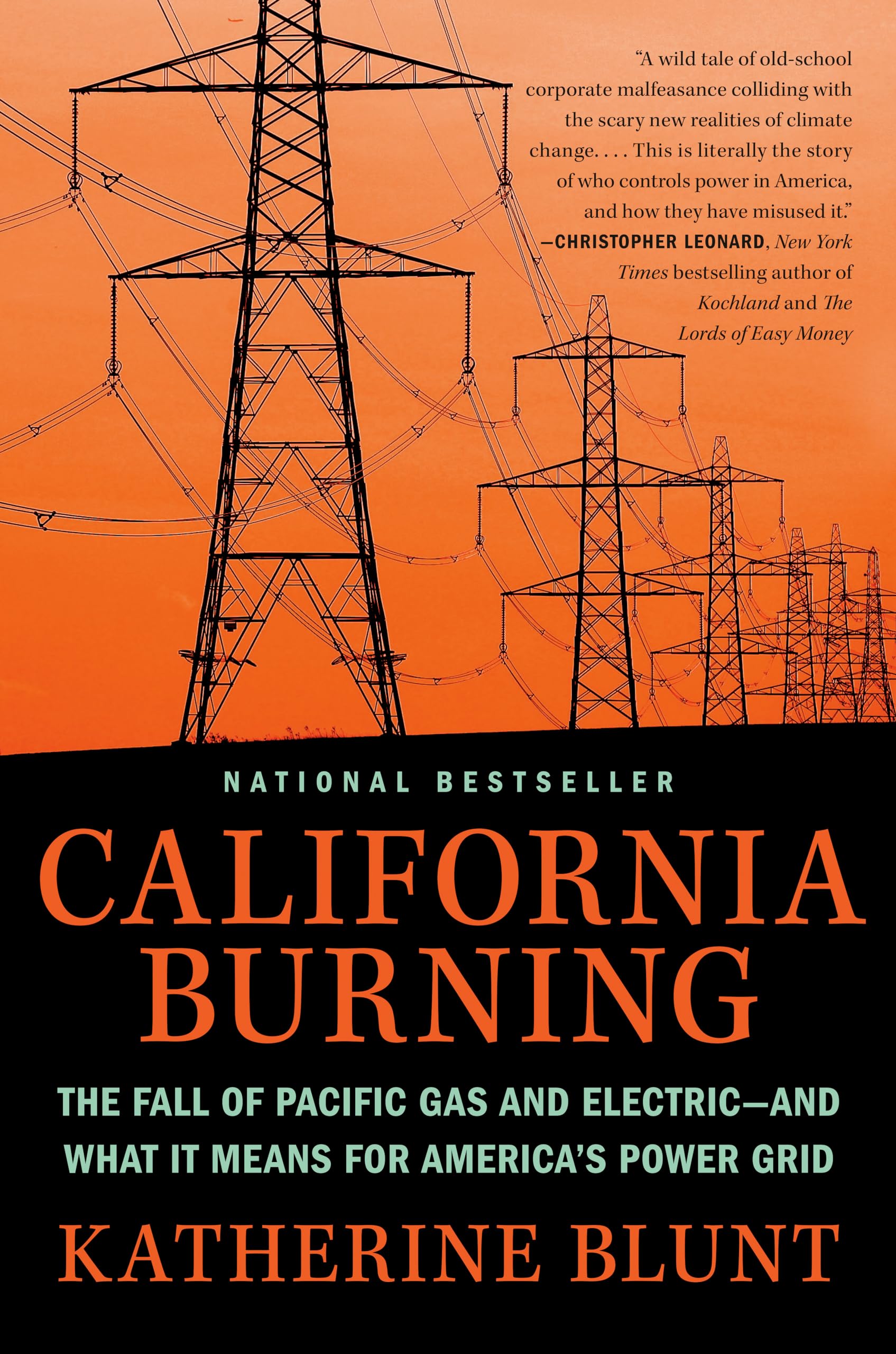
Buy California Burning: The Fall of Pacific Gas and Electric - and What It Means for America's Power Grid by Blunt, Katherine (ISBN: 9780593330654) from desertcart's Book Store. Everyday low prices and free delivery on eligible orders. Review: Having lived in rural Northern California for almost 40 years, this book was of great interest. In my opinion, the author did an excellent job in telling the "big story" while interjecting personal stories in 300 pages- quite an accomplishment for a saga that could be a yearlong college credit course. Ms Blunt also did superb job in staying objective while making the book hard to put down. There are, and were a lot of heroes who work or have worked for PG&E- and not just the lineman , for whom I have immense respect. However, there were far too many PG&E managers/leaders , elected officials and regulatory agencies who failed in their duties to guide PG&E. Now private equity and attorneys appear to be calling the shots for this utility trying to navigate an incredibly difficult path going forward while those harmed by PG&E's disasters will never be made whole. The book has stimulated me to research other sources of information such as the Solar Rights Alliance, the documentaries "Power Trip" and "Grid Down-Power Up", the latter narrated by the actor Dennis Quaid. Researching these and several other sources that I won't mention here has lead me to ask these questions: Does the old model of private utilities as monopolies running power lines through some of the toughest, remote geography in the US with rapid destabilization of the climate make any sense today? Do the rapid advancements in green energy make Northern California the ideal test bed for microgrids? Lastly, how many members of PG&E's leadership , the California Public Utilities Commission, and the elected officials of California have read this book? I've ordered 3 more copies of the book- one for our local library, to start with. Review: I live in the California foothills. When PG&E started public safety shutdowns our area was one of the most shutdown. We had family members living in Paradise and lost five homes in the Camp fire. We have neighbors that moved here after losing homes in the Camp, Tubbs and Kincaid fires. We followed these stories in the news but there was never a level of detail that gave a good over all picture. This book answered many questions and unfortunately validated many of my fears. My complaint is that there was not enough attention to California’s state governments role. It is one thing to say that California’s oversight was lacking (which is obvious) but the details were just not there. Perhaps that could be the subject best covered in a book of its own. I found well written and easy to follow.


| Best Sellers Rank | 826,624 in Books ( See Top 100 in Books ) 185 in Energy 2,589 in Business & Economic History 8,770 in Earth Sciences & Geography |
| Customer reviews | 4.6 4.6 out of 5 stars (336) |
| Dimensions | 15.75 x 3.18 x 23.62 cm |
| ISBN-10 | 059333065X |
| ISBN-13 | 978-0593330654 |
| Item weight | 556 g |
| Language | English |
| Print length | 368 pages |
| Publication date | 30 Aug. 2022 |
| Publisher | Portfolio |
2**X
Having lived in rural Northern California for almost 40 years, this book was of great interest. In my opinion, the author did an excellent job in telling the "big story" while interjecting personal stories in 300 pages- quite an accomplishment for a saga that could be a yearlong college credit course. Ms Blunt also did superb job in staying objective while making the book hard to put down. There are, and were a lot of heroes who work or have worked for PG&E- and not just the lineman , for whom I have immense respect. However, there were far too many PG&E managers/leaders , elected officials and regulatory agencies who failed in their duties to guide PG&E. Now private equity and attorneys appear to be calling the shots for this utility trying to navigate an incredibly difficult path going forward while those harmed by PG&E's disasters will never be made whole. The book has stimulated me to research other sources of information such as the Solar Rights Alliance, the documentaries "Power Trip" and "Grid Down-Power Up", the latter narrated by the actor Dennis Quaid. Researching these and several other sources that I won't mention here has lead me to ask these questions: Does the old model of private utilities as monopolies running power lines through some of the toughest, remote geography in the US with rapid destabilization of the climate make any sense today? Do the rapid advancements in green energy make Northern California the ideal test bed for microgrids? Lastly, how many members of PG&E's leadership , the California Public Utilities Commission, and the elected officials of California have read this book? I've ordered 3 more copies of the book- one for our local library, to start with.
W**M
I live in the California foothills. When PG&E started public safety shutdowns our area was one of the most shutdown. We had family members living in Paradise and lost five homes in the Camp fire. We have neighbors that moved here after losing homes in the Camp, Tubbs and Kincaid fires. We followed these stories in the news but there was never a level of detail that gave a good over all picture. This book answered many questions and unfortunately validated many of my fears. My complaint is that there was not enough attention to California’s state governments role. It is one thing to say that California’s oversight was lacking (which is obvious) but the details were just not there. Perhaps that could be the subject best covered in a book of its own. I found well written and easy to follow.
H**S
An excellent, highly readable summary of the development and consequences of PG&E’s history of prioritizing profits over common sense safety precautions, even against the advice of their own engineers and experts. But as someone who lost her home and neighborhood in the 2017 PG&E fires, and as a vocal advocate for fire victims, I wish the author had not been so reserved in her judgments and insights. The author quotes others to describe how hedge funds hijacked the bankruptcy process for their own benefit, how they reaped billions in cash and profits, how they shifted future risk onto fire victims. All true, but there is so much more. The lesson of the PG&E story is not the stock-market-driven focus on short-term gain over long-term stability and social responsibility. That’s an old story and often told. The added tragedy was the failure of the bankruptcy system to protect unwilling, vulnerable creditors (fire victims) from the gamesmanship of the hedge funds and lawyers. The bankruptcy system was crafted by large creditors to protect themselves against the mismanagement or misfortune of the DEBTOR. But in the PG&E case, the system was used to reward opportunistic investors at the expense of fire victims. Sadly, most of the lawyers representing fire victims went along with it. It has been more than five years since the fire consumed our home. Only this year did we received ANY compensation. I know fire victims who are still waiting for any payment at all. I wish the author had shown more of the impact on fire victims other than Abrams. There are more compelling stories out there. I also wish the author had addressed how much the bankruptcy industry is a fee-driven feeding frenzy. Bankruptcy lawyers (on all sides), accountants, consultants, even the trustees and administrators of the Fire Victim Trust routinely bill up to $1500 an hour. Ultimately, those fees are paid by the customers and shareholders of PG&E, including the fire victims. We were burned twice, and then some.
A**R
Well documented
C**E
10/10
Trustpilot
3 weeks ago
5 days ago