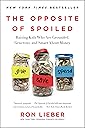

The Opposite of Spoiled: Raising Kids Who Are Grounded, Generous, and Smart About Money [Lieber, Ron] on desertcart.com. *FREE* shipping on qualifying offers. The Opposite of Spoiled: Raising Kids Who Are Grounded, Generous, and Smart About Money Review: A Practical, Thoughtful Guide to Raising Financially Confident Kids - The Opposite of Spoiled was an incredibly valuable and reassuring read as a parent. Rather than pushing rigid rules or guilt-based advice, this book focuses on helping parents raise children who understand money, values, and responsibility in a realistic, age-appropriate way. The tone is calm, encouraging, and grounded in real-life situations, which made it easy to relate to and apply. What I appreciated most is how practical this book is. It doesn’t assume perfection from parents or children, and it acknowledges that money conversations can feel uncomfortable or intimidating. The author provides concrete examples, conversation starters, and scenarios that help parents talk to kids about spending, saving, giving, allowances, and entitlement in a healthy way. It feels less like a lecture and more like a supportive guide. The book also emphasizes values over dollar amounts, which really resonated with me. It encourages transparency, curiosity, and open dialogue rather than secrecy or fear around money. I found myself reflecting not just on how I talk to my kids about money, but also on my own habits and assumptions. This is a great resource for parents who want to raise kids that are confident, thoughtful, and grounded when it comes to money—without overcomplicating things. It’s the kind of book you can return to as your kids grow and their financial questions evolve. I would absolutely recommend this to parents looking for a balanced, realistic approach to financial education at home. Review: Lots of good practical points - Good book. Easy enjoyable read, has some good points. Stressed the give part heavily. That's hard for a child to care about. We keep 2 jars, spend and save and at Christmas discuss giving to a good cause. I liked points of discussing the cause, and what the child feels is important. Is giving to the Art museum really helping people who need it, or giving to a homeless shelter or animal shelter? The depth of these questions was brought to my attention, neat how their daughter's private school has round table discussions about it. Has made me think about this in a different light when talking with my kids about what they think is important
| Best Sellers Rank | #6,326 in Books ( See Top 100 in Books ) #3 in Accounting Theory #9 in Family Activity #51 in Budgeting & Money Management (Books) |
| Customer Reviews | 4.4 4.4 out of 5 stars (894) |
| Dimensions | 5.31 x 0.58 x 8 inches |
| Edition | Reprint |
| ISBN-10 | 0062247026 |
| ISBN-13 | 978-0062247025 |
| Item Weight | 2.31 pounds |
| Language | English |
| Print length | 256 pages |
| Publication date | February 23, 2016 |
| Publisher | Harper Paperbacks |
C**A
A Practical, Thoughtful Guide to Raising Financially Confident Kids
The Opposite of Spoiled was an incredibly valuable and reassuring read as a parent. Rather than pushing rigid rules or guilt-based advice, this book focuses on helping parents raise children who understand money, values, and responsibility in a realistic, age-appropriate way. The tone is calm, encouraging, and grounded in real-life situations, which made it easy to relate to and apply. What I appreciated most is how practical this book is. It doesn’t assume perfection from parents or children, and it acknowledges that money conversations can feel uncomfortable or intimidating. The author provides concrete examples, conversation starters, and scenarios that help parents talk to kids about spending, saving, giving, allowances, and entitlement in a healthy way. It feels less like a lecture and more like a supportive guide. The book also emphasizes values over dollar amounts, which really resonated with me. It encourages transparency, curiosity, and open dialogue rather than secrecy or fear around money. I found myself reflecting not just on how I talk to my kids about money, but also on my own habits and assumptions. This is a great resource for parents who want to raise kids that are confident, thoughtful, and grounded when it comes to money—without overcomplicating things. It’s the kind of book you can return to as your kids grow and their financial questions evolve. I would absolutely recommend this to parents looking for a balanced, realistic approach to financial education at home.
D**S
Lots of good practical points
Good book. Easy enjoyable read, has some good points. Stressed the give part heavily. That's hard for a child to care about. We keep 2 jars, spend and save and at Christmas discuss giving to a good cause. I liked points of discussing the cause, and what the child feels is important. Is giving to the Art museum really helping people who need it, or giving to a homeless shelter or animal shelter? The depth of these questions was brought to my attention, neat how their daughter's private school has round table discussions about it. Has made me think about this in a different light when talking with my kids about what they think is important
R**L
So many great financial ideas for kids
I love this book! It's an easy read and relatively quick to read (just over 200 pages but they go quickly). The book is well written and enjoyable to read. There are so many great ideas to help kids of all ages become more financially intelligent. My only complaint would be that many parents interviewed in this book are very wealthy or have a rags to riches story. It would be nice to hear from parents who don't have that kind of fortune. Although, I think the point it makes of being aware of one's privilege is so important. This book touches on so many important financial aspects and how to include children in an age appropriate way so they can learn before it really matters when they are adults. I've already talked to my kids about implementing some of these ideas.
D**D
The Opposite of Spoiled is the opposite of default.
Children will learn about money. What they learn is up to us. They’ll either learn by intention or by default. Default feels unacceptable in our affluent society. Lieber is an accomplished financial writer with a passion for kids and money. The Opposite of Spoiled offers some great insight into America’s last taboo: money. In a culture that routinely exploits religion, race, sex, and violence, money may be the last frontier. Money is the one subject not discussed at our family dinner tables. Too many kids – from all rungs of the economic ladder - learn about values and money by default. Intentionality is the strength of this book. Lieber chronicles a variety of parents and how they’ve deliberately approached allowances, summer jobs, family trade-offs, gift-giving, consumer needs, wants, values, and charities. Not all solutions will fit all families, and that’s not the point anyway. The point is to be intentional about the money lessons in our own families. The point is to be intentional about the money lessons for our children. Lieber doesn’t lecture. Stories make this book powerful. He invites us to meet thoughtful parents with unique expertise and perspective on the child-money challenge. How would a renowned philanthropist revamp middle school gift-giving? How would a successful real estate agent illustrate the opportunities and limitations of a large monthly paycheck? How does a Utah farm family teach the value of hard work to their children? This isn’t a book laden with scholarly studies, although those works are present. Rather, it is a dynamic presentation of ideas and thinking about important life lessons for children. The Opposite of Spoiled is the opposite of default.
R**D
I wasn’t sure how to approach allowance or teaching my kids about money and then I read this book. I found the stories from other families from different walks of life helpful and eye opening. It gave me a lot to think about and good direction without telling me how to raise my kids or what to do. Definitely recommend for parents.
P**A
I had high hopes for this book, but was disappointed. The main content of this book are examples of how other people are educating their children about money. Basic ideas like giving them responsibility and talking about money are repeated many times, making the book very repetitive. There is very little actual critical analysis about children and money, even though the author refers to some published material like articles, the book reads much like a superficial newspaper column.
F**Y
I loved this book. It has helped to start conversations with my children about money and value. Instead of asking for treats, my kids have their own money and try to get good value for it - they realise the value of pooling their resources and buying in bulk. They understand the benefits of saving and consider the relative merits of things they choose to save for. They have engaged with society from different perspective as they consider ways to use their charitable giving pots, such as contributing to charities they see in the news or ordering a grocery delivery to an adult friend who couldn't get to the supermarket in lockdown. I am excited about the things that they have learned from reading this book and have hopes for their financial competence in adulthood.
P**V
Okay book..better get it through a library
A**E
Really excellent and thought provoking book about raising children who really can think about money. Lots of case studies, lots of good ideas, and suggestions of how to talk to your children about wants vs needs, spending vs saving, charitable giving and so on. Highly recommend.
Trustpilot
5 days ago
2 months ago