
DOWNLOAD THE APP


Customer Services
Copyright © 2025 Desertcart Holdings Limited
DOWNLOAD THE APP
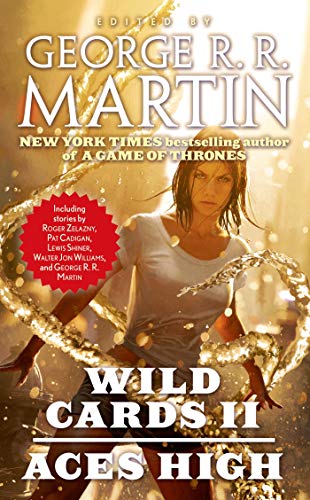
Full description not available
B**E
Super fun. Like R rated Doctor Who
I love this series. To be honest, I love this more than a certain more well known book series that got made into a T.V. show from George R.R. Martin. I don't understand why the other reviews are so harsh on this book in particular. I realize it didn't have that pulp fiction vignette quality the first book had, as the stories were all integrated to a larger story arc. But that's what I loved about it. The story as a whole felt like an R rated version of the DC shows on the CW doing a massive cross over event mashed up with Doctor Who (because, I'm sorry but Doctor Tachyon is totally based on the Third Doctor from Doctor Who. And if any of these writers are liars) mashed up with some Love craft Country (Even though I know this came long before Love craft Country) This book is far from perfect. There's time of homophobia, sexism and racism happening here. But I'm sure the authors must realize this by now, as these were more simple, MTV times back then. No one said Aces were Woke in the 80s. Also, the writing still ventured off slightly in the amateurish grade at moments. But this was a vast improvement than the first book, and gauging from the chapter sample at the end, the third book even better. Of course George R.R. Martin's story about the turtle is the absolute best. But that's to be expected. The Turtle and GRRM rule! Anyway, if you crave that Heavy Metal comic vibe in prose form, this series in the jam.
A**N
A Change of Pace From Wild Cards I
For those who haven't read the first book in this series, Wild Cards I, it is a large composition of cooperative storytelling that involves the events and consequences surrounding an outbreak of superpowers. It is at turns complex, meaningful, intriguing and suspenseful - and as a concession to its medium of inspiration - a little bit cheesy. Great fun.This book is a change of pace, and it set a pattern that many of the contributing authors would use for the series. (Kindle availability is spotty, so this may yet not be a big deal to you.) Instead of more than a dozen stories with their own beginnings and ends, Wild Cards II engages in fewer stories, all of which follow the same global event. The reading is just as enjoyable, but markedly different. Here's where I'll start dodging spoilers.The event itself involves a threat from deep space that has some reminiscent ties to Lovecraftian horror. I feel it ties in to four-color comic book horror, which is to say there needn't be advanced motivations or sympathetic villains. The bad guys in this book are definitely bad guys. The good guys are incidental, though, and they maintain their heart-wrenching weaknesses from the first book. Turtle, Fortunato, Peregrine, Chrysalis, and Jube have all emerged from Wild Cards 1 with more than a couple scars and here we see the cracks showing. Dr. Tachyon is back as well, but as opposed to his arc in Wild Cards 1, he's better composed and wanting to fight the good fight.Wild Cards has some popular legacy of being "realistic" but that term always bothers me in comics, sci-fi and fantasy. Realism isn't what we're here for, and it's highly subjective, so I'll try and put it another way: Wild Cards is about complex, vice-stricken characters whose weaknesses are sometimes physical and always emotional. They're strange, damaged goods, all wanting to fit into a world that doesn't want to accommodate them. You won't see spandex-clad poster children with paragon virtues. You'll see addicts, emotional burn-outs, grief-stricken has-beens, misguided egotists, and preening divas.If you like the iconoclastic rejection of Four-Color Simple Times, you'll like this. If you're up for more of a campy, easy-going and broad story, you should consider other things.
C**G
Introduces some cool new characters, but overall lacks the great storytelling of the first volume
I was somewhat disappointed in Aces High after Wild Cards I had surpassed my expectations. I enjoyed some of the new characters--especially Dinosaur Kid, Water Lily, and the four new incarnations of Captain Trips--but the overall quality of many of the stories was lacking.Part of the problem was too many overlapping story lines--an alien invasion of earth, a Takisian succession dispute, a chase after a black hole-powered singularity shifter, and an occult society of Masons trying to call down a mythological god to take over the world. Individual stories were forced to move too many players across the board from Point A to Point B in order to feed an overall arc, rather than letting each story play itself out in an organic way to serve its point of view characters.On the other hand, maybe the root problem was that I just found the Mason society to be irritating and uninteresting.Here are the individual story reviews: “Pennies from Hell” by Lewis Shiner – Using a few clues planted in his previous story (“The Long, Dark Night of Fortunado”), the ace whose power is fueled by tantric sex tracks down a group of occultic Masons dedicated to bringing an ancient Sumerian deity named Tiamet to earth. This story sets up one of the vital plotlines of the book, but it seemed like a lackluster outing for one of my favorite characters.“Jube” by George R.R. Martin – This is not so much a story as a series of interstitial scenes interspersed throughout the book to tie many of the other stories together into a unified whole. Jube is the Walrus joker mentioned but not named in Wild Cards I. Turns out, Jube is actually an alien, not a joker, and he has the key to technology that can save earth from an imminent alien invasion.“Unto the Sixth Generation” by Walter Jon Williams—An alien swarm attacks earth and is repelled when all the aces gather (like the Avengers!) to destroy it. Meanwhile, a mad joker scientist living in New York creates an android named Modular Man who helps the aces. The Masons and Modular Man all hunt an alien singularity device that may (or may not) stop the aliens and may (or may not) summon Tiamet. If this plot sounds disjointed and somewhat reliant on coincidence, it is. The story is broken up into four parts with other stories mixed in between.“Ashes to Ashes” by Roger Zelazny – The Sleeper returns in this broad comedy. Croyd is hired to rob the corpse of a dead alien—one of Jube’s associates—but a series of nearly slapstick digressions caused the body to be slowly lost and destroyed piece by piece.“If Looks Could Kill” by Walton Simons – A telepathic but psychologically damaged ace is recruited by the Masons and their shadowy leader, known as The Astronomer. This story relies on scenes of ritual sacrifice and violent rape, but the plot is rather lame.“Winter Chill” by George R. R. Martin –We catch up with Tom Tudbury twenty years after he became Turtle and find that living as a secret hero has ruined his chances with the woman he loves. This is the first strong, character-driven story in the book. However, I had a major quibble with one significant plot point: In a world that has been living with the virus for over 40 years, I think everyone would understand how the virus passes from parent to child—when it is dominate or recessive, and how someone can be a carrier without showing symptoms. This would be part of the fabric of everyday life and relationships, not secret information shared by Dr. Tachyon on the roof of a building in a clandestine meeting.“Relative Difficulties” by Melinda Snodgrass – Fearing the planet will soon fall to the Swarm, the Takisians arrive on earth to collect ace specimens for further study and also recruit Dr. Tachyon as a pawn in a family power struggle. Readers learn a great deal about the doctor’s background and culture. Mark Meadows returns and the full range of his ace powers is revealed—he is Captain Trips, who uses various drugs to bring forth a host of multiple personas and bodies. All of a sudden, he is a more interesting and versatile character than when he was simply Radical. Turtle has a redemption arc, and even Kiet is brought into the forefront of the narrative in a surprising way. This story is funny, exciting, and layered.“With a Little Help From His Friends” by Victor Milan – This is essentially a continuation of the previous story. Dr. Tachyon and Captain Trips investigate the death of an eccentric scientist, which leads to evidence the alien swarm is preparing a second wave of attack, this time possibly aided by Tachyon’s relatives."By Lost Ways" by Pat Cadigan -- Water Lily is an interesting addition to the pantheon, an impressionable young woman with an ability to manipulate water and a pesky habit of killing people she does not like by sucking all the moisture out of their bodies. Unfortunately, we do not get to see too much of her because this story expends a lot of its energy gathering all the various Masonic bad guys into one place, so the aces can defeat them and close out this subplot."Mr. Koyama's Comet" by Walter Jon Williams -- A well-told tale of an amateur astronomer whose life's desire is to discover a new comet, but he only succeeds in establishing the position of the Swarm ship."Half Past Dead" by John J. Miller -- Yeoman teams up with Fortunado, Dr. Tachyon, and Mai to infiltrate the Swarm Mother ship and save the planet. Fortunado's unique properties are underused, but otherwise this is a fun engaging tale. Mai's character gets an especially appropriate sendoff, and I hope to see her again to find out what happened after the alien ship left our orbit.
C**A
Confusing
English is not my first language, which maybe contributs to my negative review. However the story is in fact many stories with a thin red line. Different authors writing one book; it was like to many cooks preparing one dish. I liked the idea of the Wild Cards but felt in the end that there were too many super powers, even though strange once. Because of too may characters / protagonists, the depth in dialouge and interaction was missing. It was impossible for me to connect with anyone. Some of the "action-scenes felt endless and I lost interest. If you read the book, do it in one go! I did not and in the ned I was just pressing through, no matter who was who and did what. It's true: Sometimes less would really be more.
J**G
Great sequel to 1
I really enjoyed WC2. Having left a gap of a few years since reading 1, it took me a little while to re-familiarise myself with the characters again. Glad I gave this one a go, though. If you liked 1, you'll enjoy this one as well. The introduction of new characters kept my interest, and I really couldn't put this one down. The Astronomer was creepy as hell, and it was great to see a "supervillain"-type character become part of the story. The Swarm Mother angle was weird. I particularly enjoyed the "Modular Man" chapters, and his appearance throughout.
A**A
Love it
George Martin is better known for his 'a Song of Ice and Fire' series, and even though he mostly edited the Wild Cards series, he did contribute to the series. And I gotta say what a series it is. We have heroes and villains, super-powered people and unlucky mutants, but as typical of Martin the world they exist in is painted in shades of grey. Definitely worthy buy.
H**O
Good
Good
A**R
Mixed bag
The stories are by different authors following a shared concept, so I suppose its inevitable that some are a better read than others.
Trustpilot
2 weeks ago
1 week ago