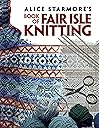
Alice Starmore's Book of Fair Isle Knitting (Dover Crafts: Knitting)
Product ID: 11091366
Desertcart purchases this item on your behalf and handles shipping, customs, and support to Senegal.
Scotland's Fair Isle is celebrated the world over for its distinctive, stranded-color knitting, and Alice Starmore is famous for her expertise in designing and instructing knitters in this appealing regional tradition. Starmore's richly illustrated guide offers both beginning and advanced knitters a complete workshop in the Fair Isle style. It not only explores the art's history, patterns, and traditional techniques but also encourages knitters to develop their own creativity. Starmore explains the traditional Fair Isle techniques of circular knitting and presents detailed tutorials on incorporating classic motifs, exploring color schemes, and creating unique patterns and designs. She shares fourteen of her own original designs, including patterns for cardigans, vests, fishermen's sweaters, hats, gloves, and mittens. More than 250 photographs, drawings, and easy-to-follow charts illustrate sources of inspiration, simple instructions, and spectacular results. Knitting devotees agree: If you have only one book of Fair Isle patterns, this is the one to have! Review: A Must for every knitter - This is a valuable text concerning the history of, and development of the iconic color worked knitting known worldwide as Fair Isle knitting. It's also one of the best ever books on technique required for Fair Isle knitting. Fair Isle requires two colors used on each row, carrying the unused yarn behind the work, and by alternating the colors, wonderful designs can be made to appear on the front. Alice Starmore is possibly the best known modern Scottish knitwear designer, and is rightly famous for her colorwork and Celtic inspired designs. This book can take the rank beginner into the mystery of color work magic, and the results are amazing if her instructions are carefully followed. The designs are traditional, with traditional fit, and not at all dated to the decade when the book was written (1980's). Thus, any of the patterns given can be knitted up for good fit, a flexible knitted design, and the sweaters are suitable to labor on a fishing vessel or attending a sporting event. Fair Isle likely began as a practical way of improving the warmth of knitted garments. Carrying the yarn on the back means the garment has an extra layer of insulation. The colors are switched using 3-5 stitch intervals, and virtually no row has a single color in her designs. This means the garment won't have peaks and valleys between bands of pattern stitches. The carried yarn must be handled so that it doesn't pull the stitches visible on the outside of the knitted garment, and at the same time, must also be quickly brought to the active needle for use in the design. Sections of the book are devoted to the history of Fair Isle knitting, the influence of it upon the economy of the various islands surrounding Scotland, and the ebb and flow of popularity of this specialized art form. There is much information about how to best achieve corrugated ribbing, using circular needles versus knitting with double pointed needles, and the layout of patterns in a garment. She discusses color choices, and the application of this color work to hats, tammies, gloves, mittens, and wearable garments. Improvisation is encouraged, as there are many patterns for peeries (Scottish for small) borders, border stitches, OXO pattern borders, Norwegian stars (or North Baltic -- depending on what your Scottish grandmother has to say about it), and how to use rows, panels or a combination of both for best effect. There is also a wealth of information about color selection, and ways color can enhance or mute a design element. Various combinations of bright colors, primary colors, shadings, and source information incorporated into color choices are all discussed. Plus, the solid advice about how to hold yarn, how to achieve a good tension, and ways to make a design your very own is included. Alice Starmore has her own line of yarns now, but most yarns used in this book are, like Starmore's own yarns, traditional in weight, color and fiber composition. These traditional yarns make wonderful knitwear, from socks to tammies, and all in between. Ganseys, which are sweaters most suited to the fishing industry, are made of a rather specific style, and when color work is applied, becomes the basic Fair Isle sweater. There are several designs for these versatile garments included, and with the option of substituting one's own border or using one of the suggested border designs, the knitter need only devise the desired color scheme and get to work. Knitting in the round with two colors is really very easy. All stitches for a stocking stitch Fair Isle sweater is done in knit stitches, so using combined Continental and British knitting, resulting in one yarn in each hand, is so much easier than one might think. Starting out on a small project such as a tammie is a great beginning. Then, by the time you're done, you can easily tackle a sweater with all the wonderful information, complete instructions, guidance and truly informative pictures included in this volume. Fans of Alice Starmore know of her many books. Her books overflow with eye candy in the form of original designs. Her designs are aimed at the average build, so adjust accordingly. With the ample information on adjusting design patterns, maintaining gauge, and selecting for good fit, this is not as difficult as it might at first seem. Fair Isle Knitting is also a great guide to keep at hand when knitting any stranded color work project, no matter the designer. I've used the book often for knitting several Fair Isle sweaters, tammies and vests, especially from Starmore's Celtic designs. This is a wonderful teaching volume for knitters of all skill levels who are interested in color knitting, and Fair Isle in particular. It will save many projects, improve your work, and help to make knitting these iconic items a joy. I encourage all knitters to try this wonderful technique with the expert guidance of Alice Starmore. Review: Beautiful, inspirational book with lots of history, styles and photos. - Stunning book. Lots of inspiration, photos and influences in vegetation; plant dyes and historical patterns. Super gift for a knitting friend of mine. Came fast. New, in perfect condition. Would buy from seller again. Lovely book. Lots of eye candy.

| Best Sellers Rank | #75,279 in Books ( See Top 100 in Books ) #141 in Knitting (Books) #144 in Fashion Craft |
| Customer Reviews | 4.8 out of 5 stars 683 Reviews |
F**E
A Must for every knitter
This is a valuable text concerning the history of, and development of the iconic color worked knitting known worldwide as Fair Isle knitting. It's also one of the best ever books on technique required for Fair Isle knitting. Fair Isle requires two colors used on each row, carrying the unused yarn behind the work, and by alternating the colors, wonderful designs can be made to appear on the front. Alice Starmore is possibly the best known modern Scottish knitwear designer, and is rightly famous for her colorwork and Celtic inspired designs. This book can take the rank beginner into the mystery of color work magic, and the results are amazing if her instructions are carefully followed. The designs are traditional, with traditional fit, and not at all dated to the decade when the book was written (1980's). Thus, any of the patterns given can be knitted up for good fit, a flexible knitted design, and the sweaters are suitable to labor on a fishing vessel or attending a sporting event. Fair Isle likely began as a practical way of improving the warmth of knitted garments. Carrying the yarn on the back means the garment has an extra layer of insulation. The colors are switched using 3-5 stitch intervals, and virtually no row has a single color in her designs. This means the garment won't have peaks and valleys between bands of pattern stitches. The carried yarn must be handled so that it doesn't pull the stitches visible on the outside of the knitted garment, and at the same time, must also be quickly brought to the active needle for use in the design. Sections of the book are devoted to the history of Fair Isle knitting, the influence of it upon the economy of the various islands surrounding Scotland, and the ebb and flow of popularity of this specialized art form. There is much information about how to best achieve corrugated ribbing, using circular needles versus knitting with double pointed needles, and the layout of patterns in a garment. She discusses color choices, and the application of this color work to hats, tammies, gloves, mittens, and wearable garments. Improvisation is encouraged, as there are many patterns for peeries (Scottish for small) borders, border stitches, OXO pattern borders, Norwegian stars (or North Baltic -- depending on what your Scottish grandmother has to say about it), and how to use rows, panels or a combination of both for best effect. There is also a wealth of information about color selection, and ways color can enhance or mute a design element. Various combinations of bright colors, primary colors, shadings, and source information incorporated into color choices are all discussed. Plus, the solid advice about how to hold yarn, how to achieve a good tension, and ways to make a design your very own is included. Alice Starmore has her own line of yarns now, but most yarns used in this book are, like Starmore's own yarns, traditional in weight, color and fiber composition. These traditional yarns make wonderful knitwear, from socks to tammies, and all in between. Ganseys, which are sweaters most suited to the fishing industry, are made of a rather specific style, and when color work is applied, becomes the basic Fair Isle sweater. There are several designs for these versatile garments included, and with the option of substituting one's own border or using one of the suggested border designs, the knitter need only devise the desired color scheme and get to work. Knitting in the round with two colors is really very easy. All stitches for a stocking stitch Fair Isle sweater is done in knit stitches, so using combined Continental and British knitting, resulting in one yarn in each hand, is so much easier than one might think. Starting out on a small project such as a tammie is a great beginning. Then, by the time you're done, you can easily tackle a sweater with all the wonderful information, complete instructions, guidance and truly informative pictures included in this volume. Fans of Alice Starmore know of her many books. Her books overflow with eye candy in the form of original designs. Her designs are aimed at the average build, so adjust accordingly. With the ample information on adjusting design patterns, maintaining gauge, and selecting for good fit, this is not as difficult as it might at first seem. Fair Isle Knitting is also a great guide to keep at hand when knitting any stranded color work project, no matter the designer. I've used the book often for knitting several Fair Isle sweaters, tammies and vests, especially from Starmore's Celtic designs. This is a wonderful teaching volume for knitters of all skill levels who are interested in color knitting, and Fair Isle in particular. It will save many projects, improve your work, and help to make knitting these iconic items a joy. I encourage all knitters to try this wonderful technique with the expert guidance of Alice Starmore.
A**Y
Beautiful, inspirational book with lots of history, styles and photos.
Stunning book. Lots of inspiration, photos and influences in vegetation; plant dyes and historical patterns. Super gift for a knitting friend of mine. Came fast. New, in perfect condition. Would buy from seller again. Lovely book. Lots of eye candy.
M**M
Great used book.
I have been wanting this book for a while. So glad to find a used copy for a bargain price. I say used, but this book looks like new. I would be proud to give it as a gift… except l am keeping this for myself. The book was originally printed in 1988, but the information is still relevant. The author gives an interesting account of the history of Fair Isle knitting, as well as a comprehensive definition of what makes a pattern Fair Isle knitting. I ordered this book while l was under the weather, thinking I would be ready to start a new project, but the shipping was faster than expected. Now I am bookmarking my favorite designs and dreaming of getting knitting needles in my hands. Very happy with this purchase in every way.
C**R
The classic book of Fair Isle knitting. IMO
To my mind this is the classic on Fair Isle knitting. I strongly recommend it. I am so glad that Dover publications has published it. It is a book of about 200 pages, and following is a list of the table of contents: A brief history Pattern Color Technique A wardrobe of patterns Creating your own designs Bibliography Index About the author Sources of supply Seems to me that anything one needs to know about Fair Isle knitting can be found in this book. The instructions are clearly explained, and charts/graphs are also clearly illustrated. It has pretty much become my knitting bible, and I will explain why: For the past few months I have been "home schooling" myself in the art of Fair isle knitting. Decades ago I was taught so-called English style knitting, which is the tried? and true? right-handed knitting. After reading this book I realized that Continental knitting, left-hand knitting, would be best to learn because it is faster than the English style. After a few weeks of practice and referring to this book to learn all I could about this style of knitting, I've become very proficient at the Continental style. Now I can use either hand for knitting since I can use both styles at the same time. Next, I decided I needed to learn to use circular needles, which were a bit problematic to use at first. But, again, after a few weeks I am most comfortable using circular needles, and I really love using them. Now, I am in the process of learning Fair Isle, and that means using no more than two colors in any single row. That is THE absolute rule about Fair Isle knitting as any practitioner of the art will tell you. Home schooling myself in this new art is coming along, but it is a slow process, at least for me. The key is that it takes lots of practice. The authentic yarns are almost as fine as fingering yarn, but that is the yarn I now prefer to use, and it is available from sellers in the U.S. Just search the Internet and you will find where it is available. One more thing that may help anyone who is about to learn these new styles and products: This has worked for me: Years ago I was taught that if one wants to learn something new, and learn it well, you must repeat the new process at least 28 times for it to stick in your brain and your muscles. For instance, if you are learning to knit Fair Isle, you must knit 28 swatches in Fair Isle. If you are learning to use circular needles, you must knit at least 28 swatches with the various sizes of circular needles, etc. If you purchase this book, you are about to begin a marvelous trip. Enjoy!!
S**I
Starmore’s Fair Isle Knitting: A Great Book about Patterns from Centuries of Trade!
This 1998, 2009 edition, of “Alice Starmore’s Book of Fair Isle Knitting” has a soft cover; it also has 201 semi-glossy pages, many of which have color photos, black and white photos and pattern graphics, or pastel-colored knitting stitch graphics. Dover Publications, Inc. is the publisher. The author has 2 full pages of maps at the very beginning of the book to show where Fair Isle is located. It is the southernmost island in the Shetland Islands (just north of 60 degrees latitude), located half-way between Scotland and Bergan, Norway. Fair Isle has been on a main trade route from Europe to Scotland and Iceland and then, westward, so all points on the trade routes could have influenced the patterns that are now identified as being ‘Fair Isle’. This said, Starmore continued to define Fair Isle knitting in 1 pre-Chapter section, ‘A Brief History’, which isn’t so ‘brief’ because it is 30 pages long! A Fair Isle pattern that is widely recognized is /OXO/ and is an identifier for this type of knitting. Read this section to learn about how ‘barter and trade’ was used with this knitting style. 5 Chapters follow this Preface: Chapter 1. ‘Pattern’; Chapter 2. ‘Color’; Chapter 3. ‘Technique’ (including *‘steeks’, which require an advanced level); Chapter 4. ‘A Wardrobe of Patterns’; and Chapter 5. ‘Creating Your Own Designs’ (which requires High-Intermediate to Advanced levels). Note that these 5 chapters are arranged from simple to complex. Following the 5 Chapters are 4 post-Chapter sections: A. Bibliography (Entries date from 1701-1983.) B. Index C. About the Author (She is accomplished in several fields, with awards, published works, and web links [for more information]) D. Sources of Supply (from virtualyarns.com). *Note that Fair Isle Knitting utilizes circular needles, not 2-stick flat needles (page 87), so this book would not be for Beginners. It could be rated for knitting levels High-Intermediate to Advanced levels only (also note the inclusion of *‘steeks, which are advanced’). Regardless of whatever level a knitter is on, this book is a great resource on a specific type of knitting – Fair Isle –as opposed to that from other places/ countries around the world. This book also acts as a great resource and inspiration (to increase ones’ knitting levels and to create some outstanding garments). This book is a ‘classic’ staple for serious knitters to have on their bookshelves.
S**N
Certified yarn porn
This is a beautiful book full of wondrous and amazing art masquerading as garments. There is a fairly in-depth discussion of Fair Isle techniques, often contrasted with Shetland, Bohüs and other stranded colorwork traditions. I have so far been caught up in learning about the various traditions and enjoying the intricate and beautiful designs, so I cannot speak to the nuts and bolts of technique yet. Even if I never master Fair Isle knitting from this book, I will still love returning to it to enjoy the photos and lovely designs.
H**S
Traditional inspiration
This book is a keeper as I love to have basic books for my library, however the color inspirations are fairly traditional and I tend to like more vibrant mixes of color. The book gives a plethora of patterns and designs from 1+ row peeries to seeding patterns, 8 different norwegian stars to more elaborate 19 row patterns and borders as well as all over patterns...surely this book will let your imagination soar once you pull out your own graph paper and colored pencils. I can imagine using self striping yarn with a coordinating solid to get a beginner like me started. Mittens, gloves, beret, vests, sweaters for the whole family...much better than having loose pieces of paper that can get lost, and I love how the book encourages the reader to create their own designs!
J**N
This has been one of my most used knitting books
The history and theory behind Faire Isle Knitting was interesting to read and the patterns for garments are nice. However, the well arranged repeat pattern charts are what have me going back to this book again and again to mix, match, and modify them for my own ideas. I would say even if you feel you feel intimidated by the garment patterns in the book it is a good buy just to play with the charts.
A**I
日本語ではありません。
テキストは日本語で翻訳されていませんか、色の合わせ方は応用が利きやすいと思います。 フェアアイルが好きな方にはお勧めの本になります。
B**A
Bellissimo libro!
La parte relativa al racconto storico è veramente interessante. Le immagini sono stupende e ci sono tantissimi schemi da cui prendere spunto. Lo stile dei modelli forse è un po' datato, ma con le spiegazioni della tecnica Fair Isle, per altro molto accurata, è possibile creare una infinità di stili seguendo il gusto personale. Consigliatissimo!
C**N
Alice Starmore's Book of Fair Isle Knitting
Libro esencial para cualquier persona que se dedique a tejer
B**.
SCAM!
FÖRETAGET VILL HA DINA PENGAR. DINA VAROR KOMMER DOCK INTE.
H**I
Ein Grundlagenbuch
Auch wenn die Aufmachung nicht so ansprechend ist, ist dieses Buch ein Grundlagenwerk das jede Stricker*in, die sich für das Vielfarben Stricken interessiert, begeistern wird. Es beinhaltet sowohl kulturgeschichtliche Informationen, als auch Technische, Mustervorlagen, Grundsätzliches zu Farbauswahl und Farbverteilung. Ein wirklich tolles Buch, das es lohnt zu kaufen (bzw sich schenken zu lassen).
Trustpilot
2 months ago
2 weeks ago