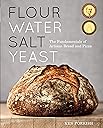
Flour Water Salt Yeast: The Fundamentals of Artisan Bread and Pizza [A Cookbook]
Product ID: 99750381
NEW YORK TIMES BESTSELLER • From Portland’s most acclaimed and beloved baker comes this must-have baking guide, featuring recipes for world-class breads and pizzas and a variety of schedules suited for the home baker. There are few things more satisfying than biting into a freshly made, crispy-on-the-outside, soft-and-supple-on-the-inside slice of perfectly baked bread. For Portland-based baker Ken Forkish, well-made bread is more than just a pleasure—it is a passion that has led him to create some of the best and most critically lauded breads and pizzas in the country. In Flour Water Salt Yeast , Forkish translates his obsessively honed craft into scores of recipes for rustic boules and Neapolitan-style pizzas, all suited for the home baker. Forkish developed and tested all of the recipes in his home oven, and his impeccable formulas and clear instructions result in top-quality artisan breads and pizzas that stand up against those sold in the best bakeries anywhere. Whether you’re a total beginner or a serious baker, Flour Water Salt Yeas t has a recipe that suits your skill level and time constraints: Start with a straight dough and have fresh bread ready by supper time, or explore pre-ferments with a bread that uses biga or poolish. If you’re ready to take your baking to the next level, follow Forkish’s step-by-step guide to making a levain starter with only flour and water, and be amazed by the delicious complexity of your naturally leavened bread. Pizza lovers can experiment with a variety of doughs and sauces to create the perfect pie using either a pizza stone or a cast-iron skillet. Flour Water Salt Yeast is more than just a collection of recipes for amazing bread and pizza—it offers a complete baking education, with a thorough yet accessible explanation of the tools and techniques that set artisan bread apart. Featuring a tutorial on baker’s percentages, advice for manipulating ingredients ratios to create custom doughs, tips for adapting bread baking schedules to fit your day-to-day life, and an entire chapter that demystifies the levain-making process, Flour Water Salt Yeast is an indispensable resource for bakers who want to make their daily bread exceptional bread. Review: Bake Your Own Slice Of Heaven - Overview I had been trying to make good artisan bread on my own by scouring blogs and websites for techniques and recipes, but nothing I found yielded the thick, crunchy, crusts and light, spongy crumbs that I was seeking to produce...that is until I found this book. I decided that combing through endless articles and the blog posts of amateurs and hobbyists was not going to cut it. So, I jumped on the Kindle store and began my search for the book that would give me the skills and knowledge I needed to bake the bread I dreamed about. I looked at various titles written by Peter Reinhart, but none of them stood out as a book just about the fundamentals. I thumbed through a few more titles, before I found Flour, Water, Salt, Yeast: The Fundamentals of Artisan Bread and Pizza. There it is...fundamentals right in the title...perfect! Organization This book is broken up into several sections. In the first chapters the author briefly goes over his transition from working in Silicon Valley, through his education in baking, to eventually opening his own bakery in Portland, OR. He had the privilege of learning the craft from several world renowned bakers and humorously tells the story of the hurdles he had to overcome to get to where he is today. One review on here called the author out for including the introduction, accusing him of being an egotistical narcissist. I don't know the author, therefore I cannot speak to his personal character, however, I found the introduction to be informative and fun to read. I for one thought it gave the reader a bit of insight into the author, who for the duration of the book becomes your mentor and guide. Chapter 3 covers the basic equipment you will need to get started. I had most everything in my kitchen already, except a 4qt dutch oven and proofing baskets, both of which I found readily available here on desertcart. Chapter 4 goes over basic techniques that will help you learn the proper methods of shaping, folding, and mixing doughs by hand. These techniques take time to get the hang of and I still am nowhere near mastering them, however, the author had provided multiple pictures in the book to help you get a visual reference of how things are supposed to look after each step. He has also posted a few videos on this bakery's website, kensartisan.com, that will help you if you need further guidance. The next chapters are organized into dough categories: Straight Doughs, Doughs with Preferments, Hybrid Levain Doughs, and Pure Levain Doughs. When you get to the chapter dealing with levain, the author educates you on what exactly a levain is and how to start and maintain your own levain. The last chapters deal with focaccia and pizza. The section on pizza includes recipes for sauces and even gives a crash course on shaping pizza dough. Scattered through the book are four essays the author has included spanning several related topics, such as the origin of the flour used at his bakery and the daily schedule of the professional baker. These essays round out the book and give additional insight into the world of baking. Recipes The recipes in this book are easy to follow and simply lay out the ingredients and the procedure for creating each bread. The author recommends measuring your ingredients by weight instead of by volume, however he also includes the approximate measurements in cups, tbs, tsps, etc. Each recipe is unique and will require different time commitments, so plan ahead to make sure your schedule can accommodate the recipe you want to try. Results I have tried almost half of the recipes in this book and most (despite my still raw technique) have looked and tasted amazing. No store-bought bread in our home anymore with these boules around. I take these artisan loaves to family parties and never have any to take home. I made several loaves for a bake sale recently and they lasted about 30 seconds before each was purchased. I got brave and tried one of the pizza recipes out on my aunt who is a self professed "foodie" and she claimed it was the best pizza she has ever had, even better than the pizza she had in Italy (she seemed sincere, however she has a talent for exaggeration). Conclusion After spending some time with this book and some time in the kitchen I am finally baking the bread that I've been wanting. I can say with out hesitation that if you're looking for a book to get you started baking superb breads and pizza...get this one. Is it the definitive book on the subject? No, but it covers the basics and from here you can go anywhere. If I can do it, you can too Review: TRULY FANTASTIC!! 6 STARS ! - I am a career server who cooks about 3 times a week and dabbles with baking a few times a month. An intermediate in the kitchen at best. 3-4 weeks ago I decided to try my hand at breadmaking for the first time ever. I found a 5 minute, no knead recipe on line - baked it up and was really satisfied that my first attempt had gone so well. I found a second, slightly more involved, rustic bread recipe that required a "sponge" done the night before (didn't know what that word meant at the time). It came out even better. So i called up a friend of mine to brag a little only to find out that he had just bought FWSY a few weeks prior and had also just started making bread.. he invited me over to talk shop, and check out his bread. Flipping through Ken's book was so refreshing. The clear instruction, the step by step processes, measurements by weight for precision, the pictures, and the wonderful back story of his quitting his corporate job to embark upon being a professional bread maker made for a really enjoyable book.... MUCH more importantly, my friend's bread was amazing. A completely different level - as in local baker worthy. I bought the book and the necessary equipment the next day (will set you back about $75), and baked my first loaf a few days later. I have baked about 14 loaves in all in the last few weeks. Each and every loaf has been AMAZING. I could retype that last sentence a few times and it wouldn't feel an exaggeration. I consider myself to be a disgruntled perfectionist when it comes to my cooking and baking endeavors. I critique the food that I eat and bread is no exception.. My wife and I will think, " this bread is good, but the crust is too hard, or it was good the first day ,but bread shouldn't be stale by the second day, etc. I have followed Ken's recipes exactly- and the results have been extraordinary. We are ruined. I would hold the bread I am producing up to any local bakery in a big city and they would be at least on par. Parting thoughts: The equipment he recommends is necessary : a couple cambros, a gram scale, an instant read thermometer. These can't be skimped on. That said, even his most difficult breads are not hard as long as you are the type of person who can follow step by step instructions. The bread comes out extremely consistent. I have not had a single "what the heck happened this time?" scenario. I couldn't be more pleased with this purchase and the lifetime knowledge I now have. Hope you make the plunge. (also, I have no affiliations nor receive any benefits for this review)

| Best Sellers Rank | #53,654 in Kindle Store ( See Top 100 in Kindle Store ) #1 in Pizza Baking #5 in Pizza Making #5 in Bread Baking (Books) |
B**E
Bake Your Own Slice Of Heaven
Overview I had been trying to make good artisan bread on my own by scouring blogs and websites for techniques and recipes, but nothing I found yielded the thick, crunchy, crusts and light, spongy crumbs that I was seeking to produce...that is until I found this book. I decided that combing through endless articles and the blog posts of amateurs and hobbyists was not going to cut it. So, I jumped on the Kindle store and began my search for the book that would give me the skills and knowledge I needed to bake the bread I dreamed about. I looked at various titles written by Peter Reinhart, but none of them stood out as a book just about the fundamentals. I thumbed through a few more titles, before I found Flour, Water, Salt, Yeast: The Fundamentals of Artisan Bread and Pizza. There it is...fundamentals right in the title...perfect! Organization This book is broken up into several sections. In the first chapters the author briefly goes over his transition from working in Silicon Valley, through his education in baking, to eventually opening his own bakery in Portland, OR. He had the privilege of learning the craft from several world renowned bakers and humorously tells the story of the hurdles he had to overcome to get to where he is today. One review on here called the author out for including the introduction, accusing him of being an egotistical narcissist. I don't know the author, therefore I cannot speak to his personal character, however, I found the introduction to be informative and fun to read. I for one thought it gave the reader a bit of insight into the author, who for the duration of the book becomes your mentor and guide. Chapter 3 covers the basic equipment you will need to get started. I had most everything in my kitchen already, except a 4qt dutch oven and proofing baskets, both of which I found readily available here on Amazon. Chapter 4 goes over basic techniques that will help you learn the proper methods of shaping, folding, and mixing doughs by hand. These techniques take time to get the hang of and I still am nowhere near mastering them, however, the author had provided multiple pictures in the book to help you get a visual reference of how things are supposed to look after each step. He has also posted a few videos on this bakery's website, kensartisan.com, that will help you if you need further guidance. The next chapters are organized into dough categories: Straight Doughs, Doughs with Preferments, Hybrid Levain Doughs, and Pure Levain Doughs. When you get to the chapter dealing with levain, the author educates you on what exactly a levain is and how to start and maintain your own levain. The last chapters deal with focaccia and pizza. The section on pizza includes recipes for sauces and even gives a crash course on shaping pizza dough. Scattered through the book are four essays the author has included spanning several related topics, such as the origin of the flour used at his bakery and the daily schedule of the professional baker. These essays round out the book and give additional insight into the world of baking. Recipes The recipes in this book are easy to follow and simply lay out the ingredients and the procedure for creating each bread. The author recommends measuring your ingredients by weight instead of by volume, however he also includes the approximate measurements in cups, tbs, tsps, etc. Each recipe is unique and will require different time commitments, so plan ahead to make sure your schedule can accommodate the recipe you want to try. Results I have tried almost half of the recipes in this book and most (despite my still raw technique) have looked and tasted amazing. No store-bought bread in our home anymore with these boules around. I take these artisan loaves to family parties and never have any to take home. I made several loaves for a bake sale recently and they lasted about 30 seconds before each was purchased. I got brave and tried one of the pizza recipes out on my aunt who is a self professed "foodie" and she claimed it was the best pizza she has ever had, even better than the pizza she had in Italy (she seemed sincere, however she has a talent for exaggeration). Conclusion After spending some time with this book and some time in the kitchen I am finally baking the bread that I've been wanting. I can say with out hesitation that if you're looking for a book to get you started baking superb breads and pizza...get this one. Is it the definitive book on the subject? No, but it covers the basics and from here you can go anywhere. If I can do it, you can too
M**.
TRULY FANTASTIC!! 6 STARS !
I am a career server who cooks about 3 times a week and dabbles with baking a few times a month. An intermediate in the kitchen at best. 3-4 weeks ago I decided to try my hand at breadmaking for the first time ever. I found a 5 minute, no knead recipe on line - baked it up and was really satisfied that my first attempt had gone so well. I found a second, slightly more involved, rustic bread recipe that required a "sponge" done the night before (didn't know what that word meant at the time). It came out even better. So i called up a friend of mine to brag a little only to find out that he had just bought FWSY a few weeks prior and had also just started making bread.. he invited me over to talk shop, and check out his bread. Flipping through Ken's book was so refreshing. The clear instruction, the step by step processes, measurements by weight for precision, the pictures, and the wonderful back story of his quitting his corporate job to embark upon being a professional bread maker made for a really enjoyable book.... MUCH more importantly, my friend's bread was amazing. A completely different level - as in local baker worthy. I bought the book and the necessary equipment the next day (will set you back about $75), and baked my first loaf a few days later. I have baked about 14 loaves in all in the last few weeks. Each and every loaf has been AMAZING. I could retype that last sentence a few times and it wouldn't feel an exaggeration. I consider myself to be a disgruntled perfectionist when it comes to my cooking and baking endeavors. I critique the food that I eat and bread is no exception.. My wife and I will think, " this bread is good, but the crust is too hard, or it was good the first day ,but bread shouldn't be stale by the second day, etc. I have followed Ken's recipes exactly- and the results have been extraordinary. We are ruined. I would hold the bread I am producing up to any local bakery in a big city and they would be at least on par. Parting thoughts: The equipment he recommends is necessary : a couple cambros, a gram scale, an instant read thermometer. These can't be skimped on. That said, even his most difficult breads are not hard as long as you are the type of person who can follow step by step instructions. The bread comes out extremely consistent. I have not had a single "what the heck happened this time?" scenario. I couldn't be more pleased with this purchase and the lifetime knowledge I now have. Hope you make the plunge. (also, I have no affiliations nor receive any benefits for this review)
N**E
An Algorithm for Great Bread: OOD + baker's experience + precise instructions = consistently superb artisan bread
If I had to choose only 3 cookbooks to take with me to a new home, this would be my bread book. A close runner up would be Chad Robertson's Tartine Bread , but I give the edge to Ken Folkish's book based on the variety of recipes, the precision of the instructions, and the consistent excellence of the outcomes. In my review of Tartine Bread, I called this book by Ken Forkish the "Algorithm of Bread", written by an ex-software engineer. Forkish is meticulous in his description of how to bake each loaf, as if he were writing a detailed algorithm for a baker to follow. Starting by defining his bread baking objects in early chapters, he proceeds by chapter from straight bread, to preferments, to natural yeast hybrids, to pure leavened breads, a journey that allows intermediate (and even beginner) bakers to follow a natural bread learning progression. The recipes for all his bread variants produce consistently top-quality loaves. I was shocked when my first preferment loaf turned out nearly perfect, in both form and taste. The algorithm worked. Chapter 2 is great background on bread and Folkish's methods; the why's and how's of his bread. Chapter 4 describes the core methods used in all of his breads: mixing, folding, dividing, proofing and baking. These are the essential programming (bread baking) objects that are arranged in the bread algorithms (recipes) which compose the rest of the book. The book has a limited but sufficient repertoire of classic breads. You won't find recipes for esoteric ingredients and combinations. That is not Forkish's intent, nor if I understand correctly is that what he offers in his Portland bakery. What you will find is a beautiful exposition of standard and classic breads: whites, whole wheats and browns; both commercially and naturally leavened. At the end of the book are two chapters on pizza, which I must say I have not read because I don't care for pizza. Forkish has a new book out (or due out soon) devoted to pizza, for the devoti di pizza. The naturally leavened (sourdough) breads in Flour Water Salt Yeast are better than Peter Reinhart's. They are on par with Chad Robertson's. The results with Forkish recipes are more consistent than with Robertson. The difference between the Zen of Bread (Robertson) and the Algorithm of Bread Baking (Forkish) is that Robertson is less directive and less precise, encouraging the baker to 'feel' what is going on and adjust, while Forkish basically says, "Do this, this and this, and you will get very good bread." ---very much like a conditional statement in programming. And he is right, you do get very good, more likely 'excellent', bread. Interestingly, in a couple places in the book, Ken Forkish credits Chad Robertson for helping him out with technique and ideas when Forkish was learning to bake bread. Nice when the results of the student match or exceed those of the master. Once I started making the hybrid and pure leavened breads in this book, only occasionally do I go back and make the pre-fermented breads. The hybrids and pure leavens have more complex flavor and last longer on the countertop. I never tried the straight yeasted breads in the book, going right to the preferments. I can truly recommend ALL the hybrid and naturally leavened recipes, with my favorite being the Overnight Country Brown (and also the companion Overnight Country Blonde). The pure leaven breads last for 3-4 days on the countertop under a tea towel and are still great. No other bread I bake is so durable. Both Forkish and Robertson use the Dutch Over method of baking for wet doughs. That was a brilliant innovation. It is the only way I have found to get the kind of internal moistness and external crispness in leavened breads baked at home. I have tried all the steam and spray techniques without the success of baking an a dutch oven or perhaps a cloche. Since I have baked with a few bread books, I want to offer my take on how they compare/rank (for me) to give others who might be looking for bread books the benefit of what I have learned. It can be tough wading through bread books, and this is just another (personal) view on what is out there. Highly Recommended (5-stars) Flour Water Salt Yeast: The Fundamentals of Artisan Bread and Pizza - best all around artisan bread for home baking, consistently very good to excellent bread. No worries, just follow the directions, it will turn out fine. Tartine Bread - beautiful exposition of how to bake artisan bread the 'Tartine Way'. Very Zen-like in the emphasis on repetition and feeling/sensing what is going on, placing the onus on the baker to think, intuit and adapt. A close second to Flour Water Salt Yeast. Robertson's signature 'Country Loaf' is still my favorite bread. Recommended (4-stars) Bread: A Baker's Book of Techniques and Recipes - literally a textbook on baking bread, ideal for culinary students or small-scale commercial bakers who have already practiced/learned the fundamentals. I use this book occasionally for rye and other non-wheat breads. It is 'THE Book' of bread, but is not as detailed and instructional as Flour Water Salt Yeast. Not a good first book of bread by itself. It is a reference book for me. The recipes are well-tested and delicious. Good (3-stars) Bread Matters: The State of Modern Bread and a Definitive Guide to Baking Your Own - an iconoclastic and sometimes pedantic denunciation of commercial (unnatural) bread, with gobs of excellent information about bread and method and a stable of recipes, though not as foolproof as Flour Water Salt Yeast. A bit British in its context, since the English author writes for a mainly British audience. And the author is a bit cranky sometimes. There are some great rye and alternative grain recipes. The wheat breads are okay/good, but because they are not fired (kiln or dutch oven method), they don't have the wonderful crust of the Forkish breads. How to Make Bread - not as much description as Forkish but great photos, a clean, easy, consistent format. More bread variety (grains and flavor ingredients) than Forkish and very good results by an excellent international baker and teacher. But here is the problem with the non-Dutch Oven (or Cloche) method --it's all just bread. No caramelized, crisp crust the way you get in a bakery. If you can't bake in a kiln or a modern day equivalent, it just isn't the same. Peter Reinhart's Whole Grain Breads: New Techniques, Extraordinary Flavor - Reinhart's previous Bread Baker's Apprentice updated for whole grains. Generally an improvement over the prior book. Same format but healthier recipes and more of them, with less of the instructional detail and background on bread. The Bread Baker's Apprentice: Mastering the Art of Extraordinary Bread - good for beginners. Recipes okay, but not great and a lot of stuff other than core bread. The real benefit its the 100 page background to bread and technique. If you are serious about bread, you will outgrow this book quickly Interesting Books I Am Still Working Through [update to follow] Tartine Book No. 3: Modern Ancient Classic Whole - the first book, Tartine Bread, is so great, the third Tartine volume is a natural extension Della Fattoria Bread: 63 Foolproof Recipes for Yeasted, Enriched & Naturally Leavened Breads - reading through it with interest, but have not baked anything yet. Like Forkish, the author uses a dutch oven on some breads. Specialized Books For Bread-Bakers -- Recommended The Bread Builders: Hearth Loaves and Masonry Ovens - the best treatise on the subject of fermenting Bread Science: The Chemistry and Craft of Making Bread - all sorts of helpful hints buried in this bread-baker's dissertation on bread. Well worth purchasing as a Kindle book. Books I Would Like to Try The Italian Baker, Revised: The Classic Tastes of the Italian Countryside--Its Breads, Pizza, Focaccia, Cakes, Pastries, and Cookies - I have the author's book on Italian grandmother's cooking and love it. The Fundamental Techniques of Classic Bread Baking - when I think I know everything there is to know about bread, I want to read this tome. There are also many good baking books with bread-making sections, like Dori Greenspan's Baking with Julia: Savor the Joys of Baking with America's Best Bakers and King Arthur Flour Whole Grain Baking: Delicious Recipes Using Nutritious Whole Grains (King Arthur Flour Cookbooks) , which I have used for non-bread recipes but not baked bread from. So many bread books, so little time... I have very little criticism of Ken Forkish's book. I wouldn't mind some more naturally leavened recipes, and some alternative grain formulations. Maybe that is stuff for his next book. And I am kind of amazed how much leaven/starter is thrown away after daily feeding and care. As I understand it, the reason for the big dose of flour, when you wind up throwing most of it out is so the bacteria can really bloom. But that doesn't quite make sense to me, because it feels like it should all be scaleable. Andrew Whitley Bread Matters: The State of Modern Bread and a Definitive Guide to Baking Your Own and Emmanuel Hadjiandreou How to Make Bread have much more sensible and less wasteful leaven development / maintenance programs. And in my daily starter maintenance program, I have scaled back the Forkish program by a factor of about 10. Personal Favorite: Pain au Bacon. A killer recipe!
J**U
One of the best food books I've ever owned
I've been making very good sourdough bread regularly for years, but I had stagnated, wanted to take it to the next level, and was attracted to Flour Water Salt Yeast by the cover photo and reviews. I bought it and read it almost cover-to-cover, invested in the recommended equipment (12 quart tubs, Lodge dutch ovens, bannetons, etc.), followed Forkish's methods, and immediately and consistently began making artisan quality bread that looked just like the cover photo with dark brown beautiful crust, soft elastic crumb with huge holes, and beautiful flavor. As a bonus, I also went from making unsatisfying pizza to making some of the best pizza I've ever had. Since then I've made almost every recipe in the book (something that just doesn't happen for me, usually), bought Forkish's next book, The Elements of Pizza, and when wowed friends and family ask for my bread recipe, I buy them a copy of this book, because it's not a collection of recipes, it's a system. Besides the quality of the results, there are several things that are noteworthy or remarkable about this book. For one thing, despite the beautiful photography, it is very no-nonsense, with very common ingredients, and doesn't bother with fluffy decorations of the loaves with stencils or cuts. I really appreciate the omission of such distractions, and appreciate being "allowed" to focus on the recipes and bread as they pertain to eating. Why is this so rare? As noted elsewhere, this is not a general purpose book in that it just tells you how to make round boules like the photo, and pizza. Again, Forkish focuses in on one thing, explores it thoroughly, and omits distractions. This is so rare, and having explored it well, I appreciate it immensely. The net result is basically a study of how minor variations in nothing more than flour, water, salt and yeast can create very different quality breads. All of the bread recipes in this book use very high hydration doughs, and are worked with pinch and fold methods rather than kneading. Though I had been making bread for years, both of these concepts were new to me (okay, I had heard of stretch & fold, but as more of an emergency maneuver), but Forkish explains them thoroughly. For educational value, this book includes a very useful section on customizing recipes, and discusses how to improvise or adapt to circumstances by thinking of time, temperature and leavening as ingredients. While this seemed obvious on first reading, I've found that applying it in practice has revolutionized my bread making. And then there's Forkish's Youtube channel where he demonstrates numerous techniques using recipes directly from this book, just to really give you no excuse not to make amazing bread. I even enjoyed Forkish's amusing, humorous and unpretentious back story, all the more since I lived in Portland for a time. He does a good job of delivering reality checks, dispelling myths and reaffirming a few truths about the romantic notions of owning a bakery. Some criticisms I have include the amount of wasted of flour in feeding starter noted in other reviews (which Forkish actually admits in his follow-up book The Elements of Pizza; I use about 1/4 the quantity of the called-for ingredients when making these recipes, and they work out great), I wish there were more pure sourdough recipes, more recipes with higher whole wheat percentages, and some discussion of fresh milled wheat, but these are extremely minor issues. Between the existing recipes and the section on designing my own, I can and will make my own customized recipes to suit myself. I should also add a footnote that I live at an elevation over 7000 feet, adjusted nothing, and had no problems.
B**1
and make bread and pastries pretty regularly.
This is really an aspirational book more than anything else. If you want to pretend you have the resources to quit a really well paying job to wander around Europe for a while dropping mad cash on specialized lessons, then start a niche business in a new town during a huge recession and be able to support yourself despite not making any money for a year or two, this book is for you. If you're the kind of person who doesn't understand why people in a residential area wouldn't want someone running a commercial, wood-burning bakery next door driving up traffic and reducing the air quality, this book might be for you. If you're the kind of person who is willing to sell substandard goods to your customers because you haven't bothered to read your proofer's manual, this is your book! If you write a "manifesto" explaining to your customers why you over bake your product to the point people don't want to buy it because it looks and tastes burnt... yeah. You get the point. I was most excited about the pizza recipes in the book. However, his "pizza dough" consists of "random bread dough you have lying around" and then photos of himself throwing dough in the air. I grew up with my mom's home made bread and make bread myself. I know my way around a kitchen, used to work in a bakery, and make bread and pastries pretty regularly... I make pizza every week, for instance. I found this book disappointing and not very useful for my needs. I don't rally care about Forkish's personal motto or inspiration or whatever, and find photos of stacked bowls not that helpful. My big take away from this book is use a wetter dough than you normally do. If you want to donk around with complicated starters and making your own levain, you might get some use out of this book. Temperature variations in my kitchen don't make that possible, though. It'd either die from cold or get moldy. There are few things more satisfying than biting into a freshly made, crispy-on-the-outside, soft-and-supple-on-the-inside slice of perfectly baked bread. For Portland-based baker Ken Forkish, well-made bread is more than just a pleasure—it is a passion that has led him to create some of the best and most critically lauded breads and pizzas in the country. In Flour Water Salt Yeast, Forkish translates his obsessively honed craft into scores of recipes for rustic boules and Neapolitan-style pizzas, all suited for the home baker. Forkish developed and tested all of the recipes in his home oven, and his impeccable formulas and clear instructions result in top-quality artisan breads and pizzas that stand up against those sold in the best bakeries anywhere. Whether you’re a total beginner or a serious baker, Flour Water Salt Yeast has a recipe that suits your skill level and time constraints: Start with a straight dough and have fresh bread ready by supper time, or explore pre-ferments with a bread that uses biga or poolish. If you’re ready to take your baking to the next level, follow Forkish’s step-by-step guide to making a levain starter with only flour and water, and be amazed by the delicious complexity of your naturally leavened bread. Pizza lovers can experiment with a variety of doughs and sauces to create the perfect pie using either a pizza stone or a cast-iron skillet. Flour Water Salt Yeast is more than just a collection of recipes for amazing bread and pizza—it offers a complete baking education, with a thorough yet accessible explanation of the tools and techniques that set artisan bread apart. Featuring a tutorial on baker’s percentages, advice for manipulating ingredients ratios to create custom doughs, tips for adapting bread baking schedules to fit your day-to-day life, and an entire chapter that demystifies the levain-making process, Flour Water Salt Yeast is an indispensable resource for bakers who want to make their daily bread exceptional bread.
D**.
Reads well. Not too heavy on bread science and has something for every level of baker.
I have read the book, pretty much cover to cover. I have not yet baked from it. What I don't like about the book is that the cover art only appears on the book jacket, and not on the cover itself. So, if you tear the cover, or lose it, you have a very plain-looking book. As far as book criticisms go, I think that is pretty mild. Not that I go about looking for errors, but I only found one that stood out for me, and that was because I was struggling to understand what was meant, before concluding (perhaps incorrectly) that the author just made a mistake. At page 63 in describing "Reading the Recipe Tables", he states that the column "Final Dough Mix Quantity" "gives the quantities of each ingredient you'll put in your empty 12-quart tub for the final dough mix, to bring the total weight of flour up to 1,000 grams *beyond* the amount in the poolish, biga, or levain, and add other ingredients as needed." I believe that for the sentence to be correct, it should have read: "*including* the amount in the poolish..." instead of "beyond the amount in the poolish" as the former suggests that the total weight of the flour is 1000 grams *plus* whatever flour is found in the poolish. And, that is not the case. Actually, it would be clearer if it just said: ""Final Dough Mix Quantity" "gives the quantities of each ingredient you'll put in your empty 12-quart tub for the final dough mix, including the amount of poolish, biga or levain. Note, while every recipe uses 1,000 grams of flour, some recipes include a portion of that flour in the poolish, biga or levain." Okay, aside from that stumbling block, I found the book to be very clearly written. If you are just starting out baking bread, I think you will definitely be able to make great bread following the instructions given. If you are already baking with a sourdough starter, and you are not familiar with bakers percentages, etc., you may find it difficult to use your own starter because his starter is 80% hydration which seems to be a rather uncommon hydration level. Still, if you can either start from scratch and make an 80% hydration starter as he describes it, or if you are familiar with bakers percentages you can simply convert a portion or all of your own starter to that hydration before using it. The photography is beautiful. However, you do need to read the captions fairly carefully to understand what is going on when he is demonstrating something through photographs. Oddly, at page 85 he has a bread photograph showing a bread with a large hole in it... big enough to hide a mouse, and therefore, not at all indicative of a good bake. I find the equipment suggestions to be very reasonable. You will note that he uses a 12 quart Cambro container to mix the dough, and the version he uses is polycarbonate -- it is crystal clear. You can get the polypropylene version of the same container for a few dollars less, and while it is not crystal clear, it is translucent enough to see what is going on with your dough. More importantly, the polypropylene version does not contain BPA while the polycarbonate version does. I am not a big fan of using products containing BPA for my food, particularly where that food may be on the acidic side, such as the sourdough he is so fond of. I've not actually baked from the book, but know from numerous people who have, that the formula yield great breads. Should I conclude otherwise, I will certainly update the review. Edited: I have baked a few of the breads and they have been outstanding. I have made one levain bread (Overnight Country Brown) and two yeasted breads using a Biga. One of the yeasted breads was 100% AP flour, the other as 50% AP and 50% home ground whole wheat. I have to say that I like using those cambro containers more so than the smaller Tupperware containers I had been using, though I am not certain a 12 quart container is really necessary having recently made two loaves worth of the dough using a 6 quart container.
R**S
A scientific approach to baking excellent bread
This is a great book that serves as a fine introduction to baking fabulous bread. I'd tried baking bread before I bought this book, but it was hit and miss. I wanted to bake my own bread so that I can control the ingredients and use either organic or GMO-free flour and also end up with great tasting bread. I think it's bizarre that so many people have developed "gluten allergies". Thanks to GMO, wheat, especially, is subject to very high concentrations of pesticides (particularly glyphosate, aka Roundup). On Jan 20, 2016 Monsanto (the manufacturer of glyphosate and GMO seeds) filed suit against the State of California to prevent glyphosate being labelled as a known carcinogen. Monsanto claims, amongst other things, that this violates its right to free speech! I strongly suspect that the majority of "gluten allergy" cases are really pesticide allergies. People's bodies are rebelling against being poisoned. How strange is that? Nutritious bread... Ken Forkish describes his apprenticeship to bread baking through to opening his own bakery and details some of the trials and tribulations along the way, all of which is very interesting reading. He approaches bread baking in a very scientific way, especially noting the importance of hydration of the flour. I made his "Saturday 75% whole wheat bread" and not only did the process follow his time line, but the two loaves I baked turned out fabulous. Check out YouTube for Ken's videos, especially the one describing the bread folding process because that's hard to envision just from the pictures in his book. The recipe turned out what was perhaps the best whole wheat bread I've ever tasted. It's probably one of the healthiest breads I've ever eaten too. It was hard to believe it was "only" 75% whole wheat. I can't wait to try out the overnight recipes. Do note that in conjunction with this book you will need a scale, a thermometer (ideally two thermometers, one for the dough and one for the oven), two round bannetons and one, or (ideally) two, Dutch ovens in the 4 - 5 liter size range. The scale and thermometer are required for reproducibility, while the Dutch ovens are used to create a steam-filled environment within the oven. Before following this book I'd tried to create a steam-filled environment within the oven using a pan of boiling water, but the result wasn't comparable to using Dutch ovens within the oven. The latter contributes to much greater oven spring (post-proofing rise) and a better, crispier crust. I used two 10" round bannetons Masterproofing 10 Inch Round Banneton Basket , a 4.5 L Le Creuset Le Creuset Signature Enameled Cast-Iron 4-1/2-Quart Round French (Dutch) Oven, Cherry and a 4.5 L Lodge Dutch oven Lodge L8DD3 Double Dutch Oven and Casserole with Skillet Cover, 5-Quart and couldn't distinguish between the loaves baked in each. One thing I did note was that there's no need to oil, or flour, the bottom of the Dutch ovens. The baked loaves didn't stick at all. It's not easy to move the proofed loaves from the counter top to the hot Dutch ovens. Not wanting to burn myself I literally dropped them into the Dutch ovens from too high and they ended up lopsided. They looked distressed, but when I took the lids off the Dutch ovens, half an hour into the baking, they had miraculously increased in volume (as a result of oven spring) and didn't appear anywhere near as badly misshapen as they had previously. Happy baking!
L**.
The One Book to Succeed in Baking Bread
I started baking bread out of necessity when the COVID-19 pandemic started. I wanted to have fresh artisanal bread to share with my family. I had no experience baking. I started by failing, over and over again. I made hard bricks, soft porridge, and mediocre loaves. Then I discovered Ken Forkish's FWSY and his Youtube videos accompanying the book. I watched the videos many times and read the various chapters in the book many times. I took careful notes. I started with the easiest recipe, the straight dough called "Overnight White Bread." It worked on the first try, making a nice loaf of bread. I gradually went through the pre-fermented recipes, the hybrid levain ones, and the full levain ones. They all worked. I took careful notes, like Ken suggested, and adjusted times, temperature, and quantities when needed. I got the knack of making bread. One year later, I still use Ken's methods even when trying some of the recipes from other books and other styles, the book gives solid building blocks that can help you make great bread. Ken is a great writer, a scientific mind and an artisan heart, and his techniques are clearly explained and easy to understand Some important tips: (1) buy Ken Forkish's "The Elements of Pizza" for his improved version of making and keeping a sourdough starter. It was thanks to that book that I finally succeeded in making a sourdough starter after many failures using other methods. (2) watch Ken's Youtube videos, the explanations in the book are not as clear the actual videos. (3) pay attention to what the books says needs to happen (e.g., dough must rise to three times the size) rather than the times stated in the book, the times are often wrong; I find that I often need a lot less time to get to the right result. There are some errors in the book. After many failed full levain loaves I finally understood that the times for the full levain bulk rise are too long for room temperature, I now believe they are supposed to be for a bulk raise in the refrigerator. I figured this out after reading other books and comparing and contrasting the various formulas. Having said that, the book recipes are fine, as long as you pay attention to how things are supposed to look/feel rather than the exact times. Thank you Ken -- you made me discover and enjoy a new hobby and share good bread with family and friends.
S**A
Must buy for beginners
Great book for amazing rustic bread. Very well explained
S**H
An awesome bread book; good for any eager home baker
I am absolutely in love with this book. I've had it for about 2 years, and I have never had a failed recipe. I'm a solid amateur baker. Prior to reading Flour, Water, Salt, Yeast, I had made the NYT no-knead loaf many times, had dabbled in various pizza dough recipes, and I had made a lot of bread-maker loaves and challah. When I wanted to try something new, I bought FWSY based on some research into good, reliable bread books. The book is a well-organized, easy read. It is divided into sections based around the preparation style for the bread, with some introductory chapters which will help you to understand the science of bread-making and improve your overall results. I would certainly recommend reading those before diving in. Forkish provides suggested schedules for your bread-making, which is very helpful if you want to plan your weekend (or weekday) and quickly know what kind of bread commitment you've made. He has suggestions for slowing down the proofing process, for folding the dough, and for equipment that are all very useful. He's also provided accompanying youtube videos to learn some of the techniques described in the book. Those were incredibly helpful and instructive. The results have been excellent. I've made most of the breads that call for autolyse, biga, and poolish. They are all incredible, with my personal favourite being the 50% whole wheat bread with biga. I have yet to venture into the world of sourdoughs since I don't have houseroom for the starter, but when I'm making bread regularly, I'm in the habit of saving a small piece of raw dough in a container one week so that I can add it to the dough the next week (after blitzing into the warm water) - a technique my father-in-law uses for his own bread to give it a little extra fermented flavour and a better shelf life. The only drawback to this book - which may be true of other bread books - is that it calls for a LOT of kitchen equipment that not everyone has readily available. I purchased an instant-read thermometer and a new kitchen scale so I could check my dough and water temperatures precisely. You'll definitely need a dutch oven if you don't already own one. Instead of banneton baskets, I use well-floured kitchen towels lining metal bowls, and it works ok but isn't perfect. Finally, Forkish calls for large plastic containers for mixing and proofing the dough. I had a large canning pot with a clear glass lid which I use instead, but if you don't have one of those, you may need new equipment. All in all, that brought the price up from around 40 CAD to about 70. However, since I already used a kitchen scale and needed a replacement, this wasn't a big deal for me. Additionally, the instant read digital thermometer has now become a household staple and is a huge improvement compared to our old one. I love this book and heartily recommend it to anyone willing to devote a little time, attention, and energy to learning beautiful bread-making techniques. Best of luck!
C**N
For a professional result
I've several books on bread making, but this one has guided me to the most professional end result. Ken Forkish has done a superb job of taking the methods and techniques employed by a craft bakery and converting them for home use. Making bread the Forkish way required several leaps of faith though. For example, I'd been told to strenuously avoid having the yeast coming into contact with the salt. Here, yeast and salt are sprinkled across the top of a flour and water dough. He recommends using ordinary plain flour rather than strong bread flour. The amount of water can seem excessive (and actually some reviewers suggest reducing the amount by 5% to allow for UK rather than US flour). Quantities of yeast can be extremely small. I followed the instructions for the most basic recipe, Saturday white bread, and am extremely pleased with the end result. It's a notably professional looking crusty loaf with a pretty good flavour (more advanced recipes produce ever more flavoursome loaves). It involved learning some new dough handling techniques but wasn't painful at all. I watched the author's accompanying short videos via YouTube - well worth it. (Just Google ken forkish flour water salt yeast youtube). The elapsed time was 7 1/2 hours, but very little of my time was required. The method is no knead, just some stretching and folding. I followed the instructions carefully, though I halved the recipe amount to produce dough for just a single loaf. (I did not adjust the % of water, at 72% for this recipe, it was close to the 70% I am used to). The author specifies quite a lot of kit: accurate electronic scales (ideally measuring tenths of a gramme), instant read probe thermometer, mixing tubs, proofing baskets (bannetons), and 1-2 cast iron casseroles (Dutch ovens). I used the large bowl from my stand mixer, an oval banneton, and the oval cast iron casserole I use for chickens (others have used pyrex to good effect). The recipes use either dried yeast or levain (sourdough) or a hybrid of the two. It's a good eBook with linked lists of recipes at the start of each recipe chapter. For the most part the author repeats instructions in recipes rather than referring back. Photos to illustrate techniques are a reasonable size. Just one less enthusiastic note. His method of creating a levain (sourdough starter) involves a large amount of flour and is very wasteful. However, others have simply scaled back on his recommendations. Thoroughly recommended.
M**Ć
Ultimate bread book :)
Book is amazing! Making bread is wonderful, relaxing, form of art. Not just book with the recipes but also an interesting read.
G**E
Trazendo a essência e a simplicidade para fazer pães.
O livro é muito bom. Explica o uso da temperatura dos ingredientes e do tempo para fazer pães incríveis. A história de vida do Ken também é bem legal. O que esse livro me ajudou foi mais na teoria de como se fazer pães e na simplicidade das receitas. Ele só apresenta um jeito de incorporar ingredientes, um jeito de dobrar a massa, um jeito de dividir e formar os pães. E com essa base, apresenta receitas que variam de diversas maneiras (farinha, hidratação, tempo de fermentação e etc) mas possuem a mesma estrutura. Sem as "firulas" (que são indispensáveis mas não essenciais per se) fica mais tranquilo fazer aquele pão gostoso e bonito. As outras técnicas (batard vs boule) como usar a navalha para fazer a arte no pão (que ele não apresenta), massas com ingredientes adicionais, é melhor ver em outro livro, pois nesse não tem. E no fim de tudo isso, ainda tem receitas de pizza e foccacia, o que é bem legal :D
Trustpilot
5 days ago
1 month ago