

The Lord of the Rings: 50th Anniversary, One Vol. Edition
Product ID: 991778
Desertcart purchases this item on your behalf and handles shipping, customs, and support to Senegal.
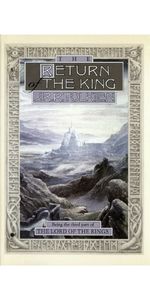
Immerse yourself in Middle-earth with J.R.R. Tolkien’s classic high fantasy masterpieces behind the films... This special 50th anniversary edition includes three volumes of The Lord of the Rings ( The Fellowship of the Ring , The Two Towers , and The Return of the King ), along with an extensive new index―a must-own epic fantasy tome for old and new Tolkien readers alike. One Ring to rule them all, One Ring to find them, One Ring to bring them all and in the darkness bind them. In ancient times the Rings of Power were crafted by the Elven-smiths, and Sauron, the Dark Lord, forged the One Ring, a magic ring of immense power, filling it with his own power so that he could rule all others. But the One Ring was taken from him, and though he sought it throughout Middle-earth, it remained lost to him. After many ages it fell by chance into the hands of the hobbit Bilbo Baggins. From Sauron’s fastness in the Dark Tower of Mordor, his power spread far and wide. Sauron gathered all the Great Rings to him, but always he searched for the One Ring that would complete his dominion. When Bilbo reached his eleventy-first birthday he disappeared, bequeathing to his young cousin Frodo the Ruling Ring and a perilous quest: to journey across Middle-earth, deep into the shadow of the Dark Lord, and destroy the Ring by casting it into the Cracks of Doom. The Lord of the Rings , a timeless adventure novel, tells of the great quest undertaken by Frodo and the Fellowship of the Ring: Gandalf the Wizard; the hobbits Merry, Pippin, and Sam; Gimli the Dwarf; Legolas the Elf; Boromir of Gondor; and a tall, mysterious stranger called Strider. J.R.R. Tolkien (1892-1973), beloved throughout the world as the creator of The Hobbit , The Lord of the Rings , and The Silmarillion , was a professor of Anglo-Saxon at Oxford, a fellow of Pembroke College, and a fellow of Merton College until his retirement in 1959. His chief interest was the linguistic aspects of the early English written tradition, but while he studied classic works of the past, he was creating a set of his own. But can a simple hobbit resist the corrupting power of the One Ring and succeed where great warriors have failed? Review: 21st Century Ahistorical Bibliophilia: Almost without peer, and the flaws have been been exaggerated in number and degree - Two points to clarify about the most popular single-volume LOTR editions: 1) The 1991 single-volume Alan Lee-illustrated edition is the "centenary" edition, commemorating Tolkien's 100th birthday (cf. "centenarian") . The "centennial" edition won't be published until 2054, which will be the 100th anniversary of the original publication of Lord of the Rings. This is a very well designed and well printed/bound edition, built to last and beatufil. Its only fault is the absence of fold-out maps (it has the black and white maps printed in sections, often seen in paperback editions). 2) The reason for the broken type in the 1974 red leatherette "Collector's Edition" (and the occurrences of this number on the order of 1 or 2 characters on every 50th page or so) is more likely that the source text from which the negatives/plates were made and this edition printed was itself flawed and originally was some form of letterpress metal type, probably Monotype [a more 'modern' version of the old LinoType system], though depending on the date of that setting [up to mid-'60s, or even later] it may have been hand-composed. All metal type gets re-used, and becomes worn and some of it cracked/chipped over time. There were many books reprinted in this way through the early '80s (and a few publishers, such as Lindsay Books, of long out-of-print, mostly public-domain or 'gray rights' titles, still do this). The problem is unlikely to have been caused by faults in photo-typesetting strips or process-camera negs in 1973 or so (when this LOTR Collector's Edition was first printed) since that process was a fully mature, climax technology by then, and quality control was simply outstanding (this was due to that extinct beast, the unionized master-printer, especially at Houghton Mifflin, a publisher with a very large academic textbook list, and an industry reputation for quality production; just look at any ten trade hardbacks circa 1973 and earlier, and compare any element of quality to any ten current titles and it's clear the the technology and practice of printing and book binding peaked long ago, and nothing of newer technology, especially computer technology has served the interest of producing better made books, quite the opposite. 2007 tech only makes it faster and cheaper, nothing else. Remember also that it was the Allen & Unwin type-compositors who introduced virtually all the spelling and diction errors in both the 1st and 2nd editions, some of which have only finally been fixed in the 2004-05 50th Anniversary edition; and these were errors mostly such as 'dwarves' being "corrected" to 'dwarfs', 'elven' to 'elfin', and many others, primarily linguistic, along those lines; these would have been proper corrections with any author other than Tolkien, of course.) As for the notion that photo-reproduction is at all like printing a Word document on a laser printer, then scanning it back into a computer as a JPEG or GIF image file, and finally printing it again, that is a facile and plainly inaccurate comparison. In short, unless one starts with a bitmap or similar low quality computer 'font', prints on low-brightness (<70) recycled paper via a cheap ink-jet printer, scans using a 75-by-75 dpi setting via low-end scanning hardware and software, and repeats printing as above, the result will certainly be nothing so poor as Jeff Sun describes in his review. Photo-reproduction via PC and peripherals or via process-camera, strips, and offset printing, can easily and does commonly achieve excellent results, provided the equipment is of first quality and the operator is skilled. If anyone is obsessed enough to try this (as I clearly am), one fairly reliable way to tell whether a book is printed (at some stage) from some form of metal type is to use at least a 20x loupe and examine the vertical straight edges (particularly of upper N's, T's, L's, and E's) for irregularity. Metal type degrades in miniscule degrees after the first few hundred impressions, and will show this by cracking/splitting/chipping/warbling/bending and otherwise appearing NOT straight, sharp, and crisp (especially machine-set monotype/linotype which was all lead/tin, since it was melted down repeatedly; hand-set type has antimony and sometimes manganese in it, which makes it much harder to start and also casts more sharply; parts of letters break off but usually don't deform). It's a challenge to tell these apart, since photo-reproduction of letterpress can be hard to distinguish from original letterpress printing, if the latter is done by a highly skilled compositor and press operator. Some letterpress books show the impression of the type on the page, like a light embossing, from the force of the type striking the stock. Really good printing avoids this. So, if you have a book without this feature that does show feathering, breaks, waviness, etc. it may be either letterpress or photo-repro of LP, but if these traits are present it is almost certain metal type was used at some point in the life of the typesetting. Two caveats to even to this: feathering alone does not definitely mean deformed metal type. Feathering,, or little veins and stream-like projects away from the character is often caused by excessive inking and watery ink, and also by cheap papers that are unsized (meaning a starch like substance is added during the paper's manufacture to prevent feathering and bleedthrough; newsprint is unsized and you can see how feathering works buy lightly touching a fountain pen to a piece of it for a minute or so). The other caveat is that some computer fonts, especially some high end ones for MAC typesetting systems, have been photographically captured/reproduced from books printed mostly before 1800, and their designers often deliberately retain some of the source type's imperfections (which are due mostly to the more primitive metallurgy of that era) to achieve a particular design effect. You might be surprised how much theory and psychology underlies type-design and typography; there is a lot. Need a dissertation topic? This has become, I see now, a rant, and a really long one. First as a reader, then as a writer, then as apprentice in a letterpress print shop and bindery, I've always held the book as art-object or craft-work in very nearly as high esteem as the words contained within. I do think these issues are worth some ink, and I expect (or hope) that those interested in fine editions such as this so-called "Collector's " (Ugh! I so hate that term, it's like "deluxe" or "premier" and is mildly patronizing to the reader/buyer) edition of LOTR might also find at least some of the above ramble of interest and use. I do regard this red leatherette slipcased edition (ISBN 0-39-519395-8) as my favorite. It was this edition in which I first read LOTR, and though the Centenary hardcover and the HC 50th Anniversary editions (slipcased US and UK, different designs, both excellent) are on the whole and in most particulars better printed and bound, this edition is a nostalgia item for me. I also very much like the red binding, evocative as it is of the "Red Book of Westmarch," the foil-stamping on the spine, of the White Tree of Gondor, (which must be by either Pauline Baynes or by Tolkien himself) is a delight, and the two color printing, in spite of the ocassional bad character and slightly inconsistent inking, makes me feel like I'm reading an incunabulum. All of these speak across from the old world, though perhaps very long after the Third Age had concluded. I recommend it, highly and without reservation, even to a casual collector, especially now since it has recently gone out of print(ca. 2003-2005, around the time the slipcased, black bonded-leather, US 50th Anniversary edition [ISBN 0-618-51765-0] was published), and is very unlikely to be reissued. It (the Red) listed for $75, and desertcart last sold new copies for $47.50 last January. Now however, fine, used copies are nearing the original list price for the new, and new copies are nearing $100, and very hard to find. Buy one now, as soon as you find one available fine or better. Review: A long time coming, but.... - First: the headline does NOT refer to the time this particular item took to get here once ordered. I refer to the fact that such an edition is long overdue. In the years between my first reading LotR, I have picked up various editions, including the Silver Anniversary and the single-volume, "red leather" edition, etc., as well as various books of Tolkien's art. It does add quite a new dimention to finally see the appropriate pieces of his art in their places with the narrative. That alone would make this a worthy addition to any Tolkien lover's library. Beyond that, the physical production of the volume is a delight in itself. There are videos on desertcart which deal with those; and they can cover them much more eloquently than I. My one complaint is that I note a problem with the actual printing in a spot or two... the one which stands out is on p. 6 of the prologue, where a couple of lines are at points so faint that one is virtually missing, while the other is occasionally difficult to decipher. This is quite likely simply a problem in the manufacture which affected only a few copies, but it is a bit disappointing. The lines in question SHOULD read: (the problem portions in brackets): "[nothing] that lived, they were dougty at [bay,] and at need could still [handle arms. They shot well with a bow, for they were keen-eyed] and sure at the mark. Not only with bows and arrows. If any Hobbits stoop[ed for] a stone, it was well to get quickly under cover, as all trespassing beasts knew very well." A minor flaw for one with other copies of the book to refer to; but for someone owning ONLY this copy, it could be more than annoying. I have not sat and read the novel (NOT "trilogy", which is a different thing) through, but this is the flaw which stands out most to me at this point. Otherwise, I am very pleased with the copy I received, and consider it a valuable asset to my library. I look forward to the forthcoming edition of "The Hobbit" donein the same manner, as I also find the similar edition of "The Silmarillion" (a personal favorite of mine among Tolkien's writings) an exquisite piece of work. I heartily endorse the publication of these volumes, as they do form a rich subset to be enjoyed on a variety of levels for those who value the man's writing; and, as someone who has not only read the major works dealing with Middle-earth (The Silmarillion, The Hobbit, The Lord of the Rings, Unfinished Tales) several times over, but also found the "History of Middle-earth" a fascinating experience, and has greatly enjoyed even the minor ventures into that realm, as well as a host of his other works, I feel I can certainly speak confidently in the matter. It is the culmination of a wish no few of us have had for some decades now -- at least since the original publication of "Pictures by J. R.R. Tolkien", if not earlier -- but it has proven well worth the wait.




| Best Sellers Rank | #20,262 in Books ( See Top 100 in Books ) #15 in TV, Movie & Game Tie-In Fiction #28 in Folklore (Books) #31 in Dragons & Mythical Creatures Fantasy (Books) |
| Customer Reviews | 4.8 out of 5 stars 13,164 Reviews |
W**E
21st Century Ahistorical Bibliophilia: Almost without peer, and the flaws have been been exaggerated in number and degree
Two points to clarify about the most popular single-volume LOTR editions: 1) The 1991 single-volume Alan Lee-illustrated edition is the "centenary" edition, commemorating Tolkien's 100th birthday (cf. "centenarian") . The "centennial" edition won't be published until 2054, which will be the 100th anniversary of the original publication of Lord of the Rings. This is a very well designed and well printed/bound edition, built to last and beatufil. Its only fault is the absence of fold-out maps (it has the black and white maps printed in sections, often seen in paperback editions). 2) The reason for the broken type in the 1974 red leatherette "Collector's Edition" (and the occurrences of this number on the order of 1 or 2 characters on every 50th page or so) is more likely that the source text from which the negatives/plates were made and this edition printed was itself flawed and originally was some form of letterpress metal type, probably Monotype [a more 'modern' version of the old LinoType system], though depending on the date of that setting [up to mid-'60s, or even later] it may have been hand-composed. All metal type gets re-used, and becomes worn and some of it cracked/chipped over time. There were many books reprinted in this way through the early '80s (and a few publishers, such as Lindsay Books, of long out-of-print, mostly public-domain or 'gray rights' titles, still do this). The problem is unlikely to have been caused by faults in photo-typesetting strips or process-camera negs in 1973 or so (when this LOTR Collector's Edition was first printed) since that process was a fully mature, climax technology by then, and quality control was simply outstanding (this was due to that extinct beast, the unionized master-printer, especially at Houghton Mifflin, a publisher with a very large academic textbook list, and an industry reputation for quality production; just look at any ten trade hardbacks circa 1973 and earlier, and compare any element of quality to any ten current titles and it's clear the the technology and practice of printing and book binding peaked long ago, and nothing of newer technology, especially computer technology has served the interest of producing better made books, quite the opposite. 2007 tech only makes it faster and cheaper, nothing else. Remember also that it was the Allen & Unwin type-compositors who introduced virtually all the spelling and diction errors in both the 1st and 2nd editions, some of which have only finally been fixed in the 2004-05 50th Anniversary edition; and these were errors mostly such as 'dwarves' being "corrected" to 'dwarfs', 'elven' to 'elfin', and many others, primarily linguistic, along those lines; these would have been proper corrections with any author other than Tolkien, of course.) As for the notion that photo-reproduction is at all like printing a Word document on a laser printer, then scanning it back into a computer as a JPEG or GIF image file, and finally printing it again, that is a facile and plainly inaccurate comparison. In short, unless one starts with a bitmap or similar low quality computer 'font', prints on low-brightness (<70) recycled paper via a cheap ink-jet printer, scans using a 75-by-75 dpi setting via low-end scanning hardware and software, and repeats printing as above, the result will certainly be nothing so poor as Jeff Sun describes in his review. Photo-reproduction via PC and peripherals or via process-camera, strips, and offset printing, can easily and does commonly achieve excellent results, provided the equipment is of first quality and the operator is skilled. If anyone is obsessed enough to try this (as I clearly am), one fairly reliable way to tell whether a book is printed (at some stage) from some form of metal type is to use at least a 20x loupe and examine the vertical straight edges (particularly of upper N's, T's, L's, and E's) for irregularity. Metal type degrades in miniscule degrees after the first few hundred impressions, and will show this by cracking/splitting/chipping/warbling/bending and otherwise appearing NOT straight, sharp, and crisp (especially machine-set monotype/linotype which was all lead/tin, since it was melted down repeatedly; hand-set type has antimony and sometimes manganese in it, which makes it much harder to start and also casts more sharply; parts of letters break off but usually don't deform). It's a challenge to tell these apart, since photo-reproduction of letterpress can be hard to distinguish from original letterpress printing, if the latter is done by a highly skilled compositor and press operator. Some letterpress books show the impression of the type on the page, like a light embossing, from the force of the type striking the stock. Really good printing avoids this. So, if you have a book without this feature that does show feathering, breaks, waviness, etc. it may be either letterpress or photo-repro of LP, but if these traits are present it is almost certain metal type was used at some point in the life of the typesetting. Two caveats to even to this: feathering alone does not definitely mean deformed metal type. Feathering,, or little veins and stream-like projects away from the character is often caused by excessive inking and watery ink, and also by cheap papers that are unsized (meaning a starch like substance is added during the paper's manufacture to prevent feathering and bleedthrough; newsprint is unsized and you can see how feathering works buy lightly touching a fountain pen to a piece of it for a minute or so). The other caveat is that some computer fonts, especially some high end ones for MAC typesetting systems, have been photographically captured/reproduced from books printed mostly before 1800, and their designers often deliberately retain some of the source type's imperfections (which are due mostly to the more primitive metallurgy of that era) to achieve a particular design effect. You might be surprised how much theory and psychology underlies type-design and typography; there is a lot. Need a dissertation topic? This has become, I see now, a rant, and a really long one. First as a reader, then as a writer, then as apprentice in a letterpress print shop and bindery, I've always held the book as art-object or craft-work in very nearly as high esteem as the words contained within. I do think these issues are worth some ink, and I expect (or hope) that those interested in fine editions such as this so-called "Collector's " (Ugh! I so hate that term, it's like "deluxe" or "premier" and is mildly patronizing to the reader/buyer) edition of LOTR might also find at least some of the above ramble of interest and use. I do regard this red leatherette slipcased edition (ISBN 0-39-519395-8) as my favorite. It was this edition in which I first read LOTR, and though the Centenary hardcover and the HC 50th Anniversary editions (slipcased US and UK, different designs, both excellent) are on the whole and in most particulars better printed and bound, this edition is a nostalgia item for me. I also very much like the red binding, evocative as it is of the "Red Book of Westmarch," the foil-stamping on the spine, of the White Tree of Gondor, (which must be by either Pauline Baynes or by Tolkien himself) is a delight, and the two color printing, in spite of the ocassional bad character and slightly inconsistent inking, makes me feel like I'm reading an incunabulum. All of these speak across from the old world, though perhaps very long after the Third Age had concluded. I recommend it, highly and without reservation, even to a casual collector, especially now since it has recently gone out of print(ca. 2003-2005, around the time the slipcased, black bonded-leather, US 50th Anniversary edition [ISBN 0-618-51765-0] was published), and is very unlikely to be reissued. It (the Red) listed for $75, and Amazon last sold new copies for $47.50 last January. Now however, fine, used copies are nearing the original list price for the new, and new copies are nearing $100, and very hard to find. Buy one now, as soon as you find one available fine or better.
J**N
A long time coming, but....
First: the headline does NOT refer to the time this particular item took to get here once ordered. I refer to the fact that such an edition is long overdue. In the years between my first reading LotR, I have picked up various editions, including the Silver Anniversary and the single-volume, "red leather" edition, etc., as well as various books of Tolkien's art. It does add quite a new dimention to finally see the appropriate pieces of his art in their places with the narrative. That alone would make this a worthy addition to any Tolkien lover's library. Beyond that, the physical production of the volume is a delight in itself. There are videos on Amazon which deal with those; and they can cover them much more eloquently than I. My one complaint is that I note a problem with the actual printing in a spot or two... the one which stands out is on p. 6 of the prologue, where a couple of lines are at points so faint that one is virtually missing, while the other is occasionally difficult to decipher. This is quite likely simply a problem in the manufacture which affected only a few copies, but it is a bit disappointing. The lines in question SHOULD read: (the problem portions in brackets): "[nothing] that lived, they were dougty at [bay,] and at need could still [handle arms. They shot well with a bow, for they were keen-eyed] and sure at the mark. Not only with bows and arrows. If any Hobbits stoop[ed for] a stone, it was well to get quickly under cover, as all trespassing beasts knew very well." A minor flaw for one with other copies of the book to refer to; but for someone owning ONLY this copy, it could be more than annoying. I have not sat and read the novel (NOT "trilogy", which is a different thing) through, but this is the flaw which stands out most to me at this point. Otherwise, I am very pleased with the copy I received, and consider it a valuable asset to my library. I look forward to the forthcoming edition of "The Hobbit" donein the same manner, as I also find the similar edition of "The Silmarillion" (a personal favorite of mine among Tolkien's writings) an exquisite piece of work. I heartily endorse the publication of these volumes, as they do form a rich subset to be enjoyed on a variety of levels for those who value the man's writing; and, as someone who has not only read the major works dealing with Middle-earth (The Silmarillion, The Hobbit, The Lord of the Rings, Unfinished Tales) several times over, but also found the "History of Middle-earth" a fascinating experience, and has greatly enjoyed even the minor ventures into that realm, as well as a host of his other works, I feel I can certainly speak confidently in the matter. It is the culmination of a wish no few of us have had for some decades now -- at least since the original publication of "Pictures by J. R.R. Tolkien", if not earlier -- but it has proven well worth the wait.
K**S
This is a beautiful book worth every penny
This book is worth every cent 💜 the art is amazing and it comes with two amazingly detailed separate maps. I had no idea it came with the maps when I bought it, and I’m so happy it does. The art is from Tolkien’s own work and really helps paint middle earth in a persons mind the way Tolkien meant it too. The extra add ons in the back of the book help explain characters a little bit more and answers some questions Tolkien would often get from his early readers. The dust sleeve is based on his original art for the books and the actual cover is just as pretty. This book is going to be treasured by me for the rest of my life I’m so happy and don’t regret getting this book for a second (getting it during a great sale just made it an even better purchase)
D**D
A masterpiece that may never be topped
Lord of the Rings is one of the greatest literary contributions to mankind. I have yet to see a book, or set of books, written as well with the amount of depth that Tolkien has put into this work. I'm first going to go through address each aspect of The Lord of the Rings, critiquing each of them as I go. The story is can both be described as very complex, or very simple. On this alone, I would give the book five stars. The entire story is summed up in one sentence: How Frodo Baggins rid Middle-earth of the Ring of Power. Then again, there is far more depth to it than that. There are literally hundreds of subplots, both implied and obvious. There are subplots involving main characters like Aragorn and Gandalf, and others including stories that go only mentioned briefly, like that of the balrog, or Treebeard, dwarves, and elves. Stories are alluded to and told that only hint at the depth of the world, Middle-earth, that Tolkien has created. The plot proceeds following a few storylines, the ultimate goal being to destroy the Ring of Power in Mount Doom. Along the way we meet a myriad of other characters, from half-main characters, like Eomer, to ones that are only touched on, like a few orcs. The story here is just so big, that it can't even be contained in the pages that J.R.R. Tolkien has used to write it. The interesting fact is that despite the complexity of the story, Tolkien presents it in such a way that all of the different aspects of the story flow together fluidly. So much so that it seems like the story is relatively simple. And that only continues to prove that Tolkien really knows how to write a good story. That brings me to my second point. The characters. Because there are so many stories involved in this one big story, and so many characters involved, you'd think that there wouldn't be much time for characterization, but it's just the opposite. Tolkien takes the time to develop each and every character involved, and the hinted stories and subplots only go to enhance this. With all of the back stories, we get to know more about the characters, and what they do later on in the book causes them to stay true to who they are, based on what they've already done. Suffice to say, Tolkien is a master of characterization. Moving onto Tolkien's writing style. It is absolutely flawless. His descriptions are masterful, and he doesn't fall into any of the usual faults that many authors fall into. Tolkien doesn't stop the action to use descriptions; he uses the action to channel the descriptions. His writing flows extremely well, and he moves the story steadily along while keeping consistent pacing, which is a very important aspect of any story. I really like how Tolkien allows the story to enhance his writing style. The grand landscapes, the epic battles. He captures the very essence of Middle-earth. That's not to say he only writes on a grand scale. His writing is nearly perfect down to the simple scenes that involve interaction between characters. I especially like the relationship between Sam and Frodo. Tolkien goes from long passages of beautiful descriptions, to quick sentences of action. He is just as adept at writing lengthy scenes where little action occurs as he is at bringing dramatic battle scenes to life. That brings me to how Tolkien handles dialogue. There are many passages where Tolkien uses long passages in dialogue to convey information while using only simple dialogue tags to portray the action. Some may say that the long passages are boring and detract from the story, but I say it only goes to enhance the story and create even better character development. Each character has his or her own voice, and each talk differently. This added with the action taking place in the short sentences between dialogue allows the scene to flow easily with the action never stopping while we still get to know whatever information needs to be conveyed. Tolkien writes with a certain depth that I haven't seen in many other authors. Very few people can capture the essence of a story like he could. Tolkien had a gift, and he utilized it well. He wrote from his heart, and when authors write from their true feelings, it comes out more real than someone who, say, writes simply for money. The book as a whole is simply an almost flawless example of how books should be written. Not only does Lord of the Rings have just a good story and characters, Tolkien created numerous biblical parallels. This makes a work of fiction really come alive and feel much more relevant. Lord of the Rings is the type of book that can be read numerous times. Whoever has not read Lord of the Rings should begin right now. It's worth the time put into it. I see no way for this to disappoint, if you are someone who knows a good story when you see one. There's a reason this is a classic and has gained worldwide fame and approval.
J**E
Great book. Beautiful pictures.
Beautiful book. Perfect size to hold and to put on the shelf. Looks amazing. My 7 and 9 year old children have really enjoyed listening to it as I read it to them. Excellent series. Highly recommend!
S**O
CD Audiobook and Rob Inglis...Spectacular so far!!
I just got the CD audiobook version of the Lord of the Rings Complete Gift Set, unabridged. It contains 46 CDs (I think it was 46?) and contains all 3 books in the Lord of the Rings series (Fellowship of the Ring, Two Towers, Return of the King). I double checked that all the discs worked and then listened to the first 3 chapters. I'm super excited to say the least! I won't try to discuss the actual books themselves as I don't feel qualified at this point and that discussion is probably better suited for a different venue. But this audiobook version is wonderful. Rob Inglis does a great job narrating and really makes the characters come alive. His voice is perfectly suited to match the mood of the book (in my opinion at least) and he does a great job of not droning on. He even does a darn good job of slightly changing voices for different characters. A tough chore I would think. His accent matches the feel of the story and its nice to hear him pronounce some of the harder names in the book (both character and location names). What else can I say? If your a Tolkien/LoTR fan and are in the market for an audiobook version...this is it. 100% perfect! You will not be disappointed. EDIT (4/5/2012): I've now completed the first book (yes, it took me a long time but I only listen to small sections of the book at a time while at work) and I am more impressed now than ever with this recorded version! Rob Inglis truly brings this book to life and I cannot rave enough about how enjoyable it is to hear him read this story. His character voices and moods are consistent throughout the book which really adds to the feel of the story. Rob's voice combined with his wonderful characterization pulls me into the story and I have caught myself more than once actually moving in sync with the actions of the book. For instance, Rob will describe how Frodo turned his head quickly to catch the stare of Boromir and because I have been so drawn into his reading, I have caught myself moving my head to the side as if I was looking to meet Boromir's stare. This may sound stupid or corny...in fact it sounds kinda corny to me...but I can honestly say I have never been this engrossed in a story before and it's really cool stuff. Another stand-out point in my opinion is that Rob sings the songs throughout the book as they come up and he does a fairly good job of staying in character. I'm not particularly impressed by or excited about the singing but since the songs are part of the story, it's nice that he sings the songs as opposed to just speaking the lyrics. Again, I give the Rob Inglis, unabridged audiobook version of the LOtR trilogy 5+ stars! It's rare for me to say this (just ask my wife) but this audiobook is everything I wanted it to be and more. I paid my money and I feel I got much more than what I expected to get. In my opinion, the LoTR story is one of the most epic good vs. evil story lines of all time...possibly the best ever! And Rob Inglis does an epic job of bringing this story to life. I would definitely recommend this audiobook to anyone...especially LoTR fans. It is well worth the price and I don't think any LoTR, fantasy or fiction fan would be disappointed. EDIT (11/15/2012): I just completed the second book, "The Two Towers", and have started the third book. And WOW!! The second book was better than the first! Didn't think that my enjoyment with this set would grow over time but it has. Looking back, I got this set circa 10/2011 and since then I have only gained more and more appreciation for the set. My enjoyment has only grown over time and I feel it's even a better deal now than it was back then. The entertainment value is through the roof. My advice...don't hesitate...save money if you have to and buy this set. It will be one of your best purchases ever!!!
S**S
Excellent book, poor cover design
A lovely compilation volume with a great forward, prologue, appendices and indexes. My complaint is only with the cover. After only about a hundred pages, the gold lettering came off the front and spine onto my skin. Of course it doesn’t make the read any less epic, but the look of the book is now disappointing.
A**R
great kindle edition
A great kindle edition; no flaws or defects. Has helpful appendices and index as well. Not to mention, probably my favorite book of all time!
A**A
Beautiful edition, absolutely loved it!
This box set is spectacular and will greatly appeal to the fans of the series like it did to me. This edition is very beautiful and comes with maps of middle earth and illustrations. Though it is on the pricier side, I don’t have any regrets about purchasing this!
D**C
Beautiful edition
Note: This review is for "The Lord Of The Rings [Deluxe Illustrated Edition]" This is a beautiful editon of the classic series. I had some concerns after reading some reviews, and also as this was originally listed as being limited to 5,000 prints worldwide, along with some delivery issues (copies being damaged in transit) For me in Australia, the book arrived well packaged and undamaged. The details page show that the book was printed in Italy. I have not had a chance to read all the pages yet to see if there are any smudges etc. as other earlier reviewers had noted, but from what I can see so far, there are no issues. Certainly this is a very collectible edition, for me personally someone that first read the series 40 or so years ago. The US 'special edition' is more expensive, but appears to be the same thing. Glad to have this AU copy much cheaper, and same quality.
S**H
Perfekt
Wunderschöne Ausgabe
F**G
Wonderful edition!!! My son loved it!!
The edition, illustrations and maps included are fantastic, my son, who is a Tolkien fan, loved it and is devouring it again!!! Highly recommended.
M**.
Perfeição tomou forma de livro
Perfeita obra. Um item de qualidade superior, que abrilhanta qualquer coleção. Para os fans de Tolkien, contém inúmeras ilustrações exclusivas, rascunhos do autor, relatos do filho. Simplesmente perfeito. A gramatura das páginas é menor do que o padrão, mas isso é óbvio, já que é um único livro contendo os três volumes de LOTR (aprox 1000 pág). Único problema que eu tive com o livro é decidir entre tirar ou não da embalagem.
Trustpilot
2 weeks ago
3 days ago