
![Blue Is the Warmest Colour [Region B] (English subtitles)](https://m.media-amazon.com/images/I/71d1BXHDl6L._AC_SL3840_.jpg)


Desertcart purchases this item on your behalf and handles shipping, customs, and support to Senegal.
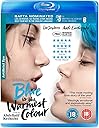
At 15, Adele doesn't question it: girls go out with boys. Her life is changed forever when she meets Emma, a young woman with blue hair, who will allow her to discover desire, to assert herself as a woman and as an adult. In front of others, Adele grows, seeks herself, loses herself, finds herself. Review: A typically slow, emotional and beautiful French film - What is it with the French? If Hollywood were presented with this script it would be cut down to 90 minutes, the intensity would be lost and there would be plot holes all over the place. Thankfully, French cinema does no such butchery. Lets get this out of the way - the sex scene. A lot has been made of the lengthy scene in which the two female leads are involved. It is presented in a way which only continental European cinema can do - honest, unflinching, 'real and beautiful. It is very cleverly shot and is incredibly realistic. The two are clearly giving it all they can. Aside from that, in context it makes perfect sense. If the film was missing this scene, the slow build up of the sexual tension in any new relationship would be lost. This scene is the culmination of that, and happens a lot earlier than you expect. The rest of the film is equally engrossing. You almost feel as if you're taking the journey with Adele, all of her emotions, personality, mannerisms... By the end of the film (and it is one hell of an ending) you can feel exactly how she feels. Particularly if you've ever been in such an intense, passionate and sometimes explosive relationship. As for the blu-ray quality - it is excellent. I cant imagine seeing this in anything less than HD! The sound is crisp and clear. So much so that you can sometimes hear the characters breathing - which is how life is. My only grip would be the massive increase in volume during the club scenes - the music is far too loug so be ready for it. Overall, an amazing film with stellar performances. If (as rumour has it) the director was brutal with the actors, the end result show it in spectacular fashion. Such powerful performances from relative newcomers is impressive. I don't often say this, but my god this is good. Review: Why this is truly unmissable... - This is one of the most thought provoking films I have ever watched. Watch it because it is truly unmissable. There are some quite 'graphic' sexual scenes, which would probably account for its 18 rating, but it certainly isn't pornographic - the scenes are there in order to forward the plot - this story is essentially character driven, so the details are necessary and not gratuitous. However, if you are easily embarrassed, it might not be a film to watch with a bunch of friends on a Saturday night and definitely not with your parents. Like most of the French films [of the same genre] that I've watched, this one doesn't fail to convey that raw emotion and those range of emotions which highlight the human condition. French film writers/makers seem to have a unique talent for describing concepts such as fear, love and mortality without needing to resort to dialogue that usually ends up being cliched and thus, falls short of achieving this. This truly is a refreshing change from the usual sentimental and empty platitudes that Hollywood resorts to in about 95% of its films. Heartbreaking, beautiful and eternal......


| Customer Reviews | 4.3 out of 5 stars 1,939 Reviews |
A**B
A typically slow, emotional and beautiful French film
What is it with the French? If Hollywood were presented with this script it would be cut down to 90 minutes, the intensity would be lost and there would be plot holes all over the place. Thankfully, French cinema does no such butchery. Lets get this out of the way - the sex scene. A lot has been made of the lengthy scene in which the two female leads are involved. It is presented in a way which only continental European cinema can do - honest, unflinching, 'real and beautiful. It is very cleverly shot and is incredibly realistic. The two are clearly giving it all they can. Aside from that, in context it makes perfect sense. If the film was missing this scene, the slow build up of the sexual tension in any new relationship would be lost. This scene is the culmination of that, and happens a lot earlier than you expect. The rest of the film is equally engrossing. You almost feel as if you're taking the journey with Adele, all of her emotions, personality, mannerisms... By the end of the film (and it is one hell of an ending) you can feel exactly how she feels. Particularly if you've ever been in such an intense, passionate and sometimes explosive relationship. As for the blu-ray quality - it is excellent. I cant imagine seeing this in anything less than HD! The sound is crisp and clear. So much so that you can sometimes hear the characters breathing - which is how life is. My only grip would be the massive increase in volume during the club scenes - the music is far too loug so be ready for it. Overall, an amazing film with stellar performances. If (as rumour has it) the director was brutal with the actors, the end result show it in spectacular fashion. Such powerful performances from relative newcomers is impressive. I don't often say this, but my god this is good.
M**M
Why this is truly unmissable...
This is one of the most thought provoking films I have ever watched. Watch it because it is truly unmissable. There are some quite 'graphic' sexual scenes, which would probably account for its 18 rating, but it certainly isn't pornographic - the scenes are there in order to forward the plot - this story is essentially character driven, so the details are necessary and not gratuitous. However, if you are easily embarrassed, it might not be a film to watch with a bunch of friends on a Saturday night and definitely not with your parents. Like most of the French films [of the same genre] that I've watched, this one doesn't fail to convey that raw emotion and those range of emotions which highlight the human condition. French film writers/makers seem to have a unique talent for describing concepts such as fear, love and mortality without needing to resort to dialogue that usually ends up being cliched and thus, falls short of achieving this. This truly is a refreshing change from the usual sentimental and empty platitudes that Hollywood resorts to in about 95% of its films. Heartbreaking, beautiful and eternal......
S**I
"Present, rarely lingering and accomplished..."
Tunisian-French screenwriter, producer and director Abdellatif Kechiche`s fifth feature film which he co-wrote with screenwriter Ghalia Lacroix, is a loose adaptation of a graphic novel from 2010 by French graphic novelist and visual artist Julie Maroh. It premiered In competition at the 66th Cannes International Film Festival in 2013, was screened in the Special Presentations section at the 38th Toronto International Film Festival in 2013, was shot on locations in France and is a France-Belgium-Spain co-production which was produced by producers Olivier Théry-Lapiney and Laurence Clerc. It tells the story about a fifteen-year-old French girl named Adèle who lives with her mother and father in a house in a city of French Flanders. Whilst interpreting parts of a novel as an obligatory part of her secondary education where one of the central themes in the book is love at first sight, Adèle is encouraged by her close circle of friends to acquaint a fellow student named Thomas whom has expressed his interest in her. Distinctly and precisely directed by Tunisian-French filmmaker Abdellatif Kechiche, this finely paced fictional tale which is narrated from multiple viewpoints though mostly from the main character`s point of view, draws a gripping portrayal of an aspiring school teacher from a working-class family whom after having befriended a same-aged boy encounters an intellectual painter who studies at an academy called Beaux Arts named Emma. While notable for its atmospheric and variegated milieu depictions, reverent cinematography by cinematographer Sofian El Fani, production design by production designer Julia Lemaire and use of sound, colors and light, this character-driven and narrative-driven story about how interpersonal relations are affected by social injustice and social differences and how human beings relate to their first experience of loneliness, where acting is taken to an almost hazardous level of emotional realism, which is more externalized than internalized and where a daughter whom has just discovered that she is attracted to a woman enters a new romance without guarding her emotions, depicts an increasingly heartrending study of character. This memorably atmospheric, eloquently humerous, sociologically romantic and ultimately authentic coming-of-age indie love-story which is set in a city in France in the late 20th century, which envisages three of the finest hours of fictional love in 2013, where the emphasis on aesthetics nearly precedes the human aspects and where a high school student who uncritically embraces what life has to offer her is excluded by her friends as a consequence of making a decision which at the time seems like the most honest thing to do for her and introduced to a new lifestyle which makes her feel misplaced, is impelled and reinforced by its cogent narrative structure, substantial character development, subtle continuity, efficient film editing, timely use of music, involving dialog, crucial interplay and the strikingly excruciating acting performances by French actresses Léa Seydoux and Adèle Exarchopoulos. A present, rarely lingering and accomplished narrative feature which gained, among numerous other awards, the Palme d`Or at the 66th Cannes Film Festival in 2013.
I**S
Luminous,
Caution, some minor plot reveals. 1. First Impressions. Yes, this really is a terrific film but there is one thing about it which makes it, at times, a problematic watch. There is no clear time scale or indication of how much time has passed. Now this may be because of cultural indicators; there may be signifiers which are clear to a French audience but not to non-French viewers, or it may be deliberate. The only one time when the age of one of the protagonists, Adele, is stated is when it's her 18th birthday; everything else is left for the viewer to work out for themselves. It's not helped by the blurb on the DVD box which states that the age of Adele at the beginning of the film is 15 when it seems clear, to me at least and it could be my misreading, that she is in the French equivalent of the UK's sixth form and she has to be 17. I then, naturally, assumed that only a few months passed between the opening of the film and her birthday. But this may not be the case. Shortly after that, she (seemingly) goes straight from school to teaching a reception class with no indication of college in between. She is also now living with Emma. If, for no other reason though there are many others, I'm going to have to give this a second viewing to see if it becomes clearer. As the film opens Adele is in the full flush of confusing exploratory adolescence. She's in love with literature (which she's studying at school) and ideas and philosophy, and just beginning to explore her own nature, who she is becoming, though her girlfriends seem to be more interested in talking about sex. She finds a slightly older boyfriend at school and has sex with him but things don't seem to work out for reasons she's not sure of. It's around this time she sees a blue haired girl walking around hand in hand with another girl. When one of her girlfriends kisses her, Adele finds herself responding but, later, when she wants to take it further the girl says it was just a spur of the moment thing and didn't mean anything. After school, and after having had a fight with another girl who accuses her of being a lesbian which she denies, she goes to a gay bar with a male friend, wanders off as he's more interested in snogging a guy, and finds herself in a lesbian bar where she meets Emma who briefly looks after her. It isn't long (or is it? I'm not sure) before they meet up again and eventually fall in love. And that's pretty much the first half of the film. In the second half Adele and Emma are living together. Emma's painting seriously, having completed her degree in Fine Art and Adele is her muse. Adele is teaching full time. That's all you need to know about the key events and the film's structure, at least without me spoiling it for you. Now I can talk about it. And we all know why the film is so controversial so let's get to it. There are two very explicit scenes of lesbian lovemaking separated by a short gap. But if anyone is tempted to watch this film specifically for those scenes then they're wasting their money. Everyone knows you can download for free off the Net videos of girls kissing, and both softcore and hardcore lesbian porn. So, are these scenes justified? The simple answer to that is that there's no simple answer because it partly depends on how you view the film. If you are calling it a film about a lesbian romance then, I suppose, yes it is. However, that isn't what the film is about. The focus is always Adele, not Emma. It's Adele's story, the story of an intelligent working class girl trying to discover who she is and about how her experiences affect her and how she changes. Even though her long love affair with Emma forms the central core of the film it's a long way from being the whole of it. That said, it is the centrepiece and the love scenes reveal the intensity of their feelings for each other and their intense desire for each other and form a strong contrast with one scene of Adele's sex with her boyfriend. So, yes, the scenes were justified. Whether or not they were justified in being so long is another question and one I'm not going to answer. However, there is so much more to the film than that. It's a film of many nuances in which important things can be revealed by the hint of a gesture. Sensationalistic (if that's what they are) sex scenes aside, this is a low key film and actress Adele Exarchopoulos is absolutely stunning as Adele (which came first, I wonder, was the character named after the actress or was it just a coincidence?). Her performance is so convincing and naturalistic that she takes your breath away. Also, mostly makeup free throughout, she is very beautiful but again in a naturalistic way. In contrast and as a personal reaction, I didn't find Lea Seydoux (excellent though she is) as Emma anywhere near as appealing; there was just something about her face and her teeth which put me off. But, though the film covers many topics such as class, politics, sex roles, etc, it's never overt, never hammering home any message, though they may be there subtly embedded. Instead it unfolds gradually, easily over its three hour length and it never feels like three hours. Is this a classic film, deserving of all its awards? Maybe. Brilliant directing, superb acting, riveting to watch, etc. One thing I do know is that it's one which will repay repeated viewings as things I missed the first time, though they were always there in plain sight, reveal themselves and I intend to watch it again soon. 2. From Graphic Novel to Film, a second look. Okay, I bought the graphic novel by Julie Maroh mainly because I was so fascinated by the film and also frustrated by the film's confusing timeline that I thought the graphic novel might help with this and clarify my thoughts on the film. Which it did. The graphic novel begins with Emma visiting the parents of Clementine (Adele in the film) after Clementine's death. The rest is a flashback with the only narrative coming in the form of extracts from Clementine's diary (often referred to in the film but never quoted from). Other than that (plot differences aside) the structure of both is similar. The graphic novel, however, is focussed on the relationship between the two young women and is very much a work of lesbian fiction. It also provides a clearer timeline than the film, for which I was grateful, as it made it easier to understand a significant aspect of how the story developed in the film as stages were signified and the span of the story covers Clementine/Adele's life from 15 to 30. It's delicately done and I've no doubt that, as a graphic novel, it makes a substantial contribution to the genre of gay fiction, But, and I'm not underestimating its importance to that, that's all it does. Director Kechiche's film, while substantially adhering to the GN's text, turns it into a transformative experience by broadening the substance of the text into something which transcends its genre roots. It is still a film about an enduring affair between two young women but it is so much more than. The film is focussed on Clementine (now Adele) and her life beyond her problematic relationship with Emma. The demonstration she attends in the book is supporting a railway strike, in the film it is significantly a protest against cuts to education. Adele's sexuality is never really specifically defined as lesbian and she has sex with boys/men. Her inner life is explored as well as the inadequacy she feels when surrounded by Emma's arty friends and the significant contrast between her working class parents whom she keeps ignorant of her true relationship with Emma while Emma's parents happily accept her as their daughter's lover. There's been a lot of fuss over the explicit sex in the film but really, apart from the scissoring, it's not much different in terms of the amount shown in the book. The difference is, and I know this is obvious, the former consists of still images and realistic but still stylised drawn images on paper. In the film it is two real young women making love. The graphic novel consists of frozen moments, panels, in other words selected extracts of the act itself. The film depicts movement with one act flowing into another. In the graphic novel the reader accepts and appreciates the aesthetic style of what is shown. In the film there is no such distancing effect. I'm making it obvious that, as a work of art and irrespective of format, I prefer the film. Would I have preferred it had I read the graphic novel first? I like to think so, though I can hardly make a definitive statement on that, as preconceptions always colour an opinion. I can certainly understand why a gay audience would prefer the book because it is aimed directly at depicting their experience whereas the film opens it out, transcending its origins so that it speaks more directly to a wider audience. But I still think that, as an adaptation, the director has done the author proud and many people will be guided to the source material as a result.
A**R
pussy galore
This is a really long film. It does seem to go on and on and nothing really happens. There are some really long, graphic sex scenes between the two girls which are a bit disconcerting. Is this actually just soft porn with a lot of talking in between. It does end up quite sad as the Adele character really gives her all to the obviously more controlled Emma. Is it a story about artists and their muses ? A good showpiece for Lea Seydoux I think, following a trend with French actresses to get their kit off and make something provocative. She's done okay, as did Eva Green before her. Bond girls both. Result.
C**4
An imperfect masterpiece ... and all the better for it.
First things first ... the film might well be notorious for its ten minute sex scene, but there are far greater moments of intimacy - not least, the close-up image, repeated several times, of Adele asleep on her pillow, her lips apart, and dribble forming at the corner of her mouth ( mucus and mucus-like fluids being a recurring motif in this film - snot, tears, saliva, spaghetti and half-alive oysters, the latter fed to the ingenue Adele by the maturer sophisticate, Emma). Sometimes the film feels like an intellectual check-list - Sartre, Picasso and numerous French classical novelists all get name-checked. But, cliches and erotica aside, there is something deeply tender and moving about this film, and the core of this can be found in the orginal French title, "The Life of Adele, Chapters 1 and 2". For this is a film wholly about its heroine, Adele, and her uncertain journey through her early adult years. And it is Adele Exarchopoulos' stunning portrayal of Adele, in all its subtlety and complexity, that merits the film being called a masterpiece. Regardless of the controversies surrounding "Blue is The Warmest Colour", and its occasional shortcomings, viewers will have the presence of Adele lingering in their minds long after the curtains close on the final, beautiful scene.
N**N
An erotic lesbian masterpiece
I feel like a a hypocrite first of all, since I usually have no time at all for European cinema. In short, I tend to loathe it, since no films I have seen measure up, but in this case, I have the most amazing exception. It is the most erotic, beautiful, and explosively sexy lesbian film I have ever seen, and despite its three hour running time, I was totally into it and could not stop the thing to watch the rest the following night which I was going to do. The leads, particularly the gorgeous Adele Exarchopoulos are stunning. There is an emotional depth which I think is rare and the visuals are raw and dynamic. The racy love scenes took my breath away to be perfectly frank, and I wanted to see the film over and over again, which I will do. Even scenes where they are not making love, the scenes where Adele is only eating on a date and when she is talking are sexy, because she looks so sexy even when she eats and when she talks and smiles. And the scene where she is talking to another girl about another about another girl who passes having a cute ass is sexy because she plays it so well and she doesn't have a bad one herself. I Have come down hard on European cinema before and I do stand by what I think of it in general, but the one thing I have always liked about it is their total liberty and fearless attitude towards sex and nudity in films and it's always beautifully done. A film like this would never be made as good in the US, but here it is an exquisite masterpiece of lesbian filmmaking and a beautiful love story at its centre. It's a pleasure seeing these two girls making love when they get together and you really feel the passion and it is so erotic, especially after the glorious flirting and looks and eyeing up of Adele to her blue haired lover to be before. The peaceful scenery and sound also add to the viewing pleasure. If only all European films were like this, but if they were, we wouldn't appreciate the good stuff when it comes along. I would recommend anyone who is a fan of this kind of thing to check this out, since you may not have a better three hours of movie lesbianism or sexy romance to thoroughly enjoy.
T**1
Blue is the most tedious colour...
The film starts reasonably well, the sex scenes are fairly steamy but oh my God, the film is about 2 hours too long, it could have been told adequately in an hour. The only reason this won awards (in my humble opinion) is that it contained a lesbian plot and graphic lesbian sex. If this had been a heterosexual film, nobody would be praising it like they have. The scenes were put together in a clumsy fashion, instead of building on Adele's distress when the blue haired girl kicks her out, they show her crying briefly then casually cut to her not crying. Years pass between scenes with no explanation: one minute she's a schholgirl introducing the blue haired girl to her mum, who then pretends to have a boyfriend as Adele hasn't come out to her family then cut to the next scene where Adele is a teacher and they are living together. The last hour is Adele screwing up by screwing a man then regretting her cheating nature over a period of months? Years? Who can tell. I continued watching it until the end thinking something interesting might happen, but to my infinite regret, it didn't. Sadly 3 hours of my life and valuable £s were wasted on this film and I am still left waiting for the day when a dramatic lesbian film can be as good in direction, plot and acting as a straight dramatic film.
L**N
Blue is the Warmest Colour
Delicious
C**N
丸見え
しっかり男女とも見えていました。
J**Y
Grandiose Adèle!
Der Film des Regiseeurs Abdellatif Kechiche zeigt , wie der französische Originaltitel, zwei Kapitel aus dem Leben von Adèle (Adèle Exarchopoulos), einem Mädchen aus einer niederen sozialen Schicht (Kechiche spricht von Arbeiterklasse), beginnend im Alter von knapp 16 Jahren. Das Kapitel 1 beschreibt die Schülerin, die dabei ist, ihre Sexualität zu entdecken. Animiert oder eher getrieben von Klassenkameradinnen, die kaum ein anderes Thema als Sex und "Hast du schon?" haben, schläft sie mit einem Jungen, wobei ihr aber "etwas fehlte." Schon zu dieser Zeit sieht sie erstmals Emma (Léa Seydoux), eine einige Jahre ältere Kunststudentin, auffallend durch hellblau gefärbte Haare, und da wir das Thema des Filmes kennen, sehen wir schon bei dem ersten Blickkontakt der beiden, dass da Interesse oder Neugier ist. Mit einem bekennend homosexuellen Mitschüler besucht sie eine Bar, die von Schwulen und Lesben besucht wird. In der Schule wird sie von den achso aufgeklärten und erfahrenen Mitschülerinnen rücksichtslos gehänselt und beleidigt. Das Kapitel 2 beschreibt das Kennenlernen von Adéle und Emma, beginnende Zuneígung, in einer großartig von beiden Darstellerinnen, besonders von Adèle gespielten Szene sehen wir schließlich beide auf einer Wiese nebeneinander liegen, sehen den inneren Kampf und die Unsicherheit von Adèle, während Emmas Gesicht eher Erwartung widerspiegelt, wann die Freundin endlich die Initiative ergreift. Es folgen Sexszenen, die lang, sehr intensiv und leidenschaftlich explizit, aber nie genitaldetailliert gefilmt sind. Wer aks zuschauer tiefere Einblicke beim Soixante-Neuf erwartet, wird umsonst glotzen. Es folgt die Vorstellung der Freundin bei Emmas Eltern, aus der Oberschicht stammend und über die sexuelle Orientierung der Tochter informiert, wobei standesgemäß Austern geschlürft werden. Umgekehrt gibt Adèle ihre geliebte bei ihren Eltern als Nachhilfelehrerin für Philosophie aus, man ißt selbstgekochte Spaghetti mit Tomatensoße, Hie wie auch in anderen Szenen wird moniert, dass andauernd in unappetitlicher Weise der Essvorgang gezeigt werde, was ich nicht nachvollziehen kann. Es wird nicht geschmatzt oder fanfarenartig geschlürft, einzig lustig fand ich, dass die Mutter die Gabel unmittelbar oberhalb der Zinken hielt. In der kleinen Wohnung findet der Sex dann mit zugehaltenen Mündern statt. Die Beziehung verfällt schließlich in Routinem vor allen Adèle bekocht die Freundin und Gäste, Emma ist mehr die Künstlerin, anfangs missverstanden und wütend über Kritiker, Adèle ist mehr ein Anhängsel und fühlt sich mit Recht zunehmend allein gelassen. Als sie sich öfter mit einem Mann trifft, mit dem sie auch knuitscht und von ihm auch nach Hause zur gemeinsamen Wohnung gebracht wird, macht Emma ihr eine schrecklicjhe Szene. Adèle lügt zuerst nicht überzeugend, Emma wird immer wütender und schimppft sie Lügnerin und Flittchen, Adèle entschuldigt sich, bittet und bettelt und weint zum Steinerweichen, aber Emma schmeißt sie förmlich hinaus. Wieder einige Jahre später besucht Ad`le noch einmal die erste große Ausstellung der Künstlerin Emma und sieht auch zahlreiche großformafige Akte von sich, fühlt sich dann aber in den Kreisen der Künstler und Kunstkenner oder solche, die sich als solcje ausgeben und für die der Besuch eher eine gesellschaftliche Pflichtveranstaltung ist, wieder einsam und fehl am Platze. In Interviews von Regisseur, Adèle und Léa wird von einer universellen Liebesgeschichte gesprochen, das kann ich so nicht unterschreiben.Es geht schon um gleichgeschlechtliche Liebe, und das erste Kapitel, das gut ein Drittel des fast dreistündigen Filmes einnimmt, ist hauptsächlich Adèle und ihrer Selbstfindung als lesbische junge Frau gewidmet, mit all den Schwierigkeiten, die ihr die Umwelt und besonders die ach so sexuell reifen Ziegen von Klassenkameradinnen bereiten. Verständnis hat fast nur der schwule Schul- oder auch Klassenkamerad, der die Angegriffene verteidigt und andere Kleingeister in die Schranken weist. Das Liebespaar hätten auch Männer sein können wird gesagt, über Mann und Frau als Alternative wird nicht gesprochen. Mag die Idee auch richtig sein, die Aussage halte ich für ein wenig scheinheilig, der Regisseur hat, das darf er ja auch, sicher auf den Erfolg des Filmes gehofft und aus gutem Grund das Liebespaar mit zwei hübschen Frauen besetzt, ich habe massive Zweifel, ob der Film bei einem breiten Publikum mit eien Männerpaar so ein Erfolg geworden wäre. Ich will nicht für andere und schon gar nicht für alle sprechen, aber ich hätte mit einem Männerpaar Probleme insofern gehabt, dass ich nichts gegen Schwule habe, aber ganz offen, knutschende Männer sehe ich nicht gerne, da reichte schon die Szene des ersten Kapitels in der Bar. Auch das Problem des Scheitern der Beziehung an den sozialen Unterschieden (in Frankreich bzw. von Kechiche Klassenunterschiede genannt) ist hier ein Problem, aber das ist nicht universell, sondern liegt meins Erachtens mehr an Lèa, die die Geliebte in ihre Kreise nicht richtig mitnimmt. Adèle wirde Lehrerin, und sie macht ihre Arbeit mit den jüngsten Schülern schon als Praktikantin selbstsicher und gut, sie läßt sich nicht auf der Nase rumtanzen, sie hat die Kinder im Griff. Lèa ist zu sehr mit der Planung ihrer Karriere als Künstlerin beschäftigt, ihr scheint Adèle nicht so wichtig wie umgekehrt. Die Unversöhnlicjkeit nach Lèas "Betrug" ist für mich eher die Wut auf ihren Besitz, der sich nicht so verhalten hat, wie es sich für ihn geziemte, eine recht kleingeistige Einstellung, und als arrivierte Künstlerin lebt sie mit einer früheren Freundin mit Kleinkind zusammen, das sei jetzt ihre Famile. Das soll jetzt nicht kritisiert werden, zeigt nur, das sie sich von einem Bohème-Leben verabschiedet hat. Meine Interpretation ist keine Kritik an dem Film, sondern an seiner Deutung durch den Regisseur und andere Rezensenten. Kechuche sagte selber, zu Beginn der Dreharbeiten habe er nioch wenig konkrete Vorstellungen gehabt und nicht genau gewusst, wohin die Reise in den Monaten der Dreharbeiten ging. Nach anfänglicher angeblich heftiger Kritik der beiden Darstellerinnen, die angeblich nie wieder mit Kechiche arbeiten wollten, "ruderten die beiden später zurück." Das mag man als opportunistisch ansehen und unehrlich, nachdem der Film ein sensationeller Erfolg war. Wenn man bedenkt, daß die Arbeiten am Film, der übrigens chronologisch gedreht wurde, sich über Monate hinzogen und am Ende mehrere Hundert Stunden Filmmaterial gedreht waren und dann sieht, welche Intensität die beiden Frauen in ihr Spiel legen mussten, etliche Male die Sexszenen, oder die fürchterliche Szene mit dem Trennungsstreit, kann ich verszehen, dass die Schauspielerinnen psychisch ausgepowert waren. Dass dann nach dem Sensationserfolg das anders dargestellt und vielleicht auch gesehen wurde, halte ich für verständlich. Meine kritischen Anmerkungen gelten der geschilderten Wertung der Aussage des Filmes, nicht dem Film selber: "Blau ist eine warme Farbe" ist einer der großartigsten und berührendsten Filme der letzten Jahre, das liegt an einer tollen Inszenierung,die den Darstellern auch Improvisation abverlangte. aber vor allem an dem glaubwürdigen und wahnsinnig intensivem Spiel von Adèle und Léa, die immer wieder an ihre Grenzen gehen mussten. Ertmalig in der Geschichte von Cannes erhielt nicht nur der Film, sondern auch Léa Seydoux und die einige Jahre jüngere (erst 20!) Adèle Exarchopoulos in ihrer ersten Hauptrolle auch die >Goldene Palme< , und diese Entscheidung der Jury kann man nur begrüßen. Léa ist phantastisch, die wahre Hauptdarstellerin Adèle spielt einfach sensationell, nicht nur für eine Newcomerin eine der herausragendsten Darstellerleistungen überhaupt. Da ihre Rolle mehr hergab als die der Emma ist die Entscheidung, beide zu ehren, salomonisch, alles andere wäre ein Affront gewesen. Adèle wurde 2014 noch mit dem CÉSAR und dem Critic's Choice Movie Award belohnt, Léa Seydoux mit der Rolle des Bond-Girls in SPECTRE. "Blau ist eine warme Farbe" ist insbesondere dank zwei großartiger Darstellerinnen ein Film, der nicht nur die Jury von Cannes, sondern auch das Publikum und die meisten Kritiker und Rezensenten mit Recht begeistert hat. Doc Halliday
J**R
Five Stars
Sensually sexy!
M**R
I'm smiling :)
Just what I wanted!
Trustpilot
2 weeks ago
5 days ago