
Desertcart purchases this item on your behalf and handles shipping, customs, and support to Senegal.
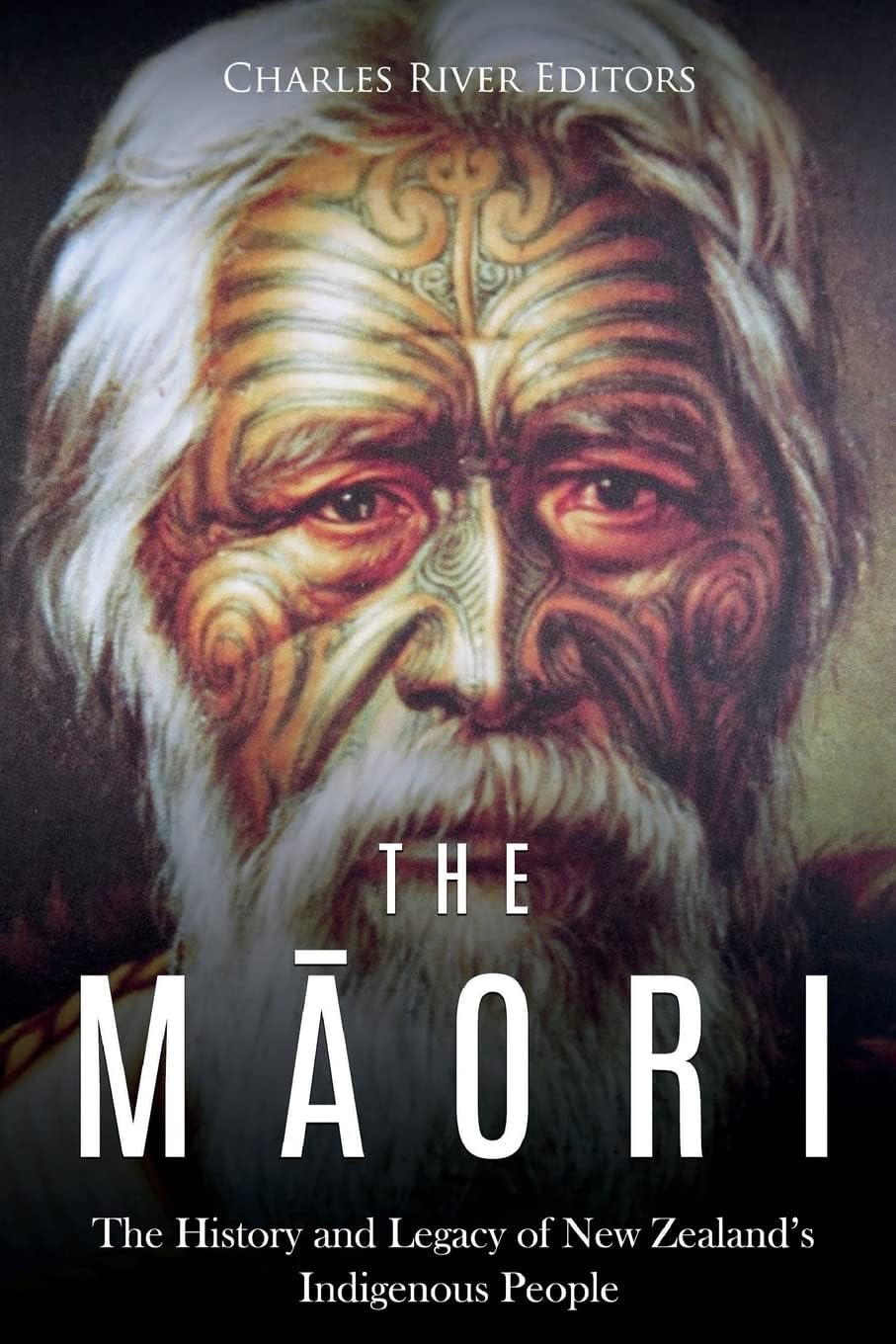
*Includes pictures *Includes contemporary accounts *Includes online resources and a bibliography for further reading “When one house dies, a second lives.” - Maori proverb In 1769, Captain James Cook’s historic expedition in the region would lead to an English claim on Australia, but before he reached Australia, he sailed near New Zealand and spent weeks mapping part of New Zealand’s coast. Thus, he was also one of the first to observe and take note of the indigenous peoples of the two islands. His instructions from the Admiralty were to endeavor at all costs to cultivate friendly relations with tribes and peoples he might encounter, and to regard any native people as the natural and legal possessors of any land they were found to occupy. Cook, of course, was not engaged on an expedition of colonization, so when he encountered for the first time a war party of Maori, he certainly had no intention of challenging their overlordship of Aotearoa, although he certainly was interested in discovering more about them. It was on October 6, 1769 that land was sighted from the masthead of the HMS Endeavour. The ostensible purpose of the expedition was to observe the transit of Venus across the Sun, but in sealed orders, to be opened only when these astrological observations were complete, he was instructed to search for evidence of the fabled Terra Australis. Approaching from the east, having rounded Cape Horn and calling in at Tahiti, the Endeavour arrived off the coast of New Zealand, and two days later it dropped anchor in what would later be known as Poverty Bay. No sign of life or habitation was seen until on the morning of the 9 October when smoke was observed to be rising inland, indicating that the territory was indeed inhabited. Cook and a group of sailors set off for shore in two boats and leaving four men behind to mind the boats, the remainder set off inland over a line of low hills. The sentries, however, were surprised by the arrival of a group of four Maori, who adopted an aggressive posture, and when one lifted a lance to hurl, he was immediately shot down. The impression that all of this left on Cook and the scientific members of the expedition was mixed. By then there had already been several encounters with Polynesian people scattered about the South Pacific, and although occasionally warlike, there were none quite so aggressive as the Maori. In fairness, it must be added that the Maori understanding of Cook’s appearance, and what it represented was by necessity partial, and in approaching it they simply fell back on default behavior, applicable to any stranger approaching their shores. The presence on board the Endeavour of Tupaia allowed for a certain amount of superficial exchange, and a little trade, but little else, and Cook was intrigued by this upright, warlike and handsome people. Taking into account similarities of appearance, customs and languages spread across a vast region of scattered islands, it was obvious that the Polynesian race emerged from a single origin, and that origin Cook speculated was somewhere in the Malay Peninsula or the “East Indies.” In this regard, he was not too far from the truth. The origins of the Polynesian race have been fiercely debated since then, and it was only relatively recently, through genetic and linguistic research, that it can now be stated with certainty that the Polynesian race originated on the Chinese mainland and the islands of Taiwan, the Philippines, Malaysia and Indonesia. Oceania was, indeed, the last major region of the Earth to be penetrated and settled by people, and Polynesia was the last region of Oceania to be inhabited. The vehicle of this expansion was the outrigger canoe, and aided by tides and wind patterns, a migration along the Malay Archipelago, and across the wide expanses of the South Pacific, began sometime between 3000 and 1000 BCE, reaching the western Polynesian Islands in about 900 BCE. Review: Read this book before you read the other two New Zealand books by Charles River’s Editors - I like this e-book, The Māori: The History and Legacy of New Zealand’s Indigenous People since it explains the culture and history of the Maori. One issue that I had while reading the other Charles River’s Editor books about New Zealand was why the Maori seem to have an aptitude for trading. The Maori had a concept called “homai o homai” which means a gift for a gift. So whenever the tribal subunits met each other, the visiting group provided a gift to the group being visited creating a sense of reciprocation between the groups. The book indicated that other native groups such as Native Americans and aboriginal societies were usually decimated by diseases brought by the colonizers, but the Maori society started to decline because of the introduction of muskets. The e-book describes the musket wars between the various Maori groups that lasted roughly 40 years. Next, the e-book describes the New Zealand wars which were similar to the traditional British colonial wars which necessitated the pacification of the natives. Several prominent Maori politicians were also described in the e-book. Lastly, the e-book described the participation of the Maori in both world wars. I wish that this e-book had come out before the other two e-books about New Zealand because this book enhanced my understanding of the Maori and why they readily fit into the British naval and trade culture. Review: Good background - This short book has useful information about the Maori peoples in New Zealand and colonization by the English. Although I would have liked more depth on 20th century developments, it is sufficient information for someone who knew nothing and is planning a trip to New Zealand.
| Best Sellers Rank | #912,926 in Books ( See Top 100 in Books ) #52 in Australia & New Zealand History #1,679 in History of Civilization & Culture |
| Customer Reviews | 3.8 out of 5 stars 238 Reviews |
M**S
Read this book before you read the other two New Zealand books by Charles River’s Editors
I like this e-book, The Māori: The History and Legacy of New Zealand’s Indigenous People since it explains the culture and history of the Maori. One issue that I had while reading the other Charles River’s Editor books about New Zealand was why the Maori seem to have an aptitude for trading. The Maori had a concept called “homai o homai” which means a gift for a gift. So whenever the tribal subunits met each other, the visiting group provided a gift to the group being visited creating a sense of reciprocation between the groups. The book indicated that other native groups such as Native Americans and aboriginal societies were usually decimated by diseases brought by the colonizers, but the Maori society started to decline because of the introduction of muskets. The e-book describes the musket wars between the various Maori groups that lasted roughly 40 years. Next, the e-book describes the New Zealand wars which were similar to the traditional British colonial wars which necessitated the pacification of the natives. Several prominent Maori politicians were also described in the e-book. Lastly, the e-book described the participation of the Maori in both world wars. I wish that this e-book had come out before the other two e-books about New Zealand because this book enhanced my understanding of the Maori and why they readily fit into the British naval and trade culture.
P**S
Good background
This short book has useful information about the Maori peoples in New Zealand and colonization by the English. Although I would have liked more depth on 20th century developments, it is sufficient information for someone who knew nothing and is planning a trip to New Zealand.
V**D
SAD
Just another case of indigenous people being stomped on by colonizers. While the aborigines of Australia were found to hide or at least be friendly, the Māori fought back. At first. Captain Cook is a predominant name in this area of the world.
D**R
History at it's finest and all so quick!
I love reading the history of all kinds (people, places, and things) well now I have found another outlet to get my fill! It is so nice to quickly read about times and people and have all of the important bits right at my fingertips. My thanks to Charles River Editors to publishing all these wonderful books. History at it finest and all so quick! History at it finest and all so quick! History at it's finest and all so quick!
A**L
White man’s book
I had hoped to get a feel for Maori culture from this book. However, it was a dry white man’s history of discovery and literally no information about the rich culture and history of Maori. Only an account of how assimilation took place after the “discovery”. Bleh and Blah.
S**R
A good introduction to the history of New Zealand
I knew almost nothing about the history of NZ. This book gave some good background. It is a quick read and did not go too far in depth regarding any one person or time period. I enjoyed it.
B**E
Super cool, short read
Who doesn’t love a book with pictures? I’ve loaned this book to several friends and we’ve all REALLY enjoyed it. Totally worth the money.
H**7
History
I read this to gain some knowledge about New Zealand prior to traveling there. The book was informative but not overly engaging.
M**Y
Colonialist crap
Like a out of date school book from the 1970's was more about the colonization of these strong and proud people than about the Maori themselves. I counted around 15 pics of the different colonists and 3 of the Indigenous people. Horrible, peice of crap. Would have sent back but under 20 bucks. Don't waste your money or time.
M**O
Disappointing!!
I ordered this book for my grandson, who is part Māori, thinking it would help him learn about his heritage. This should not be called a book, it should be labelled a brochure or a leaflet!! This will teach me to read the specifications of the books in future. The photos are so dark they are terrible, the print is small and there is no way, apart from the cover painting, which is beautiful, that anyone would find this “book” appealing! Especially a teenager!! I’m almost embarrassed to give it to him now, it was to be a gift as he recovers from major surgery, but I think I will hide it in a drawer. If anyone can recommend a book written by an actual Māori, to help a boy learn about his heritage, please suggest something. Beyond disappointed in this book!!
K**T
Good read
All clear. But lacks depth. Would be interesting if more culturalndetail was added. But other than that, very good read.
R**D
Ganz übler Nepp
Ganz schlechtes Buch. Es enthält irgendwelche zusammenkopierte Texte und Bilder, die wahrscheinlich keine Copyrights haben. Sehr schlechte materielle Qualität.
C**R
THE MAORI
A brilliant history of the Maori people
Trustpilot
1 month ago
1 month ago