
Desertcart purchases this item on your behalf and handles shipping, customs, and support to Senegal.
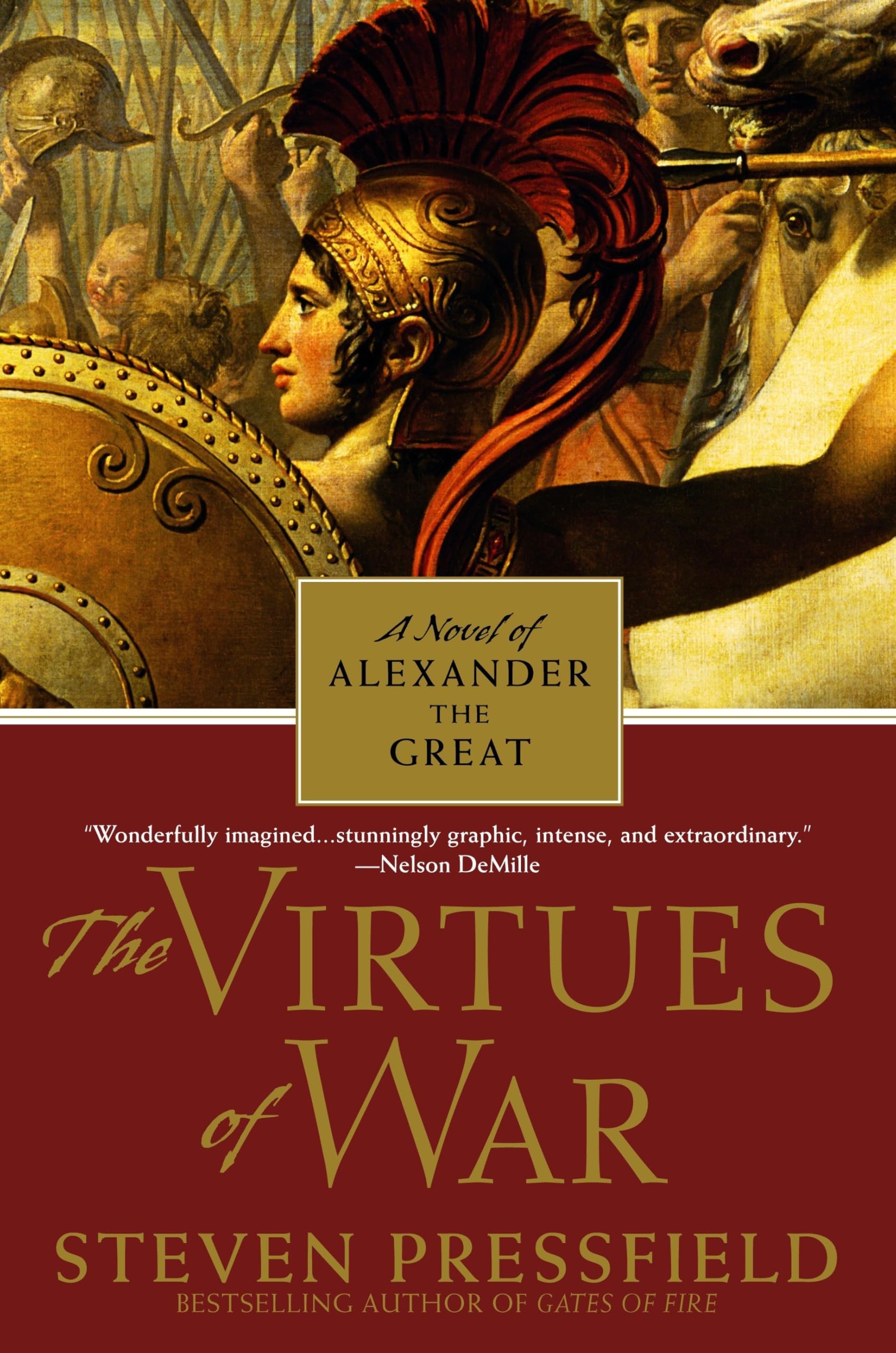
Told by Alexander the Great himself, this “sharp and colorful” ( Washington Post Book World ) novel presents a stunningly intimate account of the battles, the loves, the triumphs, and the tragedy of a man who conquered the world, from the bestselling author of Gates of Fire. “Simply superb . . . Its expert pace, its vivid detail, its bone-crushing action, and its occasional piercing insights of sad eloquence make [ The Virtues of War ] an absolutely gripping read.”— Seattle Times I have always been a soldier. I have known no other life. So begins Alexander’s extraordinary confession on the eve of his greatest crisis of leadership. By turns heroic and calculating, compassionate and utterly merciless, Alexander recounts with a warrior’s unflinching eye for detail the blood, the terror, and the tactics of his greatest battlefield victories. Whether surviving his father’s brutal assassination, presiding over a massacre, or weeping at the death of a beloved comrade-in-arms, Alexander never denies the hard realities of the code by which he lives: the virtues of war. But as much as he was feared by his enemies, he was loved and revered by his friends, his generals, and the men who followed him into battle. Often outnumbered, never outfought, Alexander conquered every enemy the world stood against him—except the one he never saw coming. . . . Review: Alexander's Art of War - In the light of the current world environment, you need to read this book. While Mr. Pressfield played on Sun Tzu's title in his 2002 take-control-of-your-life manual, The War of Art, he goes right to the heart of the matter in Virtues: this book is Alexander the Great's Art of War. Where previous Pressfield novels detailed what the individual combatant was thinking and feeling, Virtues focuses on the leader, the man in charge of it all, logistics, material, tactics, strategy, morale and every other aspect of war. In six short years since the publication of his classic Gates of Fire, Steven Pressfield has set a new standard for historical fiction and sits firmly entrenched at the top of a list of talented writers in that genre. The master's attention to detail through diligent research is without equal. As importantly to his readers, Mr. Pressfield weaves a tale that keeps us hooked on his work from first to last page. His details do not detract or bog down the telling of the tale but serve it. Like it's predecessors, The Virtues of War left me satiated if not emotionally drained when I read its final words: "The sarissa's song is a sad song He pipes it soft and low. I would ply a gentler trade, says he, But war is all I know. The wind rose in that moment, lifting the corner of Alexander's cloak. I saw his heel tap Corona's flank. He reined-about and started for the camp, surrounded by his officers." All of the Pressfield Greek Histories as I've come to call them are narrated. In his previous work, Last of the desertcarts, Mr. Pressfield took a big chance and told much of the story through the words of a woman, no small task for a man who did spend time in the U.S. Marine Corps. In Virtues, Pressfield walks the plank again; the risk: for the first time, his tale is told by a real historical figure -- not a fictitious one -- and by none other than the Great One himself, Alexander. Once again, Pressfield has re-invented himself, this time through Alexander the Great. Not far into the book, I truly felt that I was not reading a novel, rather that I was privileged to sit in the King's own tent, just he and I while I listened to his recollections of things past, most notably his major victories: Chaeronea, Granicus, Issus, Gaugamela, the guerilla war in Afghanistan and Hydaspes. Alexander explained to me the complexities of leadership and I listened closely. The book is written from such a deep, personal level that I recalled the early scene in "Patton" where the General and Omar Bradley stand at the Kasserine Pass in North Africa as Patton recollects the details of the battle waged between the Carthaginians and the Roman Legions. "I was there," Patton comments. I can't help but think Steven Pressfield immersed himself so deeply into his narrator that in a very real sense, 'he was there!' But this is not a book about the battles that often come to the forefront in the other Pressfield novels. Virtues rarely visits the hand-to-hand combat of Gates of Fire and Tides of War or the detailed massacres in desertcarts. No, this book is about leadership. Alexander's first real taste of combat was at Chaeronea in 338 BC under the tutelage of his father, Philip of Macedon. Fifteen years later he when died at 32-years-old, he had conquered the known world. In Alexander's words, Mr. Pressfield explores the decision-making process all leaders confront, and he does not overlook the doubts that are certain to plague a leader and his army as they trek over 11,000 miles on foreign soil for over a decade. The reader will find himself drawing comparisons between what happened on Alexander's campaign with what is currently happening in that part of the world. How could Alexander conquer Babylon and Baghdad and move on with the certainty that his rear position was in no danger from those he had vanquished? So often we believe that guerilla warfare is an invention of modern man, but Mr. Pressfield shows us how Alexander dealt with the guerilla war in Afghanistan. True, things are much different 2,000 years later, but if history does indeed repeat itself, there are lessons to be learned from the experiences of arguably the most successful General in the history of warfare. You won't find 'blood and guts' in this story; you will not take the battlefield with GI Joe. You will enter the mind of a man who mastered generalship through all his doubts, trials and tribulations. You may complete this book with a new outlook on current affairs and you may pose many "What if?" questions by super-imposing Alexander the Great onto the world stage as it exists today. You'll enjoy Virtues of War just for the story; you'll appreciate it more for its relevancy. Review: The Ultimate, Intimate Company of Men - Dear readers don't forget that this book is a novel, historical fiction, and so, to argue about the pros and cons of anything undocumented about Alexander the Great some 2,300 years ago is a bit absurd. But, let's delve into the absurd anyway. It's almost never disputed today that Alexander was indisputably bi-sexual and perhaps 100% homosexual. He has become a modern day gay icon. Alexander was a man who spent his entire (short) life day-in-day-out exclusively in the intimate company of men. Yet, Steven Pressfield's "Virtues of War" skirts Alexander's sexual identity with unwelcome obliviousness, except for blunt suggestions and veiled images of intimacy between Alexander and Hephaestion - and other younger men under his careful tutelage. Alexander frequently comments about the astonishing beauty of young men. Pressfield's indirect acknowledgement of Alexander's' homosexuality is this: Hephaestion is mentioned in Alexander's own voice by name and deed approximately 9,000 times in this 350 page novel, in contrast to the scant 200 or 300 words devoted to Alexander's relationship with any woman, including his mother and the 2 women he "married." What price would Pressfield have paid for actual acknowledgement of what everyone actually now understands? No price at all. In fact some good old m2m sex would have given a very welcome and healthy jolt to the painfully over-explained military tactics pages (and pages and pages) to say nothing of the boring lists (and lists and lists) of generals, captains and so on. Worse yet, Pressfield cheats us when we do not hear -- in Alexander's own voice -- his overwhelming grief and loss when Hephaestion dies, or hear Alexander's own agony and confessions as death overtook him. Why let another narrator in an "epilogue" tell us "about" those crucial moments that would have honestly portrayed the inner Alexander? The terribly disappointing ending of the book is a huge flaw. I really did want to read Alexander's own words, not Itanes, when Hephestion dies, and I really wanted to hear Alexander confess on his death bed that he was homosexual. What a let-down at the end! Yuck! Two deaths define and punctuate Alexander's life. First was Bucephalus' death - his beloved massive 21-year old horse. Second was Hephaestion's, whose demise literally devastated Alexander, causing a life-changing upheaval and loss, something from which Alexander never recovered. Page 341, "yet, from the death of Hephaestion, he was never the same man." Why? His spouse was dead. Interestingly, the death of his father is almost inconsequential. But make no mistake. This is an epic novel of epic scope about the epic star-power character of all time. Pressfield shows Alexander as a fascinatingly powerful man, an immense historical figure, the subject of countless literary works. This one - Alexander as the central character in a novel - is excellent. However, there is no denouement, no final crisis, no real mystery, no wonderment, no surprise, and no suspense. Just the end -- before he dies! Alexander's "daimon," the mystical magical will to fight, his internal warrior persona, his soul and driving conscience and life force, seems never to fail him until near the end when Telemon tells Alexander, Page 312, "The daimon is inhuman." Indeed it is possible, Pressfield suggests, that the internal Alexander was evil. Such are the things of legends. The book's structure is excellent with Alexander narrating his own story in first person - his fictional voice, as he instructs Itanes in the virtues of war. Thus, we are not spared any detail of Alexander's internal musings, his conflicts and motivations (except noted above about his own defining sexuality). The horrors of war back then are spread before us in great detail by Alexander himself. The reader is awe-struck by the logistical accomplishments involved in moving and sustaining an army of hundreds of thousands of men through harsh territory over 8 years and 11,250 miles. Alexander is brutal and unyielding, brilliant and belligerent, and almost always --with rare exceptions even with all his apparent insight -- fully able, easily and completely, to blame others for his own mistakes, murders and failures -- or the unanticipated consequences of his victories. Page 188, "My envoys sought to make the leading men of Tyre and Gaza see reason; I dispatched letters beneath my own hand. I pledged to make their cities richer, freer, safer. Still they resisted. They compelled me to make examples of them." Thus, he drove his men to the "end of the known world" to further his mega maniacal ambitions, for better or worse. His ability to motivate men to kill for him is astonishing. To have achieved a readable novel, given a lack of plot or true story line, Pressfield gives us a good read. Not great, but well worth your time, if you are a Greekophile. Was Alexander "great?" Who knows and who cares!! He's always a good read!


| Best Sellers Rank | #56,628 in Books ( See Top 100 in Books ) #57 in Historical Fiction Short Stories & Anthologies #193 in Military Historical Fiction #655 in War Fiction (Books) |
| Customer Reviews | 4.5 out of 5 stars 1,463 Reviews |
S**S
Alexander's Art of War
In the light of the current world environment, you need to read this book. While Mr. Pressfield played on Sun Tzu's title in his 2002 take-control-of-your-life manual, The War of Art, he goes right to the heart of the matter in Virtues: this book is Alexander the Great's Art of War. Where previous Pressfield novels detailed what the individual combatant was thinking and feeling, Virtues focuses on the leader, the man in charge of it all, logistics, material, tactics, strategy, morale and every other aspect of war. In six short years since the publication of his classic Gates of Fire, Steven Pressfield has set a new standard for historical fiction and sits firmly entrenched at the top of a list of talented writers in that genre. The master's attention to detail through diligent research is without equal. As importantly to his readers, Mr. Pressfield weaves a tale that keeps us hooked on his work from first to last page. His details do not detract or bog down the telling of the tale but serve it. Like it's predecessors, The Virtues of War left me satiated if not emotionally drained when I read its final words: "The sarissa's song is a sad song He pipes it soft and low. I would ply a gentler trade, says he, But war is all I know. The wind rose in that moment, lifting the corner of Alexander's cloak. I saw his heel tap Corona's flank. He reined-about and started for the camp, surrounded by his officers." All of the Pressfield Greek Histories as I've come to call them are narrated. In his previous work, Last of the Amazons, Mr. Pressfield took a big chance and told much of the story through the words of a woman, no small task for a man who did spend time in the U.S. Marine Corps. In Virtues, Pressfield walks the plank again; the risk: for the first time, his tale is told by a real historical figure -- not a fictitious one -- and by none other than the Great One himself, Alexander. Once again, Pressfield has re-invented himself, this time through Alexander the Great. Not far into the book, I truly felt that I was not reading a novel, rather that I was privileged to sit in the King's own tent, just he and I while I listened to his recollections of things past, most notably his major victories: Chaeronea, Granicus, Issus, Gaugamela, the guerilla war in Afghanistan and Hydaspes. Alexander explained to me the complexities of leadership and I listened closely. The book is written from such a deep, personal level that I recalled the early scene in "Patton" where the General and Omar Bradley stand at the Kasserine Pass in North Africa as Patton recollects the details of the battle waged between the Carthaginians and the Roman Legions. "I was there," Patton comments. I can't help but think Steven Pressfield immersed himself so deeply into his narrator that in a very real sense, 'he was there!' But this is not a book about the battles that often come to the forefront in the other Pressfield novels. Virtues rarely visits the hand-to-hand combat of Gates of Fire and Tides of War or the detailed massacres in Amazons. No, this book is about leadership. Alexander's first real taste of combat was at Chaeronea in 338 BC under the tutelage of his father, Philip of Macedon. Fifteen years later he when died at 32-years-old, he had conquered the known world. In Alexander's words, Mr. Pressfield explores the decision-making process all leaders confront, and he does not overlook the doubts that are certain to plague a leader and his army as they trek over 11,000 miles on foreign soil for over a decade. The reader will find himself drawing comparisons between what happened on Alexander's campaign with what is currently happening in that part of the world. How could Alexander conquer Babylon and Baghdad and move on with the certainty that his rear position was in no danger from those he had vanquished? So often we believe that guerilla warfare is an invention of modern man, but Mr. Pressfield shows us how Alexander dealt with the guerilla war in Afghanistan. True, things are much different 2,000 years later, but if history does indeed repeat itself, there are lessons to be learned from the experiences of arguably the most successful General in the history of warfare. You won't find 'blood and guts' in this story; you will not take the battlefield with GI Joe. You will enter the mind of a man who mastered generalship through all his doubts, trials and tribulations. You may complete this book with a new outlook on current affairs and you may pose many "What if?" questions by super-imposing Alexander the Great onto the world stage as it exists today. You'll enjoy Virtues of War just for the story; you'll appreciate it more for its relevancy.
D**D
The Ultimate, Intimate Company of Men
Dear readers don't forget that this book is a novel, historical fiction, and so, to argue about the pros and cons of anything undocumented about Alexander the Great some 2,300 years ago is a bit absurd. But, let's delve into the absurd anyway. It's almost never disputed today that Alexander was indisputably bi-sexual and perhaps 100% homosexual. He has become a modern day gay icon. Alexander was a man who spent his entire (short) life day-in-day-out exclusively in the intimate company of men. Yet, Steven Pressfield's "Virtues of War" skirts Alexander's sexual identity with unwelcome obliviousness, except for blunt suggestions and veiled images of intimacy between Alexander and Hephaestion - and other younger men under his careful tutelage. Alexander frequently comments about the astonishing beauty of young men. Pressfield's indirect acknowledgement of Alexander's' homosexuality is this: Hephaestion is mentioned in Alexander's own voice by name and deed approximately 9,000 times in this 350 page novel, in contrast to the scant 200 or 300 words devoted to Alexander's relationship with any woman, including his mother and the 2 women he "married." What price would Pressfield have paid for actual acknowledgement of what everyone actually now understands? No price at all. In fact some good old m2m sex would have given a very welcome and healthy jolt to the painfully over-explained military tactics pages (and pages and pages) to say nothing of the boring lists (and lists and lists) of generals, captains and so on. Worse yet, Pressfield cheats us when we do not hear -- in Alexander's own voice -- his overwhelming grief and loss when Hephaestion dies, or hear Alexander's own agony and confessions as death overtook him. Why let another narrator in an "epilogue" tell us "about" those crucial moments that would have honestly portrayed the inner Alexander? The terribly disappointing ending of the book is a huge flaw. I really did want to read Alexander's own words, not Itanes, when Hephestion dies, and I really wanted to hear Alexander confess on his death bed that he was homosexual. What a let-down at the end! Yuck! Two deaths define and punctuate Alexander's life. First was Bucephalus' death - his beloved massive 21-year old horse. Second was Hephaestion's, whose demise literally devastated Alexander, causing a life-changing upheaval and loss, something from which Alexander never recovered. Page 341, "yet, from the death of Hephaestion, he was never the same man." Why? His spouse was dead. Interestingly, the death of his father is almost inconsequential. But make no mistake. This is an epic novel of epic scope about the epic star-power character of all time. Pressfield shows Alexander as a fascinatingly powerful man, an immense historical figure, the subject of countless literary works. This one - Alexander as the central character in a novel - is excellent. However, there is no denouement, no final crisis, no real mystery, no wonderment, no surprise, and no suspense. Just the end -- before he dies! Alexander's "daimon," the mystical magical will to fight, his internal warrior persona, his soul and driving conscience and life force, seems never to fail him until near the end when Telemon tells Alexander, Page 312, "The daimon is inhuman." Indeed it is possible, Pressfield suggests, that the internal Alexander was evil. Such are the things of legends. The book's structure is excellent with Alexander narrating his own story in first person - his fictional voice, as he instructs Itanes in the virtues of war. Thus, we are not spared any detail of Alexander's internal musings, his conflicts and motivations (except noted above about his own defining sexuality). The horrors of war back then are spread before us in great detail by Alexander himself. The reader is awe-struck by the logistical accomplishments involved in moving and sustaining an army of hundreds of thousands of men through harsh territory over 8 years and 11,250 miles. Alexander is brutal and unyielding, brilliant and belligerent, and almost always --with rare exceptions even with all his apparent insight -- fully able, easily and completely, to blame others for his own mistakes, murders and failures -- or the unanticipated consequences of his victories. Page 188, "My envoys sought to make the leading men of Tyre and Gaza see reason; I dispatched letters beneath my own hand. I pledged to make their cities richer, freer, safer. Still they resisted. They compelled me to make examples of them." Thus, he drove his men to the "end of the known world" to further his mega maniacal ambitions, for better or worse. His ability to motivate men to kill for him is astonishing. To have achieved a readable novel, given a lack of plot or true story line, Pressfield gives us a good read. Not great, but well worth your time, if you are a Greekophile. Was Alexander "great?" Who knows and who cares!! He's always a good read!
S**Z
A Staple for the library of Warriors ⚔️
"The Virtues of War" written in the first-person voice of Alexander the Great, provides an engaging perspective on his journey from ascending the throne of Macedon to conquering empires before his untimely death at the age of thirty-three. Steven Pressfield's deep understanding of warfare, leadership, and the complexities of human emotion shines through the pages of this historical fiction. Drawing from his own Marine Corps background, Pressfield masterfully delves into the motivations that drive soldiers. The notion that soldiers are bound by their love of glory and their will to fight resonates deeply with anyone who has experienced the call of arms. The training scene with Telamon and the wolf pack metaphor powerfully illustrate the essence of being a soldier, capturing the sense of duty, sacrifice, and unity that soldiers share. Moreover, the novel does not shy away from the brutal realities of war. The description of battles, the blood, heat, and terror of the battlefield, and the deep emotional impact on both soldiers and leaders reflect Pressfield's profound knowledge of warfare. The book also explores the moral complexities of warfare, the understanding that the enemy is made up of men with families and dreams, forcing us to confront the grim truth behind the glory. As a Marine who values the principles of honor, discipline, and self-command, I appreciated the emphasis on virtue and leadership showcased through the character of Memnon. His mastery of strategy, understanding of politics, and unwavering commitment to his men serve as a poignant example of a well-rounded leader. "The Virtues of War" is not just a novel; it's a journey into the heart and mind of a soldier-king. Pressfield's brilliant writing brings history to life, transporting readers to ancient battlefields and into the psyche of a leader who dared to reshape the world. This book is a must-read for anyone interested in military history, leadership, and the complex emotions that drive soldiers to achieve greatness. Just as Alexander's legacy lives on, so too will the impact of this exceptional literary work.
X**7
Alexander’s Art of War
I have read several books by Steven Pressfield. These include Warrior Ethos, Man At-Arms and Tides of War. Each of these novels were sterling examples of making sense from history long ago. The magic in making the story is the author’s vision and the gathering of as much background information about the topic as possible. From there weaving it into a masterpiece which makes sense by filling in the gaps with facts from that era in time. Steven seems to do this flawlessly and the end product makes it seem like actual incidents from history. I envy his talent and cherish his work. While one can always be critical with scrutiny, you must respect what he has created. The detailed battle descriptions he provides to include the strategy, tactics, weapons and mindset are above reproach. The other details he provides about structures and locations make you feel like you are there. Another masterpiece by a master storyteller!
S**E
The Madness of Brilliance
Our species is fortunate that every so often a genius is born. The rest of us make progress one step at a time, but the geniuses allow us to make leaps that keep us from getting too bogged down in dogma. Beethoven was such a genius, as was Fisher and Einstein and Newton and Shakespeare and da Vinci-and Alexander. In each of their own ways, these geniuses were looking for order in chaos. It so happens that Alexander's genius was for war; he could visualize war in his mind the way Beethoven could visualize musical notes, and it is natural that he would use his genius to bring order to what he saw as chaos in the world. One can debate whether Alexander was a good guy or not, but this debate is irrelevant: Alexander lived; Alexander conquered; Alexander died-what is important is to learn from him. Steven Pressfield comes with another novel of ancient warfare, but this time it's different: he literally steps into the mind of Alexander, and he lets Alexander tell his own story. I found myself in awe of Pressfield's skill; I became immersed and could believe that I was actually reading Alexander's words. I could almost "see" what Alexander saw at Guagamela; I felt that I knew how his mind worked. I could follow his descent into madness; I could trace his rationalizations, the ways in which he justified his actions to himself; I could feel his hurt and despair. The Virtues of War is not a linear novel; rather, it is a treatise upon warfare told with astounding authenticity. Throughout are the thoughts, feelings, fears and doubts of Alexander wound together with the Virtues to create a story. Those of us interested in history-but not brilliant in that regard-will find this book an excellent way to connect with that period.
H**S
...stimulating action with great storytelling, Pressfield at his best!
Book Review – The Virtues of War – Steven Pressfield Author Steven Pressfield’s books never disappoint. His “The Virtue of War” novel is a ‘fictional’ recounting of events of Alexander the Great’s brief and violent life. The story was told in the first person of what could easily be assumed as a ‘make-believe autobiography.’ The book paints a vivid picture of Alexander's life through a brilliantly told narrative. Some of the battle sequences were written as if Pressfield was sitting right there on the battlefield. The remarkable descriptions were combined flawlessly with gruesome action and Pressfield's superb ability to introspectively describe the conflicts of war and conquest. I was impressed with Pressfield's portrayal of Alexander the Great. He shows him as a fierce warrior hell bent on victory, but also a man with a strict set of values - virtues of war - that he would not let himself nor any of his men abuse. The tale shows the relation between emotion and fascination and thorough details of battle tactics and maneuvers that Alexander performed. He was a military genius. This novel is about Pressfield doing what he does best, mixing excitement and stimulating accuracy with great storytelling of one of the greatest military strategists and leaders in world history - Alexander the Great. A captivating and thought-provoking historical war and military read…
R**O
A Magnificent Heroic Tale
Steven Pressfield has written one of the best novels on Alexander the Great. "Virtues of War" captures the essence of Alexander as supreme warrior and relives his heroic character (in the Homeric meaning of the concept.) In a journey that takes the reader into the conquest of the Persian empire and beyond, with flashbacks explaining the formation and education of Alexander, Pressfield's novel has fine insights on military leadership, strategy and tactics. In this sense "Virtues of War" is a literary next step from "Tides of War". In that one, his third novel, Pressfield wrote a fascinating interpretation of Alcibiades (the forgotten but brilliant Athenean stateman and military leader of the Peloponessian War) and gave the reader truly original insights into Alcibiades's strategic thinking. Now Pressfield has gone beyond, because "Virtues of War" is also the tale of the education of Alexander's young brother-in-law in leadership and the art of war by Alexander himself, as he tells him his life and times as a way of getting things into perspective in the difficult days previous to the Battle of the Hydaspes River. There are quite a lot of historical novels on Alexander out there, but I think none is as faithful to Alexander's true nature and essence as this one. Once again Steven Pressfield has written a great novel, one that reminds us how sadly far away we are today from that ancient heroic temper. And, as always, the action, detail and agility of his battle scenes stills unbeatable. Read it: It's one of Pressfield's best books.
K**N
4 stars for the battles, 2 stars for the story
Steven Pressfield's novel is listed as historical fiction, and I suppose that it is. However, there is virtually no plot. The whole story is fight after fight- which to some may seem interesting, but I found it boring. Don't get me wrong, the descriptions are incredible, and it seems as if we are actually at the scene of the battle. Steven Pressfield is obviously a talented writer. I enjoy reading about battles, just not an entire book about them. But I didn't feel any emotions. I wasn't excited at the victory, and found myself skimming pages just to see if there would be anything of interest later on in the chapters. Alexander the Great is undeniably one of the greatest generals who ever lived, and obviously war was a large part of his life. But this story- didn't make me go "Wow". If you're only interested in battles, then you'll probably like this book. But if you're like me, and you want a plot along with the battles, look elsewhere. I'd recommend Mary Renault's Alexander trilogy: Fire from Heaven , The Persian Boy , and Funeral Games ; or A Choice of Destinies by Melissa Scott; or Lord of the Two Lands by Judith Tarr; or even A Murder in Macedon by Anna Apostolou aka P.C. Doherty. All of these books are historical fiction about Alexander the Great. They all have battles, but they also are about his life, his companions (friends/enemies), and his emotions.
K**R
Must read awesome book
Awesome book with great storytelling
C**N
Irgendwas fehlt
Wie in seinen anderen Romanen auch (Antike: Gates of Fire: An Epic Novel of the Battle of Thermopylae , Zweiter Weltkrieg: Killing Rommel , Zukunft: The Profession: A Thriller ) erzählt Steven Pressfield vom Krieg. Obwohl Feldherr Alexander persönlich die Geschichte seiner Eroberungen schildert, spürt man beim Lesen Leben und Leiden seiner Soldaten. Die Schlachten auf dem Weg Alexanders nach Indien werden detailliert nachgezeichnet. Immer wieder geht Pressfield auf Strategien und Waffen ein, auf Taktiken und Abwägungen. Alexanders außergewöhnliche Fähigkeiten werden in Pressfields Buch in den größeren Rahmen ihrer Zeit gesetzt. Die technischen Weiterentwicklungen (etwa die lange Sarissa und die Rolle der Kavallerie) und die strategischen Winkelzüge auf dem Schlachtfeld werden mit so viel Enthusiasmus geschildert, dass man selbst als Pazifist interessiert am Ball bleibt. Die dreckigen, blutenden und sterbenden Infanteristen und Pferde geben der Geschichte eine Authentizität, die mit Sandalenfilmen von anno dazumal nichts gemein hat. Das Buch ist flüssig geschrieben. Die Kampfszenen fesseln. Auch wenn er damit nicht zufrieden wäre: Mehr als drei Sterne kann ich "Alexander" leider nicht geben. Abzüge erhält der Roman, weil er an vielen dann doch zu langatmig geraten ist. Für meinen Geschmack hätte Pressfield an der einen oder anderen Stelle eine Schlacht etwas kürzer und dafür einen Gedanken, ein Gespräch oder ein Motiv Alexanders etwas ausführlicher schildern können. Mir gefiel auch nicht, dass es keine Wechsel in der Perspektive gab, der mir einen Überblick über die Gesamtsituation hätte geben können. Trotzdem ist der Roman in einigen Bereichen ausgesprochen gelungen. Besonders an Kriegsführung, Strategie und antiken Waffengattungen Interessierte sollten unbedingt Pressfield lesen. Wer allerdings ein etwas breiteres Feld inklusive politischer Entwicklungen, persönlicher Geschichten und vielleicht Romantik möchte, ist da aufgehoben, wo Alexander Zeit seines Lebens hin wollte: woanders.
H**E
Mais uma obra do lendário Pressfield
Sem muito o que dizer, quem não o conhece passe a conhecer. Tem uma palestra sobre A Guerra da Arte na Nova Acrópole.
S**N
A must read for ancient times, war and equine gallantry.
A great rollicking story of one man's leadership, destiny and drive. The lifestyles and motivations of Alexander's era are brought to life with an enticing take on that moment in time.
R**E
It is nothing short of an excellent read. (One small point only would I quibble ...
I first read Mr Pressfield's book, Gates of Fire. This is written to the same high standard. This author can make the reader feel he writes having been present as an observer in Alexander's inner circle. It is nothing short of an excellent read. (One small point only would I quibble over and that was his description of Hephaestion as "a good friend", when a majority of academics can concur he was all of that and in all likelihood, far more). Further, the author's description of the passing of Hephaestion and his subsequent funeral was passed off in more or less one paragraph! If any one event affected Alexander in his life more than any other, it was the death of his "good friend". It devastated Alexander & diminished him. So deeply tragic and despite this young king's faults, only the coldest of hearts would not even now reach out to him in his grief and hurt and loneliness. Nonetheless, very highly recommended.
Trustpilot
2 days ago
2 weeks ago