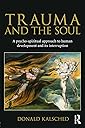
Trauma and the Soul: A psycho-spiritual approach to human development and its interruption
Product ID: 81179573
In Trauma and the Soul, Donald Kalsched continues the exploration he began in his first book, The Inner World of Trauma (1996)―this time going further into the mystical or spiritual moments that often occur around the intimacies of psychoanalytic work. Through extended clinical vignettes, including therapeutic dialogue and dreams, he shows how depth psychotherapy with trauma’s survivors can open both analytic partners to "another world" of non-ordinary reality in which daimonic powers reside, both light and dark. This mytho-poetic world, he suggests, is not simply a defensive product of our struggle with the harsh realities of living as Freud suggested, but is an everlasting fact of human experience―a mystery that is often at the very center of the healing process, and yet at other times, strangely resists it. With these "two worlds" in focus, Kalsched explores a variety of themes as he builds, chapter by chapter, an integrated psycho-spiritual approach to trauma and its treatment including: images of the lost soul-child in dreams and how this "child" represents an essential core of aliveness that is both protected and persecuted by the psyche’s defenses; Dante’s guided descent into the Inferno of Hell as a paradigm for the psychotherapy process and its inevitable struggle with self-destructive energies; childhood innocence and its central role in a person’s spiritual life seen through the story of St. Exupéry’s The Little Prince; how clinical attention to implicit processes in the relational field, as well as discoveries in body-based affective neuroscience are making trauma treatment more effective; the life of C.G. Jung as it portrays his early trauma, his soul’s retreat into an inner sanctuary, and his gradual recovery of wholeness through the integration of his divided self. This is a book that restores the mystery to psychoanalytic work. It tells stories of ordinary patients and ordinary psychotherapists who, through working together, glimpse the reality of the human soul and the depth of the spirit, and are changed by the experience. Trauma and the Soul will be of particular interest to practicing psychotherapists, psychoanalysts, analytical psychologists, and expressive arts therapists, including those with a "spiritual" orientation. Donald Kalsched is a Jungian analyst in private practice in Albuquerque, New Mexico, and a training analyst with the Inter-Regional Society of Jungian Analysts. He is the author of numerous articles in analytical psychology, and lectures widely on the subject of early trauma and its treatment. His books include The Inner World of Trauma (1996).


| Dimensions | 15.6 x 2.18 x 23.39 cm |
| Edition | 1st |
| Importer | Bookswagon, 2/13 Ansari Road, Daryaganj, New Delhi 110002, [email protected], 01140159253 |
| Isbn 10 | 0415681464 |
| Isbn 13 | 978-0415681469 |
| Item Weight | 567 g |
| Language | English |
| Net Quantity | 1.0 Count |
| Packer | Bookswagon, 2/13 Ansari Road, Daryaganj, New Delhi 110002, [email protected], 01140159253 |
| Print Length | 360 pages |
| Publication Date | 10 October 2013 |
| Publisher | Routledge |
User
A must read!!
I absolutely love this book! Really makes you think outside the box if you are just the clinical approach to cognitive functioning, if you are like many folks out there who know that in order to achieve balance, you have to have all areas addressed, physical, mental, emotional AND SPIRITUAL. This book is fantastic.
User
Profound Depth Psychology Insight into Trauma and Interrupted Human Development
As a survivor of early trauma, this is the only book that I have ever read that relates to me at a depth or analytical psychology level. It is a very advanced understanding of the mind of those traumatised and the self care system we (or some of us) developed. I quote from page 52:"It seems that the process of becoming the self you were intended to be (Jung’s definition of individuation) involves the materialisation of something spiritual.Some seed of true self-hood needs to make a perilous journey through very dangerous territory from the world of eternity to the world of time, from spirit to matter, from divine to human, in order to become a human soul.Along the way this ‘seed’ will face many trials and suffer great disillusionment and it may never be able to make a full commitment to this hopeful journey if its suffering into reality is too great. It may even be forced to split into two, sending part of itself back into the imperishable world from which it came, to make sure that the soul is not annihilated.Sometimes it will be able to return from this dissociation and enter life again.Along the way glimpses of the ‘light’ of its origins and its true companion may support it in its suffering, And if, through all the brokenness of the human condition, it finds enough of those sunny days when life seems possible, enough of those resonant images, empathic self-objects (Kohut) and optimal sufferings (Winnicott) that make love worth the sacrifice of omnipotence…if it makes it to these shores with some of its original identify intact and not as a false self…then in the language of T. S. Eliot it will have “arrived where it started, and know the place for the first time.”There is nothing further that I can say that will add to the above quote, but I hope this will give you an understanding of this simply amazing book (life time work of the author)
User
A great read....and a must read for anyone who is dealing with trauma or working with patients with traumatic histories...
Through extended clinical vignettes, including therapeutic dialogue and dreams, he shows how depth psychotherapy with trauma’s survivors can open both analytic partners to "another world" of non-ordinary reality in which daimonic powers reside, both light and dark. This mytho-poetic world, he suggests, is not simply a defensive product of our struggle with the harsh realities of living as Freud suggested, but is an everlasting fact of human experience — a mystery that is often at the very center of the healing process, and yet at other times, strangely resists it.With these "two worlds" in focus, Kalsched explores a variety of themes as he builds, chapter by chapter, an integrated psycho-spiritual approach to trauma and its treatment including:* images of the lost soul-child in dreams and how this "child" represents an essential core of aliveness that is both protected and persecuted by the psyche’s defenses;* Dante’s guided descent into the Inferno of Hell as a paradigm for the psychotherapy process and its inevitable struggle with self-destructive energies;* childhood innocence and its central role in a person’s spiritual life seen through the story of St. Exupéry’s The Little Prince;* how clinical attention to implicit processes in the relational field, as well as discoveries in body-based affective neuroscience are making trauma treatment more effective;* the life of C.G. Jung as it portrays his early trauma, his soul’s retreat into an inner sanctuary, and his gradual recovery of wholeness through the integration of his divided self.This is a book that restores the mystery to psychoanalytic work. It tells stories of ordinary patients and ordinary psychotherapists who, through working together, glimpse the reality of the human soul and the depth of the spirit, and are changed by the experience. Trauma and the Soul will be of particular interest to practicing psychotherapists, psychoanalysts, analytical psychologists, and expressive arts therapists, including those with a "spiritual" orientation.
User
Highly recommend
Wonderful book that is a must read for mental health professionals.
User
El libro estaba en muy buen estado, pero por suerte, porque el paquete estaba rajado
El. Libro estaba en muy buen estado, pero el paquete llegó roto
Trustpilot
2 months ago
5 days ago