


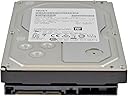
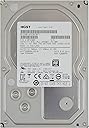

HGST Deskstar 7200rpm 128MB Cache SATA III 3.5" Internal NAS Drive Kit
Product ID: 7822332
⚡7200 RPM Speed
💾6TB Storage
🔒128MB Cache
🚀 Elevate Your Storage Game!
The HGST Deskstar NAS 3.5-Inch 6TB Internal Hard Drive is engineered for high-performance storage solutions, featuring a 7200 RPM rotational speed and a robust 128MB cache, making it ideal for NAS environments. With a generous 6TB capacity, it provides ample space for all your data needs while maintaining a lightweight design for effortless integration.
| ASIN | B00O0M5QK8 |
| Additional Features | Portable |
| Best Sellers Rank | #7,077 in Internal Hard Drives #116,694 in Computer Internal Components |
| Brand | Western Digital |
| Built-In Media | Internal Hard Drive |
| Cache Memory Installed Size | 128 |
| Color | Silver |
| Compatible Devices | Desktop |
| Connectivity Technology | SATA |
| Customer Reviews | 4.1 out of 5 stars 137 Reviews |
| Data Transfer Rate | 600 megabits_per_second |
| Digital Storage Capacity | 6000 GB |
| Form Factor | 3.5-inch |
| Global Trade Identification Number | 00705487196900 |
| Hard Disk Description | Serial ATA-600 |
| Hard Disk Form Factor | 3.5 inches |
| Hard Disk Interface | Serial ATA-600 |
| Hard Disk Rotational Speed | 7200 rpm |
| Hard-Drive Size | 6 TB |
| Hardware Connectivity | SATA 6.0 Gb/s |
| Hardware Platform | PC |
| Installation Type | Internal Hard Drive |
| Item Weight | 1.6 pounds |
| Manufacturer | HGST, a Western Digital Company |
| Mfr Part Number | 0S03839 |
| Model Name | HGST, Western Digital company, Deskstar NAS 3.5-Inch 6TB 7200RPM SATA III 128MB Cache Internal Hard Drive (0S03839) |
| Model Number | 0S03839 |
| Number of Items | 1 |
| Special Feature | Portable |
| Specific Uses For Product | personal, gaming, business |
| UPC | 799198908914 705487196900 092992703274 693109444709 809395322199 801947303878 804067727661 808114327699 804904219915 |
M**G
Solid performers, drive-seeks are noisy
UDPATE 7/13/2016: Drives have been solid and still running 24/7 since purchased well over 1 year ago. S.M.A.R.T. values for all 8 disks are great. No complaints. I bought 9 of these drives; a few from Amazon and rest from other places to mix up the lots and dates of manufacture. 8 of the drives are in a RAID10 (3 sets of 2 disk span) configuration controlled by a dedicated LSI MegaRAID SAS 9361-8i PCI-Express 3.0 x8 12Gb/s (future proofing). The stripe defined is 256kb since will be storing mainly large files. However, benchmarking was done using single disk, 6-disk (3 sets of 2 disk span) and 8-disk (4 sets of 2 disk span) array configuration. Due to some unmentioned system limitations, the drives are set up in the same box as my ESXi host, a disk container created and attached to a guest machine that serves as my dedicated NAS; said guest machine runs CentOS 7.1 for an operating system. The filesystem chosen is XFS, as it scales well with large storage arrays. First, the partition will consist of the entire array size available. It was configured using the following set of commands (Note about "print" read-out below. I added pipe "|" separators as Amazon stripped out my formatting): # parted -a optimal /dev/sdx (parted) mklabel gpt (parted) unit s (parted) mkpart primary xfs 2048s 11721043967s (parted) print Number | Start | End | Size | File system | Name | Flags 1 | 2048s | 11721043967s | 11721041920s | xfs | primary | Verify alignment: (parted) align-check optimal 1 1 aligned Save/write partition: (parted) quit NOTE: For optimal/best performance, specify the 'optimal' command so the partition alignment boundary is in multiples of 1MiB (1024x1024); which then the starting sector (2048), the ending sector, minus 1 (11721043968 - 1) and the RAID stripe size (256) are all evenly divisible. The filesystem was created specifying the block-size, stride and stripe-width options for optimal performance with the array and the partition created. The command is as follows: # mkfs.xfs -b 4096 -E stride=64,stripe-width=256 /dev/sdx1 NOTE: Your numbers will be different. I highly recommand using a stride and stripe-width calculator available on The Web. You can verify the filesystem attributes once it is created using either of the commands below: # tune2fs -l /dev/sdx1 # dumpe2fs /dev/sdx1 | less -------------------------------------- SETUP: Keep in mind that many factors will effect performance - hardware capabilities/limitations, hardware controller configuration, RAID array stripe size, NIC card performance, caching, kernel I/O scheduler (Linux), the file-system format and options you choose (Linux - see below at 'stride' and 'stripe-width'), disk mounting options defaults/user-specified (Linux), router/switch, etc. I do not run actual server hardware, but a re-purposed micro-ATX 'desktop' converted to an ESXi host with various guest machines that draws an average ~144 watts. Here is the complete set-up: Fractal Design Node 804 Case 3 x Included fans that came with the Fractal Design Node 804 case 3 x Noctua SSO2 Bearing, Retail Cooling NF-F12 iPPC 2000 PWM Intel i7-4790S Haswell Quad-Core 3.2GHz LGA 1150 Z87 65W ASUS MAXIMUS VI GENE LGA 1150 G.SKILL Ripjaws X Series 32GB (4x8GB) DDR3 2133 Samsung 850 Pro 512GB SSD Corsair RM750i 750 watt PSU (Had on-hand) CyberPower CP1500PFCLCD PFC UPS (supports my Corsair's "Active PFC") LSI 9300 MegaRAID SAS 9361-8i PCI-Express 3.0 x8 12Gb/s 2 x LSI LSI00410 0.6mm Internal Cable SFF8643 to x4 SATA HDD 8 x HGST Deskstar NAS 6TB 7200 RPM SATA 6.0Gb/s 128MB Cache For LAN benchmarks, the host machine is wired using CAT6 to an enterprise-class Ubiquiti EdgeRouter. Benchmarking includes scores from single disk, 6-disk and 8-disk RAID10 array. ------------------------------------------ BENCHMARKS: NOTE: These tests go a little deeper than your typical reviewer to show various scenerios and how these disks perform. If you don't understand q-depths, block-sizes, etc., how and when you'll generally face them - then I suggest you stick to the "HDParm" and "DD" scores below if you are looking for general performance scores. Samba 4 transfer of a 2GB file to another wired computer [Windows 8.1]: Sequential Read: 113 MBps Sequential Write: 113 MBps The theoretical maximum sequential transfer over Gigabit Ethernet is 125MBps (1000/8=125). Pretty darn close. I have tried tweaking SMB socket option values for my Samba configuration, increased the kernel read-ahead cache but it would appear that I have hit my ceiling. ---------- HDParm ---------- I ran HDParm 5 times and took the average: "hdparm -Tt /dev/sdx" (single disk) Cache read average: 16639 MBps Average = 200.444 MBps (6-disk array) Cache average = 16817 MBps Average = 632.578 MBps (8-disk array) Cache read average: 16538.47 MBps Average = 824.900 MBps ------------ DD ------------- I ran "dd" with the following parameters ("/temp/testfile" = RAID array disk partition mounted to /temp; "conv=fsync" to allow for synchronous IO; "rm /temp/testfile" to remove test file after completion): "dd if=/dev/zero of=/temp/testfile bs=1G count=12 conv=fsync; rm /temp/testfile" Single disk performance: 208 MB/s 6-disk RAID10 array sequential performance: 621 MB/s 8-disk RAID10 array sequential performance: 812 MB/s ------------ FIO ----------- Important note: FIO works at a low-level. Be sure that you specify a 'filename' or else tests will be written over your filesystem; most likely causing filesystem corruption. FIO is great for providing storage performance statistics based on more real-world scenerios with the abundance of options available, which I'll run through some below. NOTE: This part of the review assumes that you have the technical knowledge to understand the concepts being described. For the first performance test below it is a pretty straight-forward sequential read test based on a block-size of 4k, 4 worker processes, an io-depth of 4, a transfer of a 2GB file with a runtime of 60 seconds. Here is the command I used: "fio --filename=/path/to/file/on/disk --direct=1 --rw=read --refill_buffers --norandommap --randrepeat=0 --ioengine=libaio --bs=4k --iodepth=4 --numjobs=4 --runtime=60 --group_reporting --name=4k_seq_test --size=2g" (single disk) read iops = 41995 read trans. avg. = 167983 KB/s (167.983 MBps) (6-disk array) read iops = 126,167 read trans. avg. = 504668 KB/s (504.668 MBps) --------- Change to write-mode '--rw=write': "fio --filename=/path/to/file/on/disk --direct=1 --rw=write --refill_buffers --norandommap --randrepeat=0 --ioengine=libaio --bs=4k --iodepth=4 --numjobs=4 --runtime=60 --group_reporting --name=4k_seq_test --size=2g" (single disk) write iops = 41730 write trans. avg. = 166920 KBps (166.92 MBps) (6-disk array) write iops = 105,437 write trans. avg. = 421750 KB/s (421.75 MBps) --------- Now to get a mix of read and writes together (70% read, 30% writes) with various block sizes and q-depth value changes, the following command is a RANDOM read/write (70% reads, 30% writes. Note the size option value has been shrunk to 512MB, the "--rw" option value has changed to "randrw" and the option "--rwmixread=70" has been added): "fio --filename=/path/to/file/on/disk --direct=1 --rw=randrw --rwmixread=70 --refill_buffers --norandommap --randrepeat=0 --ioengine=libaio --bs=4k --iodepth=4 --numjobs=4 --runtime=60 --group_reporting --name=4k_rwmix70-30_test --size=512MB" (single disk) read iops = 284 write iops = 121 read trans. avg. = 1137 KB/s (1.137 MBps) write trans. avg. = 484 KB/s (0.484 MBps) (6-disk array) read iops = 2255 write iops = 971 read trans. avg. = 9022 KB/s (9.22 MBps) write trans. avg. = 3886 KB/s (3.886 MBps) (8-disk array) read iops = 4456 write iops = 1906 read trans. avg. = 17827 KB/s (17.827 MBps) write trans. avg. = 7626.5 KB/s (7.6265 MBps) ---------- Changed block-size from 4k to 8k: "fio --filename=/path/to/file/on/disk --direct=1 --rw=randrw --rwmixread=70 --refill_buffers --norandommap --randrepeat=0 --ioengine=libaio --bs=8k --iodepth=4 --numjobs=4 --runtime=60 --group_reporting --name=4k_rwmix70-30_test --size=512MB" (single disk) read iops = 294 write iops = 127 read trans. avg. = 2359 KB/s (2.359 MBps) write trans. avg. = 1023 KB/s (1.023 MBps) (6-disk array) read iops = 2479 write iops = 1068 read trans. avg. = 19834 KB/s (19.834 MBps) write trans. avg. = 8551 KB/s (8.551 MBps) ---------- Changed block-size to 16k: "fio --filename=/path/to/file/on/disk --direct=1 --rw=randrw --rwmixread=70 --refill_buffers --norandommap --randrepeat=0 --ioengine=libaio --bs=16k --iodepth=4 --numjobs=4 --runtime=60 --group_reporting --name=4k_rwmix70-30_test --size=512MB" (single disk) read iops = 293 write iops = 125 read trans. avg. = 4691 KB/s (4.691 MBps) write trans. avg. = 2014 KB/s (2.014 MBps) (6-disk array) read iops = 2398 write iops = 1029 read trans. avg. = 38373 KB/s (38.373 MBps) write trans. avg. = 16470 KB/s (16.47 MBps) ----------- Changed to run sequential read and writes (70% reads and 30% writes)(rw=rw, size=2gb, bs=8): "fio --filename=/path/to/file/on/disk --direct=1 --rw=rw --rwmixread=70 --refill_buffers --norandommap --randrepeat=0 --ioengine=libaio --bs=8k --iodepth=4 --numjobs=4 --runtime=60 --group_reporting --name=4k_rwmix70-30_test --size=2g" (single disk) read iops = 1515 write iops = 650 read trans. avg. = 12127 KB/s (12.127 MBps) write trans. avg. = 5207 KB/s (5.207 MBps) (6-disk array) read iops = 41615 write iops = 17909 read trans. avg. = 332920 KB/s (332.92 MBps) write trans. avg. = 143272 KB/s (143.272 MBps) ------------- Changed q-depth to 16: "fio --filename=/path/to/file/on/disk --direct=1 --rw=rw --rwmixread=70 --refill_buffers --norandommap --randrepeat=0 --ioengine=libaio --bs=8k --iodepth=16 --numjobs=4 --runtime=60 --group_reporting --name=4k_rwmix70-30_test --size=2g" (single disk) read iops = 2087 write iops = 899 read trans. avg. = 16700 KB/s (16.7 MBps) write trans. avg. = 7193 KB/s (7.193 MBps) (6-disk) read iops = 41062 write iops = 17667 read trans. avg. = 328501 KB/s (328.501 MBps) write trans. avg. = 141342 KB/s (141.342 MBps) ------------- Changed q-depth to 32: "fio --filename=/path/to/file/on/disk --direct=1 --rw=rw --rwmixread=70 --refill_buffers --norandommap --randrepeat=0 --ioengine=libaio --bs=16k --iodepth=32 --numjobs=4 --runtime=60 --group_reporting --name=4k_rwmix70-30_test --size=2g" (single disk) read iops = 1283 write iops = 554 read trans. avg. = 20535 KB/s (20.535 MBps) write trans. avg. = 8871 KB/s (8.871 MBps) (6-disk disk) read iops = 31552 write iops = 13524 read trans. avg. = 504839 KB/s (504.839 MBps) write trans. avg. = 216388 KB/s (216.388 MBps) ----------- SUMMARY ----------- These drives have been rock-solid running 24/7. They are quite noisy when 'active' but personally, a moot 'issue' for me since it's located with multiple servers running 24/7. Drives are rated for 1M hours MTBF and have a 3 year warranty; really wish these were 5 year. I guess that if the Backblaze hard drive reliability reports can paint a relative picture to what can be expected of these drives - hopefully can mean that these will run reliably for some time.
G**S
Best way to solve my storage problem, very happy
This solved a storage issue I had in the easiest way. I have been using WD drives for many years. I had a couple of green WD drives finally fail, and decided when I needed another drive to see what is working well for others today. HGST seemed to get the best recommendations for reliability. And, I needed a bigger drive for my primary drive for photo storage (was 4 GB WD black). Speed is good. Quiet. Cool enough but well-cooled tower so don't care for me. I thought of RAID smaller drives but decided once again not to add complexity. I have a pair of RAID0 500G Samsung 840EVO for my Lightroom Preview storage, and that has solved my image browsing performance issues w/o getting more complex on my primary storage. I have had this drive for I guess 6 months and no issues so far, but 4 years down the road will matter more than a few months. This machine is on 24x7. The WD Black I replaced had 4 years of continuous use. I've had one WD 2TB black and 2 WD 3TB green drives fail. I have probably 10 WD drives >2TB between primary and backup and etc. I will go with HGST from now on until I learn they don't deserve it, or until WD resolves their issues with green drives.
S**.
A terrific drive, though extremely loud
These are great drives. I've installed a bunch of them now. For raw storage, they have much better reliability than WD or Seagate, while achieving great speed in a mechanical drive. But....they are loud, and not just a little. In fact, they sound like they are about to fly apart. Great for a media server sitting in a closet, but they are a really bad choice for anything close enough that you'll hear it.
R**.
Love my new backup drive!
I bought this to replace a 2TB Hitachi drive I used for backup of my other three drives. I was starting to run short of space and needed more. After doing my due diligence, I selected this model. My old backup drive was a Hitachi and they have a better reliability rating. Also, using an NAS drive gives one, purportedly, 35% better MTBF factor. I do full backups, not sequential, because they are easier to recover with. So, with this unit I am backing up about 500GB of data three times a week and keeping three backups, which will easily fit on this drive. My first two drives are 500GB SSD drives and the third is a 500GB Seagate drive. This Deskstar NAS drive has 128MB of cache and a 7200 rpm spin rate and is blazing fast in my system, which runs Windows 7 Pro. It supports SATA 6GB transfer rates. I do a full backup in about 30 minutes, using Norton Ghost 15. I do not care to have all my "stuff" vulnerable in the cloud, but prefer it here on my office floor. I backup two cellphones, a laptop and two tablets to my system and this drive backs all that up. The drive uses less power too, which is always nice.
-**-
Well, I probably won't be buying another one.
HGST drives have an apparent good reputation for reliability, and on paper seem to tick all the boxes; so I bought this to use with an external dock with a laptop, and as an intermediate step, as back up media. Big mistake. Used with a Vantec NexStar USB3.0 SATA dock, and when empty, this drive is screaming fast - over 200MB/s for large file transfers. This is partly due to the extra platters in drives larger than 4TB, but this comes with a cost. The screaming. And it slows down a LOT when it fills up. Still faster when 80+% full than my internal 2.5" 7200 laptop drive, but not by much. I'm unlikely to use this drive for normal daily use, it is just too noisy. And I mean, almost old MFM drives levels of noise and vibration (OK, maybe a slight exaggeration - but not much). This drive is certainly a lot noisier, when used in the same dock, as any other 3.5 and 2.5" drives that I've tried. You can feel the whole dock vibrating if you touch it. The only way to make the external dock use even halfway acceptable it to place the dock on an absorbent mat, and even then the noise can be heard over the sound of the laptop fans when they are working. My first reaction when running this drive for the first time? "Wow, that is noisy, haven't heard a drive like that for years." And even when using the drive in a dock, so completely in open air, this thing gets pretty hot - certainly hotter than any other drives I have here. I have a QNAP NAS with 4 old WD Reds in it, and with all those and a fan running, that device is still way quieter than this single drive. I am instantly aware every time it starts up, with a strong hum, some background activity, and noise of the heads when they are actually seeking is also very loud. The thought of 4 of these things in a NAS almost fills me with dread. With the amount of noise and vibration being produced, I have serious doubts about the longevity of this drive, and can't see it lasting even 3 years. Good on paper, and a reasonable price, but I'll be sticking with WD in future.
D**D
Good drives long-term. Test carefully for DOAs, shipping damage.
Apart from one basically DOA drive, these drives appear to be rock solid. I bought five of these drives (not at Amazon—there was cheaper bulk pricing at the time from another vendor), largely based on Backblaze's hard drive stats showing them having some of the lowest failure rates of any hard drives on the market. (If you're shopping for drives, incidentally, I'd recommend checking their stats rather than reading these reviews, as they provide a much more realistic picture of drive reliability than anecdotes.) The five drives arrived on 5/12/2015. On or around 7/1/2015, a routine data scrub on my RAID array detected a lot of bad blocks from one of the five drives, so I RMAed it and swapped in a WD Red drive (which is identical in size, down to the byte) while I waited for the replacement. The replacement arrived on 7/30/2015, and I swapped it back into the RAID set (and wiped the WD for future use as a cold spare). The four original drives and that replacement drive have been in continuous service since then, and have exhibited no further issues. I would strongly recommend that anyone who buys any hard drive start by doing a complete zeroing of the entire disk to verify that it has no faults, as the DOA rate on hard drives has gotten pretty bad lately (probably caused by hard drive manufacturers using lousy packaging that doesn't protect drives adequately during shipping). But once you've gotten past the first couple of months' burn-in period, these drives seem to be pretty reliable. Unfortunately, the HGST RMA process is relatively slow, so you should test the drive immediately and return it to the vendor if it is defective rather than going through that if you can. On the plus side, I'm pretty sure that I got a brand new replacement even though the failed drive was six weeks old, so that's a plus.
M**Y
Really great hard drive
Really great hard drive. I bought 9 of these for a massive media server. 8 drives to be used and 1 as a back up. Within a month, one of the drives went down. A factory defect and nothing that anyone could really anticipate. I did a lot of research on reliability and this drive is the clear winner over all WD and Seagates. I have the drives running in raid 5 and replacing the drive was a snap. Amazon was quick to send a replacement and I had my server up and running again in no time. The drives are super fast, and the value to performance ratio is certainly one of the best at this pricepoint. Combine that with the reputation and reliability of HGST drives and this choice was a no brainer.
D**O
excellent drive
Bought 2 drives and is working fine. Fast. People complain about its noise -- loud like a MFM drive? Are you kidding? Gimme a break. I used to use 5.25" full-height 10 MB hard drives. Now _they_ were noisy .. noisy like a plane taking off .. literally. Yes, the drives makes a small chirp sound when doing a seek -- compared to my silent Seagate drives, yeah, it's "noisy". But c'mon now. Heat -- to be expected for a 7200 rpm drive. Make sure your 120mm fans are running. To all the people who complain about its "poor" reliability -- why don't you inform us how many CFM your 120mm fans are pushing over the hard drive? Pros: 1. Sped 2. Unmatched reliability. Cons (small): 1. Soft "chirp" sound during seek. 2. Heat ( it's a 7200 rpm drive w/ a lot of platters after all ).
D**L
Works well in external dock with Ubuntu and Ext4 filesystem
I have a couple of HGST 4TB's that I've been using for backups for a couple of years without any issues. I just bought this HGST 6TB for more backups and used it extensively today in an external dock and everything is working great.
Trustpilot
2 weeks ago
2 months ago