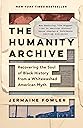
The Humanity Archive: Recovering the Soul of Black History from a Whitewashed American Myth
Product ID: 778353610
Desertcart purchases this item on your behalf and handles shipping, customs, and support to Senegal.
NOW IN PAPERBACK WITH BONUS MATERIAL, this NEW YORK TIMES Bestseller is a sweeping survey of Black history shows how Black humanity has been erased and how its recovery can save the humanity of us all. You're also getting an exclusive bonus chapter: "The Biggest Lies in American History." "An innovative reading of Black history, gracefully joining it to the larger history of all humankind." — Kirkus Starred Review Named by Essence Magazine as one of "31 Books You Must Read" in 2023. Using history as a foundation, The Humanity Archive uses storytelling techniques to make history come alive and uncover the truth behind America's whitewashed history. The Humanity Archive focuses on the overlooked narratives in the pages of the past. Challenging dominant perspectives, author Jermaine Fowler goes outside the textbooks to find recognizably human stories. Connecting current issues with the heroic struggles of those who have come before us, Fowler brings hidden history to light. Praise for The Humanity Archive: From the African Slave Trade to Seneca Village to Biddy Mason and more, The Humanity Archive is a very enriching read on the history of Blackness around the world. I was hooked by Fowler's storytelling and would recommend others who want to pore over a book that outlines critical moments in history—without putting you to sleep. — Philip Lewis, Senior Editor, HuffPost Fowler sees historical storytelling and the sharing of knowledge as a vocation and a means of fostering empathy and understanding between cultures. A deft storyteller with a sonorous voice, Fowler's passion for his material is palpable as he unfurls the hidden histories. — Vanity Fair Born in Louisville, Kentucky, Jermaine Fowler is a storyteller and self-proclaimed intellectual adventurer who spent his youth seeking knowledge on the shelves of his local free public library. Between research and lecturing, he is the host of the top-rated history podcast, The Humanity Archive , praised as a must-listen by Vanity Fair . Challenging dominant perspectives, Fowler goes outside the textbooks to find recognizably human stories. Connecting current issues with the heroic struggles of those who've come before us, he brings hidden history to light and makes it powerfully relevant. Review: Incredible read - Hard hitting, much needed check of privilege but so well written and informative. Review: Highly Recommend! - Jermaine Fowler’s The Humanity Archive accomplishes what few history books can: it transforms the act of reading into an experience of genuine connection. From its opening pages, the book establishes a rare and intimate tone, one that feels less like a monologue from an expert and more like a dialogue with a deeply knowledgeable and empathetic guide. Fowler doesn’t just want to inform you; he wants to engage with you, to think with you. This was the book’s most powerful achievement for me, it created the palpable sense of a shared intellectual and emotional journey. What I loved, and what sets this work apart, was Fowler’s masterful ability to weave rigorous scholarship with a narrative style that is both accessible and profoundly personal. He moves seamlessly from the macro to the micro: from analyzing the vast, brutal architecture of systemic oppression to telling the poignant, individual stories of resilience, ingenuity, and spirit that thrived in spite of it. He treats figures like Queen Nzinga, Frederick Douglass, and Harriet Tubman not as distant icons, but as complex human beings, restoring the full dimension of their humanity that a whitewashed history often flattens. This approach is what generated that remarkable feeling I had while reading: that Fowler was not only teaching me but was also attentively watching my reactions. The book seems to anticipate the reader’s questions and moments of skepticism. Just as I would wonder, “But what about the agency of those who resisted in quieter ways?” or “How did this logic persist in different forms?” the text would gracefully pivot to address that very line of inquiry. It’s a history that speaks to the present, constantly drawing clear, thoughtful lines between past events and contemporary realities, making the lessons of the archive urgently relevant. Ultimately, The Humanity Archive is more than a recovery of lost stories; it is a restoration of narrative sovereignty. Fowler recenters Black history not as a tangential sidebar to the American story, but as its beating, foundational heart, essential to understanding the nation’s identity, its conflicts, and its possibilities. His writing is clear, often lyrical, and charged with a moral clarity that never veers into sentimentality. I finished this book not only better informed but genuinely transformed in my perspective. It educated me, challenged me, and, true to its promise, made me feel more connected to the vast, intricate tapestry of human struggle and triumph. It is a necessary, powerful, and brilliantly executed work that reads like the most important conversation you’ll have all year. Highly, highly recommended for anyone seeking a history that is as intellectually rigorous as it is emotionally resonant.
| Best Sellers Rank | #881,331 in Books ( See Top 100 in Books ) #368 in Civil Rights #1,822 in Cultural & Ethnic Studies #3,824 in History of Civilization & Culture |
| Customer Reviews | 4.9 out of 5 stars 365 Reviews |
L**I
Incredible read
Hard hitting, much needed check of privilege but so well written and informative.
P**S
Highly Recommend!
Jermaine Fowler’s The Humanity Archive accomplishes what few history books can: it transforms the act of reading into an experience of genuine connection. From its opening pages, the book establishes a rare and intimate tone, one that feels less like a monologue from an expert and more like a dialogue with a deeply knowledgeable and empathetic guide. Fowler doesn’t just want to inform you; he wants to engage with you, to think with you. This was the book’s most powerful achievement for me, it created the palpable sense of a shared intellectual and emotional journey. What I loved, and what sets this work apart, was Fowler’s masterful ability to weave rigorous scholarship with a narrative style that is both accessible and profoundly personal. He moves seamlessly from the macro to the micro: from analyzing the vast, brutal architecture of systemic oppression to telling the poignant, individual stories of resilience, ingenuity, and spirit that thrived in spite of it. He treats figures like Queen Nzinga, Frederick Douglass, and Harriet Tubman not as distant icons, but as complex human beings, restoring the full dimension of their humanity that a whitewashed history often flattens. This approach is what generated that remarkable feeling I had while reading: that Fowler was not only teaching me but was also attentively watching my reactions. The book seems to anticipate the reader’s questions and moments of skepticism. Just as I would wonder, “But what about the agency of those who resisted in quieter ways?” or “How did this logic persist in different forms?” the text would gracefully pivot to address that very line of inquiry. It’s a history that speaks to the present, constantly drawing clear, thoughtful lines between past events and contemporary realities, making the lessons of the archive urgently relevant. Ultimately, The Humanity Archive is more than a recovery of lost stories; it is a restoration of narrative sovereignty. Fowler recenters Black history not as a tangential sidebar to the American story, but as its beating, foundational heart, essential to understanding the nation’s identity, its conflicts, and its possibilities. His writing is clear, often lyrical, and charged with a moral clarity that never veers into sentimentality. I finished this book not only better informed but genuinely transformed in my perspective. It educated me, challenged me, and, true to its promise, made me feel more connected to the vast, intricate tapestry of human struggle and triumph. It is a necessary, powerful, and brilliantly executed work that reads like the most important conversation you’ll have all year. Highly, highly recommended for anyone seeking a history that is as intellectually rigorous as it is emotionally resonant.
D**M
Good read
Good information, well laid out.
C**H
Excellent history book
Jermaine, the author, tells us the real Black history. Its a very good read. Great history lesson. Not what was taught in history class.
S**.
Accessible, well written, and valuable work of history and culture
I found Jermaine Fowler’s The Humanity Archive: Recovering the Soul of Black History from a Whitewashed American Myth (Row House, 2023) to be an accessible, well written, and valuable work of history and culture. This will make an excellent reference book on your shelf, a wonderful gift for a history/cultural studies lover, and also a good book to share and discuss so you get your money’s worth and have fun at book club. My kids will be reading this for homeschool work too:) I have enjoyed listening to The Humanity Archive Podcast (especially the episodes on Socrates and Pocahontas) and found reading Jermaine Fowler’s book an insightful extension of his podcast episodes, where you have a very smart friend sharing really cool historic insights in an accessible and thoughtful way that makes you actually enjoy learning (often difficult) historic lessons (and helping undue a bunch of the propaganda that you were taught as a child). I find Fowler’s teaching style to be solid, kind, and approachable, with excellent research and insights- it is exciting to learn from him and I am grateful that he keeps sharing the podcast episodes (and hopefully another book) soon. This is one of my favorite paragraphs of many, when he discussed folks enduring the times of the US slave society: “But it is important to remember that during this time people still clung to life: They still built communities and fell in love. They formed networks. They got married. They laughed. They joked. They played games. They hoped and dreamed. They raised children. They showed inexhaustible human fortitude and resiliency, a resiliency that is still part of Black culture.” (found on page 182). -Sarah B. (MA trained Historian, homeschool mom, and student of humanity) (received an Advanced Copy before my hardback copy I bought mailed and will be buying more books as gifts- Hello History Holidays 2023: )
Trustpilot
2 months ago
2 weeks ago