Desertcart purchases this item on your behalf and handles shipping, customs, and support to Senegal.
๐ฅ Stay ahead of danger with smart, seamless heat detection!
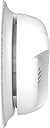
The First Alert HD6135FB Hardwired Heat Alarm combines advanced rate-of-rise sensing and a fixed 135ยฐF trigger to detect dangerous heat levels quickly. Designed for areas unsuitable for smoke alarms, it features a loud 85-decibel alarm, 120V hardwired power with 9V battery backup, and remote mute/test capability via household remotes. Interconnectable with up to 18 devices, it offers comprehensive, reliable fire safety with minimal false alarms.


| ASIN | B000Q6LXW2 |
| Alarm | Audible |
| Best Sellers Rank | #16,172 in Tools & Home Improvement ( See Top 100 in Tools & Home Improvement ) #38 in Smoke Detectors & Fire Alarms |
| Brand | First Alert |
| Built-In Media | 1 pk |
| Color | White |
| Compatible Devices | Angle Grinder |
| Customer Reviews | 4.5 out of 5 stars 786 Reviews |
| Enclosure Material | Plastic |
| Global Trade Identification Number | 00029054508102 |
| Item Dimensions D x W x H | 2"D x 2"W x 2"H |
| Item Type Name | GAS_SMOKE_FIRE_ALARM |
| Item Weight | 9.6 ounces |
| Manufacturer | First Alert / BRK Brands Inc. |
| Manufacturer Warranty Description | Warranty |
| Mfr Part Number | HD6135FB |
| Model Number | HD6135FB |
| Number of Items | 1 |
| Power Source | Battery Powered |
| Product Dimensions | 2"D x 2"W x 2"H |
| Product Style | Heat Alarm |
| Style | Heat Alarm |
| UPC | 029054508102 029054509321 |
| Unit Count | 1 Count |
D**P
Easy and perfect
Easy to install. Works perfectly.
D**D
For my garage
I needed to replace my garage fire alarm. This is the newer version of whatโs there before. Iโve had it for a few months. No problem. Easy install and looks good.
J**A
Usual First Alert high quality
I love First Alert products and recently replaced all my older smoke/CO ones with the First Alert 10 year re-chargeable ones. I am a safety freak but make no apologies. I found that you cannot use regular smoke/CO units in a garage because they get confused with the pollution normally present in garages. My concern was "Who is BRK". It was only after some research that I found BRK is First Alert's parent company, so you getting the same quality product. Installation is straightforward and I fount it totally compatible with my other First Alert 10-year smoke/COs.
R**.
An inexpensive fix for fire protection
Set it up in garage as smoke/co2 detectors are not recommended . Simple to wire. Seemed to work as expected using a hairdryer as a heat source. Audible alarm at a frequency that my hearing aids don't pick up well but another person said it was loud. Appears to be an inexpensive fix for fire protection.
C**S
No more false alarms
Replaced my wired smoke with this heat and stopped having false alarms from kitchen smoke
M**Y
Simple installation; integrates well with other BRK hardwire alarms
Smoke and CO alarms are essential for most spaces in a residential structure. They are not appropriate in areas where smoke, high humidity, airborne particles, or trace amounts of carbon monoxide are considered normal. This includes furnace rooms, laundry rooms with gas-fired dryers, and similar rooms. The HD6135FB heat alarm is the right device for these areas. It is similar in appearance to the BRK smokes and smoke/COs that are part of my installation, and interconnects seamlessly with them. For new construction or renovation, installation is as close to turnkey as it gets. Install a dedicated 3-wire circuit that hits all of your alarm locations. (The third wire, usually red, is a signaling trunk for the alarms. It must not be connected to current.) Install a ceiling work box at each location. A separate plastic mounting ring is attached to the ceiling box with the included screws. Connections are made to a pigtail connector: black to black, white to white, and red to orange (which needs to be stripped). No ground. Attach the connector to the alarm, and rotate onto the mounting ring. Pull the plastic battery disabling strip from its slot, and your installation is complete. This device includes an infrared remote sensing module, which responds to just about any button press from most consumer electronics remote controls. In my tests, it did not work with my Onkyo receiver's remote, but responded just fine to VOL or CHANNEL presses from my TiVo remote. This is a clever and insightful application of what amounts to "spare parts." I would guess that many people have remotes to products that they no longer use. Throwing in a couple of batteries and leaving this near the alarm is a great reuse of an otherwise-useless device. This alarm is designed to sense temperature rises, and will thus work well in locations that are inherently high-temperature, such as a furnace room. For obvious reasons I don't plan to test it with live flames, but will need to trust the manufacturer and Underwriters Labs on this one. The horn is loud, though this is not relevant in my application because an interconnected smoke in my bedroom will also sound if the alarm is triggered. The interconnect system works as designed, and the latching feature (a red light continues to blink after the alarm condition goes away, so you know which one tripped the system) is useful. I recommend this unit as part of a larger system.
D**G
Chwck for loose wire as last step during installation
False alarm in attic first night. Loose wire.
I**E
From Kidde to BRK
[This is the same review that I posted for the BRK 9120 smoke alarm, except for the information beginning with "NEW."] I have a house that's ~14 years old, with an interconnected Kidde smoke and heat alarm system. One of the alarms started going off randomly, and since I couldn't detect the culprit, I decided to replace all of the alarms. Turns out that smoke alarms should be replaced every 10 years anyways. Doh! I bought six of these smoke alarms and three heat detectors; these detectors will tell you which one sounded if they are triggered, and they are very inexpensive. I am assuming that they'll work in a real emergency. :) The installation was quick, about five minutes per alarm. For each alarm, I removed the Kidde alarm entirely (alarm + mounting plate + three-wire connector) and then installed the BRK alarm (three-wire connector + mounting plate + alarm). The BRK alarms do not come with mounting screws or wire nuts, but I already had these from my prior alarms, so not a problem. With regard to battery backup, you only need one 9-volt battery for an entire interconnected system. The BRK heat alarms I got have battery backup, so I didn't need battery backups on the smoke alarms. Note that Kidde and BRK alarms are not compatible on an interconnected system, so you have to go all Kidde, or all BRK/First Alert alarms (the same company makes both BRK and First Alert). Also, the Kidde and BRK three-wire connectors are different, so you cannot reuse the connectors. The only possible gripe I have is that once the BRK connectors are plugged in, they're very tough to unplug. Perhaps this is a good feature with regard to safety! [NEW] While not entirely a gripe, the foam label on the back of the heat alarms surprised me since it made inserting the alarm into mounting plate difficult. On my first heat alarm, I trimmed the foam off, thinking that it was a production mistake, but then the heat alarm didn't entirely lock well into the mounting ring. Since the other two heat alarms also had (what appeared to me to be) oversized foam labels, I left those labels as is, for a friction-based attachment to the mounting ring (versus a locking attachment). Not a big deal in any event, just leave the foam label intact. And finally, I wrote the installation month and year in black marker on one of the alarms, to aid in reminding me when to replace them, although I probably should have used their "born on" date, June 2011, or better yet, written "6/2021" as the expiration date.
Trustpilot
4 days ago
2 months ago