
Desertcart purchases this item on your behalf and handles shipping, customs, and support to Senegal.
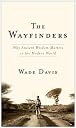
Every culture is a unique answer to a fundamental question: What does it mean to be human and alive? Anthropologist and National Geographic Explorer-in-Residence Wade Davis leads us on a thrilling journey to celebrate the wisdom of the worldโs indigenous cultures. In Polynesia we set sail with navigators whose ancestors settled the Pacific ten centuries before Christ. In the desertcart we meet the descendants of a true Lost Civilization, the people of the Anaconda. In the Andes we discover that the Earth really is alive, while in the far reaches of Australia we experience Dreamtime, the all-embracing philosophy of the first humans to walk out of Africa. We then travel to Nepal, where we encounter a wisdom hero, a Bodhisattva, who emerges from forty-five years of Buddhist retreat and solitude. And finally we settle in Borneo, where the last rainforest nomads struggle to survive. Understanding the lessons of this journey will be our mission for the next century. For at risk is the human legacy ย a vast archive of knowledge and expertise, a catalogue of the imagination. Rediscovering a new appreciation for the diversity of the human spirit, as expressed by culture, is among the central challenges of our time.
| Dimensions | 5.25 x 0.75 x 8 inches |
| Edition | First Edition |
| Isbn 10 | 0887847668 |
| Isbn 13 | 978-0887847660 |
| Item Weight | 9 ounces |
| Language | English |
| Print Length | 280 pages |
| Publication Date | October 13, 2009 |
| Publisher | House of Anansi Press |
User
A Fascinating Constellation of Cultures
Birdcalls echo in the rainforests of Borneo as the Penan hunter crouches before a kill. Inuit glide across the wind-scoured ice. Kogi priests traverse Colombian coral reefs and cloud forests to learn contours of the landscape entrusted to their care. In the published edition of his five Massey Lectures, Wade Davis seeks to answer the question โWhat does it mean to be human and alive?โ with portraits of culture spanning centuries and terrain. Itโs a rare work of anthropology illustrating the vitality of human imagination from Himalayan peaks to the southern sea; Davis brings new attention to peoples still practicing ancient arts and writes with the voice of a lyrical novelist. Anything but a detached textbook, it remains a work as fascinating as it is beautiful to read. And in depicting new dreams of the Earth, Davis presents one of his own.Why do we speak the languages we do? How did humanity journey out of Africa millennia ago and come to settle every corner of the habitable world? In examining the planetโs constellation of cultures, Davis argues that thousands of languages and millions of lifeways are as threatened as species comprising the biosphere. The loss of either has equal significance for the flourishing of our world. To read his book is to discover a love letter to our species and develop a new understanding of the diversity of human endeavor. The images are robust: San sipping water from ostrich eggs beneath the sweltering Kalahari sun, a steadfast wayfinder aboard the open-decked Hokuleโa crashing through waves on a journey across the Pacific and into the Polynesian spirit, travels into the jade canopy of the Amazon rainforest - realm of the jaguar shaman. A former National Geographic Explorer-in-Residence, Davis writes from firsthand experience based on decades of fieldwork and creates a sense of eyewitness any travel writer would envy while never deviating from scholarly precision.As a historical text, the book is exhaustively researched and includes an annotated bibliography with years of reading material for those interested in anthropology and natural history. While acknowledging Western cultureโs triumphs and contributions, Davis also explores the consequences of colonialism. Losing connection with other ways of living carries environmental and psychological costs, and the character of culture is inextricably linked to the spirit of place. The Tendai marathon monks of Japan, Andean pilgrimages, or Songlines of Aboriginal Australia represent exquisite achievements in human thought, and Davis interrogates the extent to which a singular culture produces a singular mindset. Yet the book remains hopeful. Why does Davis have faith in our ability to mend ages of destruction? Because of the tenacity and ingenuity of the human journey he himself celebrates. An unforgettable read both for the energy of its author and the poetry of its language, The Wayfinders inspired me to pursue anthropology more than any other text.
User
A captivating book
Davis seems to have been EVERYWHERE, but never loses that sense of awe and wonder that pushes the reader to genuinely think about human experiences beyond his/her own. He notes that cultures and languages are being lost at a rate greater than biodiversity loss, and the wonders of human achievements and resilience are being wiped out. Culture is a funny thing: It can unite societies, but it is immensely fragile. Thousands of years of adaptations, oral history and knowledge, can be be wiped out within a single generation of ignorance and neglect.The book explored the various ways different cultures found their way in the world. Some examples: Aborigines practiced environmental stewardships for TENS of thousands of years, although they have no need for the concept of linear time. Polynesian navigators became human supercomputers in order to find specks of land across the vast Pacific Ocean without compasses, sextants, and GPS's. Nomadic tribes in Northern Kenya accrued huge herds of cattle as an adaptation to a land of recurring drought. These practices were all woven elaborately into the customs and traditions of each unique culture; it's all very fascinating stuff.In modern times, we have a tendency to dismiss these incredible and ingenious achievements that allowed indigenous people to survive and thrive. Sometimes it's unintentional; other times it's outright disturbing. Heyerdahl of the Kon-Tiki fame, ignited the public's imagination with his voyage across the Pacific, but dismissed the reams of evidence that pointed to this great achievement was of Polynesian origins. An Australian politician in the 20th century declared that "there is no scientific evidence the the aboriginal is a human being at all", a commonly held notion that led almost to the extinction of one of the oldest and continuous ways of life in the world. Development agencies, with the noble intentions of helping nomadic tribes settled, destroyed a culture that was developed around surviving drought.All of these intriguing insights address the central question of the book: Why are cultures worth saving? I'll leave with one of the most powerful passages of the book:"Were I to distill a single message from these Massey Lectures, it would be that culture is not trivial. It is not decoration or artifice, the songs we sing or even the prayers we chant. It is a blanket of comfort that gives meaning to lives. It is a body of knowledge that allows the individual to make sense out of the infinite sensations of consciousness, to find meaning and order in a universe that ultimately has either. Culture is a body of laws and traditions, a moral and ethical code that insultates a people from the barbaric heart that history suggests lies just beneath the surface of all human societies and indeed all humans. Culture alone allows us to reach, as Abraham Lincoln said, for the better angels of our nature. (p. 198)"Powerful stuff.I highly recommend this book. As modern Western culture continues to grapple with issues of depression, meaning, and what it means to become an adult human being, I can't help but feel that there are things we can learn from other
User
Fascinating reading
Proabably a little premature to review this when I am only up to chapter 4 .... but I am very much enjoying this book. Not only am I finding it hard to put down but am also reading out paragraphs to my husband. I often feel that we have more than proven ourselves as incredibly intelligent but that along our way to proving this we have lost our wisdom. Davis puts this focus of ours into a cultural context as he shows ways in which non-western peoples have focussed their own intelligence in ways that have had just as incredible results as our own with our focus on technology. From the navigational expertise of the Polynesians to the spiritual memories of the Aborigines of Australia, Davis shows us that every population across the worls has something uniquely miraculous to contribute to the story of human intelligence. Now we just have to learn to repect others and be a littlw more humble about our own .... hopefully he will cover some of that by the end of the book.
User
You can feel the author's passion for his life's work!! Excellent!
I really enjoyed this book. I read it over the course of 3 or 4 days in my spare moments. It's historical and researched, but also written with evident passion and poetry. I really found informative the chapter of the South Pacific and the settling of those areas and the navigation of the seas without modern day equipment, rather only using the position of the stars, the feeling of the current, the birds as signs to how far you have to go. It was incredible. The idea of living generation after generation on islands surrounded by the ocean.What the book helped me see is an understanding of nature that these groups of people had and NEEDED to live and survive. For example, the people of the Kalahari. I felt as if there existence itself was so precarious, and that it is amazing that they survived and lived in such a harsh climate, and that through this necessity they learned over years how to literally suck the life out of this desolute landscape to stay alive and survive.There was a great line in the last chapter, Century of the Wind, that painted a picture in my mind, a little more close to home, of this past world that has been erased in my own home. It says, "As late as 1871, buffalo outnumbered people in North America. In that year one could stand on a bluff in the Dakots and see buffalo in every direction for 50 kilometres." Wow.Overall, what I saw in this book was the passion of a man who has obviously dedicated his life to studying people groups outside of todays mainstream society and what we see are lives and languages and wisdom that are lost or are on the precipe of being lost forever. For example, every 20 days one of the worlds languages slips into oblivion when the last elder of that people group die.Also, do I think that due to this, we should go back to some idyllic way of living? That the ways of these older groups were inheritantly more peacful than ours? Yes and no. Like the author says, a good anthropologist, doesn't withold judgement of a society but rather suspends it, in order to understand it and learn from it. There were obviously broken parts of these societies, much like our own. But rather, I wish we had approached them with a little more humility and willingness to listen and learn.
User
pouring us a truly sweet sip of the great adventures of which he has ...
So rarely can a single book, much less a non-fiction book, awaken the mind with such luminescent intelligence, kick-start the heart with its poetic prose and set a cleansing fire to the spirit with its primordial truth. While Wade Davis masterfully navigates us through the far-flung hidden waters of our own world, pouring us a truly sweet sip of the great adventures of which he has embarked, this book is not just about the journeys of one man or of one people. It is about all of us. It is about where we came from, where we are, and what we must do moving forward, for all of us. With his words, Davis builds a shelter in our minds and hearts with wisdom dug deep from the soils of our human earth. With every passing page, the weight of what has happened, what is happening, and what will happen to us all if we don't protect and reconnect with our ancient roots, transcends the page and mind to sit heavy on the heart . . . and yet, the lightness of hope and the sheer wondrous beauty of our living brothers and sisters loving us from afar, inspires one to take flight.Davis can and does speak to the scholar in us, but he prefers to connect with us, and connect us all, as compassionate sentient beings inhabiting a planet together; as collective caretakers of culture; protectors of a deep truth that has bound us all since the beginning, but is being tragically bulldozed and blanketed by the belief that tomorrow's days cannot include yesterday's dreams: the peoples who still embody, on this day, our ancient noble lineages and sacred truths. Far from being foregone conclusions; by-gone anachronisms doomed to dust, Davis reminds and re-inspires us that these cultures in his book are in-fact whom we should aspire to be like. He gives them their long overdue respect as the phenomenal blood-pumping beings that they are, not just some scholarly subject of habits and rituals or overly mystified as quaint characters in an exotic fairytale. Far from it: their actions, traditions, wisdom and convictions soar above our modern selves.If you can't tell by now, this book touched every sense and sentience I have, every step of the way. Such is the calling card of a true masterpiece. It has and continues to inspire me on a weekly basis, its words and message forever a part of me, its cause now my own. If I had all the money in the world, I would hand out a copy to all and make it required reading of schoolchildren in every country. My hats off and sincerest gratitude to Mr. Wade Davis.
User
A Celebration of the Ethnosphere
The profoundity, subtelty and literary brilliance of this book are hard not to extol. ยจMy goal,ยจ Wade Davis writes, ยจwas not to document the exotic other, but rather to identify stories that had deep metaphorical resonance, something universal to tell us about the nature of being alive.ยจ This goal is the main current that courses through the peaks and valleys of the book -- the mosaic of stories put together to shed luminous light on the theme of what it means to be alive and to be human. Reading without this objective in mind, I think it is easy for many to lose sight of the purpose of the many stories in the Wayfinders: to challenge through the tools of ethnography, history, and philosophy the belief in the objectivity of certain paradigms of life. The existence of a ยจparagon of humanityยจ or an ยจobjective standard of livingยจ or ยจmodernityยจ -- ideas often taken for granted as being universal across socio-cultural contexts -- are beautifully analyzed in light of the many histories and cultures Wade Davis explores throughout the Wayfinders. His analysis, apart from being beautifully and often poetically articulated, leaves us with a set of penetrating insights that challenge and problematize our all-too-common views of the urban/rural divide, beliefs about who is advanced and who is primitive, and lead us to a conclusion that, I think, we all know in our hearts is and always has been true: ยจthat all peoples ought to have the right to choose the components of their lives,ยจ whether that is how they choose to see the world, the way of life they choose, or even the languages they seek to preserve. I sincerely believe that this a book which will be celebrated for decades to come, and one which has made a worthy contribution to the collective consciousness of many societies in a world dominated by the forces of Westernization and globalization. Thank you, Wade.
User
Enlightening
Love this book
User
Well informed but dry...
I'd like to rave about this book as the Wayfinder was a breakthrough paradigm for me when I read Martha Beck's book Finding Your Way in the Wild New World. I can't quite manage though as this turns out to be a rather dry, albeit well informed academic writing. If you don't mind the more research oriented approach, read it. Otherwise read Martha Beck's and, strangely enough, watch Moana, a Disney animated film that truly depicts the Wayfinder in a magical fashion.
User
Important Theme & Writing that Flows
Reading Wade Davis reminds me in a way of how I felt about certain pop stars when I was in my early teens. I am overwhelmed by his writing talent, but even more overwhelmed by his intellect.....much better reasons to be so enthusiastic than about the dulcet tones of Elvis.....but I am certainly a "fan." His writing flows, and although his language is intelligent, it's also very readable. I would guess that his passion for his subjects beams through. Not the first, nor the last of his books for me, and the subject matter? I think the subtitle sums it up, "Why Ancient Wisdom Matters in the Modern World." The book is well described on its back cover, so you don't need anyone like me to tell you more - except that Wade Davis is an exceptional mind, and a thorough researcher, so his words have authority as well as beauty.
User
Must read!
A great book!
User
What an interesting read
Wade Davis is a fantastic writer (also get One River if you can). This book is very informative, especially for people who have been to Australasia and South America. It gives us a great insight into how most of us have lost ancient skills because we rely too much on tools, rather than our own bodies and minds. Unfortunately, those who still have the skills are a dying breed.This is not an easy read, but the way Wade Davis writes makes the whole story and the information accessible and enjoyable.
User
Magnifico
Magnifico libro que recomiendo mucho a los que les interesa la historia de las culturas en el mundo
User
Iโm particularly interested in worldviews and how they can change over time and this book describes in wonderful detail how indi
This was an incredibly thought provoking and fascinating read. Iโm particularly interested in worldviews and how they can change over time and this book describes in wonderful detail how indigenous cultures express the "human spirit," as Davis says. What is perhaps most incredible about these cultures is that despite unbelievable odds -- including the theft of lands, language, culture, and even children -- many have managed to persist even today. Wade Davis' book is important for so many reasons but for me it is particularly salient given our current trajectory toward annihilation -- fuelled by our addiction to endless growth on a finite planet. A change in worldview (here in the west) that incorporates ancient (and current) indigenous knowledge and honours our relationship with the living world will be essential in order to reverse the damage we've already done. This book is essential reading if you're interested in a livable future.
Trustpilot
1 day ago
3 weeks ago