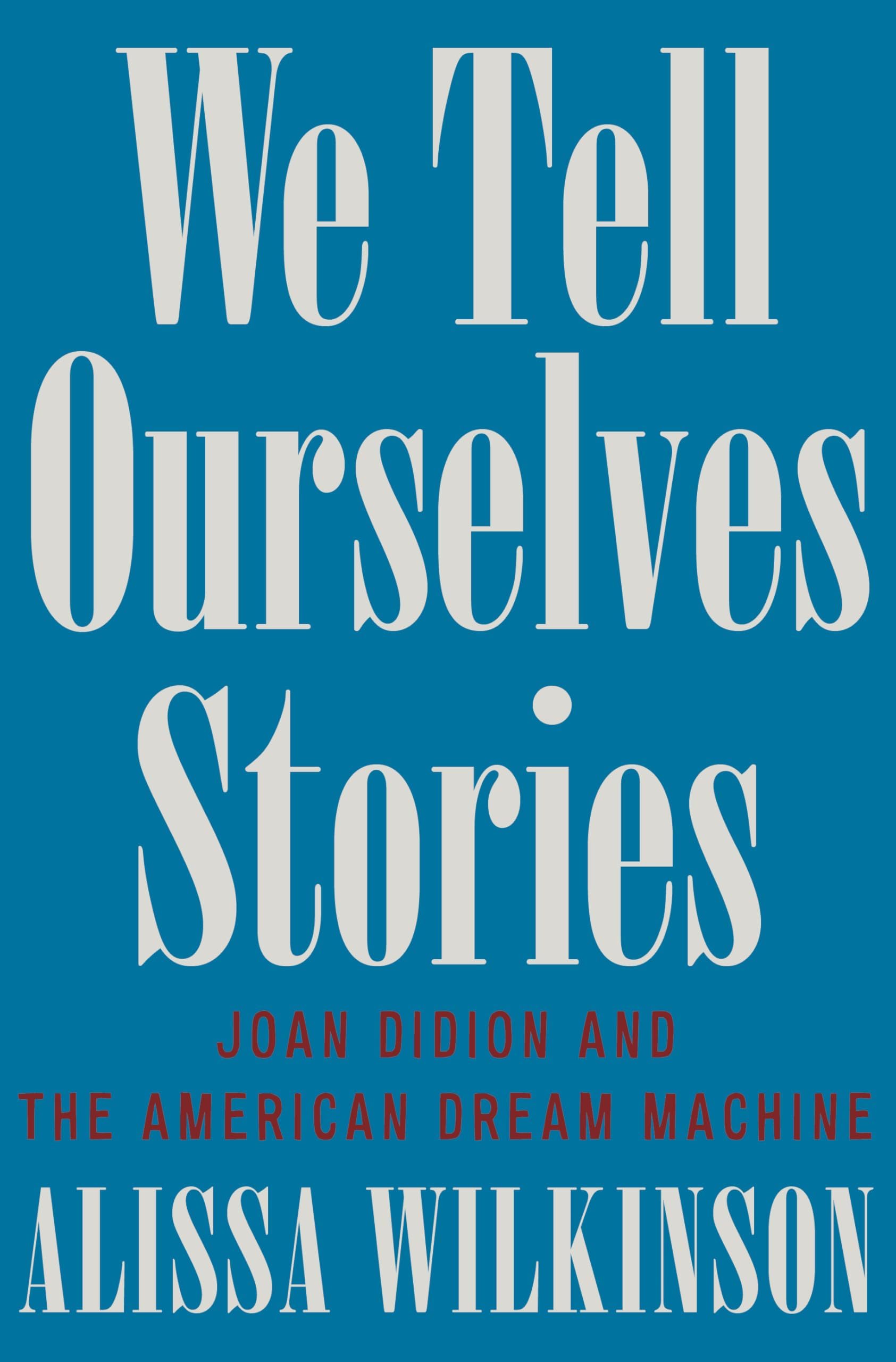
We Tell Ourselves Stories: Joan Didion and the American Dream Machine
Product ID: 639166767
Desertcart purchases this item on your behalf and handles shipping, customs, and support to Senegal.
Longlisted for the 2025 Andrew Carnegie Medal for Excellence in Nonfiction Most Anticipated Books of 2025 • Washington Post , Los Angeles Times , W Magazine , The Millions Best Books of Spring 2025 • Oprah Daily , Town & Country “Sharp, elegant and eye-opening . . . a crucial toolbox for understanding both Joan Didion and Hollywood.” ―Emily Nussbaum Joan Didion opened The White Album (1979) with what would become one of the most iconic lines in American literature: “We tell ourselves stories in order to live.” Today, this phrase is deployed inspirationally, printed on T-shirts and posters, used as a battle cry for artists and writers. In truth, Didion was describing something much less rosy: our human tendency to manufacture delusions that might ward away our anxieties when society seems to spin off its axis. Nowhere was this collective hallucination more effectively crafted than in Hollywood. In this riveting cultural biography, New York Times film critic Alissa Wilkinson examines Joan Didion’s influence through the lens of American mythmaking. As a young girl, Didion was infatuated with John Wayne and his on-screen bravado, and was fascinated by her California pioneer ancestry and the infamous Donner Party. The mythos that preoccupied her early years continued to influence her work as a magazine writer and film critic in New York, offering glimmers of the many stories Didion told herself that would come to unravel over the course of her career. But out west, show business beckoned. We Tell Ourselves Stories eloquently traces Didion’s journey from New York to her arrival in Hollywood as a screenwriter at the twilight of the old studio system. She spent much of her adult life deeply embroiled in the glitz and glamor of the Los Angeles elite, where she acutely observed―and denounced―how the nation’s fears and dreams were sensationalized on screen. Meanwhile, she paid the bills writing movie scripts like A Star Is Born , while her books propelled her to celestial heights of fame. Peering through a scrim of celluloid, Wilkinson incisively dissects the cinematic motifs and machinations that informed Didion’s writing―and how her writing, ultimately, demonstrated Hollywood’s addictive grasp on the American imagination. More than a portrait of a writer, We Tell Ourselves Stories shines a new light on a legacy whose impact will be felt for generations.
| Dimensions | 6.3 x 1.1 x 9.3 inches |
| Isbn 10 | 1324092610 |
| Isbn 13 | 978-1324092612 |
| Item Weight | 1.01 pounds |
| Language | English |
| Print Length | 272 pages |
| Publication Date | March 11, 2025 |
| Publisher | Liveright |
User
Very Well Written Story
Very well written and insightful bio of Joan Didion.
User
Life Changes in the Instant
This brilliant effort by critic Alissa Wilkinson explores Joan Didion's writing throughly, and discusses many of the ways the movies influenced her. Didion may have been the first to pick up on the way American politics has become a Hollywood production.I have read several of Didion's novels, and most of her non fiction books, but Wilkinson is well informed on both.From a perspective of 60 odd years, it is now pretty clear that Didion was the writer who got the 60s right, with her books Slouching Toward Bethlehem and The White Album, capturing both the events and the public reaction to them. Of the Manson killings: "I remember no one was surprised." Of The Cold War: "It seemed very hot at the time."In the late 20th century, she recognized much of Reagan's foreign policy initiatives as driven by Reagan casting himself in the role of John Wayne.While I loved the book, I think the author may have missed an opportunity by not giving us much insight into John Gregory Dunne, her husband and script writing partner when they moved back to California. It would have helped detail the couple's Hollywood years, and helped set the stage for Didion's late in life masterpiece, The Year of Magical Thinking, which she wrote following his sudden, massive, fatal heart attack.Personally, I just don't agree with the critics, Wilkinson included, who regard Magical Thinking as an outlier in Didion's work, as it was so deeply personal. I feel she was a hard nosed reporter here as always, and in this book just turned the lens inward. (She was 71 when the book was published, and it is rare that great art is produced at that age.).The book's strengths include detailing the writing process in several media - prose, film and theater.Highly recommended and I don't think you have to be a Joan Didion fan to enjoy it. Of course, it helps, and I suspect her fans are the intended audience.
User
Classic Didion!
For Didion lovers, there are never enough of her works to grow dull!
User
Wilkinson Explains Didion
One year since the publication of this book, the adoration of Joan Didion has progressed beyond a mere trend into a full-blown cottage industry. But there's no reason to hold it against this ambitious little tag-along. Wilkinson is well acquainted with her subject, and although she neither knew Didion personally nor had access to her papers, her project is well researched and thematically cohesive. A former film explainer at Vox, Wilkinson has a gift for synthesizing disparate strands of information and making strong connections between ideas. She offers a satisfying hypothesis as to why Didion, a one-time conservative Republican and John Wayne megafan, had no truck with Reagan. (In sum, she liked to keep her categories discrete, and when Hollywood crossed over into politics, she balked.) The title of the book, which borrows the first four words of an existing Didion collection, exudes confidence, as does the spare, handsome cover design. The tone throughout is scholarly yet accessible, seeking a shared border between biography and Hollywood history. Wilkinson tackles the dense subject matter with the determination of a grad student facing a term paper deadline. The index is plump with citations. In short, the author has done her homework. And this, perhaps, goes some way toward explaining why the book, despite enthusiastic endorsements and positive reviews, never quite became a bestseller. It's a bit too polite, a bit too pedagogic, a bit too careful not to offend the liberal readership for which it was intended. The de facto position of Didion scholars is to view her as America's peerless prophet and diagnostician of moral decay, and Wilkinson marches in lockstep with her predecessors. In the effort to connect Didion's views on the Hollywoodization of politics to Where We Are Now, the dots join up a little too easily.Addendum: I listened to the audiobook the day it dropped on Hoopla. Wilkinson does a marvelous job of reading her own prose, though certain names--Claudette Colbert, Ramon Navarro, Wojciech Frykowski, Alan Pakula--are casualties of mispronunciation. I'm happy to report that the error regarding the date of JFK's assassination has been corrected. (The faux pas regarding Raiders of the Lost Ark coming out the same year as The Empire Strikes Back will have to wait for a later edition.)
Trustpilot
3 weeks ago
5 days ago