Desertcart purchases this item on your behalf and handles shipping, customs, and support to Senegal.
❄️ Keep your insulin cool and your travels cooler!
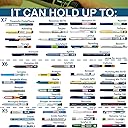
The 4ALLFAMILY Voyager Insulin Cooler is a TSA-approved, USB-powered travel case designed to maintain a stable 36–46°F temperature range, preserving insulin effectiveness during flights and road trips. Lightweight yet spacious, it holds up to 7 insulin pens or vials, features an auto shut-off thermostat to prevent freezing or overheating, and operates quietly under 40dB. Compatible with multiple USB power sources and equipped with a freeze pack and carrying bag, it’s the ultimate travel companion for managing diabetes on the go.


| ASIN | B0CQWSMB7M |
| Best Sellers Rank | #34,978 in Health & Household ( See Top 100 in Health & Household ) #61 in Diabetic Care Organizers & Travel Kits |
| Brand Name | 4ALLFAMILY |
| Closure Type | Zipper |
| Color | BLUE XL |
| Customer Reviews | 4.3 out of 5 stars 978 Reviews |
| Global Trade Identification Number | 00197644423002 |
| Handle Type | carrying handle |
| Item Weight | 3 pounds |
| Manufacturer | 4ALLFAMILY |
| Manufacturer Part Number | Voyager |
| Material Type | Polyurethane Foam |
| Model Number | Voyager |
| Number of Compartments | 2 |
| Number of Items | 1 |
| Pattern | Solid |
| Size | Large |
| Style Name | Travel |
| Unit Count | 1 Count |
| Water Resistance Level | Not Water Resistant |
T**R
This unit works great, if you have problems with yours, read this review!!!
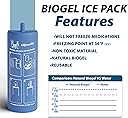
This top paragraph is an update after 2.5 years of ownership. I use this unit for travel, so I do not use it constantly. After 2.5 years of use the fan is starting to fail. This is not unexpected, small fans like this unit has inside cannot last forever. This unit requires the fan to move enough air to cool the hot parts of the unit. When the fan fails, the hot parts heat the entire unit! It heats to about 97 degrees according to the temperature readout of the unit. This is actually the expected failure mode. Essentially the heat pump in the unit is still working, but it needs the fan running to work correctly. I would like to ask the manufacturer to do something to address this issue. The fan is easy to replace, I would suggest that the unit be redesigned to make it easier to open, and that replacement fans be made available. Also the unit should have a mutable alarm for temperatures above ambient. It it is starting to act like a heater, the user should be warned. This is still a positive review, I still like the unit, I simply have experienced the end of life of the fan. I will replace the fan, and it should work like new. If you think "this is bad because the fan can die", all medication chillers that run on electricity will have a fan of some sort, and fans can fail. Small fans cannot be made to run forever. They clog with dust, and the bearings wear out. They should be replaced every couple years. Your PC has small fans in it, it will start acting bad when one dies, it is a $10 part, but some people replace the whole pc because they don't know any better. There is another reviewer that charted the temperature performance but he gave it low marks because of the failure modes such as loss of power could result in lost medicine.... And to his post I would have to agree, as it dovetails into my failure mode from the fan. The seller should add a second model to their lineup that includes wifi/blutooth with a cloud app and notification service that can alert caregivers and the user's phone. This will add around $10 in hardware costs, though it may be lower if they simply delete the existing chips and start with a wifi imbedded cpu. The upgrade will require software and will add $100 worth of value, so it can be the higher-end model. I could write a book on the features it needs...- In 15 minutes, I was able to cool the unit from a reading of 87°f to 36°f using the supplied cable and charger, in a room that was 74°f. I see a lot of complaints that are related to improper use. If you are having problems, read and understand this whole review. This unit does work, and it's limitations are in the instructions, but it may take an engineer to understand the limitations and explain them properly. I am an electrical engineer. And I happen to have very specific knowledge about how this unit operates, and why some people have issues with it. This is a 10 watt rated peltier junction refrigeration device. As long as the fan works, this unit will be functional as the solid state nature of the cooling device should have it last a lifetime. But for it to work for you, you will need to understand how to power this unit. This unit has a short USB C cable, and requires a power supply that can handle 5v at 2 amps to supply the rated power of 10 watts. If you don't use the power supply that came with it, you may have trouble finding USB ports that put out enough power. The standard USB2 port can only put out 1/4th the power this unit is rated to use. If you plug it into a standard USB port, the unit may only provide a tiny amount of cooling, and it may not be enough if it is in a warm location. This unit draws 1.5A of power when it is cooling, and if your power supply can't put that much power out, the cooler may not have enough power to do the job. This is important to understand... This unit can provide a maximum of 50° of cooling. That means if you want it to never get above 47° it must never be stored above 97° with insulin inside... If you put it in the trunk of the car on a 110° day in the Texas sun, the inside of the trunk may get as hot as 150°. at that temperature the coolest your medicine will be is 100°. On a hot dashboard where I have measured temperatures of 170°, you can expect internal temperatures no cooler than 120°. The 50° cooling this unit provides is a real limit, so plan accordingly. This is a reliable device, but power cords are frequently mistreated, so buy extras, and don't buy the cheapest cord you can get. To provide the 2 amps of power, you need a proper thick usb A to C cable that is capable of carrying power, so look for cables labeled "quick charging" to insure they are designed to carry the rated power. If you want a long cable, it must be thicker, so get one rated for 100 watts or more (for best results). The longer the cable, the less cooling you will get, so even though this is a 10 watt device, the reduced voltage drop from a 100 watt cable will provide help you get the maximum cooling. And if you use a power bank, be aware you will be drawing 8 watts when it is cooling, and in a warm location that drain will be continuous. Most power banks are rated at a higher wattage than they actually support, so it is best to assume the power bank will only put out 25% of the claimed power, but it could be as much as 75% from a high quality brand, but most you see on amazon are going to be closer to the 25% range. This unit draws 1.5Amps, that is 1500 miliamps. So to run this unit for 24 hours in a warm location, it wants 1500 miliamp hours of power per hour, so 36,000 mah per day. a 30,000 mah power bank *should* run this for exactly 20 hours, but in my experience you can expect 5 hours from cheap power banks, and perhaps 15 hours for a good power bank rated 30,000mah. The reasons the ratings don't provide real-world results is the batteries are 3.7v rather than 5v, so power is reduced by stepping the voltage up to 5v, and it is further reduced because 95% of the batteries from china do not actually hold the amount of power they claim, so the rating of the power bank will be off by however big the lie was when they sourced their batteries. And finally, this unit turns off cooling at 36° and turns it back on at 46°, so the temperature will cycle across that range. I use two insulin and one liraglutide products. The strorage instructions are long term storage in the 34-45°f range, and storage BELOW 80°f for up to 30 days after first use. I have changed brands several times, these temperature ranges are common to all of the insulin/diabetes injectables I have used. so if you are carrying a 2 week supply, for 2 weeks, then 79°f is a target temperture to stay under (you guys that think you must have insulin be refrigerated all the times are either wrong, or you are using a cheap and unstable form of insulin. The point is I read a lot of reviews of people that claim cooling requirements that may not be actually true. Read the whole label on your injectables, not just the part that says keep refrigerated. Mine say below 80 for up to a month. Most of yours will too. The important thing here is this means that the maximum powered storage temperture for a 2 week supply is 79°f, which with the 50°f cooling capacity means your medications can be kept safe up to around 120°f if fully powered and out of direct sunlight. Direct sunlight will add heat. The biogel will work at higher temperatures, but the hotter the shorter it lasts. If you are packing without power, I would generally trust the ratings of the biogel, as that is a reliable source of cooling. If you travel by plane, be aware that the biogel must be frozen to get past security. If it is melted, you will not be allowed to have it in carry on luggage, and they will make you throw it away. So using the biogel for air travel requires you to have it fully frozen in security, or you will need to pack it in checked luggage. But if your luggage is lost, all bets are off as to the condition of your medications, as they might spend a week in a metal box in the sun at an airport, so a reason TO and a reason NOT TO store in checked luggage. Decisions decisions. Buy two coolers and store half of your supply in checked luggage and half in carry on. So to recap: - provide power from a "fast charge" capable power supply - Provide at least 10 watts of power on a good cable - Do not store it at temperatures exceeding 50°f of the desired medicine temperature when powered - Cools quickly when empty, probably needs an hour or so if full (unless you prechill as recommended) - If you are having problems call the number on the door hanger - The warmer it is, the longer this will take to cool down (reality is harsh) - Test your power supply and know your limits - Cars can get really hot, 75°f higher than the temperature outside is easily possible, so this cooler can't do it's job in a hot car for long - The temperature of the display is that of the cooling device, you will see it cycle up and down from 36° to 46°, but the ACTUAL temperature of your meds will be the higher of the temperatures you see it cycling between. I did several tests using the provided charger, and the unit works GREAT. It performs up to the claimed capabilities. It cannot do the impossible... nothing can. I paid $200 for this, I think the value justifies the price. There are plenty of biogel based coolers for 1/8th the price, I still think the value justifies the cost of this unit. I'm an engineer, I could make one of these for under $50, with about $1000 worth of labor. Buying one already made is a good value.
A**Y
An extremely important device that works as advertised
An outstanding product that completely lives up to its claims. The refrigerator function worked like an absolute charm in a house in Italy during the height of summer. The ice pack did its job though you can be guaranteed the TSA will open it and look. I did also use the power pack, which was absolutely outstanding for long drives. We really did stress test the unit. It took a plane ride from Los Angeles to Rome using the gel pack. Stayed absolutely cool. Arriving in Italy. We spent a night in Rome and with an adapter put the unit into the wall using a refrigerator unit. I gave the gel pack to the hotel to freeze which they claimed they would but their freezer was either in adequate or was opened and closed a lot, and it came back mushy and not really fully frozen. Having a five hour car trip ahead of us to our home in Italy. We opted for the power pack. The power pack performed like an absolute champ. Easily handled the drive. Thereafter left it plugged into the wall for duration of the trip The only thing I would note is that the USB plug-in doesn’t work in many newer European cars unless you get a conversion block from USB-C to USB. It’s the only thing about it that I find odd is the name of the company - it makes it sounds like it’s kind of a camping cooler rather than a really effective medical refrigerator which it is.
S**T
Exactly what I needed and worked perfectly keeping everything to temperature for 15 hours +
I have Crohn's and use Adalimumab every two weeks, the injections require they are kept refrigerated but can be left out for up to 14 days. I had traveled to the USA from the UK a few times but only ever needed to bring one injection with me, which was ideal as it didn't need to be kept cold. I purchased this after doing some research as I needed to bring the entire 3 month supply with me. At the time I was using Amjevita, thankfully these are smaller than the Humira pens and I was able to fit 5 of them in the USB cooler attachment. When using this the gel block can't be used so you are reliant on having a power source. The device itself will cool using the fan and then switch off allowing the temperature to rise slightly and then the cooler kicks back in again. Conventional refrigerated units like your household fridge or refrigerated trucks use the same methods. I left it in the fridge overnight, to ensure the temperature was down and added the pens before leaving for the airport. I have a 25000mah powerbank that I normally take on my flights and took another 10000mah one along with my wife's 20000mah just incase I needed to use these to ensure I didn't run out of power. It was a 2 or 3 hour drive to the airport (LHR), I used the car USB port to keep the device running, when getting out I switched over to the powerbank which fits in the side of the carry case that it comes with. I was able to use this the entire time waiting for the flight, which was at least 3 hours, it went through security perfectly fine, I let them know it needed to stay connected and that it was medication and they were all okay with it. The cable I had did bump out a couple of times but as it was around my neck it was easy to notice if it wasn't on, plus it does make a slight noise when running. Once on the plane and able to, I switched to using a USB port on the plane which was enough power to run it and this kept it running for the entire 9-10 hour flight, it's a little annoying having a cable across but you can disconnect and reconnect and it stays fine. Plane landed and I moved it back to the powerbank, this powered it for the drive, which was another 2 or so hours, until I was able to get it back into a fridge. I purchased it as a pack with the single cooler unit as well, which did make it overall slightly cheaper and due to the heat in Texas I'm likely to use it to travel with an injection if I ever need to, but even if not, it is 100% worth the money spent considering that even with the cheapest biosimilar the drug I take costs $640 per month, rising to $6k+ if you consider a brand like Humira. If you need to travel and the drugs you take need to be kept cold and can fit in the device I would 100% recommend this.
S**.
Works well, but one major feature wish
Pros: 1. Works great with the ice pack, USB power, and A/C plug. 2. Well-made and sturdy. 3. TSA did pull my bag but looked at it and said, "oh, it's your meds" and sent me on my way. Cons: 1. There is no temperature read-out when using the gel ice pack. 2. The chamber warms quickly when opened. 3. The fan is a bit noisy, noticeable but not too bad. 4. Most importantly, there are a lot of pieces to carry when you need both ice pack and power. I wish the USB power could be used along with the gel ice pack in place -- this would reduce the extra pieces to carry as well as extend the ice pack's cooling time. Overall a good investment when traveling with refrigerated medication. Watchout: The chamber cools down fast when open.
T**N
Outstanding Product - No comparable alternative device
Read the review by "Big Texun". It is spot on. Unfortunately, he hadn't posted his review before I needed to use the cooler - so I had to do a lot of similar testing. Because of the maximum 50 degrees of cooling, I have 2 of these. I went on an 1,800 mile motorcycle trip in west Texas in early-July 2022. We were prepared for high temperatures of 107 degrees, which occurred on some days. On day rides into the dessert areas and down to the remote Mexican border (where there are no walls, guards, or migrants), I left my "refrigerated" insulin at our camp site, which was in the Davis Mountains. I did this because the cooler would only be able to keep the insulin around 57 degrees on those days in the dessert, which is too hot for insulin that is not in use. But, the highs at our camp were never above the upper 70s. So, this cooler could keep my refrigerated insulin at a safe temperature there. I took a second cooler on day rides so my in-use "room temperature" insulin didn't go above 86 degrees. Although my in-use insulin went below normal room temperature, it was always at a safe temperature during the day when the outside air was 107. I had a minor issue with the first cooler I bought (while I was testing it in 100+ degree days at home before the trip). Customer service was top notch! The company resolved it very promptly at no cost. And, I purchased a second one. I'm not aware of any comparable product. There are some other small, refrigerated coolers, but their capacity and versatility is very limited. I also tested these All-4-Family coolers against the Frio bags for my in-use (room temperature) insulin. The Frio bags don't reach their advertised temperatures except in narrow, ideal conditions. Probably fine for traveling in a controlled environment (car/plane) with only in-use (room temperature) insulin. I also tested the Vivi-Caps for in-use insulin. They are better than the Frio bags, but still can't match the performance of this cooler in a hot, outdoor environment. They are fine for carrying in your pocket (or purse) for day use in moderate temperatures (spring and fall --- or even in the summer if you aren't in extreme temperature for more than an hour ... are if you are in more northern areas than Texas). I prefer them over the Frio bags, which are also messy to deal with. The vivi-cap, inspite of their marketing material saying otherwise, does require some care. It works on heat exchange, so they have to return to room temperature to "recharge" (dissipate the heat they've absorbed). Not a good option for constant outdoor use unless the temperature drops over night for 8+ hours --- and not good for more than a few hours in extreme outdoor temperatures. I have a Frio bag, multiple Vivi-caps, and two All-4-Family coolers. If you have medications that need to be "refrigerated", this is hands down the best option. Not cheap but reasonable for the reliability and capacity of the product.
T**S
Don’t buy this!!
I absolutely HATE this new version!! I bought it to replace the original one that I had that I used for years! When I got it today I was extremely upset that it has a HUGE center metal tube that you can not remove! I wanted the same version that I had before that I could plug it in and use the ice pack and the motor on top would keep my medication cold until I reached my travel destination and then I could put my medicines in the refrigerator and place the ice pack in the freezer for my return trip. It ticks me off that I had to pay more for this piece of crap when I was trying to buy the original version! You don’t have a choice any more!
K**R
E exceeded expectations
I bought this after trying non powered alternatives. I have to say it has far exceeded expectations. In an indoor test without power using biogel it kept a thermometer between 33 and 46 degrees for 47 hours. Powered it seems it will go on indefinitely. For those who use insulin or GLP-1this is truly amazing for travel.
M**R
Things you should know / how this could be better.
I really want to love and trust this cooler, but I'm just not sure I can because of a couple flaws that I think are big potential issues. There's a great review that goes into the details of the electronic and thermal aspects so I won't go deep into them, but share a few observations from testing. I've attached a couple temp monitor graphs that illustrate the points I bring up. 1. With the USB cap only (fridge mode) this thing loses temp very quickly if/when it loses power. This is a huge issue if it happens when you don't know about it or have a way to react to save your meds. While some meds can survive room temp for quite some time, once they leave the refrigerated range they should not be refrigerated and their days until discarding reduce, often drastically. This is why it's so concerning to me that the temp can go above refrigeration spec in 10-15 min at 78F indoors, away from sun or heat source. 2. There is zero warning when power is lost. So plan to get another, reliable device like a SensorPush ht.w for like $70ish to monitor it. The cheap sensors don't have reliable alerts, and some cannot bypass silent mode on iPhone with critical alerts because the app doesn't support it. So if it loses power while you're sleeping or not paying attention, it could be a major issue when you discover that hours later. 3. The USB draw on this is too low for many of the newer USB "smart" banks. This results in those power banks shutting off after some time. Most have a trickle charge mode, but that means they are only putting out a fraction of the wattage the USB cap needs. This isn't so much the fault of the cooler/fridge manufacturer, but it's something I feel they should address in my opinion. I already have a couple great power banks and don't want to get another, dedicated one for this use only. 4. The power cord or USB plug at the cap really needs a redesign. It sticks out awkwardly and makes it prone to damage. Even just a 90 degree angle for the cord would make it better. I'm mixed on whether I will return this or not. I'm not sure I can risk thousands of dollars of medication I would have to replace if something goes wrong. By the time I bought a new cable (90 degree), a temp monitor and a dedicated power bank that will add another $130 ish to the price. I'd rather just have it be more robust and include fixes to these issues rather than have to piece them together myself. Id gladly have paid $300 instead of $200 for the fridge to begin with and have these crucial issues addressed. I have a very bulky old school setup with a somewhat modified cooler and ice packs that I have used before buying this. I had really hoped to been able to switch to something that is smaller and can be packed external to my carry on (this fits perfectly in my backpack side pocket) but it seems the only option is to have some kind of backup that still requires freezer packs, whether it's another one of these or something else. My situation may not be like others, and in some scenarios I can see this working pretty well (with that temp monitor). On 3+ days for one way travel that I do fairly regularly, it unfortunately doesn't inspire enough confidence to fully trust it.
J**1
Not accurate.
Display on the USB top says 39 but when I use my digital thermometer it gives me readings in the low 50ies. Not low enough for GLP1 storage. Unfortunately I didn't test it before the return window closed. Now I have a 30 hour international trip in 5 days and I'm scrambling to find another solution.
L**Y
Ottimo!
Comprato per un amico diabetico, ha sua detto è un accessorio fondamentale e super comodo!
L**Y
Great for flights with one minor exception
Product works great for flights with one minor adjustment. I Used for a 21 day travel abroad from BC Canada to Ireland then Scotland. Flight was Van to Amsterdam then smaller airline to Ireland so not needed to transfer to Scotland. I use Trezspire for Asthma via epi pen one dose every 28 day. My dose was required mid trip. It worked great and maintained required temp well, we did group tours lots and stayed at hotels for 1-2 days only so lots of on and off buses and kept it on my outside bottle holder of backpack. Stayed at high end hotels not all hotels had a fridge so unit needed to run those days, longest run time was 4 day. ****NOTE- many airlines will not allow you to use usb system with power bank or their plug ins during taxi, take off and landings***** My USB lid has an attached tube so not able to use bio gel and switch lids. Many airlines won’t let or can’t put it in fridge (some smaller airlines use dry ice and risk of freezing is high). I recommend and will do for myself Next time is to order the rambler with biogel and use these during the temporary times I am Not permitted to use the USB capability. For those who have the units without the internal tube I believe you can use the bio gel combined with the USB LID and switch the lids during restriction times. Will certainly use again and recommend it was the best way to travel long duration and ensure consistent temperature
C**S
Fast delivery of a good product
Exactly as described- good quality
V**.
Best insulin mini fridge wherever you go
I bought it for my father. We travel from one country to another by car and oftentimes we are staying in a hotel overnight during our journey. We have tried many options and cases with coldpack gel but that still was not enough. The 4ALLFAMILY Voyager is exactly what we were looking for. This small guy does it's work for 5/5. Without gel you can just plug it in the car and it will sustain the required temperature. Same in the hotel. If there is no fridge you can just connect it to the socket via usb and you insulin is safe. Also if we go somewhere for a long time before having dinner we don't have to worry about taking insulin with us for whatever time period because with gel it keeps the temperature for more than a whole day. Additionally you can connect it to the powerbank which i personally haven't used yet because in most cases with gel you are good. Anyone who is looking for a way to keep insulin under control on the road if you buy this one - you will not regret
Trustpilot
2 days ago
1 month ago