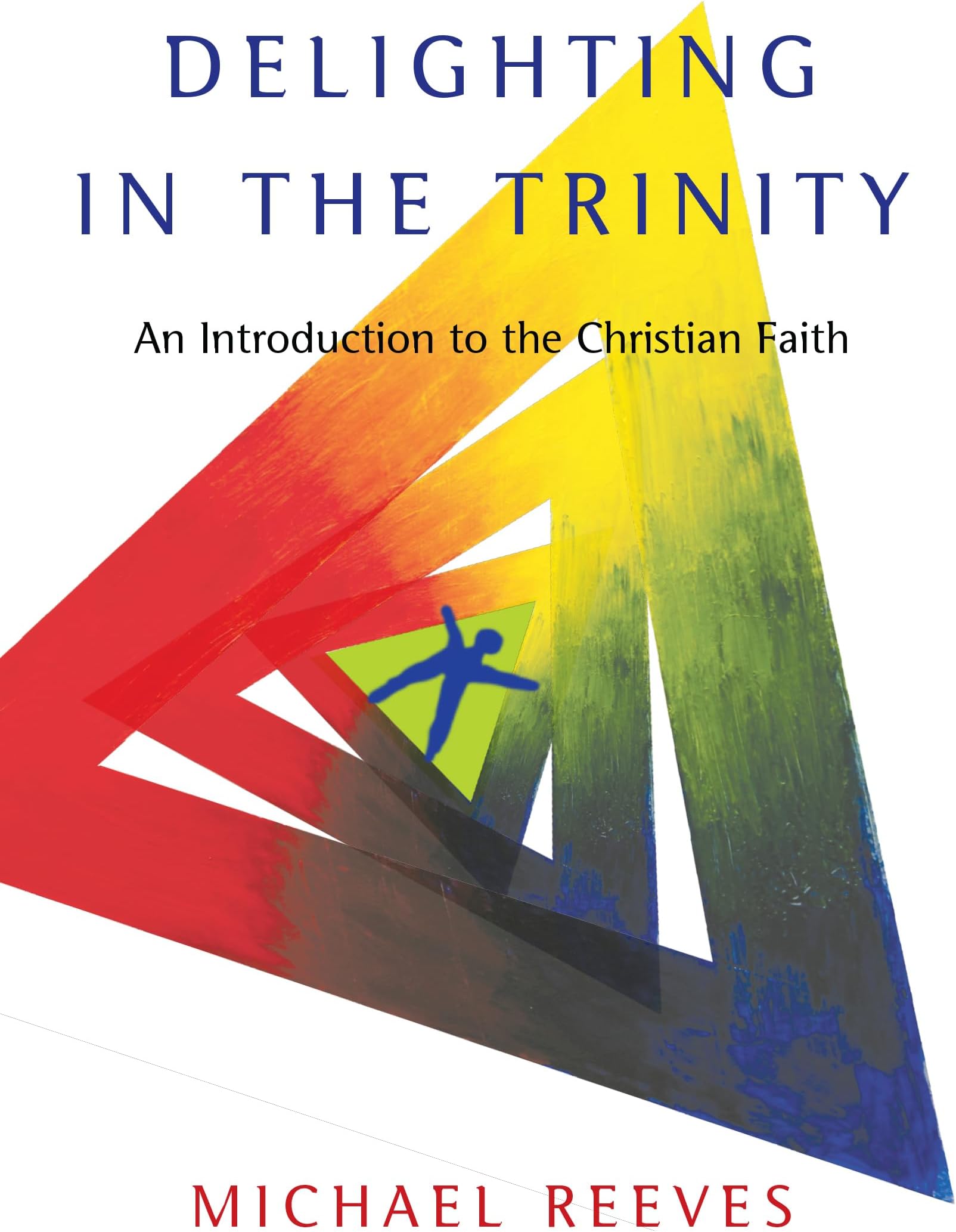
Delighting in the Trinity: An Introduction to the Christian Faith
Product ID: 5906071
Desertcart purchases this item on your behalf and handles shipping, customs, and support to Senegal.
The Beloved Introduction to the Trinity and Christian Life – Over 200,000 copies sold! Why is God love? Because God is a Trinity. Why can we be saved? Because God is a Trinity. How are weable to live the Christian life? Through the Trinity. Delighting in the Trinity by Michael Reeves is a classic introduction to the heart of the Christian faith―our triune God. Drawing from centuries of church history up to the present, Reeves explores how the doctrine of the Trinity isn't just a theological concept but the foundation of our intimate relationship with God. Written with wit, clarity, and warmth, this engaging book unpacks how understanding the Trinityshapes every aspect of Christian life, from salvation to prayer to the church and every aspect of our faith. With profound truths presented in a relatable, accessible way, Delighting in the Trinity invites Christians into deeper joy, richerworship, and a closer walk with the Father, Son, and Holy Spirit. Delighting in the Trinity is Expertly Crafted: Draws from church history and the wisdom of a wide range of notable teachers and preachers, offering well-rounded insights Practical for Everyday Faith: Reveals how the Trinity shapes not only our theology but our daily Christian life Trusted and Proven: Well-researchedyet accessible for both academic and everyday readers Discover why so many Christians have found joy and renewal in Delighting in the Trinity. Review: Delighting in the Trinity: An Introduction to the Christian Faith - Delighting in the Trinity: An Introduction to the Christian Faith IVP Academic 2012 By Michael Reeves Reviewed by Jack Kettler Bio: Michael Reeves, (PhD, King's College) is an author, theologian, historian and professor who teaches at Wales Evangelical School of Theology (WEST) and is the director of Union, a WEST initiative that puts the theological academy back in the local church context. He previously served as theological adviser for the Universities and Colleges Christian Fellowship in the United Kingdom where he oversaw the Theology Network, a theological resources website. He was also associate minister at All Souls Church, Langham Place. Reeves is the author of books such as Delighting in the Trinity, The Unquenchable Flame, Discovering the Heart of the Reformation, The Breeze of the Centuries, On Giants Shoulders and The Good God. What others are saying: “Even many Christians find the Trinity confusing, but Delighting in the Trinity is the clearest and best written explanation I've ever read.” (Marvin Olasky, World Magazine, June 29, 2013) “Michael Reeves's Delighting in the Trinity is an enjoyable introduction to the doctrine of the Trinity. . . . [It's] a great read. . . . This book would be useful for working with non-Christians seeking to understand Christianity. It would also serve the Christian who wants a better understanding of why the Trinity was not the invention of 'bored monks on rainy afternoons.'” (New Horizons, April 2013) “Michael Reeves . . . has produced a powerful and concise treatment of the trinity in Delighting in the Trinity. One of the strengths of this volume is its practicality and accessiblity. One of the most exciting aspects of this book is Reeves' skill in helping readers understand what it means to enjoy God and understand the doctrine of the trinity to be a demonstration of 'the beauty, the overflowing kindness, the heart-grabbing loveliness of God.'" (R. Albert Mohler Jr., Preaching, March/April 2013) “It's not often one reads a book on trinitarian theology that is deeply insightful and wonderfully witty at the same time, but this is such a volume. Filled with careful thought and wise application, Reeves provides a most accessible book for those who are trying to understand what difference it makes that we are trinitarian.” (Kelly M. Kapic, Covenant College) “The Trinity is often regarded as an esoteric and intimidating doctrine, over the heads of rank-and-file Christians. What are laypeople and students to make of the theologians' unfathomable utterances about how the Father, Son and Spirit constitute one God? The answer: Start by reading this book. Michael Reeves unpacks the significance of the Trinity for Christian life with a straight-shooting, conversational style honed by years of student ministry. But don't let the panache fool you. There is substance here that outweighs that of books much harder to understand. Read this book. Look up all the Bible passages it quotes. Let the Spirit use it to help you to see the Scriptures―and most of all, to see God the Trinity―in a new way. I cannot recommend it highly enough.” (Donald Fairbairn, Robert E. Cooley Professor of Early Christianity, Gordon-Conwell Theological Seminary, and author of Life in the Trinity) My Thoughts: First off, this is how the introduction and chapter layout look: Chapter layout Introduction: Here Be Dragons? 1. What Was God Doing Before Creation? 2. Creation: The Father’s Love Overflows 3. Salvation: The Son Shares What Is His 4. The Christian Life: The Spirit Beautifies 5. “Who Among the Gods Is Like You, O Lord? Conclusion: No Other Choice To start, this work is nothing short of extraordinary! It is has both a devotional aspect and powerful apologetic combined! The apologetic value of the book for Muslims and Arians is enormous. From the Introduction we read: “You see it in the Bible, where the Lord God of Israel, Baal, Dagon, Molech and Artemis are completely different. Or take, for example, how the Qur’an explicitly and sharply distinguishes Allah from the God described by Jesus: “Say not ‘Trinity.’ Desist; it will be better for you: for God is one God. Glory be to Him: (far exalted is He) above having a son.” (Surah 4.1710). “Say: ‘He, Allah, is One. Allah is He on Whom all depend. He begets not, nor is He begotten. And none is like Him.’” (Surah 112). “In other words, Allah is a single-person God. In no sense is he a Father (“he begets not”), and in no sense does he have a Son (“nor is he begotten”). He is one person, and not three. Allah, then, is an utterly different sort of being to the God who is Father, Son and Spirit. And it is not just incompatibly different numbers we are dealing with here: that difference, as we will see, is going to mean that Allah exists and functions in a completely different way from the Father, Son and Spirit. All that being the case, it would be madness to settle for any presupposed idea of God. Without being specific about which God is God, which God will we worship? Which God will we ever call others to worship? Given all the different preconceptions people have about “God,” it simply will not do for us to speak abstractly about some general “God.” And where would doing so leave us? If we content ourselves with being mere monotheists, and speak of God only in terms so vague they could apply to Allah as much as the Trinity, then we will never enjoy or share what is so fundamentally and delightfully different about Christianity.” (pp. 17, 18 introduction) This short selection from the introduction is amplified and the implications developed and expanded many times over throughout the book. For example, consider some more gems from this book in the next three quotes: “Just so, the Father would not be the Father without his Son (whom he loves through the Spirit). And the Son would not be the Son without his Father. He has his very being from the Father. And so we see that the Father, Son and Spirit, while distinct persons, are absolutely inseparable from each other. Not confused, but undividable. They are who they are together. They always are together, and thus they always work together. That means that the Father is not “more” God than the Son or the Spirit, as if he had once existed or could exist without them. His very identity and being is about giving out his own fullness to the Son. He is inseparable from him. It also means there is no “God” behind and before Father, Son and Spirit.” (34) “Therein lies the problem: how can a solitary God be eternally and essentially loving when love involves loving another? In the fourth century B.C., the Athenian philosopher Aristotle wrestled with a very similar question: how can God be eternally and essentially good when goodness involves being good to another? His answer was that God is, eternally, the uncaused cause. That is who God is. Therefore he must eternally cause the creation to exist, meaning that the universe is eternal. This way God can be truly and eternally good, for the universe eternally exists alongside him and eternally he gives his goodness to it. In other words, God is eternally self-giving and good because he is eternally self-giving and good to the universe. It was, as always with Aristotle, ingenious. However, once again it means that for God to be himself, he needs the world. He is, essentially, dependent on it to be who he is. And, even though technically “good,” Aristotle’s god is hardly kind or loving. He does not freely choose to create a world that he might bless; it is more that the universe just oozes out of hi.” (40-41) “The seventeenth-century Puritan theologian John Owen wrote that the Father’s love for the Son is “the fountain and prototype of all love. . . . And all love in the creation was introduced from this fountain, to give a shadow and resemblance of it.” Indeed, in the triune God is the love behind all love, the life behind all life, the music behind all music, the beauty behind all beauty and the joy behind all joy. In other words, in the triune God is a God we can heartily enjoy—and enjoy in and through his creation.” (62) In closing: From the final chapter: “Who Among the Gods Is Like You, O Lord?” “For the last two hundred years or so, atheism in the West has been marching forward with ever more confidence and power. Its cries have not only heartened the person on the street who would simply rather do without God and religion; they have also inspired a new, ultra-aggressive squad of “antitheists.” (109) This final chapter along with Reeves’ closing comments are extremely valuable in dealing with atheistic mistaken beliefs about the triune God. Bibliophiles, this book is for you. Review: A Delightful Read - I don't know Michael Reeves, but I picture him as outgoing, personable, and winsome - a gift of grace to us. He wants this book to be “about growing in our enjoyment of God and seeing how God's triune being makes all his ways beautiful. It is a chance to taste and see that the Lord is good, to have your heart won and yourself refreshed” (p. 9), which, of course, are great goals. Towards this end, he writes with a wider audience in mind than theologians like Barth or Volf, but Reeves's gifts are properly suited to his task at hand, and he’s able to make the thoughts of these major theologians digestible to the common person. He approaches his goal, as a scholar, teacher, and historian; however, he writes Delighting in the Trinity primarily a preacher and exhorter, attacking his thesis from every angle, and repeatedly so. He’s sometimes brilliant, witty and humorous, and able to take complex concepts and bring them into every day life, igniting the reader's soul in the process towards living for Christ. All these things are the sign a good teacher and preacher. Further, this book's concepts would be easily digestible by many Christians, hungry enough to learn about the Trinity, and contains ideas that are foundational to the faith of all Christians, hence the subtitle: an Introduction to the Christian Faith. His mystical, relational, Spirit filled Christian life may be foreign to some, but his thoughts in this area are refreshing, balanced, and properly nuanced and not often enough written about by those within his stream of theology. I did find him, at times, however, to be a bit too pedantic, dry, or basic. But, he really worked hard not to be so and my “lethargic moments” in the book may have been due to having read similar thoughts before or that time I read this book after a long day and a full meal. The book would have been better with an index, but having to reread a few sections over again, when in search of a recently read point, wasn’t so bad. This pastor can easily recommend M. Reeves’s book; it would especially be a helpful for you, if you: • Desire an introduction to Trinitarian theology. • Delight in Jonathan Edwards, Religious Affections, etc. but are uncomfortable with the over arching tones of the sermon “Sinners in the Hands of an Angry God.” • Want another reason for going to the mission field, other than God is sending heathen to Hell, unless I do something. • Are a preacher, whose sermons are stuck on do, do some more, and then do it again. • Are a believer, who needs to be reminded that God is working to complete his love in you and won’t quit until you are fully in his arms. Reeves, takes several of the heroes of Reformed theology – Calvin, Edwards, Spurgeon et al – and quotes from their works but consistently declares throughout the entire book: “God's innermost being (hypostatis) is an outgoing, loving, life-giving being … He is not a God who hoards his life, but one who gives it away, as he would show in that supreme moment of his self-revelation on the cross.” (45) If sin is “love turned in on itself,” then God is entirely other than this characteristic; he’s the One whom love of the other is central to his being, an eternal self-existent love that was before creation and intrinsically part of the Triune relationship of Father, Son, and Holy Spirit. “The only thing that counts is faith expressing itself through love. "God is love. Whoever lives in love lives in God, and God in him.” (Gal 5:6; 1 John 4:16)



| Best Sellers Rank | #4,522 in Books ( See Top 100 in Books ) #6 in Christian Systematic Theology (Books) #23 in Christian Church History (Books) #42 in Religious History (Books) |
| Customer Reviews | 4.8 out of 5 stars 2,524 Reviews |
J**R
Delighting in the Trinity: An Introduction to the Christian Faith
Delighting in the Trinity: An Introduction to the Christian Faith IVP Academic 2012 By Michael Reeves Reviewed by Jack Kettler Bio: Michael Reeves, (PhD, King's College) is an author, theologian, historian and professor who teaches at Wales Evangelical School of Theology (WEST) and is the director of Union, a WEST initiative that puts the theological academy back in the local church context. He previously served as theological adviser for the Universities and Colleges Christian Fellowship in the United Kingdom where he oversaw the Theology Network, a theological resources website. He was also associate minister at All Souls Church, Langham Place. Reeves is the author of books such as Delighting in the Trinity, The Unquenchable Flame, Discovering the Heart of the Reformation, The Breeze of the Centuries, On Giants Shoulders and The Good God. What others are saying: “Even many Christians find the Trinity confusing, but Delighting in the Trinity is the clearest and best written explanation I've ever read.” (Marvin Olasky, World Magazine, June 29, 2013) “Michael Reeves's Delighting in the Trinity is an enjoyable introduction to the doctrine of the Trinity. . . . [It's] a great read. . . . This book would be useful for working with non-Christians seeking to understand Christianity. It would also serve the Christian who wants a better understanding of why the Trinity was not the invention of 'bored monks on rainy afternoons.'” (New Horizons, April 2013) “Michael Reeves . . . has produced a powerful and concise treatment of the trinity in Delighting in the Trinity. One of the strengths of this volume is its practicality and accessiblity. One of the most exciting aspects of this book is Reeves' skill in helping readers understand what it means to enjoy God and understand the doctrine of the trinity to be a demonstration of 'the beauty, the overflowing kindness, the heart-grabbing loveliness of God.'" (R. Albert Mohler Jr., Preaching, March/April 2013) “It's not often one reads a book on trinitarian theology that is deeply insightful and wonderfully witty at the same time, but this is such a volume. Filled with careful thought and wise application, Reeves provides a most accessible book for those who are trying to understand what difference it makes that we are trinitarian.” (Kelly M. Kapic, Covenant College) “The Trinity is often regarded as an esoteric and intimidating doctrine, over the heads of rank-and-file Christians. What are laypeople and students to make of the theologians' unfathomable utterances about how the Father, Son and Spirit constitute one God? The answer: Start by reading this book. Michael Reeves unpacks the significance of the Trinity for Christian life with a straight-shooting, conversational style honed by years of student ministry. But don't let the panache fool you. There is substance here that outweighs that of books much harder to understand. Read this book. Look up all the Bible passages it quotes. Let the Spirit use it to help you to see the Scriptures―and most of all, to see God the Trinity―in a new way. I cannot recommend it highly enough.” (Donald Fairbairn, Robert E. Cooley Professor of Early Christianity, Gordon-Conwell Theological Seminary, and author of Life in the Trinity) My Thoughts: First off, this is how the introduction and chapter layout look: Chapter layout Introduction: Here Be Dragons? 1. What Was God Doing Before Creation? 2. Creation: The Father’s Love Overflows 3. Salvation: The Son Shares What Is His 4. The Christian Life: The Spirit Beautifies 5. “Who Among the Gods Is Like You, O Lord? Conclusion: No Other Choice To start, this work is nothing short of extraordinary! It is has both a devotional aspect and powerful apologetic combined! The apologetic value of the book for Muslims and Arians is enormous. From the Introduction we read: “You see it in the Bible, where the Lord God of Israel, Baal, Dagon, Molech and Artemis are completely different. Or take, for example, how the Qur’an explicitly and sharply distinguishes Allah from the God described by Jesus: “Say not ‘Trinity.’ Desist; it will be better for you: for God is one God. Glory be to Him: (far exalted is He) above having a son.” (Surah 4.1710). “Say: ‘He, Allah, is One. Allah is He on Whom all depend. He begets not, nor is He begotten. And none is like Him.’” (Surah 112). “In other words, Allah is a single-person God. In no sense is he a Father (“he begets not”), and in no sense does he have a Son (“nor is he begotten”). He is one person, and not three. Allah, then, is an utterly different sort of being to the God who is Father, Son and Spirit. And it is not just incompatibly different numbers we are dealing with here: that difference, as we will see, is going to mean that Allah exists and functions in a completely different way from the Father, Son and Spirit. All that being the case, it would be madness to settle for any presupposed idea of God. Without being specific about which God is God, which God will we worship? Which God will we ever call others to worship? Given all the different preconceptions people have about “God,” it simply will not do for us to speak abstractly about some general “God.” And where would doing so leave us? If we content ourselves with being mere monotheists, and speak of God only in terms so vague they could apply to Allah as much as the Trinity, then we will never enjoy or share what is so fundamentally and delightfully different about Christianity.” (pp. 17, 18 introduction) This short selection from the introduction is amplified and the implications developed and expanded many times over throughout the book. For example, consider some more gems from this book in the next three quotes: “Just so, the Father would not be the Father without his Son (whom he loves through the Spirit). And the Son would not be the Son without his Father. He has his very being from the Father. And so we see that the Father, Son and Spirit, while distinct persons, are absolutely inseparable from each other. Not confused, but undividable. They are who they are together. They always are together, and thus they always work together. That means that the Father is not “more” God than the Son or the Spirit, as if he had once existed or could exist without them. His very identity and being is about giving out his own fullness to the Son. He is inseparable from him. It also means there is no “God” behind and before Father, Son and Spirit.” (34) “Therein lies the problem: how can a solitary God be eternally and essentially loving when love involves loving another? In the fourth century B.C., the Athenian philosopher Aristotle wrestled with a very similar question: how can God be eternally and essentially good when goodness involves being good to another? His answer was that God is, eternally, the uncaused cause. That is who God is. Therefore he must eternally cause the creation to exist, meaning that the universe is eternal. This way God can be truly and eternally good, for the universe eternally exists alongside him and eternally he gives his goodness to it. In other words, God is eternally self-giving and good because he is eternally self-giving and good to the universe. It was, as always with Aristotle, ingenious. However, once again it means that for God to be himself, he needs the world. He is, essentially, dependent on it to be who he is. And, even though technically “good,” Aristotle’s god is hardly kind or loving. He does not freely choose to create a world that he might bless; it is more that the universe just oozes out of hi.” (40-41) “The seventeenth-century Puritan theologian John Owen wrote that the Father’s love for the Son is “the fountain and prototype of all love. . . . And all love in the creation was introduced from this fountain, to give a shadow and resemblance of it.” Indeed, in the triune God is the love behind all love, the life behind all life, the music behind all music, the beauty behind all beauty and the joy behind all joy. In other words, in the triune God is a God we can heartily enjoy—and enjoy in and through his creation.” (62) In closing: From the final chapter: “Who Among the Gods Is Like You, O Lord?” “For the last two hundred years or so, atheism in the West has been marching forward with ever more confidence and power. Its cries have not only heartened the person on the street who would simply rather do without God and religion; they have also inspired a new, ultra-aggressive squad of “antitheists.” (109) This final chapter along with Reeves’ closing comments are extremely valuable in dealing with atheistic mistaken beliefs about the triune God. Bibliophiles, this book is for you.
P**N
A Delightful Read
I don't know Michael Reeves, but I picture him as outgoing, personable, and winsome - a gift of grace to us. He wants this book to be “about growing in our enjoyment of God and seeing how God's triune being makes all his ways beautiful. It is a chance to taste and see that the Lord is good, to have your heart won and yourself refreshed” (p. 9), which, of course, are great goals. Towards this end, he writes with a wider audience in mind than theologians like Barth or Volf, but Reeves's gifts are properly suited to his task at hand, and he’s able to make the thoughts of these major theologians digestible to the common person. He approaches his goal, as a scholar, teacher, and historian; however, he writes Delighting in the Trinity primarily a preacher and exhorter, attacking his thesis from every angle, and repeatedly so. He’s sometimes brilliant, witty and humorous, and able to take complex concepts and bring them into every day life, igniting the reader's soul in the process towards living for Christ. All these things are the sign a good teacher and preacher. Further, this book's concepts would be easily digestible by many Christians, hungry enough to learn about the Trinity, and contains ideas that are foundational to the faith of all Christians, hence the subtitle: an Introduction to the Christian Faith. His mystical, relational, Spirit filled Christian life may be foreign to some, but his thoughts in this area are refreshing, balanced, and properly nuanced and not often enough written about by those within his stream of theology. I did find him, at times, however, to be a bit too pedantic, dry, or basic. But, he really worked hard not to be so and my “lethargic moments” in the book may have been due to having read similar thoughts before or that time I read this book after a long day and a full meal. The book would have been better with an index, but having to reread a few sections over again, when in search of a recently read point, wasn’t so bad. This pastor can easily recommend M. Reeves’s book; it would especially be a helpful for you, if you: • Desire an introduction to Trinitarian theology. • Delight in Jonathan Edwards, Religious Affections, etc. but are uncomfortable with the over arching tones of the sermon “Sinners in the Hands of an Angry God.” • Want another reason for going to the mission field, other than God is sending heathen to Hell, unless I do something. • Are a preacher, whose sermons are stuck on do, do some more, and then do it again. • Are a believer, who needs to be reminded that God is working to complete his love in you and won’t quit until you are fully in his arms. Reeves, takes several of the heroes of Reformed theology – Calvin, Edwards, Spurgeon et al – and quotes from their works but consistently declares throughout the entire book: “God's innermost being (hypostatis) is an outgoing, loving, life-giving being … He is not a God who hoards his life, but one who gives it away, as he would show in that supreme moment of his self-revelation on the cross.” (45) If sin is “love turned in on itself,” then God is entirely other than this characteristic; he’s the One whom love of the other is central to his being, an eternal self-existent love that was before creation and intrinsically part of the Triune relationship of Father, Son, and Holy Spirit. “The only thing that counts is faith expressing itself through love. "God is love. Whoever lives in love lives in God, and God in him.” (Gal 5:6; 1 John 4:16)
R**I
Greater appreciation for our Triune God
The overwhelmingly positive reviews testify to the popularity of this book. Popularity in itself is not a safe measure to determine its orthodoxy obviously, but it does demonstrate the effect this book has had on people. I can relate to the experience of others. This most certainly was a great book. I found the book valuable because it turned something I had previously perceived as a technical point of doctrine, very much interesting, but not as a fundamental part of my faith. God is a Trinity. This has radical implications for my relationship with Him as well as my relationship with others. The Trinity is entirely practical to every aspect of my life. Reeves reminds us Westerners that we often adopt Western assumptions when trying to develop an understanding of God. Therefore, conversations about the nature of God become very awkward as we try to fit in an additional two people in the godhead. Often, erroneous (and ultimately heretical) analogies are given in an effort to try to explain this tri-unity. Three forms of water. A clover. All very much modalistic which fail miserably to help one actually understand the Trinity. Reeves offers this helpful reminder, "...Deuteronomy 6.4 really doesn't convey 'mathematical singularity [The Lord our God is one]...The word [one] is also used, for example, in Genesis 2.24, where Adam and Eve-two persons-are said to be one." A theme developed early on in the book is that the Trinity makes Christianity absolutely distinct in the identity of God over any other religious system. Here is how he demonstrates this uniqueness. God is love (1John 4.8) and His love does not depend upon His creation. In other words, God's love existed before His creation (in the Son) and therefore God does not depend upon His creation in order to be love (if there was no one to love, how could God be a God of love?) "Now, God could not be love if there were nobody to love. He could not be a Father without a child." (p. 26) Reeves then makes the contrast with others systems, such as Islam. One of Allah's 99 names is "The Loving", but Reeves asks, how can Allah be loving if there was nothing else in existence that he could love? If Allah needs his creation to be loving, then Allah is therefore dependent upon that creation. But the Koran teaches Allah is not dependent upon anything. Aristotle saw the same problem. How can God be good if there is nothing else in creation to be good toward? Goodness requires something other. Therefore Aristotle postulated the eternal nature of creation. However, Aristotle's god still remains dependent upon his creation in order to be considered good. At this point I thought, well couldn't Aristotle or Muslims counter with the same charge? Doesn't God being a savior depend on a fallen creation that needs to be saved and with no fallen creation, God could not be a savior? Though this question isn't itself raised in the book, I think Reeves answers the charge. He says, "It is unsurprising that such a God should create. And that we should then be created in the image of God and destined to conformed into the likeness of Christ." But why? Because, "...the Father so enjoyed his fellowship with his Son that he wanted to have the goodness of it spread out and communicated or shared with others." Our salvation is an outpouring of God's love. Salvation is simply a part of God's love that has existed from all eternity and before creation. Quoting puritan Richard Sibbes, "Such a goodness is in God as in a fountain..." That illustration led me to think of the Samaritan woman at Jacob's well in John 4. John 4:13,14 "Jesus answered, "Everyone who drinks this water will be thirsty again, but whoever drinks the water I give them will never thirst. Indeed, the water I give them will become in them a spring of water welling up to eternal life." This identifies (at least in part) what it means to be created in God's image. "The Father's love is primary. The Father is the loving head. That then means that in his love he will send and direct the Son, whereas the Son never sends or directs the Father." (p.28) "...as the Father is the lover and the Son is the beloved, so Christ becomes the lover and the church the beloved. That means Christ loves the church first and foremost: his love is not a response, given only when the church loves him; his love comes first, and we only love him because he first loved us (1Jn 4.19). That dynamic is also to be replicated in marriages, husbands being the heads of their wives, loving them as Christ the Head loves his bride, the church. He is the lover, she is the beloved. Like the church, then, wives are not left to earn the love of their husbands; they can enjoy it as something lavished on them freely, unconditionally and maximally." (p.28) God is love and we have been created in His image. We are created to be love. To love the Lord our God with all our heart and with all our soul and with all our mind and to love our neighbor as ourself. Quoting Richard Sibbes, "We become like what we worship." (p.47). Therefore, the contrast between the devil and the triune God. "But the contrast between the devil and the triune God could hardly be starker: the first is empty, hungry, grasping, envious; the second is superabundant, generous, radiant and self-giving." (p.46) This is all very practical. Being created in the image of God and redeemed by the blood of Christ, I am sanctified by the Spirit to be generous, radiant, and self-giving. Simply, a lover of others. The contrary then is demonic. There is such more to be taken from this book. It is a very quick read, but rich in practical wisdom. It would be appropriate for any level of maturity in the church, but would most certainly be invaluable for new believers to begin their journey with a greater appreciation for the Trinity.
A**H
Concise, funny, game-changing...made God's love more real to me
I am ashamed to say it, but I often end up feeling closer to my family than to God. I never question whether my family life is real or meaningful, but, sometimes, my Christian life feels like going through the motions. This all changed when I read "Delighting in the Trinity" by Michael Reeves. Before reading this book, I had little grasp on the impact of the doctrine of the Trinity. Three persons that are one God?...why does that even matter? It just seemed kind of irrelevant or even bizarre, "like some pointless and unsightly growth on our understanding of God, one that could surely be lopped off with no consequence other than a universal sigh of relief." In "Delighting in the Trinity", Reeves opened my eyes to the practical implications of the doctrine of the Trinity, and it made my relationship with God come alive again. Because God is a Trinity the whole story is about Love. One of my main takeaways from the book was that, because God is a Trinity, the whole story of creation, fall, and redemption is about love. Why? Because for all eternity, the Father, Son, and Spirit have been loving each other. The following quote from the book gives a sample of this idea: "Jesus tells us explicitly in John 17:24. “Father,” he says, “you loved me before the creation of the world.” And that is the God revealed by Jesus Christ. Before he ever created, before he ever ruled the world, before anything else, this God was a Father loving his Son....Since God is, before all things, a Father, and not primarily Creator or Ruler, all his ways are beautifully fatherly. It is not that this God “does” being Father as a day job, only to kick back in the evenings as plain old “God.” It is not that he has a nice blob of fatherly icing on top. He is Father. All the way down. Thus all that he does he does as Father." Isn't this beautiful! God is not just some distant, abstract perfection. God is a family of three persons who have been overflowing with love for each other throughout all eternity! Once this hit home it made so many scriptures come alive. For example, when I used to read " God is Love" (1 John 4:8) it didn't have much meaning to me; it seemed abstract. But, now I see that this verse is talking about real, joy-filled love of God the Father, Son, and Spirit. It is love like my family love. Now, I see that this love explains God's motivation for the whole story of life. Reeves explains that God must be a Trinity for us to have a real, loving, relationship with him. How could we ever love someone who was essentially just a ruler or creator? Do you love your local police force or politicians? You may be grateful to them, but you don't love them, not like you love your family. Another consistent emphasis of the book was a contrast between the true God and the single person gods of other religions, such as Allah of Islam. Reeves shows that Allah exists and functions in a completely different way from the Father, Son and Spirit. I found this contrast really encouraging, and I think that it would be really helpful in apologetic discussions. The only minor negative that I have about the book is that the structure of the book was a little too loose for my taste. I got a little lost at times. With that said, "Delighting in the Trinity" was the best book that I have read in years. Reeves' writing style is clear and concise and really funny in certain parts. I would strongly recommend it to Christians of all walks!
K**Y
Perfect Primer for Basic Sunday School Class
This book can be read by age-16 and up. It is a very straight-forward historical presentation of the Trinity that unpacks the roles of each person of the Godhead in an interesting way that makes it easy to read. If you are looking for a very simple, rich, and practical book that can be utilized for teaching Sunday school classes, then I highly recommend `Delighting in the Trinity.' To be blunt: this is an orthodox and basic book meant for new followers of Christ or believers that do not read theology, including historical theology. Although this book is only 120 pages, it is packed full of historical and theological facts, and Reeves offers interesting insights on how the Trinity touches on all other issues in the Christian worldview (e.g., salvation). Reeves offers numerous inserts throughout this book (e.g., a one-page essay on Pelagius [page 67]) much like one would find in a study Bible. For example, after laying a basic theological foundation regarding obtaining knowledge ("relational knowledge") of God, Reeves states, ". . . in revealing himself, not only does the Father send his Son in the power of the Spirit; together the Father and the Son send the Spirit to make the Son known. The Son makes the Father known; the Spirit makes the Son known" (page 81). This statement is a conclusion to a very Biblically based argument that is unpacked in the chapter. If you are unfamiliar with a basic understanding of the importance of the Trinity, I would highly recommend this book. Although one could raise the criticism that the contents of this book could be subsumed in a different book on the same topic, this would ultimately undermine the utility of Reeves' book and its ability to be used in a church seminar or Sunday school class setting. Many times new believers need a sense of learning step-by-step, and having them purchase a lengthy book (e.g., Wayne Grudem's `Systematic Theology') is usually overwhelming--although I do recommend one ought to have Grudem's book in their private library. For those that have with a much more in-depth knowledge base, I would not recommend purchasing this book. Reeves has not written a book for scholars or apologists/philosophers entrenched in theology proper, or who study the attributes of God. You will not find a long and drawn out defense of the logical coherence of the Trinity. For those looking for a defense of the concept of God and the Trinity at an academic level, I recommend Feinberg's `No One Like Him,' the `Blackwell Companion to Natural Theology,' edited by JP Moreland and William Craig, or the Oxford handbook of `Philosophical Theology' edited by Thomas Flint and Michael Rea. These suggestions are not for new believers/followers. However, for the new believer reading this review, these books represent the level of learning in which you ought to aspire.
K**H
Delightful reading for Christians of every stripe
I rarely read a book twice, but since I loved this book and couldn't put it down, I returned to the first page as soon as I arrived at the last. The book confirms what I have long believed, that Christians must reclaim and celebrate our faith in the Holy Trinity if we are to address the inroads that Islam is making. Monotheism is very attractive, especially when it promotes a strict moral code. Islam created one of history's great empires; it spread from Spain to India with long tentacles in Eastern Europe and northern Asia. It has been winning ardent converts in the United States ever since Malcolm X went on pilgrimage to Mecca and saw that not all Muslims are black. It's not absurd to suppose Islam might one day become the dominant religion of Great Britain, France and the United States. That might happen if monotheistic Islam recognizes the equal standing and dignity of women and if Christians fail to instruct their children in the foundations of our faith. If Islam misses that opportunity, the Church of the Latter Day Saints might make the breakthrough. Like Muslims, they do not recognize the Trinity but call themselves Christian and honor women's equality, Better yet, they peddle a peculiar kind of divinity for their believers. As Reeves observes, who hasn't dreamed of being god? Michael Reeves, an English evangelical theologian, no doubt responding to the inroads of Islam in England, makes a strong case against Islamic-style monotheism. A "single-person" god must be eternally frustrated by the failure of his creation to honor him. Lacking intimacy with an equal, he can only fume at the continual failure of sinful mortals to pay adequate homage to his holiness, dignity, beauty and authority. Struggling to breathe in his awesome presence, his minions must finally escape the temple, mosque or church to regain their sense of identity. Millions have escaped Christian churches for that very reason! Meanwhile, Muslims have been shaped in that monolithic presence into images of their idol. Their families, mosques, corporations and governments must be extremely hierarchical, ruled by one all controlling and universally "loved" tyrant. Never can they admit even in their most secret, darkened and silent rooms that, as Gwendolyn Brooks wrote in her poem, The Preacher ruminates behind his sermon, "Nobody loves a tyrant." Reeves, using many quotations from scripture and citations of Protestant theologians and preachers, shows how joyful, gracious, merciful and super-abundantly generous the Trinitarian God is. God the Father is infinitely pleased with God the Son, who returns an equally infinite love for, and pleasure, in God the Father. That love and delight is called the Holy Spirit. All are personal; all are God; and there is only one God. Reeves ventures briefly into the mathematics of God's threeness and oneness. He compares it to Hindu doctrine which says that, since all is illusion and there is nothing real, mathematics doesn't even matter. One plus one plus one equals one. Cardinal Joseph Ratzinger (Pope emeritus Benedict XVI) had a more helpful insight when he pointed out: in God one is not one, and three is not three. Mathematics, no matter how subtle, cannot comprehend divinity. Speaking as a Catholic priest, I can say this book only enriches and enlivens my celebration of the Roman Catholic liturgy. In our tradition all liturgy is directed "to the Father, through the Son and in the Holy Spirit." Entering the rituals of the Mass, the sacraments and the Hours, we step into the furious whirlwind of God's trinitarian healing, happy love. At this point I wish Reeves could have taken the next step. Rightly he says, "if I do not believe in this God (the Trinitarian God revealed in Jesus Christ) then... I am not a Christian." We are saved by that "faith alone" but as the pragmatic American I wonder how does that faith make a difference. Is belief only one's glorified opinion about the way things are? Does it not bond me to the Church and send me each Sunday to worship with the congregation? In the liturgy which Jesus revealed to his Church we find the work of salvation. ("This is the work of God, that you believe in the one he sent.” John 6:29) John 6 demands that we eat his body and drink his blood so as to pray within the mystery of God's trinitarian oneness. That work, of course, must be accomplished with the "disposition" of which the Catechism of the Catholic Church speaks, (¶1128); but it is effective. I loved this book. I loved Reeves' references to Protestant theologians and his declaration of faith in the Lord. It is time for all priests, preachers, teachers and parents to reclaim the Father, the Son and the Holy Spirit as our God and savior, privilege, pleasure and delight.
R**D
This is a wonderful book! I would put it easily in the ...
This is a wonderful book! I would put it easily in the top 5 of all Christian books I've read. Wonderful for new believers and mature believers. I think the Lord has blessed brother Reeves with an insight and a gift in describing a beautiful vein of Gospel truth. He brings out the truth of who God is in a beautiful and biblical way, One God who is three beautiful persons dwelling in an eternal blessed fellowship of love, unity, and holiness. The Father, Son, and Holy Spirit. Too often I think of God and His attributes in abstract and unpersonal ways. But the true God is the Living God who created us in His image and He is beautiful, personal, outgoing, loving and righteous. One of Satan's biggest attacks upon God is to in some way slander and misrepresent the character of God to us. He loves to paint God in dark, horrible, unpersonal and malicious ways. This book is a very helpful antidote against that. I recently noticed in the Gospel of John just how many times Jesus referred to God as His Father. This book helps bring out the beauty of that reality. Our sins are great because we sin against a God who is soo good, wonderful, kind and full of love. We have not loved the God who is love and therefore only Christ and His blood and cross can redeem us from such sin. If God were a singular being he could not love and he would be a cold, self absorbed, miserly tyrant who would demand and take all that we and creation could give just because he would need it and sin against such a being would be no great sin at all. But the One True God is worthy of our love and devotion because He is Three Persons who are Soo full of unconditional love for and delight in one another and are so kind, generous and good. And they created the universe that all creation might behold, enjoy and join in with this holy and beautiful truine fellowship. This book brings to light what a wonderful thing it is to become a Christian. The Father, Son and Spirit in unconditional love are calling and drawing lost utterly unworthy hell deserving sinners through the Gospel to enter into knowing and enjoying the Son Jesus Christ and the Father who sent Him and to receive the Spirit of truth and love from Christ who baptizes with the Spirit. Salvation is not only about being forgiven for our sins and justified through Christ and saved from God's wrath. It most certainly is that. But it is also being brought into a relationship with the Father, Son, and Holy Spirit. It is being adopted by God and becoming His child and enjoying fellowship and union in Jesus Christ. When we believe upon Christ we are spiritually immersed into Christ. Christ as the Son of God has for eternity enjoyed the benefits and blessings of being the Son of the Father. He knows the Father intimately. When we first are converted we are put into Christ and begin to be blessed with and experience the very same blessings in Christ. His Father becomes our Father too! Through Christ we begin to share in the blessings of being children with the same Father. No I'm not saying that we become God or equal with Christ. But we do enter into knowing and loving the Father through and as the Son and we also begin to join in with the Father in loving and enjoying His Son Jesus Christ. And the Holy Spirit is the Spirit of truth and love who works out this glorious salvation within us and continues to glorify Christ who is the exact image of His Father. The Spirit works in us to purify and to cause our love to abound to the Father and Son. Thus true believers because they know they are soo loved and redeemed by this God will hate and forsake their sins and seek to live righteously in this life. Because they now love God they mourn over their sins and desire to be free from all that grieves His heart. This is eternal life that we may know Him! Wonderful wonderful book!
C**N
Highly-Readable Work for an Often Difficult Doctrine
What would you say if you were asked to answer the question: "Who is God?" When it comes to the Christian faith, the doctrine of the Trinity is as crucial as any because it describes the identity of the God who is at its center. Ultimately, this is what makes Christianity perfectly unique in comparison to the rest of the world's religions. This is what Michael Reeves argues for in his short work, Delighting In The Trinity. For all of the complex theological cacophonies that tend to result in our conversations over the Trinity, Reeves moves with ease and great wit as he introduces his readers to a deeply accessible doctrine that is not meant to be far off, but intimately near; not mind-numblingly convoluted, but swiftly refreshing to the soul. Admittedly, this doctrine is shrouded in divine mystery and cannot be properly constrained by human reason, but God has revealed Himself as Triune and given us His Word as a means for understanding how the great King of the Universe has functioned in such a remarkable manner before the outset of history as we know it. Reeves opens his work by seeking to answer the question I posed at the beginning of this entry - "Who is God?" Or more specifically, "What was God doing before Creation?" From there, he presents his readers to the Loving, Life-Giving Father of the Bible who, because of His infinite love for His Son, created the world and all its inhabitants out of the overflow of His heart and is pleased to share His love for the Son with all creation through His Holy Spirit. Reeves tactfully highlights each member of the Trinity with balance and care, showing their equal distinction and perfect unity with one another. Page after page reads of the God who creates without need for anything; who has eternally existed in intimate, loving community; who stoops and comes down from His rightful place in Heaven to enter into His creation in order to redeem His people. Before you know it, as the truths of the Trinity leap from each paragraph, you will find yourself drawn into deep worship for the God of the Bible. The strength of Reeves' Delighting In The Trinity is its highly-readable content. He has made what has often been relegated to "scholarly minds" a more than tangible reality for anyone who picks up the book. This work is a must read for anyone not well-acquainted with the beautiful truths of the Trinitarian God. Many throughout history have toiled, sweat, and bled to preserve the doctrine of the Trinity because it is a sweet and powerful reality underlying the intimate presence of God in His creation.
P**I
I Thank my God upon every remembrance of you
What a delightful book. You can truly delight in our God who is indeed three in one. Thank you Mike Reeves and I thank God for you. This book has drawn me closer to the Lord more than ever before. Highly recommend it to Christians and non Christians. The Former will draw closer to the Saviour and the latter will come to know the true God and will give his or her life to God. A small message for Mike Reeves Philippians 1: 3
V**N
Delightful Reading
Every chapter is edifying. Loved reading. Must read.
J**N
Le contenu du livre est transformateur
Je suis rendu au chapître 4. Je suis boulversé par ma lecture. Surtout sur l'aspect OUTGOING du Père au chapitre 3. La présentation du péché contre l'amour ne m'a jamais été enseigné d'une si belle façon que par la trinité. Je lis doucement. L'amour de Dieu m'interpelle. En tant que pasteur et évangéliste, cela va boulverser mon approche.
C**H
Important perspectives that lack deeper analysis
Having just finished this book as part of a masters assignment, I am in two minds. I love that the author, Michael Reeves preposed a thesis and the call to see God in a broader context. I am however left wanting. This was a taste test, but it did little to satisfy. He seeks to show how seeing God as triune impacts on all aspects of our thinking and living. I found however, that he does not address some of the real issues or engage with the tension of life. This then acted more like a primer. I would love there to be a longer more exhaustive conversation based on his wonderings. If God is triune, then is there anyone left out? Will God fail to save the broken and the hurt? How can those that have rejected God based on the broken relationships within their own families trust a God who is a father? What of those that have had their lives ripped apart by rape and sexual abuse by parents and siblings; how can we bridge the gap between their understandings of parenting and God's... Didn't God the father in-fact give his son up to be killed - how can we trust a father that did that? If God’s wrath is reserved for those that commit genocide, where is the line? At which point is God’s judgement and wrath reserved, contained or set loose? Does the grace and forgiveness offered by Jesus extend to only those that encounter him in this life by a missionary and repent, or has God been his own missionary where disciples feet have not yet tread? What about children that have not heard the Gospel? Does a triune God leave them to suffer for an eternity? These questions of course, need more pages and volumes to breathe; their absence however leave the book with a sense of naivety. The result is that the real world applications to his proposition are left without an answer or even the awareness that there needs to be an openness to an answer.
R**L
Worth it!
I am not an academic person by nature, but love to learn more about God. Michael Reeves was very helpful to guide my thinking in a way that was understandable yet, challenged me to think on the new perspectives and even old ideas that I have grown in. Delighting in the Trinity has motivated me to know God deeper and to worship all of Him in a beautiful way. Thank you for a book that I will continue to recommend.
Trustpilot
4 days ago
2 weeks ago