American Gothic: Six Decades of Classic Horror Cinema
Product ID: 49029697
Desertcart purchases this item on your behalf and handles shipping, customs, and support to Senegal.
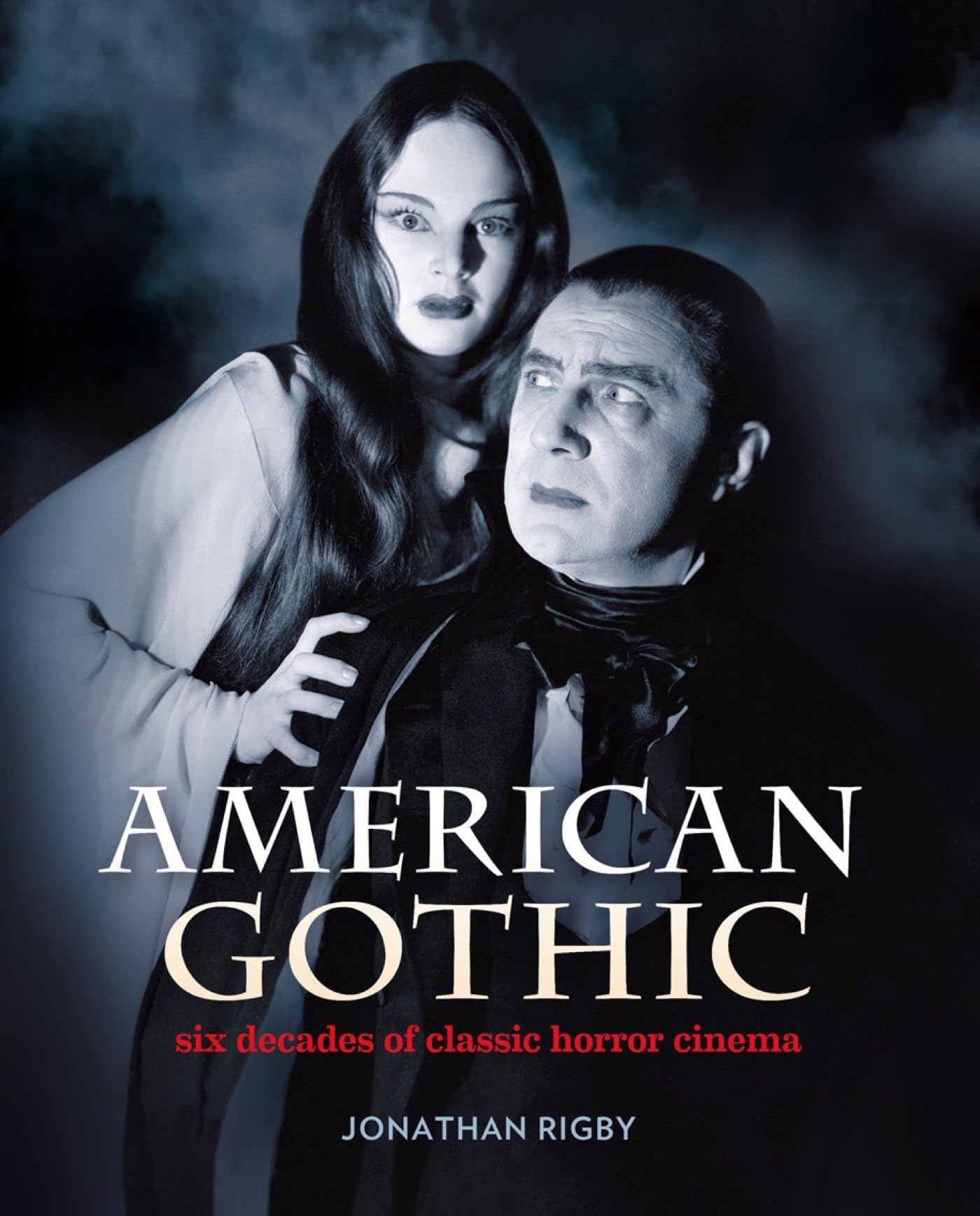
In the long-awaited American Gothic Jonathan Rigby tells the story of the Hollywood horror film from its 19th-century beginnings through to the arrival of Vincent Price as a genre star in films like House of Wax and The Fly. This 60-year period encompasses the shadowy nightmares of the silent era, the breakthrough hits produced by Universal, Warner Bros and M-G-M in the early days of talkies, the thoughtful RKO chillers of the 1940s and the post-war boom in lurid science-fiction shockers. Out of print for more than ten years, American Gothic has been extensively revised and expanded, and is now available in hardback for the first time. Review: If you, like me, burn with the irresistible desire to penetrate the unknown, carry on... - Following the 2015 re-issue of the now-legendary English Gothic, and then 2016’s excellent Continental study Euro Gothic, Jonathan Rigby’s long-out-of-print American Gothic (first published in 2007) is now also available in a complimentary hardback edition, handsomely mounted like its companion volumes. Revised to include a small but valuable amount of new material, the vast majority of the content here is nevertheless retained wholesale from the decade-old first edition, though unlike the other two volumes, and despite broadening out its period of study slightly (the initial edition ended with a look at the Basil Rathbone / Lon Chaney / Bela Lugosi monster mash The Black Sleep from 1956, whilst the new one takes in Vincent Price chillers like 1958’s The Fly and 1959’s House on Haunted Hill) this study of classic US-made horror cinema does not attempt even a cursory overview of the genre’s development past the pre-Psycho (1960) period. This is of course because, unlike the UK and European fright film booms of the 1950s – 1970s that have been subjected to Rigby’s close focus, a ‘golden age’ of US horror flicks is much more difficult to identify, and thus in order to really address his key subject of ‘classic gothic’ the writer has had to essentially disregard American cinema’s ‘modern’ contributions to the genre out-of-hand, which is totally understandable. The sheer scale of US horror film production from 1960 onwards is so unconscionably vast that to cover it in anything like a level of detail comparable to that of Rigby’s past tomes would probably necessitate two more huge volumes at least, surely an unworkable task regardless of how passionately fans might feel that Romero, Friedkin, Carpenter and Craven are American cinema’s most important horror directors and the founding fathers of late 20th Century / early 21st Century scary movies. But enough about what American Gothic isn’t, this review is about what it is: the best book I have ever read on the subject of the classic American horror film. From the German Expressionism-influenced silent era through the Universal classics of the 1930s, the good and the bad to come from the other major Hollywood studios, the 'Poverty Row' howlers of the 1940s, and the Val Lewton-produced chillers from RKO, everything you’d expect is touched on; even Dwain Esper’s grotty proto-roughies get a suitable amount of coverage. As always, Rigby’s critiques remain well-reasoned and highly detailed, with the genre’s hero figures (Boris Karloff, Lionel Atwill, Jacques Tourneur) rightly lionised and celebrated whilst the somewhat more controversial contributions of other individuals are given the probing they deserve (I especially enjoyed Rigby’s identification of what is wrong with the hugely overrated horror-comedy films of James Whale, whilst his opinion of John Carradine’s sub-par Count Dracula very much echoes my own). In summary, this is an excellent book for real horror buffs and all thoughtful film fans, so please don’t miss it. Review: American Gothic: Six Decades of Classic Horror Cinema. - An impressively well-presented and substantial hardback volume, this is an entertaining and quite scholarly survey of American horror movies; the illustrations are mostly in black and white with a few pages of colour reproductions of posters; individual panels are laid out providing information on films of particular note within the more general narrative of each chapter; as others have noted, it rather disappointingly ends in 1959 so it is – to some readers perhaps - an incomplete reference. Otherwise, it's a good book for what it is; it is a companion volume to a couple of others by the author Jonathan Rigby and is certainly worth adding to one's library of cinema studies.
| Best Sellers Rank | 733,603 in Books ( See Top 100 in Books ) 214 in United States Cinema 359 in Horror Films 659 in Film Guides & Reviews |
| Customer Reviews | 4.7 out of 5 stars 92 Reviews |
M**Y
If you, like me, burn with the irresistible desire to penetrate the unknown, carry on...
Following the 2015 re-issue of the now-legendary English Gothic, and then 2016’s excellent Continental study Euro Gothic, Jonathan Rigby’s long-out-of-print American Gothic (first published in 2007) is now also available in a complimentary hardback edition, handsomely mounted like its companion volumes. Revised to include a small but valuable amount of new material, the vast majority of the content here is nevertheless retained wholesale from the decade-old first edition, though unlike the other two volumes, and despite broadening out its period of study slightly (the initial edition ended with a look at the Basil Rathbone / Lon Chaney / Bela Lugosi monster mash The Black Sleep from 1956, whilst the new one takes in Vincent Price chillers like 1958’s The Fly and 1959’s House on Haunted Hill) this study of classic US-made horror cinema does not attempt even a cursory overview of the genre’s development past the pre-Psycho (1960) period. This is of course because, unlike the UK and European fright film booms of the 1950s – 1970s that have been subjected to Rigby’s close focus, a ‘golden age’ of US horror flicks is much more difficult to identify, and thus in order to really address his key subject of ‘classic gothic’ the writer has had to essentially disregard American cinema’s ‘modern’ contributions to the genre out-of-hand, which is totally understandable. The sheer scale of US horror film production from 1960 onwards is so unconscionably vast that to cover it in anything like a level of detail comparable to that of Rigby’s past tomes would probably necessitate two more huge volumes at least, surely an unworkable task regardless of how passionately fans might feel that Romero, Friedkin, Carpenter and Craven are American cinema’s most important horror directors and the founding fathers of late 20th Century / early 21st Century scary movies. But enough about what American Gothic isn’t, this review is about what it is: the best book I have ever read on the subject of the classic American horror film. From the German Expressionism-influenced silent era through the Universal classics of the 1930s, the good and the bad to come from the other major Hollywood studios, the 'Poverty Row' howlers of the 1940s, and the Val Lewton-produced chillers from RKO, everything you’d expect is touched on; even Dwain Esper’s grotty proto-roughies get a suitable amount of coverage. As always, Rigby’s critiques remain well-reasoned and highly detailed, with the genre’s hero figures (Boris Karloff, Lionel Atwill, Jacques Tourneur) rightly lionised and celebrated whilst the somewhat more controversial contributions of other individuals are given the probing they deserve (I especially enjoyed Rigby’s identification of what is wrong with the hugely overrated horror-comedy films of James Whale, whilst his opinion of John Carradine’s sub-par Count Dracula very much echoes my own). In summary, this is an excellent book for real horror buffs and all thoughtful film fans, so please don’t miss it.
J**�
American Gothic: Six Decades of Classic Horror Cinema.
An impressively well-presented and substantial hardback volume, this is an entertaining and quite scholarly survey of American horror movies; the illustrations are mostly in black and white with a few pages of colour reproductions of posters; individual panels are laid out providing information on films of particular note within the more general narrative of each chapter; as others have noted, it rather disappointingly ends in 1959 so it is – to some readers perhaps - an incomplete reference. Otherwise, it's a good book for what it is; it is a companion volume to a couple of others by the author Jonathan Rigby and is certainly worth adding to one's library of cinema studies.
N**R
Scary read
Fantastic book
N**N
Great, but not a major upgrade on the softback edition.
The book’s fantastic but I’m a little disappointed this ‘revised and expanded’ edition still ends in 1959. Thought there would be more new material, perhaps covering the Corman Poe films of the early 60s.. Hopefully the author is working on a volume 2.
I**N
Excellent
A truly excellent tome and just as good as the Euro Gothic edition; now if only they would reprint the English Gothic (its been ten years now!) one as originals are horrendously expensive!!
P**U
Essential Reading For Lovers Of Classic Horror
This updated edition now sits proudly beside the hardback versions of English & Euro Gothic on my bookshelf . It’s beautifully presented and illustrated but more importantly bigger with even more films covered . If you’ve read any of Rigby’s previous books you know what to expect and you won’t be disappointed . I defy anyone to show me a better examination of the films mentioned in this book . Although , as ever , this new edition features quite a few films that have slipped under my radar so thanks Jonathan, I’m going to start searching right now .
M**S
The Horror Movie Bible
If you're a Horror Movie fan then this is the go to book for all you need to know about the American contribution to this genre. Jonathan Rigby writes in a very eloquent, informative entertaining style! His love and enthusiasm for the subject matter shines thru and in my opinion he's one of the most eminent authorities on this subject. Well worth the purchase!
T**N
A masterpiece about horror!
Fully detailed and illustrated, it's the kind of book you need - even must have - if the horror genre is your kind of movies, and in this case "the golden age of Hollywood"!!!
G**Y
A Must for Intellectual Horror Fans
Well written, well researched, and well presented. I would recommend this book for any horror fan seriously interested in the history of the genre.
D**H
American Gothic goes for the Jugular!
This is the type of film book that I dig the most: well written, astonishingly illustrated with plenty of b&w plates and color as well, page after page of concise reviews of horror's golden age. Jonathan Rigby has created a unique testament to old time Hollywood featuring page after page on Universal's wonderful chillers as well as some poverty row films from lesser known studios such as Republic, RKO and plenty of British films of course. Dead hard fans will definitely want to add this volume to their libraries where it will provide hours on end of reading pleasure! Hats off to Rigby and here's to a much sought after sequel! We deserve more serious books like this one. Highly recommended!
C**S
2017 Edition
This review pertains to the 2017 edition, new to it is a section on 1950s movies, and rumor has it that the author has been working on a sequel volume that will cover 1960s- on flicks, but I have also heard rumors that he was supposedly going to update his book on Christopher Lee, and I have not seen that one out, yet. Well, writing books is hard work, even labors of love. Anyway, now more on this one, not on the one that is yet to come. As with the companion volumes, English Gothic (2015) and Euro Gothic, there is a lot covered, in this case from the silent era to 2015, and comedies are covered, as is true of those other books, as well as thrillers that can be viewed as horror flicks. The format is the same, and there are color sections, and not all of the key titles in side bars are well known. There are rare stills for Puritan Passisons (1922), The Scarlet Letter (1928), The Conquering Power (1927), The Ghost Breaker (1927), Go and Get It (1922), One Exciting Night (1922), Trifling Women (1922), Dante's Inferno (1924), The Monster (1924), The Bells (1926), The Wind (1927), The Mystic (1925), The Terror (1922), The Last Warning (1924), the Haunted House (1928), The House of Horror (1929), The Unholy Night (1929), Murder by the Clock (1931), Crime Without Passion (1934), The Ghost Breaker (1940), and Among the Living (1941). There are even rare treats for better known movies, there is a still for a scene that was cut for The Ghost of Frankenstein and a rare one for The Fly (1958) that I have not seen on book form before, unless it was in the book The Fly at Fifty, which I do not have as I generally do not buy one movie books.
L**O
Gothic Bullseye
Another great read by Rigby. Anyone familiar with his fantastic earlier volume, "English Gothic", knows how well researched and wonderfully presented his info is. A hard book to put down, even if you know much of this stuff already. As an owner of 80+ books of this type, this is among the best. Nothing lacking in facts- this guy has obviously seen all the films he has reviewed (or at least has done his research!). Pick this one up! And get "English Gothic" as well!
J**A
TOO MUCH GOTHIC
American Gothic ; sixty years of horror cinema by Jonathan Rigby is the most in depth collection of American Gothic film information I have ever run across. In fact, it is probably a little more than "I" bargained for. It is a plethora of intense and concise information regarding the classical American gothic film genera that goes far beyond my basic understanding of the early film industry. This is a book designed for the real film buffs and historians who live, eat, and breathe the dusty film vaults that encompass the spirits of Bela Lugosi, Boris Karloff, Lon Chaney, and many many more. A great collection for the true horror film historian, but simply too much information for my interest and understanding of the subject matter.
Trustpilot
1 month ago
3 weeks ago