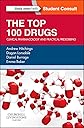

Prescribing for the first time is a nerve-wracking experience. Of all the tasks performed by new doctors, it is probably the one with greatest direct impact on the wellbeing of patients. Safe and effective practice rests on a good understanding of both clinical pharmacology and practical prescribing. Acquiring this is not easy, particularly when faced with reams of information about hundreds of unfamiliar drugs, often presented in a way that appears detached from clinical reality. This book is your starting point. It is a direct response to requests from students for a compendium of the 100 most important drugs in the NHS. Key information about the clinical pharmacology and practical prescribing of each drug is presented side-by-side, allowing you to direct your attention as appropriate for your stage of training. Drugs can be accessed alphabetically when you need quick information on the wards and by organ system or clinical indication when you are at your desk. Research led by Professor Emma Baker has identified the ๏ฟฝtop 100 drugs๏ฟฝ by their importance and prescribing frequency. She has shown that the list changes little over time, making it a stable resource upon which to base learning. "A great practical resource for those new to prescribing the text is aimed at those new to independent prescribing, and for that group I would consider. The Top 100 Drugs๏ฟฝto be an excellent publication." Reviewed by๏ฟฝEmma Watts, GP in Surrey on behalf of (journal) Pulse๏ฟฝApril 2015 "This handy, pocket-sized book is a great practical resource for those new to prescribing." Reviewed by Pulse, Apr 2015 The top 100 drugs and the five most important intravenous fluids are presented using a clear, consistent layout across double-page spreads. Drugs are arranged alphabetically and also listed by organ system and clinical indication, providing multiple pathways into the information. Clinical pharmacology is discussed under the headings: common indications; mechanisms of action; important adverse effects; warnings; and important interactions. Practical prescribing is discussed under the headings: prescription; administration; communication; monitoring; and cost. A clinical tip is presented for every drug. Single-best-answer questions are provided for self-assessment and to show how information from several drugs may be integrated. Review: Essential for medical students! - What a fantastic resource for medical students! This book covers commonly prescribed drugs as the title suggests, but also lays out the information in an easy, readable manner. I much prefer this to Pocket Prescriber; which is excellent for once you qualify but seems to be filled with lists and details without much of an explanation. In my opinion, this book is great to learn drugs, pharmacology and prescribing from, and pocket prescriber is more of a 'simplified BNF' type text (which is also written in a similar manner). I haven't gone through it completely yet, but I can already tell that the authors have done a wonderful job (not surprising as they are fantastic lecturers!), and I can tell that this book will be well used by the time I graduate. A brilliant resource for students and doctors, I would highly recommend this! Review: Useful for student nurses too - I am a third year student nurse, and I can't recommend this book enough. Although it is aimed at medical students, I find the layout and explanations within very accessible and the vast majority of information contained is relevant to nurses too. Drugs with similar mechanisms of action are grouped together to avoid repetition - this can make it hard to find particular drugs if you are not sure what group they belong to. However, other than that I am very happy with this book. For prescribers, drugs are sorted at the front of the book into the illnesses and conditions they are used to treat, for easy reference. It is small enough in size to be carried around easily.
| Customer Reviews | 4.6 out of 5 stars 309 Reviews |
H**B
Essential for medical students!
What a fantastic resource for medical students! This book covers commonly prescribed drugs as the title suggests, but also lays out the information in an easy, readable manner. I much prefer this to Pocket Prescriber; which is excellent for once you qualify but seems to be filled with lists and details without much of an explanation. In my opinion, this book is great to learn drugs, pharmacology and prescribing from, and pocket prescriber is more of a 'simplified BNF' type text (which is also written in a similar manner). I haven't gone through it completely yet, but I can already tell that the authors have done a wonderful job (not surprising as they are fantastic lecturers!), and I can tell that this book will be well used by the time I graduate. A brilliant resource for students and doctors, I would highly recommend this!
P**D
Useful for student nurses too
I am a third year student nurse, and I can't recommend this book enough. Although it is aimed at medical students, I find the layout and explanations within very accessible and the vast majority of information contained is relevant to nurses too. Drugs with similar mechanisms of action are grouped together to avoid repetition - this can make it hard to find particular drugs if you are not sure what group they belong to. However, other than that I am very happy with this book. For prescribers, drugs are sorted at the front of the book into the illnesses and conditions they are used to treat, for easy reference. It is small enough in size to be carried around easily.
I**H
Great book
The lecturers are amazing and so is this book written by them to help students grasp the key facts they need to know about drugs at medical school. The drugs are laid out in alphabetical order so you can use it like a dictionary to find a drug. This is in contrast to the BNF which is categorised into treatments for disease conditions. There's a few pages categorising the drugs by disease condition too at the beginning. There are also very good questions at the end. Worth buying from third year up especially if you are a student at St George's medical school :)
M**G
Indispensable
Great book. Convenient size. I don't agree that it can be replaced by BNF. There are a lot of information that you'll need to learn that is not contained in the BNF, e.g. 1) explanation of mechanism of action for every drug. 2) explain the mechanism behind each drug interaction. 3) questions and answers on clinical pharmacology. My advice, for your medical school needs anyway, is to buy this and also get an old edition BNF. The latter is helpful when you want to look up an unfamiliar drug. The Top 100 Drugs does not have an index of individual drug names: the top 100 refers more to 100 classes of drugs. So if you don't know what 'solifenacin' is, then you are unlikely to be able to find it there, as it is under "anti-muscarinics, genitourinary use". The book would even be better if the search facility on Student Consult is better. This applies to all the Student Consult books. It is most user-unfriendly. It does not allow you to do more advance searches, like searches for phrases.
A**R
Great!
Soooo so useful! Used it for the revision for my exam. It has things laid out simply, so if you're not one to remember all the super long scientific words you just want the foundation of a certain drug or group of drugs then this is perfect. If you do wish to have more detail then further information should be sought, such as I also used a BNF for more specific drugs. It includes things such as; what its predominately for, how it works, contra-indications, things to avoid and be aware of, and any other important info you'd need about that drug.
R**R
Of course it does not replace the BNF but it was good for short term cramming with the vital facts about ...
This book is an absolute god send, summarised the bnf and really helped me get to grips with all the medicines out there. Of course it does not replace the BNF but it was good for short term cramming with the vital facts about each drug. It also gave important interactions on each drug on the same page which is easier than the BNF as BNF has interactions on a separate page. Another positive is that this book provides information on key IV fluids e.g Haartman's solution and some test q at the end. I really hope they make a more up to date version but in reality it contains all the information that would be needed for general examinations.
M**M
Very useful book
Good: clear information about drugs we're most likely to prescribe/come across in our junior years. Unlike Pocket Prescriber there is mechanism of action so it's also good for exams. Side effects are explained, and common ones highlighted (rather than just a list like you get in the BNF). Would recommend even if you're not at St George's (where the authors teach). Bad: no index
A**R
Best book I've ever bought
Probably the most useful book I have ever bought. I honestly hated pharmacology for years 1 and 2 before I came across this book and now I actually like it! On top of that, I got 97% on my last pharmacology module, all thanks to this. There is a reason why this book is always 'currently unavailable' in the library and a med-student favourite at my university. 5 Stars
A**I
Dont dare to buy it.
what the hell is this book. i want to return it back. intially when they kept the sample they didnt include any tables and how the exact book looks like. i thought it will be useful and bought. But its all crap. The book is full of tables where you can read nothing in kindle. Even if zoom its not clear. and its unreadible. My dear amazon if there is any possibility take this book and back. I dont want money but replace this book with any other book atleast. Next time when you are selling a kindle book on your site please fix it and put it up.
M**M
Five Stars
Great book in great condition too.
E**C
Much more useful than expected
I was surprised how much i use it on my day to day life. It does not have a lot of drugs, but then again, these are the most common ones that any doctor would encounter on a day to day basis. Provides very concise and useful information. It is a light book, perhaps a bit to wide so as not to fit too well in the lab coat. Still a great book
D**R
Great book, TERRIBLE EBOOK
Great book, but terrible file format!!! Do not get this book from Amazon kindle, because they have ruined it so that the drug tables are barely legible. Each table is in image format, while thr headers and introduction are in regular font. You must zoom in to each table to see what is written and is terrible compared to the paper book format.
S**O
Un must per la medicina interna e di base
Ottimo libro, tutti farmaci (e relative interazioni) must-know per un medico. Libro consegnato imballato e in condizioni perfette.
Trustpilot
1 week ago
5 days ago