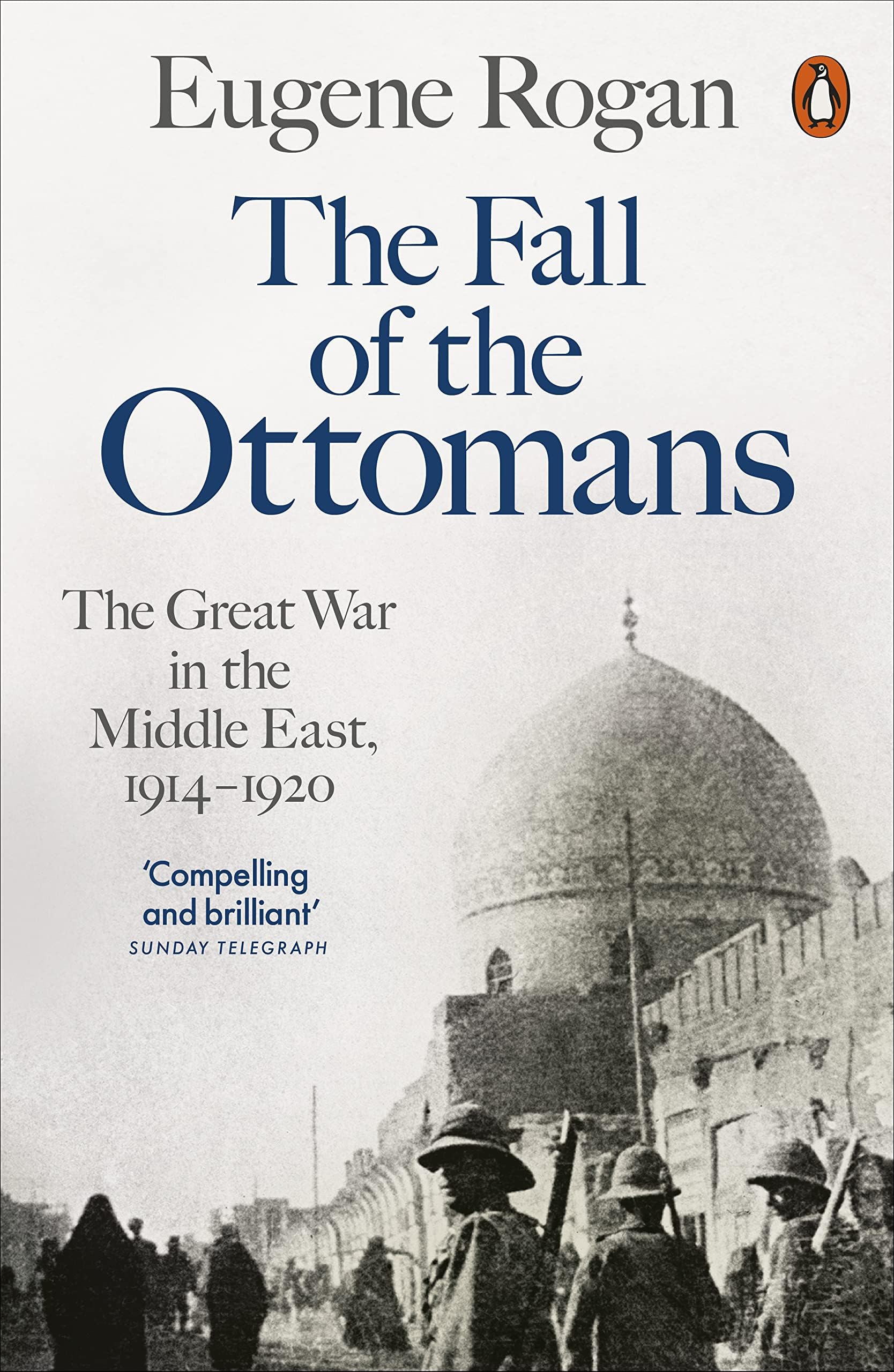
The Fall of the Ottomans: The Great War in the Middle East, 1914-1920
Product ID: 474735475
Desertcart purchases this item on your behalf and handles shipping, customs, and support to Senegal.
*FULLY UPDATED WITH A NEW FOREWORD* THE SUNDAY TIMES TOP TEN BESTSELLER WINNER OF THE BRITISH ARMY MILITARY BOOK OF THE YEAR 2016 'Truly essential' Simon Sebag Montefiore The final destruction of the Ottoman Empire - one of the great epics of the First World War, from bestselling historian Eugene Rogan For some four centuries the Ottoman Empire had been one of the most powerful states in Europe as well as ruler of the Middle East. By 1914 it had been drastically weakened and circled by numerous predators waiting to finish it off. Following the Ottoman decision to join the First World War on the side of the Central Powers the British, French and Russians hatched a plan to finish the Ottomans off: an ambitious and unprecedented invasion of Gallipoli... Eugene Rogan's remarkable book recreates one of the most important but poorly understood fronts of the First World War. Despite fighting back with great skill and ferocity against the Allied onslaught and humiliating the British both at Gallipoli and in Mesopotamia (Iraq), the Ottomans were ultimately defeated, clearing the way for the making, for better or worse, of a new Middle East which has endured to the present. Review: Gripping and binding - Great historical account Review: Extensive research delivers classy narration - The Ottoman Empire was a multinational and pluralist empire spanning 6 centuries. Even at the onset of the First World War, the empire controlled around 2.4 million square km of area that includes modern day Turkey and most of the Middle East. The Islamic caliphate ruled empire was dominated by the Turks and also includes Arabs, Kurds, Greeks, Armenians and other ethnic minorities. During it’s prime , it surpassed even European power both in terms of military strength and wealth. Why and when the empire of such magnitude started to wane? What were the stimuli that caused its downfall? What were the flash-points? The lookout for these answers pulled me towards this book. The 17-18th century is an era which coincided with technology and enlightenment advancement. The benefit was reaped by European power and they left Ottoman Empire far behind. In the last few centuries, Ottoman Empire had lost significant territories to others. They lost almost every war with their Eastern neighbour Russia and with its territories too. In the year 1911, they fail to prevent Italy from annexing Libya. In 1912, the Balkan League comprising of Serbia, Montenegro, Greece and Bulgaria waged a war on the Empire with the objective of driving them away from Europe. It was a major fiasco for the Empire. The morale and confidence of military was in tatters. Still, what bought them to the war ? First and foremost, it was Russia’s territorial ambition. In Ideal circumstance, the Empire would have relied on Britain or France to keep Russia in Check. Now neither of the two nations can be counted on as they along with Russia are allies in Triple Entente. In trouble time, the Empire needed a strong friend to counteract them and it turned out to be Germany. The empire’s entry into the war was an acquiesce , resulting out of this alliance driven by circumstances. With more than 7500 miles of border and coastlines spanning Black Sea, The Persian Gulf, The Red Sea and the Mediterranean, the Ottomans presented their enemies with many points vulnerable to Allies attack. This was further exacerbate by nascent Arab revolt, where sizable numbers turned against them. Despite odds and colossal damage, the stultifying Ottoman forces surprisingly were able to thwart Allied forces and the war extended to 4 years. However, they ended up on the defeated side, gaining nothing from the tenacity. The war imposed greater hardship and bought greater despair. The upshot of the War is the creation of modern Middle East, divided under British or French dominion. The empire hold on Balkan region dwindled to naught. One of the gruesome and horrifying event has been genocide which was perpetrated by the Ottoman force on hapless Armenians in Anatonia ; allegation being disloyalty and treason. There were deep seated antipathy towards the Armenians. Males from 12 onwards were killed within sight of horrified womenfolk in smaller town. While in larger town, they were killed at a location where murder could not be witnessed by foreigners. The survivors were escorted out of the town under armed guard, where they faced robbery and wholesome massacre. Sick and elderly were killed as they fell behind. Though the death has been presented as negligence due to war ,but the fact is that top military brass were involved in the shenanigans. The genocide has left an indelible mark on the history and still etched on mind of Armenian generation that followed. The key subjects which did not find a mention in the review here includes , The rise of Young Turks , How Germany bolstered Empire army, Call for jihad to bring Muslims to Ottoman side, menace of flies, Russian withdrawal from war after Tsar was overthrown, unhygienic condition of trances, Arab revolt, contribution of Australian, New Zealand and Indian forces to Allied victory . Also excluded are episodes of humanity showed by both the sides. The Ottoman soldiers occasionally used to throw raisins , hazelnut and almonds to enemy side while invaders reciprocated with cans of fruits of jam. The book is all about infantry, cavalry, artillery , and everything related to war front. The events were placed chronologically and the author has been through giving with facts. It’s not easy to hold on to readers attention, even for history buffs , to such war chronicles. The author proves otherwise. The book has managed to answer every questions that I had in mind prior to reading it. This is a decent but painstaking job done on an egregious subject. The research done is commendable. There is so much to write on the subject that even shortening the review has been a difficult task.
| Best Sellers Rank | #34,311 in Books ( See Top 100 in Books ) #55 in Middle Eastern History (Books) #72 in United States History (Books) #227 in Military History (Books) |
| Customer Reviews | 4.4 out of 5 stars 2,359 Reviews |
S**Y
Gripping and binding
Great historical account
D**A
Extensive research delivers classy narration
The Ottoman Empire was a multinational and pluralist empire spanning 6 centuries. Even at the onset of the First World War, the empire controlled around 2.4 million square km of area that includes modern day Turkey and most of the Middle East. The Islamic caliphate ruled empire was dominated by the Turks and also includes Arabs, Kurds, Greeks, Armenians and other ethnic minorities. During it’s prime , it surpassed even European power both in terms of military strength and wealth. Why and when the empire of such magnitude started to wane? What were the stimuli that caused its downfall? What were the flash-points? The lookout for these answers pulled me towards this book. The 17-18th century is an era which coincided with technology and enlightenment advancement. The benefit was reaped by European power and they left Ottoman Empire far behind. In the last few centuries, Ottoman Empire had lost significant territories to others. They lost almost every war with their Eastern neighbour Russia and with its territories too. In the year 1911, they fail to prevent Italy from annexing Libya. In 1912, the Balkan League comprising of Serbia, Montenegro, Greece and Bulgaria waged a war on the Empire with the objective of driving them away from Europe. It was a major fiasco for the Empire. The morale and confidence of military was in tatters. Still, what bought them to the war ? First and foremost, it was Russia’s territorial ambition. In Ideal circumstance, the Empire would have relied on Britain or France to keep Russia in Check. Now neither of the two nations can be counted on as they along with Russia are allies in Triple Entente. In trouble time, the Empire needed a strong friend to counteract them and it turned out to be Germany. The empire’s entry into the war was an acquiesce , resulting out of this alliance driven by circumstances. With more than 7500 miles of border and coastlines spanning Black Sea, The Persian Gulf, The Red Sea and the Mediterranean, the Ottomans presented their enemies with many points vulnerable to Allies attack. This was further exacerbate by nascent Arab revolt, where sizable numbers turned against them. Despite odds and colossal damage, the stultifying Ottoman forces surprisingly were able to thwart Allied forces and the war extended to 4 years. However, they ended up on the defeated side, gaining nothing from the tenacity. The war imposed greater hardship and bought greater despair. The upshot of the War is the creation of modern Middle East, divided under British or French dominion. The empire hold on Balkan region dwindled to naught. One of the gruesome and horrifying event has been genocide which was perpetrated by the Ottoman force on hapless Armenians in Anatonia ; allegation being disloyalty and treason. There were deep seated antipathy towards the Armenians. Males from 12 onwards were killed within sight of horrified womenfolk in smaller town. While in larger town, they were killed at a location where murder could not be witnessed by foreigners. The survivors were escorted out of the town under armed guard, where they faced robbery and wholesome massacre. Sick and elderly were killed as they fell behind. Though the death has been presented as negligence due to war ,but the fact is that top military brass were involved in the shenanigans. The genocide has left an indelible mark on the history and still etched on mind of Armenian generation that followed. The key subjects which did not find a mention in the review here includes , The rise of Young Turks , How Germany bolstered Empire army, Call for jihad to bring Muslims to Ottoman side, menace of flies, Russian withdrawal from war after Tsar was overthrown, unhygienic condition of trances, Arab revolt, contribution of Australian, New Zealand and Indian forces to Allied victory . Also excluded are episodes of humanity showed by both the sides. The Ottoman soldiers occasionally used to throw raisins , hazelnut and almonds to enemy side while invaders reciprocated with cans of fruits of jam. The book is all about infantry, cavalry, artillery , and everything related to war front. The events were placed chronologically and the author has been through giving with facts. It’s not easy to hold on to readers attention, even for history buffs , to such war chronicles. The author proves otherwise. The book has managed to answer every questions that I had in mind prior to reading it. This is a decent but painstaking job done on an egregious subject. The research done is commendable. There is so much to write on the subject that even shortening the review has been a difficult task.
S**N
Excellent book
Nice printing quality. Quality pages. Overall a quality book.
C**6
How the mighty fall
One of the best works on this subject. The period covered and the empire covered has a lot of relevance for historians and the experts of management too. The book actually confirms a lot principles enunciated in Jim Collins book how the mighty fall. It would be an interesting read for any management expert.
M**N
Four Stars
INTERESTING BUT STOPS SHORT OF EXAMINING FUTURE PERSPECTIVES
A**R
Excellent book. Beautifully written
The book takes you the actual battle field. You can feel the movement of the armies. The pain of treason and losses. The joy of winning and the suffocation of the treaties
J**S
Don't Know Why the Last Few Pages were Empty
Eugene Rogan is amazing author despite writing three books. This is the second in the series of book histories describing the Arab-Middle East aspirations. The other two works of his are "The Arabs: A History" and "The Damascus Events". The Fall of the Ottomans is expected to pick up the events defining Arabian lands during the course of the First World War. The seller "Cocoblu Retail" wrapped the books in just a brown recyclable packing paper which was torn off by the time we received. The book which I received had multiple creases and pages were worn out. Subsequently, the cover page was crumpled and it happened due to very poor packaging from the seller's end. Despite all of this, I am retaining this book because I don't know how long does it take to replace and whether the correct replacement will come on time.
K**Y
Fast delivery
Great book at good price
G**O
Extremely interesting and well written
This was my introduction to the Middle Eastern front in the Great War, and it turned out to be one of the most interesting books I have read in quite some time. The author presents the facts from both sides, and manages to do so in a detailed manner without the book ever feeling tedious or excessive, despite the amount and seriousness of the topics covered. I absolutely recommend it to anyone willing to explore this often forgotten side of the first world war, which still matters greatly to this day for the immense changes it brought.
M**A
Excelente
Pesquisa histórica apurada, didático e interessantíssimo.
M**A
A moving contribution towards clarifying a complex subject
A remarkably clear and concise picture of Ottoman collapse and its impact on the Middle East. The book sheds light on the fate of the last Ottoman ruler, the rise of Kemal Ataturk, the genesis of the Middle Eastern imbroglio - starting with an analysis of Turkish tenacity, the reason for its ties with Kaiser's Germany, the precarious victories of the Entente powers, the preservation of Turkish nationalism and its reclamation of conquered territory in the Caucasus from the Russians who withdrew from the War with the start of the Communist revolution. It tells us how the buffer states of Georgia, Azerbaijan, Armenia came to be and foreshadowed the instability in Iraq and The Arab Israeli wars. The tragedy of Great Power politics and the endurance of the bitter conflicts till the present day lies in unfolding of history and the follies and foibles of Generals, Statesmen and the determination and heroism of those who picked up the gauntlet to steer a different course to set right the derailed trajectories of a positive and equitable outcome. A moving and well paced, fair and clear account of events. It left me wanting to know ore about the subject. It served as a more than adequate introduction on a vital subject! Hence the five stars.
A**S
Magisterial History of a Neglected Theater of WW1 -- All Too Relevant to Today
This compelling history of the Ottoman Empire's involvement in World War One -- and of the peace that led to the Empire's collapse -- is important not just as history, but as a backdrop to current events. As history, it is a major achievement, opening a perspective on the war with which I at least was almost totally unfamiliar (barring references to the Treaty of Sevres and to Lawrence of Arabia). Why has so little been written about the Ottoman involvement in World War One? Western European and American historians have focussed on the diplomatic lead-up to the war and on the war on the Western front, not surprisingly given the tendency to focus on one's own (or one's country's), point of view. Beyond that, there are vast troves of material on the War in English, French, and German, and a wide audience for World War One books in countries where those languages are spoken. Much less has been written from an Ottoman perspective. Much of the source material is in Turkish or Arabic, not part of most Western historians' toolkits. And from a current-day Turkish perspective, the First World War was a prologue to Turkey's definitive war -- the War of Independence from 1919 to 1923, when Turkish forces led by Ataturk defeated the Greek, French and other forces who had invaded. For many modern day Turks, Ottoman history is barely relevant to the new state founded by Ataturk. This lack of attention has left a significant empty space in popular writing on the First World War , a space which this book admirably fills. It is meticulously researched, relying extensively on Turkish and Arabic sources, and on a very wide range of other sources as well. It is admirably clear, with an organization that pulls one steadily forward, and a prose style that makes reading a pleasure. The author evokes characters and circumstances in a compelling way, particularly given that this is in part a military history. As to conclusions, the author argues that it wasn't the war that overthrew the Ottomans, it was the peace that followed. The Treaty of Sevres is best known as the treaty in which the British and French carved up the Middle East; what is less widely understood is that they carved up Turkey as well. This finished the Ottomans, and almost finished the Turkish state as well. It seems questionable that the the Empire could have survived even given a less draconian treaty -- the Ottoman Empire in Europe was crumbling before the War, and Arab rebellion became a key factor in Asia during the War -- but the author's case is well put. Another conclusion is that the Armenian genocide was almost certainly at least in part a deliberate policy of the "Young Turks" Ottoman government. The author's reliance on contemporary sources to demonstrate this is compelling. As to the relevance of this work to today's events, it is direct. In their post-war division of the Middle East, Britain and France created states that had no relation to ethnic and religious groupings, nor to historical patterns of trade and settlement. Instead, they suited the interests of the imperial powers. In the 1950's and 1960's, the colonial lid was replaced by the lid of dictatorial power. With that removed, religious and ethnic differences are boiling over, with "states" that do not have the power, or legitimacy, to impose order. The past doesn't tell us what to do in future, but it does give strong hints of what not to do. As we start to do it all over again -----
ホ**タ
内容は面白いが、これはamazonがひどすぎる
気になって購入したところ、青いペンのアンダーラインが引いてありました。 このような商品を売るamazonの品質管理はどうなっているんでしょうか? 内容はおもしろかったので4です 近々、日本語版も販売されるのでそっちに興味をもたれてもいいかもしれません。
Trustpilot
2 weeks ago
1 month ago