
Buy anything from 5,000+ international stores. One checkout price. No surprise fees. Join 2M+ shoppers on Desertcart.
Desertcart purchases this item on your behalf and handles shipping, customs, and support to Senegal.
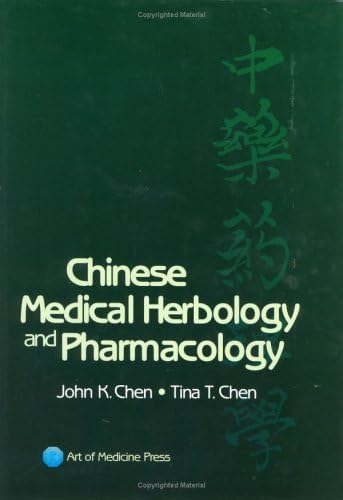
desertcart.com: Chinese Medical Herbology & Pharmacology: 9780974063508: John K. Chen, Tina T. Chen, Laraine Crampton, Charles Funk, Rick Friesen: Books Review: Excellent Resource. Begins to bridge the gap between eastern and western pharmacology. - This book is now 6 years old. In some ways it is definitely ready for an update. I also would be delighted to purchase the 2nd edition if/when it become available. In the interim there is still a great deal of useful information in this edition to promote better understanding and dialogue between eastern practitioners and western ones -- when a patient has decided they wish to explore or pursue both strategies. Until the availability of this rigorously researched and organized textbook, the field of chinese herbal medicines and their formulary combinations has been extraordinarily bewildering to conventional western providers. The difficulty with a shared language being one of the greatest hinderances. For many herbs, this book still omits topics a western physician may need to know that are standard in the discussion of pharmacokinetics and dynamics (route(s) of drug metabolism, peak and duration of action, means of elimination and half-lives for the above, presence of active metabolites, etc). Yet it has more extensive information written in the English language (i.e. not translated) on cautions/contraindications and management of overdoses than any other similar resource I have yet found. These are clearly stated in traditional terms for chinese diagnoses such as "avoid in patients with yin deficiency, spleen deficiency," etc. The authors also attempt to list relevant concerns for western diagnoses such as epilepsy, diabetes mellitus, hypertension etc. There is generally a section for each herb regarding herb-drug interactions. These are written to explain the concerns by categories of western drug followed by specific examples -- thereby allowing a knowledgeable western provider to make some reasonable generalizations about other drugs in the same drug class even if not all of them are mentioned (such as beta-blockers.) For some of the most common herbs, such as Ma Huang, substantially more details are given. For the best know ingredients, ephedrine and pseudoephedrine,these include time to peak plasma concentration, half-lifes, drug distribution through the body and excretion. This work is much more thorough with respect to modern pharmacology than Chinese Herbal Medicine: Materia Medica, Third Edition by Bensky. The latter seems to be primarily directed toward disease descriptions in the context of TCM logic, tracking herbal usage through prior classic texts, and naming of herbs across asian and scientific languages. The paragraphs in Chen & Chen that are devoted to clinical studies are still relatively limited in scope and precision. On some of the most popular herbs there may be more citations, but for the most part these are not often placebo-controlled or randomized. My understanding is that the included studies were indeed restricted to human populations, in order to make them more relevant. However, they frequently address only one or a few of the posited functions of a given herb. There is another source which does presents detailed research -- but these are more likely to be drawn from animal studies. The latter is a 2 volume set and is even further out of date plus out of print: Pharmacology and Applications of Chinese Material Medical . Given these limitations the authors/contributors and publishers of Chen & Chen's Chinese Medical Herbology have created a very solid and pioneering reference work. The consistent organizational structure of the herbal monographs is outstandingly user-friendly and succinct. The fonts and spacing are easy on the eyes, particularly when needing to scan for rapid access. There are high quality black & white photos with each herb monograph. The introductory section includes color plates with a photo for most or all herbs. Although I have not at this point planned to prescribe chinese herbs, I am pleased to have this resource as a way of understanding the purpose of some of the preparations to which my patients may have been exposed. Previously these appeared to be a nearly incomprehensible maze of potential interactions and complications. It is helpful to know there is a source for learning about them, about some of the better known interactions with western pharmaceuticals. This allows me to dialogue more meaningfully with their oriental medicine practitioners. From the standpoint of medical acutherapies, this book is also intriguing as a way to further understand the actions of typical herbs (and some pharmaceuticals) on acupuncture channels and/or principles. Review: 10/10 - Very informative and helpful
| Best Sellers Rank | #477,925 in Books ( See Top 100 in Books ) #18,824 in Textbooks (Special Features Stores) |
| Customer Reviews | 4.7 out of 5 stars 157 Reviews |
Q**X
Excellent Resource. Begins to bridge the gap between eastern and western pharmacology.
This book is now 6 years old. In some ways it is definitely ready for an update. I also would be delighted to purchase the 2nd edition if/when it become available. In the interim there is still a great deal of useful information in this edition to promote better understanding and dialogue between eastern practitioners and western ones -- when a patient has decided they wish to explore or pursue both strategies. Until the availability of this rigorously researched and organized textbook, the field of chinese herbal medicines and their formulary combinations has been extraordinarily bewildering to conventional western providers. The difficulty with a shared language being one of the greatest hinderances. For many herbs, this book still omits topics a western physician may need to know that are standard in the discussion of pharmacokinetics and dynamics (route(s) of drug metabolism, peak and duration of action, means of elimination and half-lives for the above, presence of active metabolites, etc). Yet it has more extensive information written in the English language (i.e. not translated) on cautions/contraindications and management of overdoses than any other similar resource I have yet found. These are clearly stated in traditional terms for chinese diagnoses such as "avoid in patients with yin deficiency, spleen deficiency," etc. The authors also attempt to list relevant concerns for western diagnoses such as epilepsy, diabetes mellitus, hypertension etc. There is generally a section for each herb regarding herb-drug interactions. These are written to explain the concerns by categories of western drug followed by specific examples -- thereby allowing a knowledgeable western provider to make some reasonable generalizations about other drugs in the same drug class even if not all of them are mentioned (such as beta-blockers.) For some of the most common herbs, such as Ma Huang, substantially more details are given. For the best know ingredients, ephedrine and pseudoephedrine,these include time to peak plasma concentration, half-lifes, drug distribution through the body and excretion. This work is much more thorough with respect to modern pharmacology than Chinese Herbal Medicine: Materia Medica, Third Edition by Bensky. The latter seems to be primarily directed toward disease descriptions in the context of TCM logic, tracking herbal usage through prior classic texts, and naming of herbs across asian and scientific languages. The paragraphs in Chen & Chen that are devoted to clinical studies are still relatively limited in scope and precision. On some of the most popular herbs there may be more citations, but for the most part these are not often placebo-controlled or randomized. My understanding is that the included studies were indeed restricted to human populations, in order to make them more relevant. However, they frequently address only one or a few of the posited functions of a given herb. There is another source which does presents detailed research -- but these are more likely to be drawn from animal studies. The latter is a 2 volume set and is even further out of date plus out of print: Pharmacology and Applications of Chinese Material Medical . Given these limitations the authors/contributors and publishers of Chen & Chen's Chinese Medical Herbology have created a very solid and pioneering reference work. The consistent organizational structure of the herbal monographs is outstandingly user-friendly and succinct. The fonts and spacing are easy on the eyes, particularly when needing to scan for rapid access. There are high quality black & white photos with each herb monograph. The introductory section includes color plates with a photo for most or all herbs. Although I have not at this point planned to prescribe chinese herbs, I am pleased to have this resource as a way of understanding the purpose of some of the preparations to which my patients may have been exposed. Previously these appeared to be a nearly incomprehensible maze of potential interactions and complications. It is helpful to know there is a source for learning about them, about some of the better known interactions with western pharmaceuticals. This allows me to dialogue more meaningfully with their oriental medicine practitioners. From the standpoint of medical acutherapies, this book is also intriguing as a way to further understand the actions of typical herbs (and some pharmaceuticals) on acupuncture channels and/or principles.
J**O
10/10
Very informative and helpful
M**N
Informative
Needed this book for school and couldnโt have been more helpful!!
L**D
A must for any Herbalist
This text has full, easy to read information on the medicinal uses, interactions and properties of a vast range of herbs. My understanding of oriental herbal medicine is limited to say the least, but this book has piqued my interest as well as being an in depth source of ready information that is usable in my business today. The book is that readable, that it has yet to get to the office as I cant seem to put it down at home.
M**W
... complete text on Chinese Medicine substances that I would recommend to all students and practitioners of Chinese Medicine
Phenomenally informative and complete text on Chinese Medicine substances that I would recommend to all students and practitioners of Chinese Medicine. Two critiques for improvement: color photos should be found within the section of each herb, instead the reader needing to find the color photo at beginning of the text; and 2. thicker paper so that page is not see-through and the text is easier to read.
I**N
Chinese Medicine
Very thorough, and many beautiful photos of medicinal herbs, a rare find.
F**N
chinese medical herbology&pharmacology
this is a great, as i call recipe book for ailments and what is wrong with you book. tried a couple of the TCM recipes and they turned out very well and took care of what was wrong. be prepared though. some of the remedies does take some stuff that you have to order/try to find. but if you want a natural way of dealing with your ailments, this is a great book to have.
J**O
This is THE Book!
I love this book! I particularly love the fact that you can look up pharmacological actions on herbs and it also contains research studies. I often use this book to cross reference potential side-effects with medications as well as making sure herbs won't have implications on hormone sensitive patients. Much better than the Bensky book we all had to read in school.
Trustpilot
2 months ago
3 weeks ago