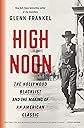
High Noon: The Hollywood Blacklist and the Making of an American Classic
Product ID: 40123054
Desertcart purchases this item on your behalf and handles shipping, customs, and support to Senegal.
From the New York Times- bestselling author of The Searchers , the revelatory story behind the classic movie High Noon and the toxic political climate in which it was created. It's one of the most revered movies of Hollywood's golden era. Starring screen legend Gary Cooper and Grace Kelly in her first significant film role, High Noon was shot on a lean budget over just thirty-two days but achieved instant box-office and critical success. It won four Academy Awards in 1953, including a best actor win for Cooper. And it became a cultural touchstone, often cited by politicians as a favorite film, celebrating moral fortitude. Yet what has been often overlooked is that High Noon was made during the height of the Hollywood blacklist, a time of political inquisition and personal betrayal. In the middle of the film shoot, screenwriter Carl Foreman was forced to testify before the House Committee on Un-American Activities about his former membership in the Communist Party. Refusing to name names, he was eventually blacklisted and fled the United States. (His co-authored screenplay for another classic, The Bridge on the River Kwai , went uncredited in 1957.) Examined in light of Foreman's testimony, High Noon 's emphasis on courage and loyalty takes on deeper meaning and importance. In this book, Pulitzer Prize-winning journalist Glenn Frankel tells the story of the making of a great American Western, exploring how Carl Foreman's concept of High Noon evolved from idea to first draft to final script, taking on allegorical weight. Both the classic film and its turbulent political times emerge newly illuminated. Review: High Noon - I don’t tend to read a lot of non-fiction so the subject matter really needs to appeal to me and in the case of High Noon – it did. It’s got Hollywood, politicians behaving badly and a movie I remember watching with my father when I was a child. One of the first things I did after finishing the book was to go back and watch the movie again. It would have been nice to have had my father here to watch it with me again but I’m sure he was with me in spirit. The book focuses on the movie High Noon but it’s really the retelling of how the House Un-American Activities Committee (HUAC) went on its witch hunt throughout Hollywood to route out members of the Communist Party. Many had joined not out of any deep seated loyalty to Russia or “the Party” but rather as a rejection of policies that didn’t favor the working man. Many drifted out of the party without giving it a second thought not realizing the impact it would have on them later. Then the Cold War politics of fear began and as history tells us common sense went out the window. In Hollywood the HUAC started calling in people to testify and they had limited choices if they wanted to keep working; admit they were once in a member of the Party, say they no longer were and name the names of others they knew. It was a system that survived on fear; the fear of being called, the fear of having to name the names and the fear of being named. It was a horrifying time in American history. There were no checks and balances. Even the press failed to provide a counter; the journalists of the time went along with whatever the Committee put out. From the initial concept to the final cut I found the story of the making of High Noon to be fascinating. It almost didn’t get made and it changed as the screenwriter, Carl Foreman felt the impacts of the HUAC on his life and on Hollywood overall. He was a man committed to his ideals in a very difficult time. Mr. Frankel’s writing style is very easy to read and I never felt like I was in a textbook. It is deeply researched and footnoted. I think it’s an important book to read so we don’t forget what can happen when things get out of control. Anyone who loves movies and is interested in the political history of the country will find this to be a fascinating book. Review: I COULDA BEEN A FASCIST. - “The Communist Party was for years the best social club in Hollywood…” (p. 28). In the early 50s, when High Noon was released and I was on the cusp of adolescence, I remember thinking what a proud and patriotic thing the House Committee on Un-American Activities was doing: ridding Hollywood of all the subversive, ‘Commie rat bastards’ they could find. I was an idiot. In his excellent, well researched book, High Noon: The Hollywood Blacklist and the Making of an American Classic, Glenn Frankel expertly illuminates the evil, harmful, and lasting impact that the HUAC had on real people—mostly sincere and caring Americans who thought freedom was a good idea. Witch-hunts and inquisitions are rarely noble; just self-righteous, and vicious. With blacklists, and graylists, and actual jail terms meted out for contempt of Congress—I can’t believe that even reopening the Japanese-American concentration camp at Tule Lake to house dissidents was considered—Tinsel-Town’s paranoia was more than justified. And, at the height of it all comes an American screen classic, a metaphorical tale of a reluctant hero, a man of integrity, abandoned by the friends from whom he’d expected better, who stands tall and faces evil on his own at, High Noon: screenplay by, soon to be blacklisted, Hollywood screenwriter, Carl Forman. Recommendation: For me: a painfully reminiscent story about more innocent times, and the tale of the making a great movie. For you: a bit of history, and a closer look at today’s world. For us: a cautionary tale well worth reading. “It is a story that bears a clear relation to things that are happening in the world today, where people are being terrorized by bullies and surrendering their freedom out of senselessness and fear.” (p. 259) Bloomsbury Publishing. Kindle Edition, 380 pages.
| Best Sellers Rank | #1,270,619 in Books ( See Top 100 in Books ) #1,628 in Movie History & Criticism #26,163 in United States History (Books) #68,914 in Arts & Photography (Books) |
| Customer Reviews | 4.4 out of 5 stars 558 Reviews |
P**D
High Noon
I don’t tend to read a lot of non-fiction so the subject matter really needs to appeal to me and in the case of High Noon – it did. It’s got Hollywood, politicians behaving badly and a movie I remember watching with my father when I was a child. One of the first things I did after finishing the book was to go back and watch the movie again. It would have been nice to have had my father here to watch it with me again but I’m sure he was with me in spirit. The book focuses on the movie High Noon but it’s really the retelling of how the House Un-American Activities Committee (HUAC) went on its witch hunt throughout Hollywood to route out members of the Communist Party. Many had joined not out of any deep seated loyalty to Russia or “the Party” but rather as a rejection of policies that didn’t favor the working man. Many drifted out of the party without giving it a second thought not realizing the impact it would have on them later. Then the Cold War politics of fear began and as history tells us common sense went out the window. In Hollywood the HUAC started calling in people to testify and they had limited choices if they wanted to keep working; admit they were once in a member of the Party, say they no longer were and name the names of others they knew. It was a system that survived on fear; the fear of being called, the fear of having to name the names and the fear of being named. It was a horrifying time in American history. There were no checks and balances. Even the press failed to provide a counter; the journalists of the time went along with whatever the Committee put out. From the initial concept to the final cut I found the story of the making of High Noon to be fascinating. It almost didn’t get made and it changed as the screenwriter, Carl Foreman felt the impacts of the HUAC on his life and on Hollywood overall. He was a man committed to his ideals in a very difficult time. Mr. Frankel’s writing style is very easy to read and I never felt like I was in a textbook. It is deeply researched and footnoted. I think it’s an important book to read so we don’t forget what can happen when things get out of control. Anyone who loves movies and is interested in the political history of the country will find this to be a fascinating book.
G**N
I COULDA BEEN A FASCIST.
“The Communist Party was for years the best social club in Hollywood…” (p. 28). In the early 50s, when High Noon was released and I was on the cusp of adolescence, I remember thinking what a proud and patriotic thing the House Committee on Un-American Activities was doing: ridding Hollywood of all the subversive, ‘Commie rat bastards’ they could find. I was an idiot. In his excellent, well researched book, High Noon: The Hollywood Blacklist and the Making of an American Classic, Glenn Frankel expertly illuminates the evil, harmful, and lasting impact that the HUAC had on real people—mostly sincere and caring Americans who thought freedom was a good idea. Witch-hunts and inquisitions are rarely noble; just self-righteous, and vicious. With blacklists, and graylists, and actual jail terms meted out for contempt of Congress—I can’t believe that even reopening the Japanese-American concentration camp at Tule Lake to house dissidents was considered—Tinsel-Town’s paranoia was more than justified. And, at the height of it all comes an American screen classic, a metaphorical tale of a reluctant hero, a man of integrity, abandoned by the friends from whom he’d expected better, who stands tall and faces evil on his own at, High Noon: screenplay by, soon to be blacklisted, Hollywood screenwriter, Carl Forman. Recommendation: For me: a painfully reminiscent story about more innocent times, and the tale of the making a great movie. For you: a bit of history, and a closer look at today’s world. For us: a cautionary tale well worth reading. “It is a story that bears a clear relation to things that are happening in the world today, where people are being terrorized by bullies and surrendering their freedom out of senselessness and fear.” (p. 259) Bloomsbury Publishing. Kindle Edition, 380 pages.
J**N
A marvelous, riveting read about Hollywood - and how Stars were made "Back then."
For those who love "classic Hollywood" and are into behind the scenes glimpses into how movie stars were "Made" back in the day of the "Studio System" in the 1930s through the late 1940s, and maybe into the VERY early 1950s, this is a MUST READ book. I could not put it down. The, well, amazing story of how Gary Cooper got into movies is fascinating and illustrates (back in those days), how "valuable" it was to know how to ride a horse (!) and how THAT skill helped Cooper make the big time. Equally riveting is how he got the name GARY. Also mind boggling is the $$$ he made back then (compared to today's multi million dollar payouts, is again fascinating. Even more beguiling, is how HIGH NOON was made and promoted. Back then it was considered a "so-so" movie NOT worth any special attention. In fact Stanley Kramer the overall "Boss" of everything, was so "Down" on the movie, he gave Cooper a very large percentage of all future profits as he, Kramer, thought it would be a loser. As it turned out, Cooper made something like 15 times his salary in this Profit Participation! Also spellbinding is the "Other Part" of this marvelous book, that cover and yes, UN covers the Hollywood Blacklist of that era. It seems inconceivable today that such an "Operation or Proceeding" could not only take place, but also ruin the lives and well being - especially financially - of so many up and coming movie stars, directors and producers. Yes, even if you are NOT interested in "Things Hollywood" this is still an excellent book to place in your home and on your bookcase shelves.
T**D
1950's communist scare hits Hollywood
If you were alive then , you're probably 80+now and you remember it well. The House UnAmerican Activities Committee (HUAC) and Sen. McCarthy went after any prominent Hollywood executive or actor, who had joined an ultraliberal group. They were labeled as communist sympathizers , Reds, fellow travelers, commies, even anti-Americans. But there was a real Communist Party in California in the 1930's and early 40's when Russia was our important ally in WW II, and "sympathizers" did abound. Studio writers, directors, producers, actors were coerced into revealing names of anyone they knew in their Hollywood movie orbit who attended a meeting or even a social party of any ultra- left wing group. Execs who were investigated and listed by the HUAC were put on the famous Hollywood "black list", as not employable for further work in the studios. Those who refused to cooperate with the HUAC and denounce their friends and relatives in the business were admired by some and persecuted by others. And the reverse was true of those who betrayed their colleagues by submitting their names to the Committee. It was an ugly time--mcarthyism-- and the author divides his descriptions of the making of that great Oscar winning movie High Noon and the biography of its admired and beloved actor, Gary Cooper, with a detailed scholarship of the anti-communist phobia of the 1950's era in the motion picture industry. You can almost skim through which of two topics you're not interested in and still have a good read ---How a movie is made--- the technical and artistic direction of a masterpiece, , or the Congressional investigations of the studios.
J**A
High Noon is mostly about the Hollywood blacklist and it’s affect on the industry, not the movie.
Great insights as the making of this movie however the book was more about the Hollywood blacklist than HIgh Noon. There are other books on that subject and though there were some nice tidbits about the actual making of movie most was about the turmoil caused by the HUAC. The book could have used a few pictures so we could see what some of the characters mentioned looked like. Half way thru the book I started to lose interest even though I am a big fan of the movie and Gary Cooper.
S**N
A political perspective on the movie "High Noon"
This is a fascinating volume on the making of the Western movie classic, "High Noon." What makes this volume so interesting is that is is not simple a description of the making of the movie. The focus is the context surrounding the movie and its influence on the film and on the people responsible for it. It was conceived and produced during the time of the Congressional House Unamerican Activities Committee (HUAC), which spent time exploring the role and danger of Communists in Hollywood. And the book explores this and the aftereffects. Foreman, the writer, had been a member of the American Communist party, although he left after some time as a member. His script slowly changed, as the story began to represent an allegory of the times. Gary Cooper, nearing the end of being offered decent scripts, was offered the chance to play the lead role in the movie and jumped at it. He was a conservative politically. then, there were Kramer (producer) and Zinneman (director). In addition, the cast included the musician Dmitri Tiomkin, with one of his well know scores. The development of the movie within the context of Congressional probes, blacklisting of those who did not cooperate with HUAC, and the making of the movie are intertwined. This was not one of the finest hours for the United States. Many, like Foreman, lost their means to generate income in the United States until later, after the blacklist ended. A good read and an excellent use of High Noon as a movie to illustrate larger issues.
S**O
Is There a Communist Under Your Bed
This is an interesting behind the scene look at the making of the classic HIGH NOON. But more importantly it an excellent study of what the 50's Back List did to Hollywood. In fact, you could call it the Grey List because it caused problems for everyone. The are many villains in this story and very few heroes. I couldn't believe what rats people like Hedda Hopper, Robert Taylor, John Wayne, Cecil DeMille, and others were. Very few had and dignity or courage. It is a sad, sad tale. I was surprised by the negative comments about Grace Kelly and her acting. The movie and director deserved Oscars. HIGH NOON is far superior to the winner, THE GREATEST SHOW ON EARTH (really!). And I think Zimmerman did a better job with this movie than Ford did with THE QUIET MAN ( a movie I really dislike more every time I see it, I cannot stand the way Wayne treats the beautiful and lovely Maureen O'Hara.) This is a must for film lovers every where.
J**N
Great book for High Noon fans
If you are interested in Hollywood, especially during the blacklist time or fan of High Noon as a film, this is an excellent history of the time and the film, and the people who were involved in making High Noon. I was a teenager when High Noon was released, and I thought it was one of the best films I had ever watched, which I guess shows I wasn't a very frivolous teenager :). Therefore, reading about the background to the making of the film was very interesting to me. I also grew up during McCarthyism, which I abhorred, so that also added to my interest. However, I wonder if readers from a younger generation would find the story as interesting and entertaining as it was for me.
B**E
An excellent and informative read
Prompt delivery of a very good book. Anyone with an interest in Hollywood history should read it. All three of Frankel’s movie books make excellent and informative reading.
M**K
Enjoyed every page
Compellingly written. Frankel skillfully combines the story of the making of High Noon with a detailed and highly readably portrait of the "Hollywood Blacklist" era. Fascinating portrayal of principles and betrayal; artistry and disappointment. Its lessons about the dangers of giving in to bullying have special relevance in the time of Trump. If you have never seen High Noon, watch it before reading the book.
D**Y
a classic on a classic
A brilliant read. Each of Glenn’s books takes a different approach but they are all of sublime quality. The interweaving of history, biography and film criticism makes for a rich and compelling read.
S**N
Satisfied
It was a great purchase!!!!
C**E
high noon
Very interesting book about the history of the Hollywood blacklist, McCarthyism and the movie High Noon. I am always a big fan of Gary Cooper, and after reading this book, I understand him better.
Trustpilot
1 month ago
2 months ago