
Desertcart purchases this item on your behalf and handles shipping, customs, and support to Senegal.
📚 Unlock the dark genius of Poe — where every page is a thrilling escape into the macabre.
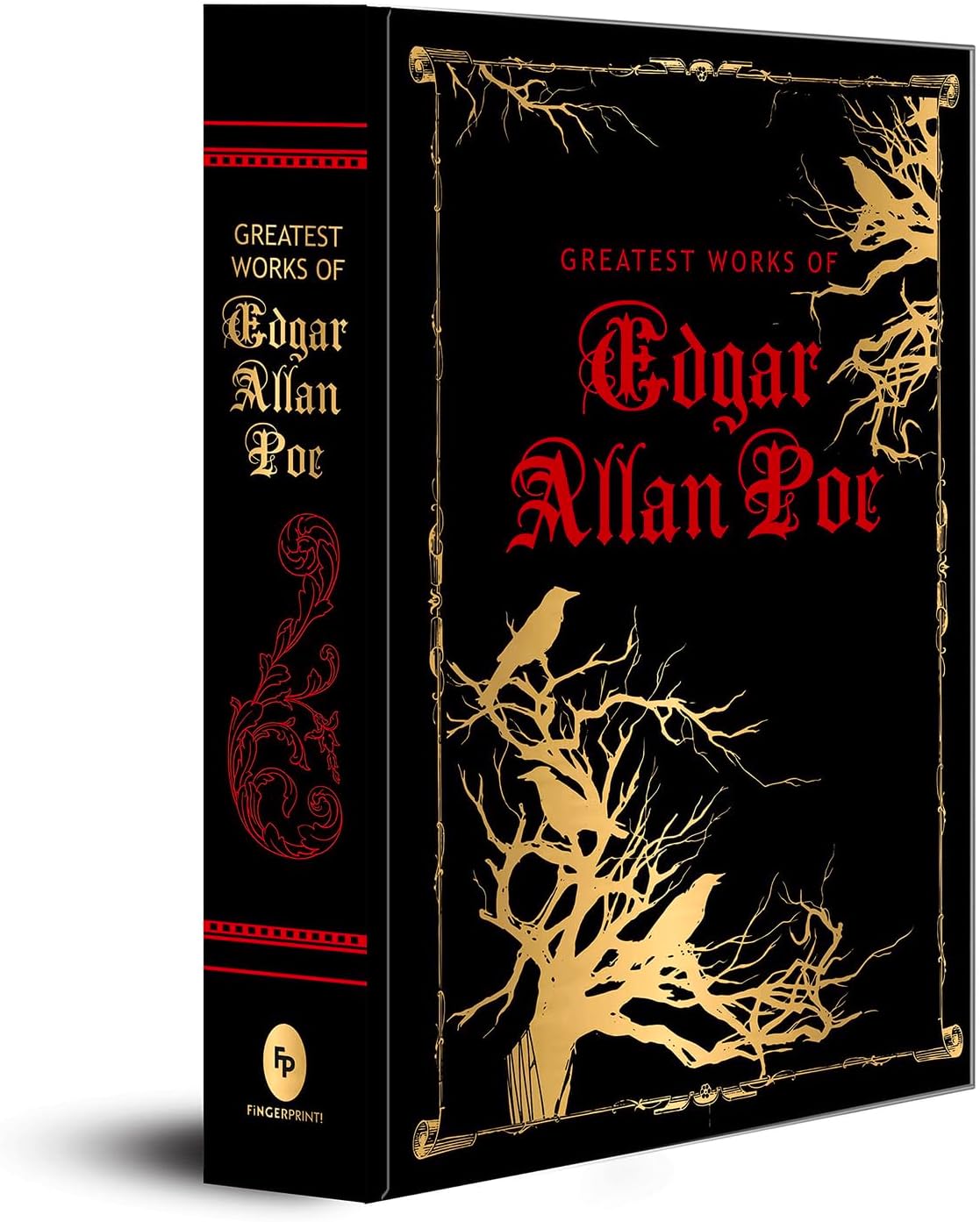
The Greatest Works of Edgar Allan Poe (Deluxe Edition) is a hardcover collection featuring 516 pages of Poe’s most iconic gothic tales, including The Raven and The Tell-Tale Heart. Published by Fingerprint! Publishing, this edition is a top-ranked bestseller in poetry and literary criticism categories, celebrated for its psychological depth, suspenseful storytelling, and enduring influence on literature.

| Best Sellers Rank | #5,067 in Books ( See Top 100 in Books ) #4 in History & Criticism of Poetry #4 in U.S. Poetry #12 in Literary Criticism & Theory |
| Customer Reviews | 4.8 out of 5 stars 4,316 Reviews |
R**L
not bad
The book full of poem and culture, long and not for everyone since its old English. Took me few weeks to finish, but it was good non the less. for those who like the 1800s and older stories, its documentary more than a story.
D**S
an every booklover's gem!
bought this together with +Collected Works of Kahlil Gibran- DELUXE EDITION [Hardcover] KAHLIL GIBRAN, and am just in awe! such a gem for its price! got this today, and I must commend the courier/driver too! Thank you!
B**S
Edler look
Super schönes Buch! Schwester hat es geschenkt bekommen und liebt es!
L**N
Secrets Unlocked of Poe’s Raven
Of all Edgar Allan Poe’s work, the most remembered and recalled piece of his literary poetic legacy is The Raven. Edgar Allan Poe's "The Raven" which is a poem that has fascinated readers for centuries with its hauntingly beautiful language and eerie atmosphere. It is a complex poem exploring grief, loss, and the human psyche. Through vivid imagery, symbolism, and repetition, Poe delves into the depths of the narrator's despair and madness. The raven symbolizes death and serves as a metaphor for the narrator's haunting thoughts and tortured mind. But beyond its surface level, this poem is filled with hidden meanings and esoteric symbols that add depth and complexity to the story. In this article, we'll explore the hidden meanings in "The Raven" and uncover the symbolism behind this iconic piece of literature. 🐦⬛THE SYMBOLISM OF THE RAVEN The most obvious symbol in "The Raven" is, of course, the raven itself. In many cultures, the raven is seen as a symbol of death and darkness, making it a fitting choice for Poe's poem. The raven's ominous presence in the narrator's chamber serves as a constant reminder of the loss and grief he is experiencing. But the raven also holds a deeper meaning in the poem. In ancient mythology, the raven was often associated with wisdom and prophecy. This adds a layer of complexity to the raven's role in the poem, as it could be seen as a messenger of truth and insight, rather than just a symbol of death. 🐦⬛THE RAVEN’S REPEATED WORD One of the most famous lines in "The Raven" is the raven's repeated word, "nevermore". This word serves as a constant refrain throughout the poem, and its repetition adds to the eerie and haunting atmosphere. But beyond its poetic effect, "nevermore" also holds a deeper meaning. In the context of the poem, "nevermore" can be seen as a symbol of the narrator's inability to move on from his loss. The word is a constant reminder of the finality of death and the narrator's inability to change the past. It also serves as a reminder of the raven's presence, as it is the only word the bird can speak. 🐦⬛THE NARRATOR’S DESCENT INTO MADNESS The chamber door in "The Raven" serves as a symbol of the narrator's descent into madness. At the beginning of the poem, the door is described as "chamber door" or a "chambered nautilus", representing the narrator's mind as a safe and secure place. But as the poem progresses and the raven's presence becomes more prominent, the door is described as a "black, ungainly, ghastly, gaunt, and ominous bird of yore". This transformation of the door symbolizes the narrator's descent into madness and his inability to escape the raven's haunting presence. 🐦⬛THE NARRATOR’S LOSS AND GRIEF The narrator's loss and grief are central themes in "The Raven", and they are represented through various symbols throughout the poem. The bust of Pallas, the Greek goddess of wisdom, serves as a reminder of the narrator's lost love, Lenore. The fire in the fireplace, which is described as "dying embers", symbolizes the fading of the narrator's hope and happiness. And the darkness and stillness of the night represent the emptiness and loneliness the narrator feels without Lenore. 🐦⬛DARKNESS The poem also references darkness, symbolizing the man's despair and hopelessness. The fact that the Raven visits him in the middle of the night when he is most vulnerable suggests that the man is struggling to cope with his grief and is searching for answers. THE INFLUENCE OF THE OCCULT 🐦⬛THE ALLUSION OF GREEK MYTHOLOGY Poe was known for his fascination with the occult, and "The Raven" is no exception. The poem is filled with allusions to Greek mythology, which adds to its esoteric nature. The mention of Pallas, the Greek goddess of wisdom, and the bust of Athena, the goddess of war, both serve as symbols of the narrator's lost love and his inner turmoil. 🐦⬛THE USE OF NUMEROLOGY Another occult influence in "The Raven" is the use of numerology. The number seven is mentioned multiple times throughout the poem, which holds significance in many occult and religious practices. In numerology, seven is seen as a number of completion and perfection, which could represent the narrator's desire for closure and his search for meaning in his loss. THE POWER OF LANGUAGE AND POETRY 🐦⬛THE IMPORTANCE OF RYTHM AND RHYME As a poet himself, Poe understood the power of language and the importance of rhythm and rhyme in poetry. In "The Raven", the use of repetition, alliteration, and internal rhyme adds to the musicality of the poem and creates a hypnotic effect on the reader. This use of language not only adds to the overall atmosphere of the poem but also serves as a symbol of the narrator's obsession with the raven and his descent into madness. 🐦⬛THE SYMBOLISM OF THE QUOTH The use of the word "quoth" in "The Raven" is also significant. This archaic word, meaning "said", adds to the Gothic and mysterious tone of the poem. But beyond its poetic effect, "quoth" also serves as a symbol of the power of language and the ability of words to haunt and torment the narrator. CONCLUSION In conclusion, "The Raven" by Edgar Allan Poe is a complex and multi-layered poetic masterpiece that is filled with hidden meanings and esoteric symbols. From the raven itself to the narrator's descent into madness, the influence of the occult, and the power of language and poetry, this poem is a treasure trove of symbolism and deeper meanings. By unlocking these hidden meanings, we can gain a deeper understanding and appreciation for this iconic piece of literature. All of Poe’s works are seminal of being the father of the detective story and a historical icon that is respected in many ways for what he created and holds credit with his name that even today holds worth looking into
A**R
Beautiful book
Beautiful book. My daughter is a big Edgar Allan Poe fan so she's going to be really happy with this gift
L**T
Quality
Loved the quality of the book
Trustpilot
3 weeks ago
2 days ago