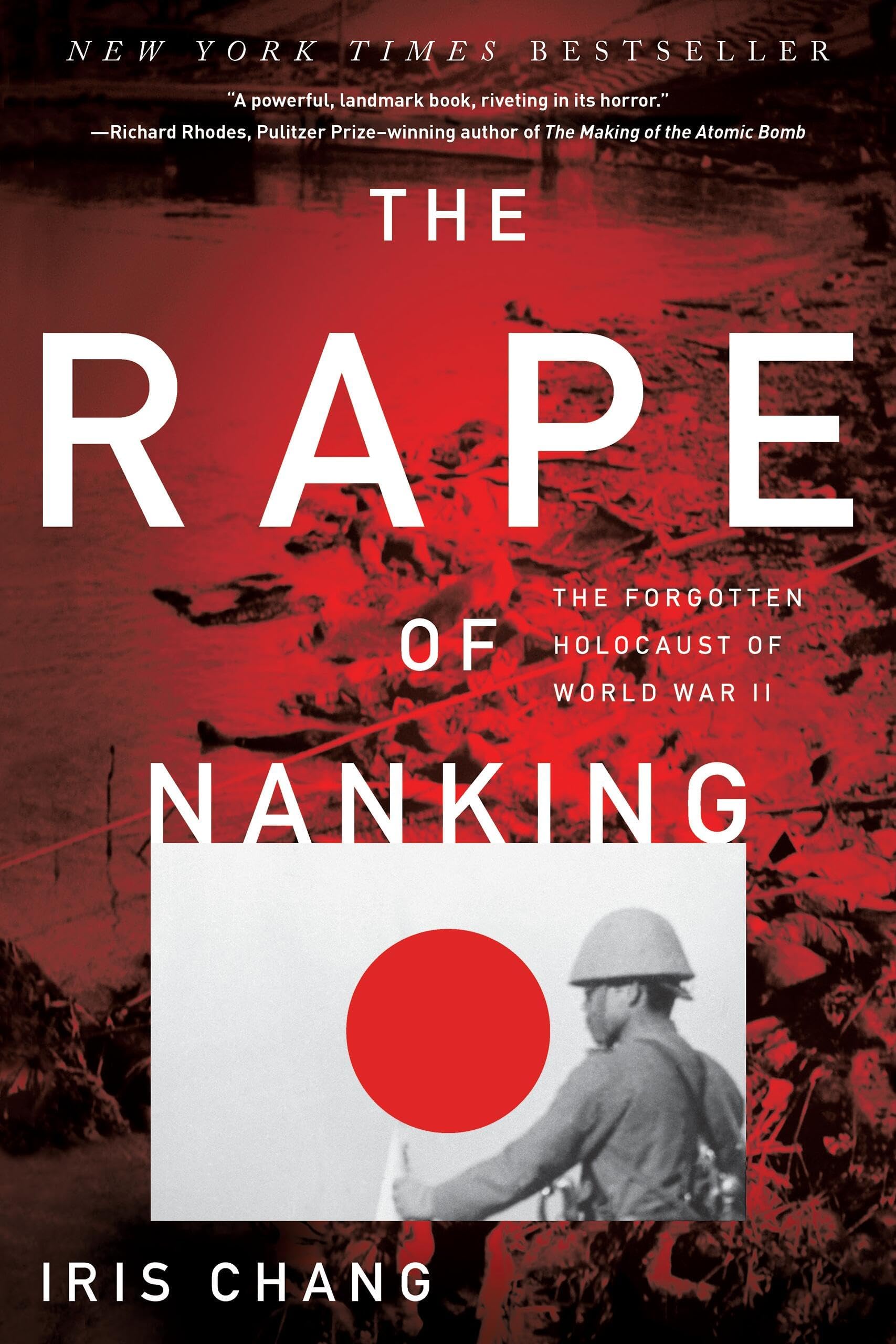
The Rape of Nanking: The Forgotten Holocaust Of World War II
Product ID: 3283017
Desertcart purchases this item on your behalf and handles shipping, customs, and support to Senegal.
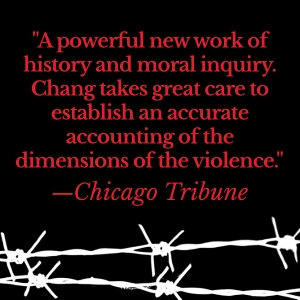
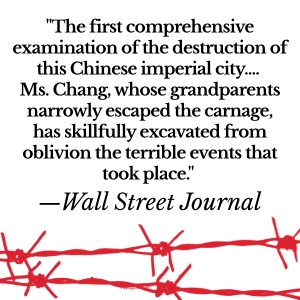
The New York Times bestselling account of one of history's most brutal―and forgotten―massacres, when the Japanese army destroyed China's capital city on the eve of World War II. "A powerful, landmark book, riveting in its horror." ―Richard Rhodes, Pulitzer-Prize winning author of The Making of the Atomic Bomb In December 1937, the Japanese army swept into the ancient city of Nanking. Within weeks, more than 300,000 Chinese civilians and soldiers were systematically raped, tortured, and murdered―a death toll exceeding that of the atomic blasts of Hiroshima and Nagasaki combined. Historian Iris Chang tells the story from three perspectives: that of the Japanese soldiers, that of the Chinese, and that of a group of Westerners who refused to abandon the city and created a safety zone that saved almost 300,000 Chinese. More than just narrating the details of an orgy of violence, in The Rape of Nanking Chang analyzes the militaristic culture that fostered in the Japanese soldiers a total disregard for human life. It also tells of the concerted effort during the Cold War on the part of the West and even China to stifle open discussion of this atrocity. Drawing on extensive interviews with survivors and documents brought to light for the first time, Iris Chang’s classic is the definitive history of this horrifying episode.



| Dimensions | 5.5 x 1 x 8.25 inches |
| Edition | Illustrated |
| Grade Level | 8 and up |
| Isbn 10 | 0465068367 |
| Isbn 13 | 978-0465068364 |
| Item Weight | 11.6 ounces |
| Language | English |
| Print Length | 368 pages |
| Publication Date | January 10, 2012 |
| Publisher | Basic Books |
| Reading Age | 13 years and up |
User
Sad, gruesome book of one of modern history's worst genocides
This book was the effort from Chinese/American author Iris Chang to raise awareness of the horrifying events of December, 1937, when Nanking, then the capital of China was, along with Manchuria at large and nearby Shanghai attacked by Japanese forces who would carry out one of humanity's most brutal, sick and inexcusable acts the world ever knew. Already blazing a trail of murder by the thousands of Chinese civilians and anybody suspected of being a Chinese soldier, they took this to psychotic levels in Nanking.The details of the seven weeks of torture, mass killings and rapes are so putrid it is not advisable to discuss them here. While the Holocaust of Jews in Germany outnumbered the dead in Nanking, where most estimates hover around 350,000 deaths, most of them civilians - women, men, children, infants - it didn't matter to the Japanese, what made the Rape of Nanking stand out was the speed in which the atrocities occurred, in just over a one month period before a full military occupation took hold and residents were allowed to return home but forced to obey the Japanese unless they wanted to be killed for even the slightest implication of an insult or unwillingness to do what they were told.Chang argues that while the U.S. especially demanded rightfully so severe reparations from Nazi Germany, and dutifully executed most of the high ranking officials and many many underlings, with Mao Tse Tung's takeover of China in 1946 and Chiang Kai-Shek's exile to Taiwan which meant communism China style, the U.S., while trying and executing some Japanese officials, including some for the equally brutal Bataan march, they feared communism and pumped billions into the Japanese economy and ignored for the most part the horrifying deeds their Army committed so America could have an "ally" near Russia and China. Thus, Japan skated, and systematically excluded the rape of Nanking, Bataan and other atrocities from schools and universities. Those who did dare to demand Japan admit responsibility, many Japanese scholars and journalists, were faced with death threats, protests, and vile denials in the right wing media.Her efforts were not in vain, as the book was a best seller and Japanese officials even as late as 1998 were forced to come clean after a fashion and at least one offered a formal apology to the citizens of Nanking and China.Tragically, because she suffered from bi polar disorder, and a severe case of it, coupled with the stress of promoting her book, making speeches all over and sadly becoming more paranoid as the disease progressed, Iris Chang suffered a nervous breakdown and committed suicide in 2004. While she was not a direct victim of the Rape, her parents and grandparents told her many stories of what happened, and combined with the very thorough research she compiled, it is quite possible the very horror of the event could have contributed to her mental illness. She would not be alone, as thousands of victims who did live suffered severe health problems after being maimed, burned and otherwise tortured. One woman who worked at a university in Nanking during this holocaust was so effected by the brutality, gore and misery that she too succumbed to her own suicide.We can't fairly hold the Japanese collectively responsible as most are long gone. But to shove this terror under the proverbial rug only allows a population or armed forces of any nation the potential given the effectiveness of the nationwide propaganda and sense of nationalism to be just as bad. Witness Kosovo - the U.S. was involved as much to cover up Bill Clinton's affair with Monica Lewinsky as any sense of duty, and the ethnic cleansing that took place was an equal horror. Tanzania, Cambodia under the Khmer Rouge and Pol Pot, attacking Iraq for 9-11 when it was totally innocent - hundreds of thousands of innocent Iraqis died for war profiteering and a not so subtle Islamic genocide because George W. Bush wanted it. We are no better than any other nation when it comes to the ability and willingness to use propaganda, controlled media and lies to commit terrible crimes for money and power.Chang valiantly tried to warn all of us that as the saying goes, those who ignore and obfuscate or destroy history are condemned to repeat it, and we do so over and over and over. This book is must reading, along with "Tears in the Darkness", a great book about the Bataan march of 1942, to remind all of us that as a species, we do not have to act like the tyrants leaders worldwide demand us to do.
User
Excellent book on an otherwise hidden topic.
This book by Ms. Chang is an excellent recounting of the atrocities which occurred in WW2 China.As for those vicious comments here refuting the book, I don't know what to say. What would one say to someone who was to deny the European Holocaust? In the face of irrefutable evidence, not even just this book, but the available documents regarding this incident, how can these events be denied? Why is this historical event denied with such a vitriolic hysteria? If it were not true, could it not be disproved objectively, and not with the "lies lies lies" that are listed here? It can't, the books which "refute" Nanking are pure fabrications themeselves; the very paradigm of modern Japanese selective amnesia. The fact that the Japanese to this day whitewash their shameful actions during WW2 only adds humiliation to those who suffered through this nightmarish event.And Nanking was not the only place which was "raped" in China during this time. Let us pretend Nanking did not even occur. What of it? It was NOT the only city in China, nay, in all of Asia which was "raped" by Japan. Even if this book, which it IS NOT, was pure fabrication, it still does not excuse the actions of Japan on its neighbors. The argument that Japan was doing its Asian neighbors a favor, or was asked in by them to get rid of the Western occupying colonsits is exceedingly silly. There has not been a nation on the face of this planet in all of history which has willingly asked an enemy nation to occupy their territory.To those who would berate this book, or this tragedy, based on completely unrelated contemporary Chinese actions, such as Tibet, then shame on you. A tragedy is a tragedy; if you think that Nanking is somehow justified for any other reason, I ask you how you can look at yourselves without disgust.Ms. Chang has written a very objective book on the subject matter. Chang is not a historian, she is a journalist, and as such, does NOT write her book like a history book, as some people seem to expect. Also, her book is balanced, and she is VERY careful not to blame all the Japanese people for the horrible event; and she is correct in doing this. The fact that some Japanese would get mad at this book only shows how they have been brainwashed into the view that their country was a victim; it was not. It is objective, and picking at any MINOR faults it may have is truly pathetic. As said earlier, a rape in August is still a rape in September. Mutilated, raped, pregnant women in "site A" is still a tragedy in "site B."A question was raised, "how long must the Japanese people be sorry for this event?" Well, read this book, and look at the whitewashing the Japanese have done on their wartime crimes, look at the ignorance of the world to this topic, and I think you can confidently say that there has been not one once of regret concerning this event.I applaud Ms. Chang for having the courage to write about such a previously unknown event, an event which has gotten many killed in Japan for asking too many questions about...For those who suggest you read revisionist books by ultra-nationalistic Japanese, I say that would be as objective as reading "Mein Kampf" for information on WW2. You decide...
User
a war crime we should all know.
It’s an excellent book in giving us information about a horrific event in history. It’s worth reading and being aware of the rape of Nanking.
User
Vital but disturbing reading
The late Iris Chang (sadly, overcome with depression, she killed herself in 2004) has crafted an excellent, but disturbing account of one of WWII's most horrific atrocities. The Rape of Nanking is written in an easy to read, non-academic style, making it accessible to all types of readers. Chang writes of numerous incidents of Japanese barbarity that occurred when the Japanese captured the city of Nanking in 1937. Repeatedly, the reader is bombarded with stories of rape, murder and outright excesses of violence, condoned at the highest levels of command. These do become repetitive but this only reinforces the horror of the situation, of men and women trying to keep their families together and to stay alive and out of the clutches of the Japanese.But it is easy to lose sight of the fact that the The Rape of Nanking isn't just about the atrocities - that Chang is able to tell the story at all is because of a small band of people, who risked their lives to help as many of the fleeing Chinese as possible. The British, Americans and Germans living in Nanking established a safe zone for Chinese refugees, and to help as many as they could. It is thanks to the records they left behind, that this horrific event is able to be told. The book is illustrated with a selection of black and white photographs, many of which only reinforces the sense of this tragic and disturbing atrocity. It should be noted that many of the images are disturbing and gruesome.Unfortunately, there is no separate bibliography although Chang does include a notes section which indicates her source material. She has relied on a number of sources, mainly westerners who wrote diaries and letters (there were a number of British, Americans, and Germans present in Nanking at the time - John Rabe, the Nazi who was "The Good German", even wrote a report to Adolf Hitler). Other sources of information were German diplomatic records and US Naval Intelligence records. She interviewed a number of Chinese survivors for their accounts, and also located Japanese sources for their side of the story - disturbingly at one point Chang discusses Japanese newspaper coverage of a race between two Japanese officers to kill as many Chinese as possible. I happen to have a copy of the book "Documents of the Nanking Safety Zone" which Chang references on a number of occasions in the notes section of her book, and it lists over 400 events of rapes, murders and other acts of violence prepetrated by Japanese soldiers, a number of which were verified by witnesses including a Reverend in Nanking at the time of the events, Rev. Magee, and John Rabe.From the number of reviews for this book, it is quite apparent that "The Rape of Nanking" is one of the more controversial books around. The main reason for this being the heated denials from the pro-Japanese faction that the events as portrayed in the book ever occurred. However, despite their best efforts to convince people otherwise, it is clearly obvious to anyone troubling to inform themselves of both sides of the argument, that a massacre of some proportions occured in Nanking. To my mind, there is just too much independent evidence to suggest anything but a massacre, whether it was 300000 people slaughtered or 200000. The Japanese denials come across as being factually inaccurate and baseless, and lack any sort of credibility given the Japanese government's position on a number of issue's arising out of their conduct in WWII including the treatment of POWs, comfort women, and the revisionist teachings in Japanese school's of Japanese actions in WWII. It is a tragedy that many young Japanese are unlikely to learn the extent of what their country did 70 years ago, in stark contrast to the youth of today's Germany, who are well aware of what their country and citizens did in WWII. However, just as I do not judge Germans today on what their grand parents generation did, nor do I judge the Japanese of today on what their countrymen did some 70 years ago. The Rape of Nanking is an account of a tragic event that all people, regardless of nationality should be aware of. If everyone was aware of this tragedy, then maybe such an atrocity will never be allowed to perpetuated again.
User
The Rape of Nanking
As the author suggests, I am one of the people that had absolutely no knowledge of The Rape of Nanking.I had put this book on my read list for quite sometime before I eventually ordered it. I found it to be totally sickening and difficult to read. It was difficult to read because of the subject matter and throufh no fault of the author.I have read several WWII books about the war with Japan and found in most all accounts, several direct or indirect references, to the atrocities Japan inflicted on their captives. However, this was the first I've read about Nanking.I really don't understand why I haven't read, at least a reference, to this subject in all of my history classes through the years. It is important that history is told so that it is not ever repeated.I would recommend to anyone to read this book. And sadly, as we talk about reparations in our country, Japan has never made an effort to apologize or attempt to make these Chinese whole again. I would go so far as to say it's too late anyway now.Please add this topic to current history books. It is earth shattering.This book is well written and holds the readers attention.
User
A book should be reward for Noble Price of Peace.
I would recommend any one who are interested to see the truth in history. How this part of history is unknown for most of people? how politics influences the books of history? and why 🇯🇵 as a nation needs repentance and does what Germany has been doing to prevent repeat the history…。
User
"It reminded me of a picnic of devils."
I use a Kindle reader for iPad. When you finish a book, Amazon always pops in asking for a review. I had to ignore this for this book, because I wasn't ready to write yet, needing time to process what I had just read!Having taken several days to process, I can say I am certainly glad I read this book. Having read extensively about the Armenian Genocide, the Holocaust and other 20th century atrocities, I was shocked at having never heard of this massacre.It was a hard book to read. Hard, because of the content, and hard because it exploded my preconceptions of the Japanese as being always gentle, kind people. I have always harbored guilt for the internment of the Japanese on American soil. I still feel some shame, having many colleagues of Japanese ancestry whose families were uprooted from there homes and sent away. But this book put that period into more of a context to perhaps understand what a previous generation did, since these crimes were front page news in 1937-1938.I will not do an extensive review of the content, since others have summarized this very well. But, it is the story about the Japanese Imperial Army taking the Capitol of China, which was then called Nanking (now Nanjing), at the end of 1937, as part of the Sino-Japanese war. They were brutal to the Chinese civilians, slaughtering hundreds of thousands in cruel ways, including beheading, using humans for sword practice spearing infants and adults, and raping tens of thousands of Chinese women. Remember I said civilians, non-combatants. They took few, if any POWs, executing Chinese soldiers, and any male they thought could be a soldier, post haste on entering the city. The Yangtze River was clogged with dead bodies, and blood ran in the streets, as they couldn't bury them as fast as they killed them.I know, having read some of the writings from the Japanese, that there are deniers among many of that people. I also know that some historians take issue with some of her history telling and facts. Having read extensively about the Armenian Massacre in Turkey that began in April 1915, and killed hundreds of thousands, if not millions of the Armenian people, I know there are many who deny this mostly unknown holocaust as well. I am convinced the Turkish government and the Japanese government just want to deny their horrendous behavior, avoid the shame, and the paying of any reparations. Shame on them!I am in the medical field, and we have peer review for any medical work which is published, so I understand the need to criticize some facts that may not be correct or strictly confirmed by historical records. But even if some of this is wrong, it would be hard to convince me this never happened. They can argue about the numbers of dead and raped, but this massacre happened.I am thankful that Iris Chang wrote this history/remembrance. I am saddened that she took her own life after writing it, and before she could finish her book on the Bataan Death March, which would have expanded my knowledge of another atrocity. I would highly recommend picking up this book. As has been said, we should not ignore where we came from, and we do so at our own peril!The subject quote above is from George Fitch's diary, a member of the International Committee for the Protection Zone, created by expatriots to try and save as many Chinese as they could! They thus bore witness to the slaughter!I would give this 4.5 stars.
User
I now know a great deal about my own family’s history and how the ...
I believe that Iris Chang’s ‘The Rape of Nanking’ stands out as one of the more powerful and straight-forward non fiction books in the genre with its use of grisly details and evidence from a multitude of first hand accounts. Personally, I have listened to stories from my parents regarding the brutality of Japanese soldiers to civilians scattered throughout Asia during the Second World War, but I never truly realized the extent of these crimes until reading this book. In doing so, I now know a great deal about my own family’s history and how the consequences of the ‘Rape of Nanking’ heavily influence today’s politics between China and Japan. Chang also goes on to recount how the Japanese government still, to this day, attempts to cover up the horrors of its past— an act akin to the German government downplaying the Holocaust or, in other words, erasing established history. The implications of the rampage in Nanking are misunderstood today, but Iris Chang actually recounts countless stories of survivors and statistical data to paint a picture of the situation understandable by all who even briefly look into the subject. The author also references the unique story of John Rabe, a German and a Nazi who initially lived in China for diplomatic purposes, but ultimately staying through the war to establish and maintain a ‘safe-zone’ for any Chinese seeking shelter from looting, rape, and/or murder. This account, albeit not the main story of the event, provides a brief introduction into the idea that anyone may help in a situation when others are in need, regardless of their background. However, the abundance of tales of valor also leads me to beg the question: Why is this necessary? Chang’s contrast between the heroism and immense suffering of the victims establishes a hopeless feeling that spans the entire length of the book and reflects upon the lack of a justice and outcry for the crime.I recommend this book to anyone considering a read, especially since this topic never attracted the same attention as other controversies around the world and remains relatively unknown to the public today. An educated society makes it harder, if not near-impossible, for crimes to go unpunished or protested— but here we stand now with all the evidence and documentation necessary for a conviction… and no verdict. Chang notes the similar response of the international community to “the more recent response to the atrocities in Bosnia-Herzegovina and Rwanda while… the entire world has watched CNN and wrung its hands” (Chang 220). She describes how ignoring or forgetting the past merely paves the path for more crimes to be committed, which I feel warrants a great deal of thought and consideration because of how many other developments receive little to no international response. By connecting the issue to more modern events, Chang makes it more personal for the reader because of its proximity in time to our lives.
User
Gift
Got it for my niece. She liked it.
User
great read
At times this book was very difficult to read; I persevered because I thought: I'm only reading it, but these people actually lived through these horrors. My worst moment was when I finished the book, read the epilogue and found out that the author had committed suicide. I recommend that everyone read this book. The horrors that humans are capable of should be at the back of every mind.
User
Reality can be rough.
Be sure you're prepared to open this book.
User
Essential, but harrowing
A warning should be given to any prospective reader of this book. I would strongly suggest that you do not read this book if you are easily upset by graphic descriptions and images of rape and murder. I have read a lot of graphic books about the Jewish Holocaust, but the `Rape of Nanking' is one of the most disturbing books I have ever read.That being said, this book is a massively important testimony for the lives of hundreds of thousands of Chinese soldiers and civilians who were brutally raped, tortured and murdered by the sadistic Japanese invaders during the Sino-Japanese Conflict which eventually formed part of the Second World War. This book is essential reading, I knew nothing at all about this massacre before reading this book. I had read books written about the survivors of Japanese prisoner of war camps and was aware that torture and barbarism was part of the captor's psyche and management; but I was totally unprepared for the level of violence and depravity the Japanese subjected their conquered Chinese citizens to.The book principally describes the six week period in which the Japanese invaders subjected their captives to some of the worst violence recorded in modern warfare. The author also describes the `International Safe Zone' which was created by a small band of Westerners including the famous John Rabe (a complete paradox as he was a `kind-hearted' Nazi); in order to attempt to provide a comparatively safe haven for the refugees of the conflict. The book ends by describing the punishments received by some of the perpetrators before looking at how the Japanese as a country still refuses to officially recognise the `Rape of Nanking' and has done nothing to alleviate the suffering of the survivors of this terrible event.This book is truly heart rendering and it will certainly upset the reader at various points. It did with me, I just couldn't get my head around the lack of humanity that the invaders showed to their captives. I would recommend that as many people as possible who are able to read this book do so. This is certainly a forgotten Holocaust and what with the Japanese government continuing to deny this crime, combined with the passage of time; the world needs to know what happened in Nanking in order to prevent it being forgotten from memory and most importantly as a warning to future generations of what human beings are capable of doing to each other.So in conclusion: harrowing, graphic, upsetting, but vital reading.
User
A must read
What an interesting book. A must read if one wants to comprehend the atrocities in the Asian continent during WW2 and more than that, to comprehend what humans are capable of...
Trustpilot
2 months ago
1 day ago