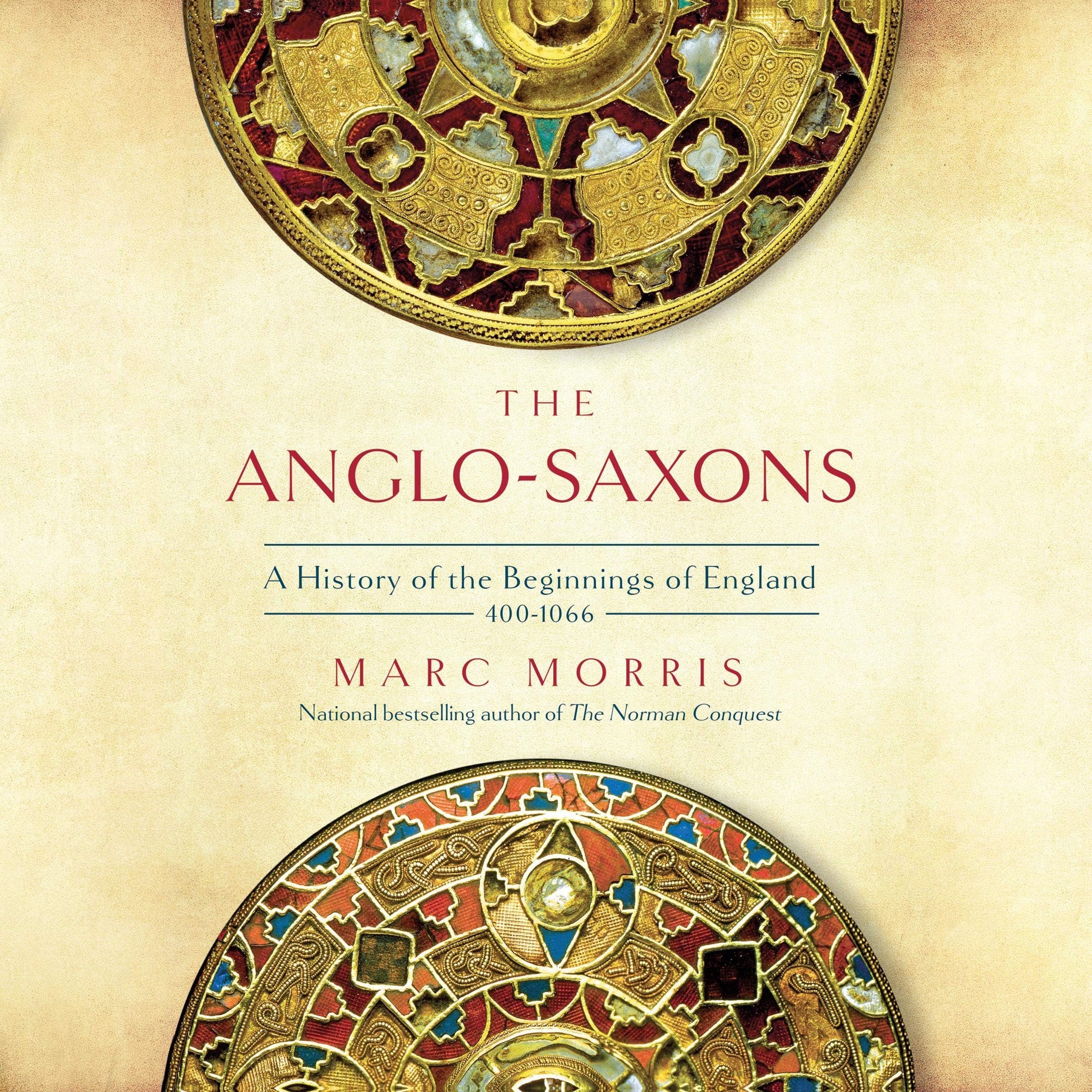
The Anglo-Saxons: A History of the Beginnings of England: 400 – 1066
Product ID: 321472547
Desertcart purchases this item on your behalf and handles shipping, customs, and support to Senegal.
A sweeping and original history of the Anglo-Saxons by national bestselling author Marc Morris. Sixteen hundred years ago Britain left the Roman Empire and swiftly fell into ruin. Grand cities and luxurious villas were deserted and left to crumble, and civil society collapsed into chaos. Into this violent and unstable world came foreign invaders from across the sea, and established themselves as its new masters. The Anglo-Saxons traces the turbulent history of these people across the next six centuries. It explains how their earliest rulers fought relentlessly against each other for glory and supremacy, and then were almost destroyed by the onslaught of the vikings. It explores how they abandoned their old gods for Christianity, established hundreds of churches and created dazzlingly intricate works of art. It charts the revival of towns and trade, and the origins of a familiar landscape of shires, boroughs and bishoprics. It is a tale of famous figures like King Offa, Alfred the Great and Edward the Confessor, but also features a host of lesser known characters - ambitious queens, revolutionary saints, intolerant monks and grasping nobles. Through their remarkable careers we see how a new society, a new culture and a single unified nation came into being. Drawing on a vast range of original evidence - chronicles, letters, archaeology and artefacts - renowned historian Marc Morris illuminates a period of history that is only dimly understood, separates the truth from the legend, and tells the extraordinary story of how the foundations of England were laid. 2021 by Marc Morris. ℗ 2021 Penguin Audio, all rights reserved. Published by Brilliance Publishing, Inc. Review: Fascinating for history lovers! - Marc Morris does a great job writing this history in an interesting way. I never found myself getting bored with the narrative. In fact, I would like to learn more about this period of time. As simply a normal person who wants to learn history, I believe the author does a good job avoiding confusing details and sticking to the overview of the storyline. I read both the ebook & a physical book so I will remark on my experience with both. The maps at the beginning of each chapter are helpful in referencing that chapter's topic. At the same time, I found it confusing because certain places in the chapter are not on the map. More charts & maps would be helpful in following the narrative. I appreciate all of the pictures throughout the book, especially the glossy, color photos. They help bring the history to life where words alone may be difficult to create a mental picture. I believe books can never have enough photos, charts and maps, so I would encourage every author to include as many as possible. I got confused trying to follow all the kings and their descendants. The author has a flow chart to help with this, which was a necessary addition to the book. Even then, it was hard to follow. I didn't care to spend a lot of time trying to figure it out perfectly. Maybe others won't find it as difficult to follow as I did. I would have liked more background on the native people before the Romans invaded. Were they all Celtics? Also, I would have liked more information about where the Anglos & Saxons came from & how they mixed with the natives. There are certain words and details that the author should have better explained, but he seemed to gloss over them carelessly. I definitely recommend this book. It's very well written. Some things could have been better but they don't take away from the overall enjoyment of the book. If those details bother you then you'll have to do a little personal research to fill in the holes. Thankfully, we have technology to simplify that research. I plan to read more books from this author. 10/7/25 Review: Good history of the Anglo Saxon period - Good book, a bit slow in spots and detailed. Not sure of the language, old English, of some of the odd looking names of many of the rulers A good deal of time of the Roman period was covered, the end of Harold and the entry of William the Conqueror was much less detailed 1066 had a busy September. Harold defeated one army and was defeated shortly thereafter ending the Anglo Saxon era Worth a read
O**9
Fascinating for history lovers!
Marc Morris does a great job writing this history in an interesting way. I never found myself getting bored with the narrative. In fact, I would like to learn more about this period of time. As simply a normal person who wants to learn history, I believe the author does a good job avoiding confusing details and sticking to the overview of the storyline. I read both the ebook & a physical book so I will remark on my experience with both. The maps at the beginning of each chapter are helpful in referencing that chapter's topic. At the same time, I found it confusing because certain places in the chapter are not on the map. More charts & maps would be helpful in following the narrative. I appreciate all of the pictures throughout the book, especially the glossy, color photos. They help bring the history to life where words alone may be difficult to create a mental picture. I believe books can never have enough photos, charts and maps, so I would encourage every author to include as many as possible. I got confused trying to follow all the kings and their descendants. The author has a flow chart to help with this, which was a necessary addition to the book. Even then, it was hard to follow. I didn't care to spend a lot of time trying to figure it out perfectly. Maybe others won't find it as difficult to follow as I did. I would have liked more background on the native people before the Romans invaded. Were they all Celtics? Also, I would have liked more information about where the Anglos & Saxons came from & how they mixed with the natives. There are certain words and details that the author should have better explained, but he seemed to gloss over them carelessly. I definitely recommend this book. It's very well written. Some things could have been better but they don't take away from the overall enjoyment of the book. If those details bother you then you'll have to do a little personal research to fill in the holes. Thankfully, we have technology to simplify that research. I plan to read more books from this author. 10/7/25
E**N
Good history of the Anglo Saxon period
Good book, a bit slow in spots and detailed. Not sure of the language, old English, of some of the odd looking names of many of the rulers A good deal of time of the Roman period was covered, the end of Harold and the entry of William the Conqueror was much less detailed 1066 had a busy September. Harold defeated one army and was defeated shortly thereafter ending the Anglo Saxon era Worth a read
M**N
Unusually Balanced and Durable Despite Academic and Political Controversy
This author deserves a glowing and carefully written review. I don’t have time for that, but I decided to post this anyway because there’s something important missing from these reviews. After reading this 2022 publication for the second time in April 2024, I was curious how many of Marc’s readers (or reviewers, anyway) had noticed what I consider to be his most outstanding achievement: balance, independent judgment and durability through a chaotic period in Anglo-Saxon historiography rocked by vicious political controversy and groundbreaking advancements in population genetics. I didn’t see this mentioned in the other reviews, so here I am. Since the June 2022 paperback edition was published, several landmark academic papers have demonstrated much greater mobility in ancient and Early Medieval populations than many recent historians and archaeologists had realized. In particular, Gretzinger et al (Sep 2022) and a recent preprint by McColl et al (March 2024) showed rather conclusively that large parts of England were virtually repopulated by migrants from around Germany after the fall of Roman Britain. These findings directly contradict the cultural diffusion models favored by the left. Frustratingly, they’ve also been weaponized by unsavory nationalist ideologies. So Marc was entering sensitive territory with this one. When Marc wrote this book, he would have known about some 2016-2017 papers showing a sizable genetic legacy from the Anglo-Saxons among the modern English, but this hadn’t really settled questions about the scale and process of migration, local assimilation and displacement, ethnogenesis and so on. He would have been faced with a complex, under-documented period that was getting punted around and politically weaponized by radicals on both ends of the spectrum. Somehow, he managed to draw conclusions that were demonstrably accurate in light of subsequent findings without endorsing extreme or simplistic views about ethnicity that preoccupied the opposing camps. He agrees with recent findings in his nuanced rejection of the “elite transfer” model, but he draws his conclusions primarily from archaeological and literary rather than genetic evidence, very much on his own terms, and he mentions the evolving genetic picture with cautious interest and abiding respect for interdisciplinary methods. Of course, Marc’s stance was entirely correct, but his writing also shows a studied awareness of these issues without really acknowledging, antagonizing or otherwise dignifying the political discourse, and he did it at no cost to his own sweeping and confident exposition. Wow. Just wow. Marc is smarter than he lets on. His literary talent alone is quietly brilliant, but he’s also a good historian. Thank you, Marc.
D**T
A Great Read
Very thorough, very interesting, memorable and enjoyable. Well done!
K**R
immensely readable
This book provided insights that I, as an Englishman (maybe more appropriately a Briton), found engaging and fascinating. I had no idea that there were three successful invasions of England - Roman and Norman, and a third I will let the readers discover. It gives a clear view of the history and the underlying politics, of which there was much, but thee are some areas that out of necessity were overlooked or reduced. The two areas I would like to understand better are the conquests of the Britons, and the level of artistry shown by the artifacts from those days. I could not reconcile the level of sophistication of the books and jewelry with the often dangerous times they lived in. But perhaps that is for another book. As for this one, grab your favorite drink, be prepared to wince at all the similar names you will read, and be prepared for a good read. The centuries gallop by all too fast.
W**E
Very Readable
This author and book progresses through the Anglo - Saxon kingdoms and kings, the bloody revolts, tumult and falls of the many kings from the 5th century to the 11th century. The author does so with some clarity but without making overbroad claims for developments accomplishments and significant historical events as he progresses through history. He captures well the dichotomy and competition between Irish Catholicism and Catholicism imported from the continent, the split between monks and clerics--many of these conflicts carried into more modern history and helped shape the religious landscape of England to the present (spoiler: the Irish and the monks lost). I enjoyed this book, it filled a gap in my knowledge, as history, while giving some play to Alfred the Great, Harold Godwinson and Harold Hardrata, largely jumps from the fall of Rome to William the Conqueror. This history even informed my own genealogical studies (my family starts in Whitby). I was surprised that the epithet Aethelred the Unready may mean something different than we think. A kings list added as an appendix might have been useful, otherwise a good read.
S**R
Understanding the Terminology of British History
Now I understand: Celts to Romans to Anglo-Saxons (and Kingdoms) to Vikings and plundering and how the English got a grip on governance and defense.
A**R
Good
Book is in good shape, with color plates and other photos. I haven't read it yet.
J**N
middle ages
Very easy to read and very interesting!
T**E
Hervorragende Lektüre
Das Buch ist exzellent recherchiert und stellt die Ereignisse der Zeit gut verständlich und übersichtlich dar. Derzeit das wohl beste Buch über die Zeit der Angelsachsen in England, das es zu kaufen gibt. Unbedingte Kaufempfehlung.
E**A
The history you did not expect
I decided to buy "The Anglo-Saxons: a History of the beginnings of England" because I felt I did not know enough about this period of English life. The centuries spanning from the Roman withdrawal from the island and the Norman Conquest (1066), conventionally referred to as a turning point in the events of the place, are a real challenge for the historian: lots of names, plenty of events, few literary sources, most of them mixing reality with legend. Professor Morris is able to govern the material with a firm hand and sometimes a touch of irony that fits properly. Not only are kings and events carefully selected and presented; the writing style is accurate and also pleasant. The book will suit the history scholar as well as the curious reader who wishes to go beyond Sutton Hoo and learn more of the history of these once wild tribes who gave life to Britain and , in some strange way, contributed to influence the culture to Europe, too.
G**L
The Anglo-Saxons
Excelente y llegó en buen estado.
M**D
An interesting and informative read
I am interested in history and that is why I purchased this book. I found it a most interesting read and very informative. It gave me much enjoyment in reading this book.
Trustpilot
3 weeks ago
1 day ago