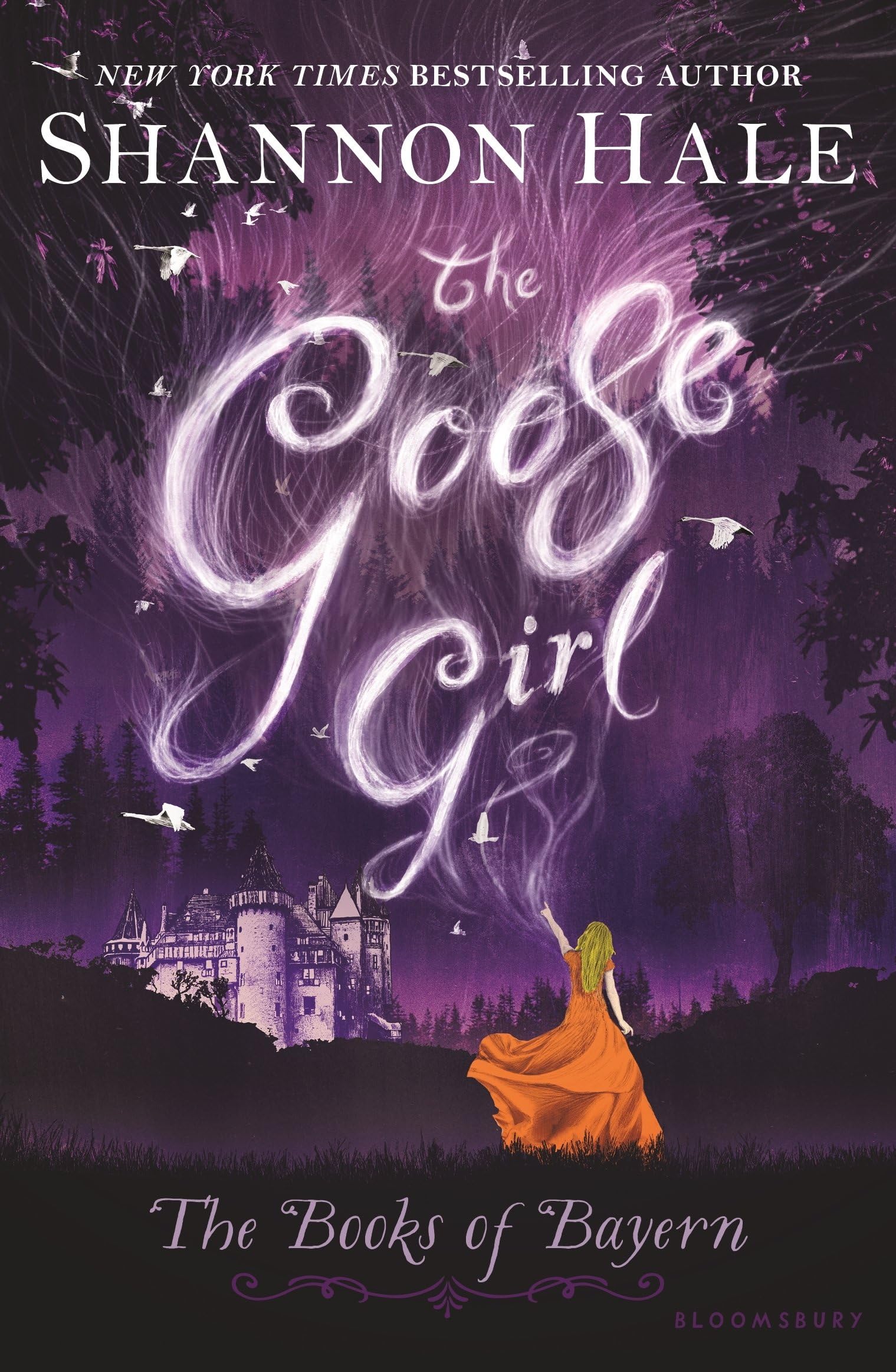
Bloomsbury U.S.A. Children's Books The Goose Girl
Product ID: 317043554
Desertcart purchases this item on your behalf and handles shipping, customs, and support to Senegal.
Buy Bloomsbury U.S.A. Children's Books The Goose Girl by Hale, Ms. Shannon online on desertcart.ae at best prices. ✓ Fast and free shipping ✓ free returns ✓ cash on delivery available on eligible purchase. Review: Great book! Absolutely golden Review: SPOILER ALERT: For those who are not familiar with the Grimm's fairy tale this book is based on, this review contains some things you may consider SPOILERS. Know that it follows the original story line in all the main points, but fleshes out the characters and gives cool explanations for the abilities of the maid/princess/etc to do the things they do. (But, like, really? You never read that fairy tale? So good. Go read it.) One of my very fave fairy tales as a very young Mir was "The Goose Girl". I especially loved reading aloud the rhymes--'Alas! alas! if thy mother knew it/Sadly, sadly, would she rue it," and "Blow, wind, blow." I was horrified in that particular, sensitive way of children that someone would decapitate a lovely horse such as Falada, the beloved, talking horse of the princess protagonist. Clearly, evil was afoot if such a dastardly deed was conscionable. I imagined Curdken's chase for his cap. (In my chikdhood's version of the tale, that was his name. In other versions--and in this retelling--it's Conrad's hat that goes rolling over hill and dale, sparking his pursuit. And I delighted in the horrible, terrible justice that befell the villainess. Just thinking about it makes me feel 6 years old all over again, feeling the magic of the story--all the stories--and how to a child, all this was so plausible: that a horse should talk, that the lock of hair should speak (some versions have drops of blood on a hanky), that a princess should command the wind, that justice would prevail. Shannon Hale has taken that brief, bloody, magical tale that may be familiar to you and fleshed it out in a story written for a YA audience, but sufficiently skilled, lyrical, and well-plotted in the telling that an adult like me was engrossed and loath to put it down even to have supper. In this retelling, the Princess Anidora-Kiladra (Anifor short) is a misfit in her own family. Even as a newborn she evidenced a strangeness: She didn't open her eyes for three days, not until her aunt (gifted with a special "speech") spoke her into wide-eyedness. This hint of a special power of speaking is hinted at from the opening, but develops beautifully. We see the not-well-loved child, Princess Ani, grow close to her aunt, who can speak to animals. She learns the language of swans, she learns some of the bird dialects, and she senses something latent in herself, something she cannot fully enunciate. It turns out that out of political considerations (fear of war), the Queen--who has the gift of people speech, ie persuasive to humans) betroths Ani to the prince of the neighboring acquisitive, hawkish kingdom. En route (as in the fairy tale) Ani's lady in waiting, Selah, who is deceitful and potent in people speech, gains many of the guards to her side, and they mutiny. Ani must hide in the forest of this foreign land, where she is befriended by a forest widow and her son. Ani ends up, as the Princess in the original tale, working as a goose girl for the king whose son she had been fated to marry. Without a persuasive gift of speech of her own, she is at the mercy of the powers around her. From privilege to the lowest echelon of society. A drastic change of status. What will she do? She ponders how to fix what has been damaged (and it's more than just her status). And, in the process, she begins to develop her gift. She learns goose speech, which is (surprisingly) not like swan speech. It's a gift that will serve her well. The start of a new journey of acquisitions--of insight, of power, of perspective, of friends, of confidence. Through the treacheries and friendships and tests and hardships, she begins to understand what her privileged and curtailed palace life had kept her from learning. And she learns one very important thing: She can speak to the wind. The fairy tale glosses over this great gift. Hale develops it as part of the evolving plot and part of the evolving, maturing Ani. We know, from the fairy story, that she will get her prince, and their romance develops believably and sweetly in Hale's tale, somewhat reminiscent of EVER AFTER, the film retelling of Cinderella. We sense that her trials will only make her a better future ruler, one who has walked in the shoes of the poor and oppressed and outcast and unjustly accused. Because it is a fairy tale retold, we know the ending though not all the details of how to get there. The special pleasure here is in the details. A marvelous, magical story. RECOMMENDED for young and middle-aged and old. Mir of Mirathon blog
| Best Sellers Rank | #178,579 in Books ( See Top 100 in Books ) #500 in Science Fiction for Young Adults #1,095 in Romance for Young Adults #1,711 in Fantasy for Young Adults |
| Customer reviews | 4.7 4.7 out of 5 stars (459) |
| Dimensions | 12.95 x 2.92 x 19.69 cm |
| Edition | New |
| ISBN-10 | 1681193167 |
| ISBN-13 | 978-1681193168 |
| Item weight | 392 g |
| Language | English |
| Print length | 432 pages |
| Publication date | 25 July 2017 |
| Publisher | Bloomsbury Childrens Books |
| Reading age | 13 - 15 years |
L**.
Great book! Absolutely golden
M**R
SPOILER ALERT: For those who are not familiar with the Grimm's fairy tale this book is based on, this review contains some things you may consider SPOILERS. Know that it follows the original story line in all the main points, but fleshes out the characters and gives cool explanations for the abilities of the maid/princess/etc to do the things they do. (But, like, really? You never read that fairy tale? So good. Go read it.) One of my very fave fairy tales as a very young Mir was "The Goose Girl". I especially loved reading aloud the rhymes--'Alas! alas! if thy mother knew it/Sadly, sadly, would she rue it," and "Blow, wind, blow." I was horrified in that particular, sensitive way of children that someone would decapitate a lovely horse such as Falada, the beloved, talking horse of the princess protagonist. Clearly, evil was afoot if such a dastardly deed was conscionable. I imagined Curdken's chase for his cap. (In my chikdhood's version of the tale, that was his name. In other versions--and in this retelling--it's Conrad's hat that goes rolling over hill and dale, sparking his pursuit. And I delighted in the horrible, terrible justice that befell the villainess. Just thinking about it makes me feel 6 years old all over again, feeling the magic of the story--all the stories--and how to a child, all this was so plausible: that a horse should talk, that the lock of hair should speak (some versions have drops of blood on a hanky), that a princess should command the wind, that justice would prevail. Shannon Hale has taken that brief, bloody, magical tale that may be familiar to you and fleshed it out in a story written for a YA audience, but sufficiently skilled, lyrical, and well-plotted in the telling that an adult like me was engrossed and loath to put it down even to have supper. In this retelling, the Princess Anidora-Kiladra (Anifor short) is a misfit in her own family. Even as a newborn she evidenced a strangeness: She didn't open her eyes for three days, not until her aunt (gifted with a special "speech") spoke her into wide-eyedness. This hint of a special power of speaking is hinted at from the opening, but develops beautifully. We see the not-well-loved child, Princess Ani, grow close to her aunt, who can speak to animals. She learns the language of swans, she learns some of the bird dialects, and she senses something latent in herself, something she cannot fully enunciate. It turns out that out of political considerations (fear of war), the Queen--who has the gift of people speech, ie persuasive to humans) betroths Ani to the prince of the neighboring acquisitive, hawkish kingdom. En route (as in the fairy tale) Ani's lady in waiting, Selah, who is deceitful and potent in people speech, gains many of the guards to her side, and they mutiny. Ani must hide in the forest of this foreign land, where she is befriended by a forest widow and her son. Ani ends up, as the Princess in the original tale, working as a goose girl for the king whose son she had been fated to marry. Without a persuasive gift of speech of her own, she is at the mercy of the powers around her. From privilege to the lowest echelon of society. A drastic change of status. What will she do? She ponders how to fix what has been damaged (and it's more than just her status). And, in the process, she begins to develop her gift. She learns goose speech, which is (surprisingly) not like swan speech. It's a gift that will serve her well. The start of a new journey of acquisitions--of insight, of power, of perspective, of friends, of confidence. Through the treacheries and friendships and tests and hardships, she begins to understand what her privileged and curtailed palace life had kept her from learning. And she learns one very important thing: She can speak to the wind. The fairy tale glosses over this great gift. Hale develops it as part of the evolving plot and part of the evolving, maturing Ani. We know, from the fairy story, that she will get her prince, and their romance develops believably and sweetly in Hale's tale, somewhat reminiscent of EVER AFTER, the film retelling of Cinderella. We sense that her trials will only make her a better future ruler, one who has walked in the shoes of the poor and oppressed and outcast and unjustly accused. Because it is a fairy tale retold, we know the ending though not all the details of how to get there. The special pleasure here is in the details. A marvelous, magical story. RECOMMENDED for young and middle-aged and old. Mir of Mirathon blog
G**A
A história é maravilhosa! Mas o livro chegou em péssimas condições. Todo amassado e o pior COM INSETOS dentro, tipo uns carunchos. Não recomendo esse vendedor
S**O
Il romanzo è stupendo, la protagonista è un amore, i comprimari sono splendidi e la storia d’amore è dolcissima. Un libro da tenere vicino quando ci si sente soli e si ha bisogno di un po’ di conforto.
A**M
The first time I read this story, I thought it was fun and enjoyed the development of the characters and the relationship between the princess and the prince. There were parts of the story I didn't really get why they were included and seemed like they didn't fit in the story. It seemed to drag in the beginning, and I was annoyed with how wimpy Princess Ani is in the start of the book. I recently reread the story and really loved it. I understood why everything was included in the book and pushed the story along. It no longer dragged, but I saw the development of Ani's personality. The Goose Girl starts with the birth of Crown Princess Ani who grows up in the shadows of her beautiful Mother who is talented in people-speaking. Her mother the Queen never quite approves of Ani who has the gift of animal-speaking in a Kingdom that scorns such a gift. Her mother the Queen has little value in Ani and gives the crown to Ani's younger brother then sends Ani off to a distant Kingdom to marry the Prince there, thus being rid of Ani. Ani's lady-in-waiting, Selia, is also gifted with people-speaking and sees that Ani does nothing to reclaim her crown from her Mother and thinks to steal Ani's future crown. On the 3-month trip to the Kingdom next door, Selia initiates a coup and takes Ani's clothes, name, and all to present herself as the Princess to the betrothed Prince. Ani survives the slaughter and makes her way to her new Kingdom only to see Selia in her place. Ani takes a job as a goose girl tending the King's geese. She does this to hide from Selia's guards and to earn money to return to her mother and have her mother fix this for her. Ani starts out as a young girl who is never comfortable in her own skin. She is self-conscience, unsure, dependent, and naive. In her defense, she's never had a friend that wasn't paid to be her friend nor ever had a helpful or praising word from her mother. Through her experience as the goose girl, she finds true friends and finds her own true voice. She grows up. She starts as a timid girl wanting mom to fix her problems and grows into a young woman with confidence, determination, and love--love of self, of true friends, and of a handsome fellow. This book is well written with a great story to tell. I've read the follow-up book Enna Burning (Books of Bayern) and enjoyed it as well. I highly recommend this book to all! Hales continues writing books set in the same world, but from different character's point of view. Enna Burning (Books of Bayern) River Secrets (The Books of Bayern) Forest Born (Books of Bayern)
Trustpilot
3 weeks ago
1 month ago