
Desertcart purchases this item on your behalf and handles shipping, customs, and support to Senegal.
🕊️ Discover the untold stories that shape America’s soul — don’t miss out on the history everyone’s talking about!
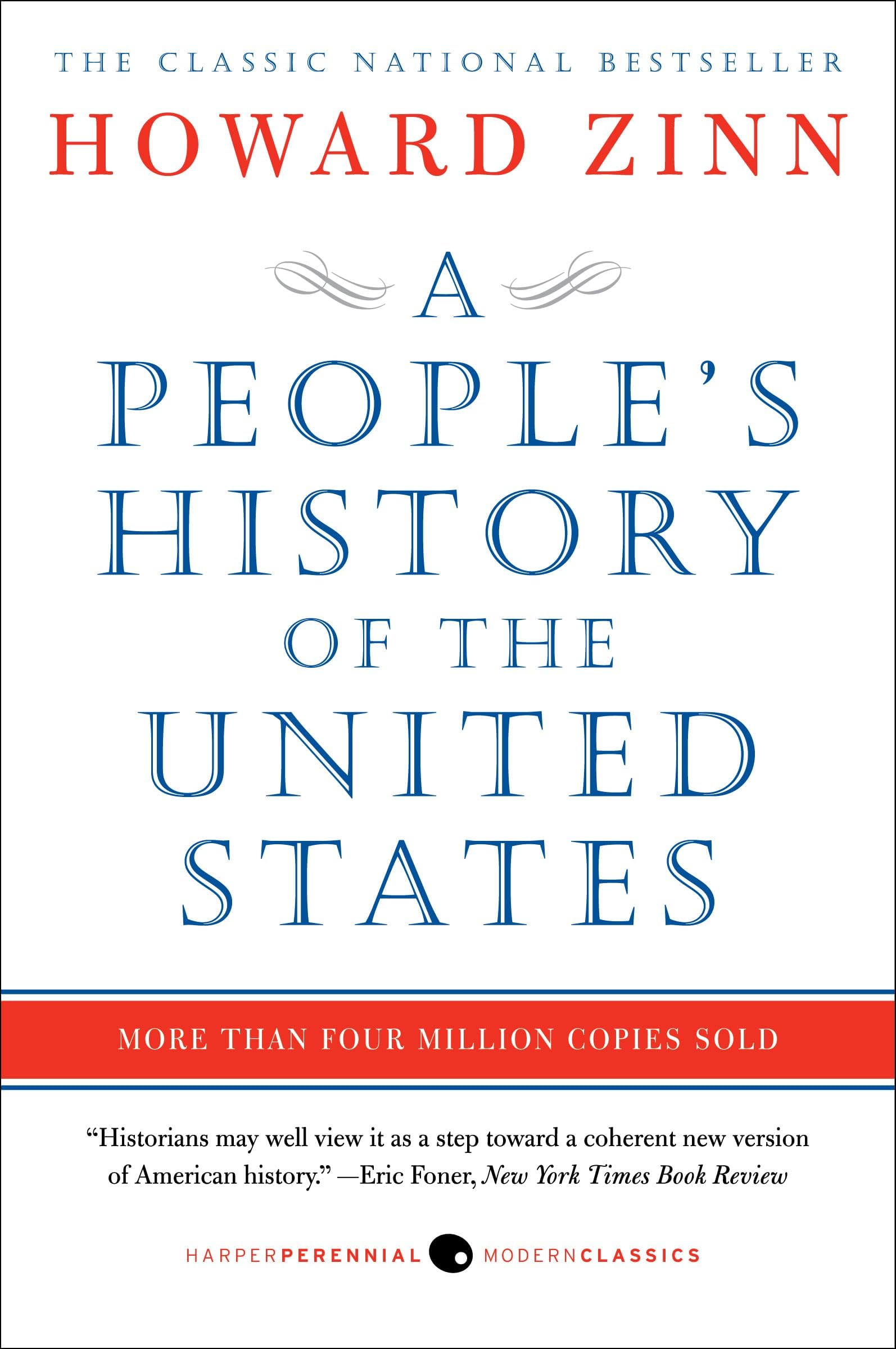
Howard Zinn’s A People’s History of the United States is a landmark bestseller that redefines American history by centering the voices of women, workers, African Americans, Native Americans, and immigrants. Covering events from Columbus’s arrival through the Clinton administration, it offers a critical, grassroots perspective on social justice movements and racial equality. Celebrated for its clear prose and scholarly depth, this book is a top-ranked essential for anyone seeking a deeper, more inclusive understanding of the nation’s past.


| Best Sellers Rank | #956 in Books ( See Top 100 in Books ) #1 in Democracy (Books) #1 in Social Sciences Research #1 in History Encyclopedias |
| Customer Reviews | 4.7 out of 5 stars 17,557 Reviews |
A**R
My Thoughts on A People’s History of the United States
A People’s History of the United States is a book about the history of the United States of America from the very beginning. It was written in 1980 by Howard Zinn. Zinn is a historian, political scientist, and a social activist. I think this a very good book to read because it not only tells about the history of the United States but it give the real truth about things that have never been discussed before. The book starts off at the very beginning of America. Some of the topics discussed range from Christopher Columbus’ travels to Hernando Cortes adventures. From there it talks about slavery and such. The book is written in a time line of history. It starts from the beginning and then goes on. In history there are many conflicts. Some that were discussed were about how Christopher Columbus Day has always been a celebration. After reading this book, you may have a different view on him. It then tells about the conflicts of slavery and gives very vivid details about the conditions that slavery really consisted of. This book is the real deal. It gives you the straight facts and information about history that you never knew about. Even though A People’s History of the United States was written in 1980 and may be considered an older book, it is still a good read. The realness of the book and how it gives so much information about history that is not taught in schools is what makes this book so great. It is a very important book and it should be read by others to understand the true history. I believe the reasons the book was/is popular still hold true because it is about history. It is telling the real truth about history. History will never become a subject that is forgotten. My judgement and evaluation on A People’s History of the United States is that the quality of writing was very strong. It shows strength in its vivid details and the choice of words that were used. One of my favorite quotes from the book is a piece quoted from the Virginia slave code. It says: “Whereas many times slaves run away and lie hid and lurking in swamps, woods, and other obscure places, killing hogs, and committing other injuries to the inhabitants...if the slave does not immediately return, anyone whatsoever may kill or destroy such slaves by such ways and means as he…shall think fit…If the slave is apprehended… it shall…be lawful for the county court, to order such punishment for the said slave, either by dismembering, or in any other way…as they in their discretion shall think fit, for the reclaiming any such incorrigible slave, and terrifying others form the like practices…” That quote is one of my favorites because it is so descriptive. Another one of my favorites is a quote by writer J. Saunders Redding as he describes the arrival of a ship in North America. It says: “Sails furled, flag drooping at her rounding stern, she rode the tide in form the sea. She was a strange ship, indeed, by all accounts, a frightening ship, a ship of mystery. Whether she was trader, privateer, or man-of-war no one knows. Through her bulwarks black-mouthed cannon yawned. The flag she flew was Dutch; her crew a motley. Her port of call, an English settlement, Jamestown, in the colony of Virginia. She came, she traded, and shortly afterwards was gone. Probably no ship in modern history has carried a more portentous freight. Her cargo? Twenty slaves.” That quote is another one of my favorites because it is also very descriptive. It paints a clear picture of the truth about what used to really happen. That to me is a very strong strength. In conclusion, my overall thoughts about the book are very positive. It has changed the way I look at history. It has showed me that there is a whole lot more truth about history than just what is taught in schools. One particular thing it has made me realize is that history is a lot more gruesome and violent than I originally thought. It also has given me a different perspective of Christopher Columbus. I do not see him the same as I once did. A People’s History of the United States was really an eye opener about giving the real truths about history.
W**S
Beyond the Usual Left/Right bifurcation
When thinking about Howard Zinn's "A People's History of the United States, I am reminded of E.H. Carr's seminal work "What is History?" whereby he stated: "The belief in a hard core of historical facts existing objectively and independently of the interpretation of the historian is a preposterous fallacy, but one which it is very hard to eradicate". As Carr famously stated, millions of people had crossed the Rubicon, but only Julius Caesar's crossing in 49 BC has been given normative value by historians. For those familiar with the philosophical treatment of historical understanding in Tolstoy's War and Peace, this sentiment will ring true. A People's History is designed to give voice to those millions who passed the rubicon but never found their way into the annuals of history. A couple of points. This book was intended to be a supplement as opposed to a strictly chronological account of history that will give you the bullet points for the most important people, dates and events. [sic] It is not meant to be a replacement for a more standardized textbook. Secondly, Zinn did not hate America, and he in fact stated: "I want young people to understand that ours is a beautiful country, but it has been taken over by men who have no respect for human rights or constitutional liberties. Our people are basically decent and caring, and our highest ideals are expressed in the Declaration of Independence, which was that all of us have an equal right to life, liberty and the pursuit of happiness. The history of our country, I point out in my book, is a striving, against corporate robber barons and war makers, to make those ideals a reality-and all of us, of whatever age, can find immense satisfaction in becoming part of that." Regardless of your political position, between the Great Recession and the Iraq war, there is a relevance to this sentiment that cuts across political lines. Now, what one will notice in the bulk of the one star reviews is the sense that either the reviewer has not read the book, they copied and pasted their criticism from another source or they have strictly given the book one star because it does not conform with their view of reality. "Blame America first", "socialism", "communism", "Marx, "liberal propaganda", you can easily get the gist of the talking points because many American conservatives apparently got the same memo in dismissing anything they don't agree with. The disservice they do to themselves and the sphere of ideas in the outright dismissal of any perspective which does not conform to their own is truly sad. When someone gives a book one star merely for not conforming to their view of reality,they have obviously lost the plot. In university I knew many conservative history professors who liked and used Zinn's work. They believed it was important to incorporate and deal with the claims that Zinn made. You cannot whitewash history and blindly stick by the most comforting narrative. That does not mean that one should agree with Zinn's conclusions or think that he has a monopoly on the truth. Zinn himself would not have wanted that. For those who claim Zinn is a socialist or any other kind of -ist, that he is not completely objective, they have obviously never done any research. Pure positivism was dismissed long ago. Even Max Webber started that our subjective bias comes in the moment we choose to study something, for by seeing the subject matter as valuable, we have placed a normative value on it. There is no pure value objectivity, stating one's position and bias from the outset is what responsible social scientists do these days. A dryly academic text with an obvious bias concealed by a detached form of writing gives a falsely omniscient perspective whose reality is psychological but not objective. However they write, they are just a person, and without expressing their biases it will inevitably turn up in their work without necessarily being obvious. This is far more dangerous than what Zinn does in stating his bias from the outset. So it is a red herring to dismiss Zinn for having a perspective. We all have one and it will come into whatever we do. There is no knowable, objective reality (for humans) living in the Platonic world of perfect forms. History was a puzzle of immeasurable size that was blown apart and the pieces scattered over the cosmos. The vast majority of the pieces are gone, never to return. We are stabbing at an imperfect speculation, not ultimate truth when we engage in historical study. Any physicist will tell you that the particle wave duality of light has pretty much closed the book on the notion that we can objectively, perfectly know anything. This book is important because the poison of partisan politics has come to dominate even the dialogue of academic research. If the sole criterion for giving a book one star is the notion that you don't agree with its thesis, then you obviously live in a fragile world and are incapable of being challenged intellectually. This book is of the upmost importance for the conservative to read and digest. In developing a coherent narrative of the United States, you need to wrestle with its sins and determine, despite our historical shortcomings and transgressions, what is it that makes this imperfect union the pinnacle of nation states if one agrees with that prospect. For the liberal, you should not view Zinn's work as the last word on anything, but rather use it as a stepping stone to further develop your own historical understanding and consider how well has American done on a relative scale in light of the political, societal and human failings that have marred all human civilizations. This book is well worth the challenges it presents, and should be a 5 star treat for the conservative who loves his country and wants to develop the most cogent and nuanced argument as to why that is the case despite those unsettling realities to be found in this book as well as the liberal who wants to give voice to his disaffection with certain aspects of American society and the reasons why we need to change it. This is not another tool in the mindless and poisonous Manichean bifurcation of American politics. It is a vehicle to help you strengthen and deepen your understanding of US history, regardless from which direction you are coming. Recommended to all who are interested in the journey of learning as opposed to a presupposed outcome that serves a vested interest.
U**B
A guide to the truth, I hold Mr. Zinn's truths to be self evident.
This book will challenge your view of these DisUnited States. We live in a bubble of historical bullcrap. We have always been an ugly self centered country. We pretend to wonderfulness while we subjugate the poor and disenfranchised. WE THE PEOPLE???? Wake up folks, those words were only to describe OLD,WHITE MEN WHO OWNED PROpERTY! Women did not get the right to vote until Women's Suffrage in 1919 finally did the trick with the 20th Amendment passed in 1920! FYI The Equal Rights Amendment NEVER DID PASS! Politicians have sent in police and National Guard to break heads and break up labor unions including lethal violence that threatened the outrageous earning of the industry owners. This has gone on from the beginning of this wanna be great nation. Read the book and get a belly full of the truth. I am not saying that we need to overthrow the government just the idiots we have elected to run it. The only hope is to institute TERM LIMITS. The only way to do that is to "grandfather" in the jackasses alreay in office. Oh yeah, judges past the age to 72....finish your caseload and head for the beach, time to leave to bench! Wow, this is what happens when you read a god book that goes beyong the personalities and digs deeply into the background. Be afraid my friends. Add AI into the mix and pretty soon everyone not worth millions, billios or trillions will be reduced to virtual slavery. Cheers!
J**N
A must read for anyone who wants to know the truth about the United States
A People’s History of the United States is the classic work by Professor Howard Zinn. Professor Zinn’s main thesis is that the United States was founded by rich, white males for their own benefit and they have discriminated against the poor, people of color and others for their own gain, often using violence in the process. It is a one-sided presentation that shows that the ideals that this country is presumed to stand for were no more than the attempt of the rich to rationalize their greed largely ignores the undeniable progress that has been made toward a fair and just society. At the same time it is a vitally important book because it tells a story that is largely ignored in establishment history books and in the words of American leaders. Professor Zinn admits these points and states this reason for his writing the book. He cites the opening words of the Constitution (“We the people”) as an example. In fact he says, this document was written by 55 rich white men to create a country with a strong central government from which they would benefit. George Washington, he notes, was the richest man in America and Thomas Jefferson owned hundreds of slaves. Facts, he says, represent a judgment and the facts presented in standard American history books are chosen selectively to create an image of the United States as a fair and just society when in fact it has never been so. Professor Zinn gives numerous examples throughout the book of the discrimination and violence people have faced, starting with the arrival of Christopher Columbus. Columbus is often portrayed as an intrepid explorer when in fact his objective was to gain riches and he enslaved the natives he found. The story of Native Americans, Africans who were brought to this country as slaves, immigrants, workers and others is told from their perspective. Numerous strikes and rebellions are detailed as well as opposition to America’s wars, many of which were based on lies and for nationalistic purposes. He provides numerous quotations and direct statements to prove his argument. I rate the book at five stars and as a must read book for every person who wants to know the truth about the United States. While there has been progress since the days of stealing land from the natives and enslaving Africans, America still remains an unequal place where one percent of the population owns some 33 percent of the resources, millions of children go hungry every day, the streets of cities are lined with the homeless, health insurance is difficult to acquire, white male police officers kill black males with seeming impunity and the American response to violence, domestically as well as internationally, is more violence. Professor Zinn has provided a sobering account of what America has been and continues to be despite the rhetoric of politicians and the story told by establishment history books.
T**L
A People's History Review
‘A People’s History of America,’ by Howard Zinn has become a classic example of Non-conformist perspectives of American history because Howard Zinn dared to challenge the old cliché that ‘history is written by the victors.’ He seeks nothing less than a fresh angle on how history is written, with the goal of changing it from ‘his story’ to a more inclusive ‘our story.’ His task is ambitious and as a reader wades through, at times they may ask themselves if he has bitten off more than he can chew, because he seeks nothing less than to capture the voices of the ‘little people,’ the activists on the front lines fighting the daily battles for civil rights, worker’s rights, and indigenous peoples’ rights. His, is not a history of big name leaders, but a history of the regular people on Main street, the nameless people who propelled our nation’s heroes to their places in America’s pageant. At times poetic, at other times tragic, this book captures the feelings of the people as they both win and lose their struggles to create a system fair for all. Throughout Mr. Zinn effectively utilizes narratives of common men and women in order to illustrate his theme that in America’s history there has been a constant struggle between those with power and those without. Those with power have continuously attempted to put down people’s movements by coopting those without power, by suppressing their voice or their rights to organize. Tragically, as Mr. Zinn points out, this phenomenon has often been displayed in a political process that de-emphasized the issues of the day, or utilized propaganda to divert attention away. Too much of the time the wishes of those seeking inclusion or access to resources have not been heard or acted upon. Mr. Zin makes the case that the political parties that were meant to reflect the voice of the people have been coopted to represent the will of the elite, or the corporations. He demonstrates this by illustrating how the political platforms of Democrats and Republicans often mirror each other instead of giving voters a real choice between different political visions. His overview of history begins with a revisionist narrative of Columbus’s arrival. Looking at colonization from an indigenous perspective, he portrays the tragic loss of population, land, and rights of indigenous tribes. Yet he also demonstrates the resiliency of Indigenous peoples despite the violence perpetuated against them. Continuing with a fresh perspective of the American revolution, he illustrates that the revolution was not a uniform attempt by a united populace to free the U.S. from British rule. Instead there were diverse actors and latent internal conflict between local elites and a powerless populace that the elite attempted to control while also subverting the authority of the British crown. He portrays how the protests of the powerless was diverted by the local elite into a revolt against England, leading to the formation of the American republic. He also makes the case that this new government made little attempt to include the commoners, inadvertently sowing the seeds for continued turmoil. From the revolution to contemporary times, his theme turns to the attempt by the powerless to create a democracy and economic system inclusive of all, and continued attempts by a rising nascent elite to either suppress or coopt the powerless. Throughout this revisionist account he intersperses the story of America’s minorities. Mr. Zinn shares the painful experience of African Americans brought over as slaves and their struggle to end slavery and obtain their rights, a struggle that continues to today despite the momentous gains that were achieved during the Civil Rights era in the 1960’s. Writing from the Mexican American perspective, he portrays how the redrawing of the borders after the war with Mexico made Mexican Americans ‘strangers in their own land.’ He also brings in the voice of immigrants and women; and all those who were excluded from the Republic’s decision making process, demonstrating the case that America’s history has been a movement toward inclusion. Yet, he admits that the work of creating a more inclusive society is far from over, and for each gain there has also been loss. For example, he brings in compelling evidence that the presidencies of Reagan and Clinton dismantled many of the gains achieved by working class people during the Great Depression. At times readers may feel like the message is getting lost in the detail. Yet, it’s Mr. Zinn’s attention to these details through the voices of common people that makes ‘A People’s history of America’ a remarkable achievement in historical revisionism. This book should be studied alongside any textbook account of America’s history, just for the sake of the alternative view that it offers.
D**P
An amazing book ...
An amazing book. Reading the book helped me understand why the US is experiencing difficulties in "perceived righteousness" today. I would recommend it to anyone who would like to change the World for the better. Howard Zinn is a benevolent hacker: the kind of hacker I would like my children to be, and why not: all children to be. For me, Zinn’s A People’s History of the United States hacks history and defines a problem and offers a solution: 1. The problem: a one-sided patriotic history enslaves the masses, 2. The solution: a bottom-up, humanistic history empowers everyone and opens the doors for future reconciliations among different communities.(1) At this critical juncture of human history both are relevant not only for the US but rather for our race. A one-sided patriotic bias in history: at what cost? 1. hides wrongdoings and the associated guilt, 2. serves as the first line of defense to deflect current & future criticisms for the past & current mistakes, 3. tampers data gathering, silences questioning & divergence of opinions, 4. reduces communication among communities, 5. defines “the patriotic” and increases the chances of populating the armed forces, 6. defines the other: “the unpatriotic,” 7. increases insecurities, 8. evokes fears (of retribution, etc.) 9. can be misused to justify violence against “the other,” 10. builds a common memory for the masses, builds their egos so that these egos can later be exploited, 11. allows the word “culture” to be used as an equivalence: American culture = being American; (2) 12. a politician can mix these facts to incite emotional reactions of the masses and eventually reach a higher number of votes in a predetermined direction, inexpensively, 13. at school, in the media, in speeches of politicians, and during different rituals (starting with reciting the pledge of allegiance and singing of the national anthem) the patriotic history is repeated and reinforced. Under these conditions, the masses learn to repeat what is given to them. They shun away from questioning further. Their concept of free-will is replaced by a misplaced trust. They learn not to deviate from the norm: they are enslaved and are not even aware of this enslavement. Many words lose their meaning: “a more perfect Union” “Justice” “secure the Blessings of Liberty,” “democracy.” A higher degree of cynicism and later a deep feeling of helplessness ensue. There are costs to the individual, the family, the society. Since many worldwide look up to the US morally, the use of one-sided patriotic history in the US produces world leaders who imitate bad examples. Consequently, Humanity pays dearly. A bottom-up, humanistic history empowers everyone: 1. can eliminate ignorance, 2. can eliminate convenient forgetfulness, 3. can eliminate arrogance, 4. improve self-esteem, communication, & understanding 5. can reduce violence, 6. can empower the individuals and the masses: psychologically and economically and thus improve the quality of life, 7. can help the path to sustainable peace. Among the different communities, the wounds are real. A one-sided history often does not address all of these wounds. Denial freezes any possibility of a reconciliation. A reconciliation process would pass through an acceptance of a historical wrong doing. In time, mankind may realize that what Howard Zinn has started may be the building blocks of sustainable peace. As a new year starts, I wish upon all of us: nations, creeds, ethnicities, etc. our very own Howard Zinns. (1) In the US, these communities can be whites, blacks, American Indians, Mexicans, WASPS, Catholics, Jews, Moslems, Chinese, Japanese, etc. In Turkey, where I am from, these communities include the seculars, non-seculars, Alevites, Armenians, Greeks, Jews, Kurds, etc. (2) Most of us are led to believe that “being” American/WASP/Jewish/Moslem/... is a “culture;” we almost always have these attributes thanks to coincidences; i.e. we are born into these “states;” how can a state that is largely a coincidence, be culture? I would suggest that only what is done through our free-will is deemed culture. Interestingly worldwide, the education systems, the media, and politicians use and propagate the word “culture” to imply largely a static state, rather than the result of a willful action.
R**.
just say "Howard Zinn" and hand them a copy..
"Howard Zinn" can be the rebuttal for the "love it or leave it" crowd, a friendly suggestion to read this book because it is an education in American life, in American history. He includes what appears to be a complete bibliography citing where the information originated. "A People's History of the United States" should be read by anyone interested in American life, both past and present. Much of what seems mysterious and inevitable today is a result of choices made by those with the power to choose. We never hear these stories so we remain ignorant to much of our past. So it goes, those who ignore history are doomed to repeat it. Why did so many American manufacturers quit America in the '70s and '80s, taking all those jobs to other countries? Was it the "invisible hand" of the market or did certain powerful political leaders make deals, trade favors? Why has union membership declined so dramatically since 1970? Why have so many Americans defaulted on their student loans despite working steady, full-time jobs? Have our politicians truly worked to broaden and strengthen "the middle class," as they always claim to do? How much influence does Wall Street, wealthy donors and multi-national corporations exert in our government? Is it a recent phenomenon or has it always been this way, since the founding of the U.S.? Why did so many Americans, mostly Black but many White Americans as well, feel compelled to march through the streets last summer carrying "Black Lives Matter!" signs? Was it only the murder of George Floyd (and so many others) or is there a purposeful and structural component to the racial divide? Have powerful leaders in the past exploited cultural and other differences between Native Americans, Blacks and Whites by design, to further their own interests? Do they still find that strategy useful today? Do they really "hate us for our freedom?" Ask an Iranian about 1953 and you are sure to get an answer. How many Americans know what happened that year, and why it's important today? Or ask a Chilean about September 11th and learn what happened on that day in 1973, and why it's important today. Many complicated questions to be sure, and reasonable people may disagree on the answers. Mr. Zinn's book offers some answers and fills in the history surrounding the issues. In the Afterword Mr. Zinn explains his point of view and tells us why he chose the stories he did. For readers predisposed to dismiss ugly or inconvenient truths it may help to read this section first. Mr. Zinn makes no claim to objectivity but because every fact presented by an author, a teacher etc. reflects a choice he must be commended for stating his point of view and embracing it.
D**P
A Refreshingly Honest, Poignant, and Inspiring Account of American History
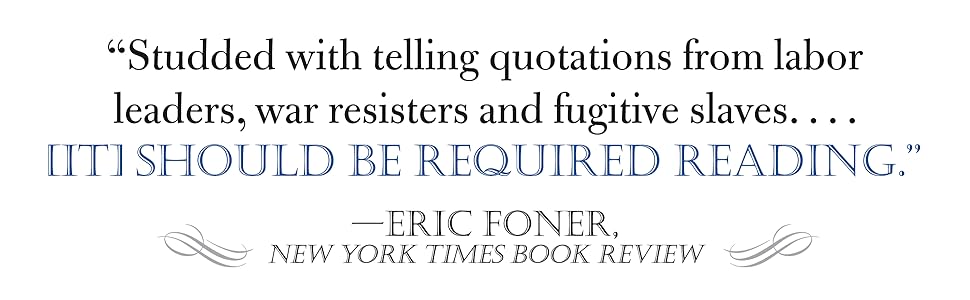
This book should be required reading. From childhood, we are inundated with a false, biased view of American history, one from the vantage of those who were in power and control. In education and mainstream news media, a picture is painted that omits virtually all failure, and romanticizes America to appear as the greatest nation of all time. A country where everyone is equal; anyone can succeed and achieve the American Dream with hard enough work. A country that has always been just and good, and is only getting better. The reality is that entire people groups (blacks, women, native Americans, hispanics, immigrants, etc.) have been severely oppressed since the dawn of this nation, and in many ways are still under oppression today. Great achievements and successes of people in these groups are misappropriated or ignored. The wealthy also grossly take advantage of the poor, which is a class that many races of people have over time been systematically forced into. Through the accounts of regular American people, Howard Zinn tells an accurate, true account of the history of America. He doesn't romanticize the nation in the name of patriotism. He doesn't justify it's exploitative past or ignore the injustices that it's plagued its citizens with. He simply tells the truth, and with beautifully flowing prose and passion that is noticeably absent from the vast majority of history texts. This truth is what students should learn in schools, no matter how harrowing and difficult it may be to hear. If lies and distortions of the past continue to be propagated, they are more likely to be repeated. Please ignore the negative reviews. I'm not necessarily asking you to not read them, but don't take them seriously. They are completely unmerited. In the one and two star reviews you will find a common theme of nationalistic, patriotic, capitalist, "America f*** yeah", far right-leaning individuals claiming that this book is a distortion and false representation of American history. Apparently these reviewers either A) ignorantly reside in their own comfortable bubbles, or B) seek to maliciously reinforce the injustices Zinn's book seeks to combat. I won't address why those who fall into the B category are clearly in the wrong, but if they're in the former, reality tells us that their perception of this nation and its history is incorrect. Go outside and talk to people in the black and hispanic communities. Ask them about their past and experiences, and their family history. About how they were treated and marginalized. Spend time there and see how this oppression persists. Look at how many Native Americans currently reside in the Americas. Go visit some tribes and have conversations to learn about their past and current struggles. Talk to elderly women, and ask about the ordeals their mothers, grandmothers, and they themselves had to go through. Observe the trends of the economy for yourself, and how the rich are consistently getting richer while everyone else gets poorer. Pay attention to how money and big corporations influence government officials, and often result in the passing of detrimental policies or the neglect of beneficial ones. Go to the back of the book to the bibliography, and pick up and read some of the historical accounts of real people who lived throughout American history and suffered under the corruption of wealthy, powerful, racist leaders. I urge everyone to put aside your preconceived notions, and read this with these things in mind! Then you might come to see the value of Zinn's work and understand its necessity in this culture.
E**T
An honest inspection of American history, probably better read after a lighter introduction.
I brought this book knowing fairly little of American History. I was keen to avoid a jingoistic book written solely to appeal to Americans. This book delivers on this very well, it details much of the European discovery of the new world and then starts to focus on North America and the USA. Naturally any description of the European conquest of the new world was going to be dark and at times grim but what I really appreciated about this book was that it does a good job of balancing the need to condemn these things with explaining them in context, this allows better understanding of why some of the awful aspects of Americas history occured. This includes the early genocides perpetuated by the spanish, and the beginning of the transatlantic slave trade, it is carefully explained how Americas hierarchical race system was not a naturally materialising system but was manipulated and brought into shape to enforce authoritarian order by a small elite group of wealthy individuals over a far more numerous populace of slaves and near-slave endentured servants brought over to serve them. The foundation of the USA is not at all portrayed as entirely negative, the role of higher enlightenment values is discussed in detail, but it is also made clear that the founding fathers were far from interested in the normal persons issues and we're very much a continuation of the aristocratic elite. This helps to comprehend Americas strange political system. I think I would distrust any book that glorified virtually any period from several hundred years ago and I think this books careful dissection of how America came to be is greatly helpful in helping understand the country and continent today. Having said that it is grim reading at times and I think having a good base line knowledge of Americas history from another book may be helpful as it's hard to appreciate a myth being debunked when you didn't know the myth in the first place. All in all Ide highly recommend especially for non Americans who want to understand the country a little bit more.
A**A
A great book
The book provides great insight into the making of the United States, after the landing of Saint Columbus, and covering a very long period-till the presidency of Bill Clinton. The book really tells about the events faced by the common people, in making of the country. Recording the history of a nation requires a lot of research and access to documents and records. There is enough evidence to this end, seeing the size of the book and the background notes and references made. Any serious reader will learn a great deal while studying the book. It can serve as an important reference book for all curious readers. While historic events have made the US a great country, the price paid by its people has been unbelievable. This is a must book for all who want understand history of nation building.
F**0
More entertaining than most fiction, more enlightening than most philosophy
Vital reading for anyone in the US, and almost equally important for everyone else. This is the side of history nobody ever teaches in school - the story from the point of view of the common people, as opposed to the ruling elite. This is also one of the most entertaining books of history you're likely to find - never dry, always lively and fascinating. Some will inevitably quibble with Zinn's admittedly leftist perspective. But they won't be able to find much fault with his research. In fact, the book doesn't present any truly controversial information: there's nothing here that you can't easily verify. What's radical is the way the information is assembled. When you follow the story of the people - as opposed to that of a few rich, powerful and famous individuals - history takes on a very different aspect, and you never see the world quite the same way again. I actually bought this particular edition as a gift for someone. This is a book that begs to be shared.
U**N
American history saw from the losers side
Different point of view of america history, someone may be agreed someone else may be not, in my modest opinion the american history is clear, pioneers did a great work, they made america, no matter. God bless USA 🇱🇷
I**A
Un classique incontournable
Au cas où il serait besoin de le dire au vu de l'actualité, D. Trump et consort, il y a des gens bien aux Etats Unis. On en trouvera beaucoup dans ce livre qui explique pas mal de choses....
Trustpilot
3 days ago
5 days ago