Buy anything from 5,000+ international stores. One checkout price. No surprise fees. Join 2M+ shoppers on Desertcart.
Desertcart purchases this item on your behalf and handles shipping, customs, and support to Senegal.
๐ธ Capture the world wider, sharper, and lighterโyour ultimate Micro Four Thirds companion!
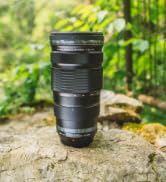
The OM SYSTEM Olympus Digital ED 9-18mm f/4.0-5.6 lens is a compact, lightweight wide-angle zoom designed for Micro Four Thirds cameras. Featuring advanced optical elements including Dual Super Aspherical and extra-low dispersion glass, it minimizes distortion and chromatic aberrations for superior image clarity. Its smooth, quiet MSC autofocus system excels in both still photography and HD video. The retractable design with locking mechanism ensures portability without compromising performance, making it ideal for professionals and enthusiasts seeking versatile wide-angle capabilities in a pocket-friendly form.


| ASIN | B0035LBRM6 |
| Best Sellers Rank | #993 in SLR Camera Lenses |
| Brand | OM SYSTEM |
| Built-In Media | lens and case |
| Camera Lens | OM SYSTEM OLYMPUS Digital ED 9-18mm f/4.0-5.6 Lens for Micro Four Thirds, Black |
| Camera Lens Description | OM SYSTEM OLYMPUS Digital ED 9-18mm f/4.0-5.6 Lens for Micro Four Thirds, Black |
| Color | Black |
| Compatible Camera Models | Olympus PEN |
| Compatible Camera Mount | Micro Four Thirds |
| Compatible Mountings | Micro Four Thirds |
| Customer Reviews | 4.2 out of 5 stars 108 Reviews |
| Exposure Control Type | Automatic |
| Focal Length Description | 9-18 millimeters |
| Focus Type | Micromotor |
| Global Trade Identification Number | 00050332174535 |
| Has Self-Timer | No |
| Image stabilization | Digital |
| Item Weight | 155 Grams |
| Lens | Wide Angle |
| Lens Coating Description | ZERO Coating |
| Lens Design | Zoom |
| Lens Fixed Focal Length | 36 Millimeters |
| Lens Mount | Micro Four Thirds |
| Lens Type | Wide Angle |
| Light Sensitivity | 100-25600 |
| Manufacturer | Olympus |
| Maximum Aperture | 5.6 f |
| Maximum Focal Length | 18 Millimeters |
| Media Type | ProductImage, EnhancedContent |
| Minimum Aperture | 22 f |
| Minimum Focal Length | 9 Millimeters |
| Model Name | m.zuiko |
| Number of Diaphragm Blades | 7 |
| Photo Filter Size | 52 Millimeters |
| Shooting Modes | Auto, Program, Aperture Priority, Shutter Priority, Manual |
| UPC | 050332174535 |
| Video Capture Format | MP4 |
| Video Capture Resolution | 1080p |
| Warranty Description | 1 year manufacturer warranty |
| Water Resistance Level | Not Water Resistant |
| Zoom Ratio | 2:1 |
J**N
A fine addition
I did about 100 shots with this lens yesterday and I am very pleased with the results. It is expensive, but it is also good. Wide angle lenses tend to be more expensive than other focal lengths and this one is no exception. I like the size, the weight, the focal range, the ability of the barrel to retract into the housing for carrying, and the fact that it accepts filters. When I considered the price and weight, I was reminded of a description of the XB-70 aircraft -- it cost more than its weight in gold to build. Equating the weight and price to my automobile, my car would have cost $6.7 million. One thing I am going to have to learn to do is to grab the zoom ring without touching the focusing ring. I touched the focus ring nearly every time I wanted to zoom, causing the camera to shift to magnifying mode with a corresponding delay and distraction in shooting. This is a consequence of the compact size. The lens is black and it is small, so take care about where you sit it down when you take it off the camera. It would be easy to loose -- it more than one way. When you first look at the front element, it might appear that there is some defect on an inner surface of one of the outer elements. These spots are apparently caused by internal reflections. You may see multiple, small points of light with one or more of them green. Nearly all of the spots were a little off center, but none of them moved as I rotated the lens; indicating that it was not on the glass. And, I notice no issues with the images produced. This lens with the PAN 14-45 f3.5-5.6 and PAN 45-150 would give you a light weight 3 lens kit that expands from 9mm to 150mm (18mm to 300mm 35mm equivalent); with the other two lenses combined costing less than this one lens.
N**R
Excellent images, small, light and accepts filters
The small size of the 9-18mm is the first striking observation when I unpacked the lens -- it's only slighty larger than the Panasonic 20mm f/1.7 pancake lens and much smaller (in its retracted position, it extends for use with a small slide switch on the lens barrel) than the Panasonic 14-45mm lens. Zooming is smooth and the lens extends as it zooms but not enough to become awkward. Image clarity and color are very good and the field of view range is excellent for wide angle work. The lens is threaded to accept 52mm filters and does not rotate while focusing or zooming -- so a circular polarizer will remain in adjustment. A slight amount of chromatic aberation is apparent in the corners of the image but not in the central area, not objectionable to my eye and easily corrected. The 35mm equivalent 18-36mm field of view is outstanding on a Micro Four Thirds camera -- especially for such a small and lightweight lens. The chief competitor is the Panasonic 7-14mm lens, also rated highly by reviewers and offering the advantages of wider field of view (35mm equivalent 14-28mm) and some auto-correction when used on a Panasonic camera but more expensive, larger and does not accept filters. This lens is not stabilized on a Panasonic camera but is stabilized on Olympus cameras since they have camera-body stabilization -- although a wide angle lens shows little hand vibration. I would give the lens 5 stars but I'm disappointed at this price that it comes without a hood or even a soft case, items that are included on lenses like the Panasonic 14-45mm, 45mm and 45-200mm lenses. Overall, I highly recommend this lens so far based on a few days use.
S**S
So how does it compare to the Lumix 7-14?
I made an emotional leap and bought the Lumic G 7-14 right when I got my GF1 a while back. I had dabbled with wide-angle photography and found the images very compelling so I went for it. For a long time I only had the 7-14 and the 20mm pancake and I have to say it changed my picture taking. Limited to this range, with no long zoom, I began to seek wider perspectives, and ways to use depth of focus to pull out an object that would otherwise be lost in its surroundings. Soon, my portraits, especially of groups, started to swim in context, something so often lacking in portrait photography. But most notably both lenses produced fabulous images, rich and deep in color, crisp and worth taking time to really study, rather than glance at. I still longed for a telephoto, but was unsure whether the current 45-200 would meet the same optics standards as the 20 and 7-14 so I held off. Then came the Olympus 9-18. Initially I dismissed news of the lens as covering an area I already had well in hand, but then I read reviews and began to think about it. Deciding to take the plunge I ordered the lens pretty much the day it came out and was surprised when it came very quickly. It is stunningly small, not to pile on but it is something to remember because it takes BIG images. Sweeping shots that encompass the scene and deliver it in one big, satisfying mouthful to the viewer. At the end I could find little to differentiate the images from the 7-14 barring the added range at the bottom end, which should not be discounted. But soon I found I was not carrying the 7-14 anymore. It was larger, more specialised. The 9-18 with my GF1 would hang around my neck with my 20mm in my bag and I would find myself forgetting to switch to the pancake, as the 9-18 came close to touching its range anyway. So what am I saying? For those that enjoy wide angle shooting as a standard, the 9-18 is spectacular and will possibly become your go-to lens, especially during the day when you can keep your aperture as low as possible. For thiose that only dabble in big sky shots, the 7-14 has more of that fabulous bottom range and the images are a touch more vivid, crisper in the center, slightly more satisfying. They both have their place, depending on what your desires are, but ironically I would recommend the 9-18 to the true lover of wide angle, and the 7-14 to the big shot tourist, even though that may seem counterintuitive. 9mm is that sweet spot of 90 degree horizontal view, and really where you want to be before barrel distortion becomes the main theme rather than a feature. So pick your poison and enjoy.
C**E
Not a compromise worth making
As someone who owns full frame cameras but would prefer not to carry them, I'm always looking for ways to squeeze the last extra bit of quality from micro 43. I've owned two of these lenses and on paper they are ideal for m43. Very small, very light, very versatile. Alas, they are not very sharp. They're also not great mechanically, and other optical attributes like distortion aren't great either. Due to it's price tier, comparsions with this lens are often the Panasonic 14 or the Olympus 17, and while both of these lenses are far better than the 9-18, they're not great either (and obviously not zooms). People seem to love the 9-18 and that's great. But as someone who owns 18 m43 lenses, the bottom line is, if you want a ultra-wide zoom that's really good, you'll have to spend more and carry more. What's better? The 7-14 Pansonic is quite sharp, not terribly large. Under backlight conditions, it suffers from some blue/magenta fringing at the edge of fine details but most of this can be removed with software and it's a fine, fun lens. Better still, is the Panasonic 8-18 which is a fine peformer although a bit large for m43. I realize these alternatives are a lot more money but they are worlds away in terms of image quality as well. Anyway, please don't judge what micro 43 can or can't do, based on what you get with the 9-18.
Z**R
Great lens!
Having used this lens for a couple weeks now, I can now safely say that it's great. If I could I would give just about every good product 4.5 stars, because nothing's perfect, and neither is this lens. But I feel fine bumping it up to 5. At 9mm the lens shows considerable distortion, even for being corrected. If the in-camera correction were absent, it would be verging on obscene. But this is a wide-angle lens (though to be fair, it's not really THAT wide), so I personally expect a fair amount of distortion. It's also surprisingly sharp in the center even at f4. By 5.6 it sharpens up a bit, and softer corners definitely get better. But it doesn't sharpen up much past 5.6, and starts to lose it pretty early, around f11 or a little earlier. At 18mm, the lens is not as sharp in the center, but the lens is pretty much distortion-free. So you get essentially a 36mm 5.6 at tele with no distortion, which is a pretty good focal length, even though the aperture at that length isn't great. Close focusing distance is better than I expected (of course I didn't expect much), with macro abilities coming in at relatively weak, but certainly not terrible. Chromatic aberration? I use the E-PL2, so yes, it's there, and it could probably be better dealt with. But for me it's really not that much of an issue. The price could always be lower, but to be honest, it's not that bad for what it is. On the whole, well worth it! (Update 12.26.12) So believe it or not, I've now gone through selling all my mft gear, moving to Canon, then selling my Canon gear, moving to Nikon, then slowly adding back in MFT gear (basically because of the sensor in the OM-D). Recently I re-purchased the 7-14mm Panasonic, but was getting too many nasty purple flares (a well-documented issue with the OM-D, I was to find), so decided to go back to this little gem of a lens. I have not regretted one moment of it. Shot a wedding just recently, using both my Nikon D600 and my Oly E-M5, and hands down the best shots of the day were taken with the Oly + this lens. It's just a pleasure to use, from the light weight and compact size to the epic images, it does not disappoint. And since I use it now almost exclusively at 9mm (though the lens performs nicely throughout the range--see mention above), for me at this point the aperture is essentially fixed. One of my favorite lenses of all my gear (Nikon, Oly and Panasonic), highly recommended. (Update 11.27.13) I light of the fact that I've used both the Panasonic 7-14mm and this lens, both for extended periods, I thought I might add my two cents (though I know many others already have). The Panasonic is hands down the sharper animal. It is quite sharp for a zoom lens, in fact. In my opinion, the Oly just doesn't quite compare on this front. But, the Oly wins for size and the fact you can use filters (if that is important to you... I don't ever use them). The Panasonic is small, but the Oly is REALLY small. Both are lightweight, and both are great lenses. Yes, the Panasonic wins on the aperture, being constant. They are both excellent lenses, and I would recommend them both. However the 9mm wide on the Oly is a little easier to handle than the 7mm of the Pana. If you want super wide, there's no way you can beat the Pana. But the 9mm, to me, is a little more realistic of a focal length. Things around the edge of the frame don't look as unnaturally flat and odd on the Oly as they do on the Pana. The 9mm perspective just looks fantastic. So the extra 2mm (4mm equiv) to me ends up being unnecessary. It's fun, but I didn't end up utilizing it quite as much as I thought I would. So these things, the size, and the cheaper price, lead me to recommend the Oly over the Pana. But if you are looking for the widest you can get on m43, then there's really only one option (short of using adapters).
J**O
comparisons against other lenses
This lens is smaller than it looks in the pictures. I was apprehensive about buying this lens due to it's small size and the quality it might give up to achieve it, but I need a small/lightweight wide angle for long hikes up mountains. I set out to thoroughly test it against other lenses and this is what I found out. 1) versus Panasonic 14mm f2.5 The Olympus was set at f5.6 and the Panasonic set at f5.6. No contest here, the Panasonic is a sharp prime lens. It's easily sharper at the pixel level in the center but the borders are comparable. A slight amount of sharpening in post processing puts the Olympus on par, at the expense of noise. Another thing I noticed was that the Panasonic has better contrast, giving it punchier colors. 2) versus Nikkor AF-S DX 16-85mm This Nikon lens is known to be sharp and a very good zoom lens in the DX format. The Olympus was tested at 12mm, 14mm, and 28mm at equivalent FOV against the Nikkor. This test is somewhat hard as they are different in their complete zoom ranges and sensors so I spent a considerable amount of time trying to set up the tests to be as close as possible. I find that the Olympus is about as sharp in the center as the Nikkor at all the equivalent FOV lengths. The center sharpness is very comparable but when going beyond the center to the edges the Nikkor is noticeably sharper. The Nikkor does noticeably better in terms of controlling chromatic aberrations and suppressing flare. Due to this, the Nikkor has better overall contrast and produces more pleasing images. 3) versus Pansonic 7-14mm The Panasonic is known to be the best wide angle zoom for the m43 format. This lens is about as sharp as a prime lens across all focal lengths. The Olympus doesn't compete with the Panasonic in terms of sharpness. The Panasonic is just plain better optically. Conclusion and thoughts: This is a pretty decent lens, but I feel that it's not really worth it at full retail. I got this second hand at a much cheaper price. At full price, you can add a little more and get the Olympus 12mm f2.0 prime lens. If you don't need to shoot wider than 14mm, the Panasonic 14mm f2.5 is an excellent choice and can be had a very cheap price. The Panasonic 7-14mm is noticeably more expensive, but if you must have the best then this is your best choice. This lens is sharpest from the 9mm-12mm range, between 13mm-18mm it loses a small amount of sharpness. Sharpness is decent in the center but drops off much at the edges. The lens has plenty of fringing with chromatic aberrations. If you must produce professional quality landscape shots, this is not the lens to do it with. To me, this is really more of a hobby lens. Post processing will be necessary to improve your images. In fact, with just some very minor work in Lightroom, all of it's weaknesses disappear. Do some highlight recovery, add a touch of contrast, sharpen it up slightly, and it's actually nearly indistinguishable from the better lenses I tested it against. Shooting in the sun can be pretty challenging, make sure you got a hood on. If you are using this for video, even though this is a MSC lens, there is continuous autofocus chatter than can be clearly heard in videos. I am not sure if the noise is a problem from my copy of the lens but another video test done by a youtuber shows the same chatter noise in continuous auto focus mode. This is an OK lens that falls short of being great -- overall, a unique and very usable lens whose strength is it's amazing size. My sharpest settings: 9mm-12mm @F5.6 13mm-18mm @f8.0
A**T
Olympus M4/3 lens on a Panasonic G1
I haven't had the chance to really give this lens a thorough shakedown, but here are some immediate thoughts. First, many of the other reviewers are clearly using this lens on an Olympus. When "collapsed", this lens is almost half an inch shorter than the 14 - 45 mm kit panasonic lens, and therefore slightly shorter than the 14 - 42 mm kit lens. It is considerably lighter, too. That means that the whole package is really light and fun to use. Note that there's no image stabilization with this lens on a Panasonic camera, but I took some handheld indoor shots without a flash without much blur. Autofocusing worked nicely. The only thing that made my heart skip a beat is that the Panasonic camera does NOT recognize the lens until it is fully extended. After you extend the lens to at least 18mm, it works beautifully. It certainly corrects for distortion, but I've heard that Panasonics can't correct for chromatic aberration. I haven't had a chance to do the pixel-peeping and confirm this. All I know is it does the most important correction automatically, which I'm thrilled with. The only other thing to note is that this lens is a bit pricey. It's normally 70% of the price of the Panasonic 7 - 14 mm F4 lens. Recently, Amazon had an instant rebate that brought the price down to 60% of the price of the Panasonic lens. At that price, it's a super lens. It's not quite the sharpest, or the best built, but in terms of capability per dollar, it's excellent, which is why I've given it five stars.
G**N
Compact Ultrawide Lens, but Expensive
Extremely compact lens, though approximately doubles in length in use. Produces nice photos. (I use it with an Olympus OM-D and a Panasonic GF2.) This lens provides a new perspective for landscape photography, which I could not get previously. (Stitched together photos.) I could easily see this as a good walking around lens and complements my other micro 4/3 lenses 20mm f1.7, 14mm f2.5, and 14-45mm f3.5. It is relatively an expensive lens.
Trustpilot
1 day ago
2 weeks ago