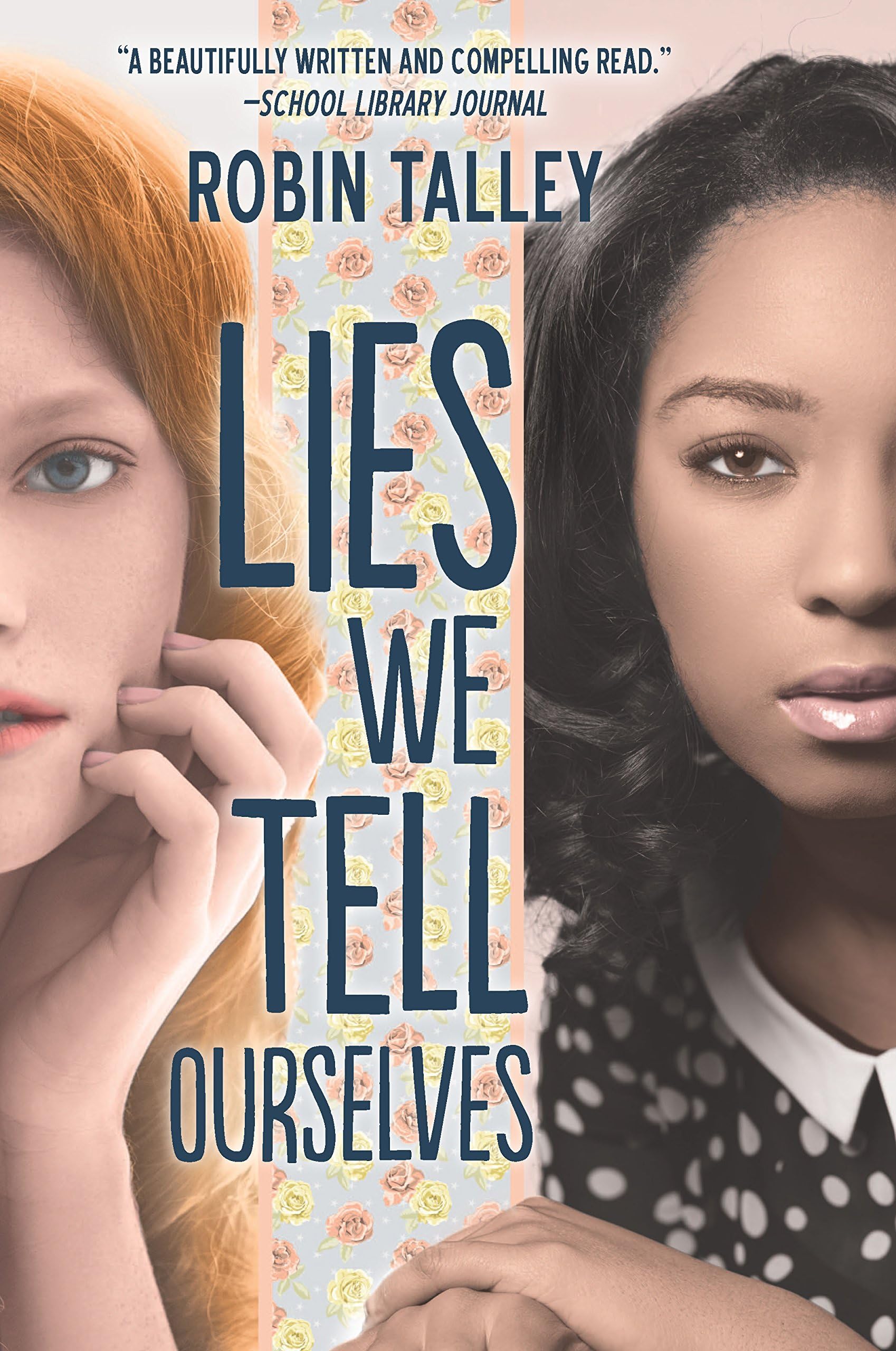
Lies We Tell Ourselves: A New York Times bestseller
Product ID: 25535319
Review: One of the best reads this year! - This might have been one of my favourite reads this year (this and another one). I honestly didn't expect it to be this good, but it proved me completely wrong. I was hooked within the first few pages, and more so when the story got going. This book was a good glimpse in this dark part of history, never once trying candy coat it. And it wasn't put aside so that the two characters that fall in love isn't the main plot. It was a nice change, when most books will do just that. The writing was real and left me feeling like I was there, leaving me nervous with them, with my heart pounding. I stayed up late most nights reading, not able to put it down and my eyes burning. I found myself relating to the moments when the characters admitted they were gay, that they might love another woman, but that maybe all they had been told that it was wrong, wasn't true. How they felt about being in relationships with men, how there was simply nothing there, I felt like they were describing my own experience before I came out. Now that I'm done, I miss the character and I wish I could know more. And I'm so happy how it ended. Review: Eye-Opener - Sarah Dunbar is in one of the first groups of black students to integrate into the all white Jefferson High School in Virginia in 1959. From the first day of school and onward, she and her cohorts are harassed and threatened by the white students (and the teachers). They are subject to a number of humiliations and violence. Sarah, an honor student at her all black school, is put into remedial classes simply because she is black and the white administration has decided that black kids aren’t capable of keeping up with the white kids intellectually. Sarah endures the endless days of being spit on, having things thrown at her, being called names, being pushed and shoved, etc. She does all this and tries to protect her little sister, who is also in the integrating group, at the same time. She harbors some ill feelings towards her parents and the local leaders of the NAACP for encouraging herself and the others to go into this school, but does her best to hold her head high and persevere. Meanwhile, there is a white student at the school, Linda Hairston, who is the daughter of the main newspaper’s editor and most outspoken critic of de-segregation. Linda hates and fears her father but has been brought up hearing negative things about black people and believes in all the “reasons” the races should stay “separate but equal”. She sees the new black students as “instigators” and is irritated that they weren’t happy to simply stay at their own school. She writes editorials for the school newspaper that blame the black kids for the abuse they are enduring at the hands of the whites. In her mind, they are ungrateful and lesser people who have arrived out of their selfishness to ruin her senior year. When Sarah and Linda end up assigned to work on a project together, both are upset about it. Sarah knows Linda’s feelings about herself and the other black kids, and Linda not only feels she is above having to work with Sarah on the project, but also fears her father’s reaction if he finds out about it. So, they decide to meet secretly. As they are forced to interact more and more, Linda starts to question the things she has been brought up to believe about blacks. However, she has a habit of seeing Sarah as different from the others, continuing her dislike for the other black students. Linda waivers back and forth between liking Sarah and hating her. Some of the things that come out of Linda’s mouth are so offensive, it’s hard to believe Sarah would even continue to try to get through to her, but she does, and they end up forming a special friendship. I really liked Lies We Tell Ourselves for the most part. I think it’s a very important book, and one that everyone should read, just to experience what Sarah and the others went through in a first person narrative. It’s so much different than reading about this period of history in a textbook or even a non-fiction book. This feels so much more personal. I felt the fear, anger, and the humiliation along with Sarah. I even empathized somewhat with Linda, who was so much a product of her environment and her overbearing father. That doesn’t excuse the way she acted, but I was able to understand her character. The secondary characters were well-developed, and I was able to see things from their points of view as well, especially Ruthie’s. The problem I had with Lies We Tell Ourselves, which is going to keep me from giving it five stars, is the budding romance between Sarah and Linda. It’s not that it was an inter-racial lesbian relationship, I don’t have a problem with that, it’s more that it was a relationship between two people from such different mindsets, backgrounds, and histories. I never felt that Linda accepted the equality of blacks, especially so much so that she would consider getting involved romantically with Sarah. I also never understood Sarah’s interest in Linda, other than to educate her on her misconceptions of the different races. They just seemed too different to me. I never really felt any chemistry between them either, unless it was supposed to be in the almost constant arguments. I understand the link between racial and sexual prejudice, but I think it was just too much to take on in one book. I think it would have been much better had the relationship between Linda and Sarah been left as simply a friendship. However, that said, I would still recommend the book as a good eye-opener into the history of integration. You can see more of my book reviews at Bookworm Book Reviews.
| Best Sellers Rank | #3,802,645 in Books ( See Top 100 in Books ) #481 in Teen & Young Adult Fiction on Prejudice & Racism #978 in Teen & Young Adult Historical Romance #1,125 in Teen & Young Adult LGBTQ+ Romance |
| Customer Reviews | 4.5 out of 5 stars 2,031 Reviews |
M**H
One of the best reads this year!
This might have been one of my favourite reads this year (this and another one). I honestly didn't expect it to be this good, but it proved me completely wrong. I was hooked within the first few pages, and more so when the story got going. This book was a good glimpse in this dark part of history, never once trying candy coat it. And it wasn't put aside so that the two characters that fall in love isn't the main plot. It was a nice change, when most books will do just that. The writing was real and left me feeling like I was there, leaving me nervous with them, with my heart pounding. I stayed up late most nights reading, not able to put it down and my eyes burning. I found myself relating to the moments when the characters admitted they were gay, that they might love another woman, but that maybe all they had been told that it was wrong, wasn't true. How they felt about being in relationships with men, how there was simply nothing there, I felt like they were describing my own experience before I came out. Now that I'm done, I miss the character and I wish I could know more. And I'm so happy how it ended.
K**.
Eye-Opener
Sarah Dunbar is in one of the first groups of black students to integrate into the all white Jefferson High School in Virginia in 1959. From the first day of school and onward, she and her cohorts are harassed and threatened by the white students (and the teachers). They are subject to a number of humiliations and violence. Sarah, an honor student at her all black school, is put into remedial classes simply because she is black and the white administration has decided that black kids aren’t capable of keeping up with the white kids intellectually. Sarah endures the endless days of being spit on, having things thrown at her, being called names, being pushed and shoved, etc. She does all this and tries to protect her little sister, who is also in the integrating group, at the same time. She harbors some ill feelings towards her parents and the local leaders of the NAACP for encouraging herself and the others to go into this school, but does her best to hold her head high and persevere. Meanwhile, there is a white student at the school, Linda Hairston, who is the daughter of the main newspaper’s editor and most outspoken critic of de-segregation. Linda hates and fears her father but has been brought up hearing negative things about black people and believes in all the “reasons” the races should stay “separate but equal”. She sees the new black students as “instigators” and is irritated that they weren’t happy to simply stay at their own school. She writes editorials for the school newspaper that blame the black kids for the abuse they are enduring at the hands of the whites. In her mind, they are ungrateful and lesser people who have arrived out of their selfishness to ruin her senior year. When Sarah and Linda end up assigned to work on a project together, both are upset about it. Sarah knows Linda’s feelings about herself and the other black kids, and Linda not only feels she is above having to work with Sarah on the project, but also fears her father’s reaction if he finds out about it. So, they decide to meet secretly. As they are forced to interact more and more, Linda starts to question the things she has been brought up to believe about blacks. However, she has a habit of seeing Sarah as different from the others, continuing her dislike for the other black students. Linda waivers back and forth between liking Sarah and hating her. Some of the things that come out of Linda’s mouth are so offensive, it’s hard to believe Sarah would even continue to try to get through to her, but she does, and they end up forming a special friendship. I really liked Lies We Tell Ourselves for the most part. I think it’s a very important book, and one that everyone should read, just to experience what Sarah and the others went through in a first person narrative. It’s so much different than reading about this period of history in a textbook or even a non-fiction book. This feels so much more personal. I felt the fear, anger, and the humiliation along with Sarah. I even empathized somewhat with Linda, who was so much a product of her environment and her overbearing father. That doesn’t excuse the way she acted, but I was able to understand her character. The secondary characters were well-developed, and I was able to see things from their points of view as well, especially Ruthie’s. The problem I had with Lies We Tell Ourselves, which is going to keep me from giving it five stars, is the budding romance between Sarah and Linda. It’s not that it was an inter-racial lesbian relationship, I don’t have a problem with that, it’s more that it was a relationship between two people from such different mindsets, backgrounds, and histories. I never felt that Linda accepted the equality of blacks, especially so much so that she would consider getting involved romantically with Sarah. I also never understood Sarah’s interest in Linda, other than to educate her on her misconceptions of the different races. They just seemed too different to me. I never really felt any chemistry between them either, unless it was supposed to be in the almost constant arguments. I understand the link between racial and sexual prejudice, but I think it was just too much to take on in one book. I think it would have been much better had the relationship between Linda and Sarah been left as simply a friendship. However, that said, I would still recommend the book as a good eye-opener into the history of integration. You can see more of my book reviews at <a href="http://bookwormbookreviews.com">Bookworm Book Reviews</a>.
C**E
Relevant
I don't choose to read books that take place around a high school because that narrative often no longer speaks to me. However, Lies We Tell Ourselves is does so much more than just that. Despite juggling many different issues, Robin Talley writes a story about high school, about the 1950s, about things that may not connect with most adults today, and makes it relevant again. How Talley divides the chapters and the sections is amazing, lending to well-paced story with moments of relief when needed. The development of her two main characters as well as the small changes with Ruth and Chuck and the little reveals of other side characters like Jack show how well Talley can keep track of her characters and make them as interesting and as important as they should be to deserve being included in this complicated and rich story. I read this is one afternoon after buying it immediately after finishing the sample. There were moments when I was angry, moments when I laughed, moments when I frowned, when I had to put it down, when I had to take a deep breath. There are some subtleties that affected me a little harder because of my own experiences, but the growth that Sarah and Linda both experience, that strength that they both unlock towards the end, is so important. And I wish this book was published just a few years earlier. But it was published two years ago, and it takes place over a half century ago, yet the themes and messages are still relevant today. I recommend this for everyone. SPOILER: Yes, there's a happy ending.
R**N
Read twice - will read again
I've read this book twice now. After the first time, I was too stunned to write a review. I immediately decided to read it again, and launched right into that, without taking a break by reading anything else. The book was so good on the second reading, I feel like reading it a third time. The opening chapters in particular are written with such intensity, I felt as if I was Sarah, or one of her friends, when she entered Jefferson high for the first time. I raged and I cried and I felt hope as I read this book - and I think the chapters from Linda's POV made it so excruciatingly clear how segregated the US South actually was. Linda had some pretty wild ideas about what a black person was, that's for sure, and it all felt completely realistic to me as a reader. This is one of those rare books I gladly label as a must-read.
C**O
This Is An Amazing Book
My interest was piqued when I read the blurb and some reviews of this book. I'm very interested in the Civil Rights era and was looking forward to seeing how this author wove it into a lesbian YA plot. She did a magnificent job. What I realized is that this is a novel where the lesbian YA plot is woven into a story about the Civil Rights era (not the other way around as I initially thought). The focus is on school integration and the author's notes at the end of the book lists the tremendous amount of research she did using primary source material. It really shows. The details about the experiences of African American teenagers bravely walking through the doors of a Virginia high school are so well wrought in their specificity and emotion. But she doesn't stop there. The ways in which these teens interact with their families, their friends who remain in the all Black schools, and their larger community are also really clearly drawn. All that and what is truly a beautiful teenage love story set during a time when the attraction of one girl to another was viewed as unnatural and sinful. I would urge everyone to read this amazing book.
M**I
AMAZING, and makes me glad for the forward progress we have made!
Another fantastic book on equality, Robin Talley did an amazing job with this novel she wrote this story beautifully and with such detail and horror it felt as if I was witnessing these atrocious deeds first hand. The pace of the writing was perfect and kept me engaged the entire way through and the characters are perfectly written. This is sadly STILL a controversial topic and it makes me sad to know that these things really happened to people just because they are different. I felt so strongly for Sarah and Linda they had enough going against them, a life time of being raised by a strong belief of segregation and racism, but to not only be different from each other but also different in the fact they want to be friends, then to also have a whole other difference that brings on a whole other type of confusion and fear. Sarah and Linda seemed to not only have their friends, family and society against them but they also had their religious beliefs shaken up. This is just a really amazing novel about some incredibly strong topics, it brought all of my emotions to the surface through out the story and made me feel incredibly lucky to have been raise in a time where we are almost all welcomed, accepted, celebrated and loved for our differences. Skin color, race, religion, sexual orientation, or even just our core beliefs. This is a book I feel everyone should read at least once, so please go out and get it, curl up and read it, love the SH*T outta it and come back here and tell me and the rest of the world what your thoughts and reactions are!
J**R
A masterpiece about finding who you are in the worst circumstances
“This is how it works. Someone has to sacrifice. Or nothing will get better for any of us.” “So the governor shut down all the white schools in Virginia that had been ordered to admit Negroes. He figured if colored people couldn’t go to the white schools, it meant he’d won. He didn’t seem to care that if the white schools were closed, then white people couldn’t go to school, either.” + • + • + • + A legit masterpiece about finding who you are in the worst circumstances. The reality of racism is that before you really know who you are & what you believe, you've already learned who & what to hate. & it takes an open mind, strong will, independent spirit & extremely tough skin to stand up & on your own at great personal risks.
W**)
Beautiful But Problematic In A Way Thousands Choose To Ignore
There will be no spoilers in this review. This book was good in terms of writing and being powerful, but as a black person I have to say I was really uncomfortable with a white person writing about racism. It isn't that the book wasn't compelling and well-written, because it was, but no matter how well-researched this book was...every time there was a slur word used, I couldn't look past the fact that it was a white person writing and publishing them and reading it was a real painful experience for me. I kept reading for the queerness of the story and the relationship and the power of the growth of the characters, but the intimate...wrongness...of a white person using these words and writing yet another story that doesn't belong to them and being lauded for it hit me like cold water being thrown over my head in the summer but instead of there being refreshment, there's just this uncomfortable, undeniable chill. Especially reading the biography at the end of the book and seeing that Robin works in social justice programmes, I think that made it a bit worse. Why? Because she works to help advance the marginalised, she works so that their voices can be heard and though I see that Robin might have been attempting to use her voice to elevate the visibility of the importance and impact on segregation and american racism on black people in America...it is by using that voice that she perpetuates the notion that is held in society and has been held in the publishing industry for as long as it has existed that the white voice is more prominent than the Black and so it is the job of the white to advance the cause of black people so that they can be heard. I feel it is better advancing progress as one who works in social justice activism to lift up the voices of those already there or getting there than it is to take it upon yourself to be that voice because it honestly isn't her place to be that voice. I don't think there's anything wrong with Robin Talley, or that she is a bad writer or author. I think she was trying to do a good, powerful thing for this community for people of colour, and I think in some ways she succeeded, and I think that her success is two-sided. It is meant to help, but ends up (perhaps accidentally) perpetuating the present issue of white voices being elevated over others. Simply put, I think that the author is certainly talented and I am in no way attempting to dispute that or attack her as a person but I believe that this story was not hers to write in regards to race and that it hurts more than helps in the long run even if its only intent was for the good.
Trustpilot
2 weeks ago
1 week ago