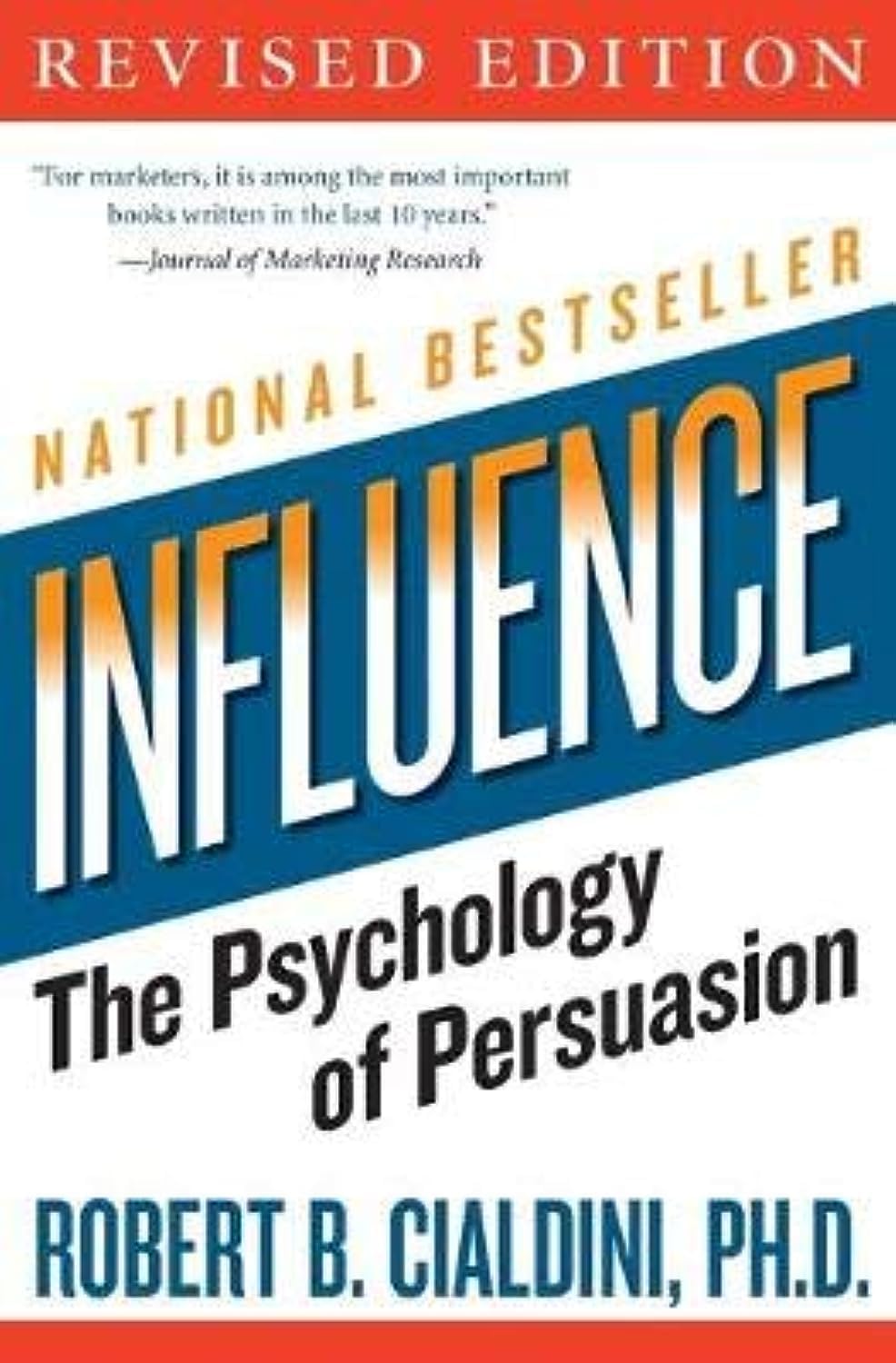
HarperBusiness influence: The Psychology of Persuasion
Product ID: 254155765
Desertcart purchases this item on your behalf and handles shipping, customs, and support to Senegal.
Explains the psychology of why people say "yes" - and how to apply these understandings. This book aims to teach the six principles, how to use them to become a skilled persuader - and how to defend yourself against them. Review: Good - Good Review: An outstanding account about how the human mind is influenced - We are all consumers of goods and services in some way or another, and I am glad I have read this…. hopefully I should have done so much earlier, but certainly better late than never. The author discusses how the psychological mechanism works in making decisions, saying “yes” to a request, how our decisions are influenced/swayed, and how we can prevent ourselves from the situations where we likely end up making unwanted decisions and/or being exploited by ill-intended profiteers. In so doing, the six underlying principles: reciprocation, commitment/consistency, social proof, liking, authority, and scarcity, are introduced with ample examples from various intriguing researches, and how these potent influencers can be commissioned by those who want us to consciously or unconsciously comply with their requests. Used with due professional ethics, the six principles can be very effective marketing tools, but we as consumers would be certainly better equipped with understanding of the principles when dealing with someone who tries to pull a trick or two and manipulate our attitudes and behaviors.

| Best Sellers Rank | #8,436 in Books ( See Top 100 in Books ) #46 in Marketing #132 in Economics #140 in Business Leadership & Motivation |
| Customer Reviews | 4.6 out of 5 stars 6,921 Reviews |
R**.
Good
Good
T**A
An outstanding account about how the human mind is influenced
We are all consumers of goods and services in some way or another, and I am glad I have read this…. hopefully I should have done so much earlier, but certainly better late than never. The author discusses how the psychological mechanism works in making decisions, saying “yes” to a request, how our decisions are influenced/swayed, and how we can prevent ourselves from the situations where we likely end up making unwanted decisions and/or being exploited by ill-intended profiteers. In so doing, the six underlying principles: reciprocation, commitment/consistency, social proof, liking, authority, and scarcity, are introduced with ample examples from various intriguing researches, and how these potent influencers can be commissioned by those who want us to consciously or unconsciously comply with their requests. Used with due professional ethics, the six principles can be very effective marketing tools, but we as consumers would be certainly better equipped with understanding of the principles when dealing with someone who tries to pull a trick or two and manipulate our attitudes and behaviors.
C**R
Absolutely Astonishing
Language is my passion. I love it more than that early morning sunrise, that crisp smell of the first fall day, or the still picture of the outside world out my window on a dead end street after the first snow. I write books, I tell stories, I sell things to people, I make people feel better, I guide them through their problems, I solicit favors, and I make people see the world the way I see it. I'm part of Toastmasters International, I write cover articles online websites, I go through and edit people's papers for them in college for extra money here and there. I know that no matter what happens to this country, whether it collapses or it continues to grow, I will always be okay, because I have the ability to talk to people, sell to people, and persuade people of almost anything. I started reading this book about a year ago and read it in a day. I usually take my time reading books, but this one was so interesting and informative that I couldn't stop reading it. It is a bit dry, I feel its more analytical and scientific than it is mechanical--for a book on the mechanics of persuasion, I would suggest Maximum Influence by Kurt W. Mortensen or Persuasion: The Art of Getting What You Want from David Lakhani, these two books are much more mechanical--in fact, I consider Maximum Influence to be a sort of companion (though it is not really meant to be that way) to Influence. Robert Cialdini lays out his ideas and research into the psychology of persuasion, with adroit research, that comes off as absolutely brilliant. He begins the book with Weapons of Influence, where he skillfully sets the stage for everything that is to come, and details many basic techniques that we've probably all had done to us by one salesperson or another. Every find yourself buying a computer and, as you're standing at the counter and its been rang up, they bring up a warranty, after you decide on the warranty for a couple hundred, then they bring up tech support, then antivirus software, and by the time your done, your six hundred dollar computer purchase has ballooned to a hefty 1,000 or 1,200 dollar purchase, and your scratching your head, trying to justify the cost with everything you're getting. We've all probably been there once or twice, with one thing or another. He explains this process, why it works, a long with a dozen of others. Chapter 2 is reciprocation. A friend of mine went to a three day conference, for which, for lunch that day, they took everyone to a pizza place, and treated for the pizza. Now, you were allowed to drop the course and get a 75% refund, if you didn't like the program on the first day. When he talked to people at the end of the three days, none of them feeling really content with the whole program, they all said they had they had thought about dropping out, but it didn't feel right with them taking them out for pizza the first day. This is the act of reciprocation at its finest. The conference cost 1,500 a person, there were ten people, and they got food for the three days, which probably cost them a little more than 300 dollars, and no one wanted to speak up about feeling as if they weren't getting what they wanted. Reciprocation can be done on smaller scale, and is done everyday, with a small trinket, a bonus gift, or something else. Chapter 3: Commitment and Consistency: This chapter powerfully lays out how people will act under the feel of obligation, how, if someone is guided in their beliefs, their need to be consistent will push them to act against even their own wants. A good example of this, though maybe not a pleasant one, would be a guy who talks to a woman, asks her if she thinks of herself as adventurous and entertaining and looking for new experiences, and then asks her to go some place with him, and when she firsts refuses, challenge her with her own words. Chapter 4: Social Proof- People find it hard to act against the current. The stories he talks about in here so some of the darksides of social proof, but, that it can be used to instantly make you appear different to others is also invaluable. It also shows a clear psychology to why people act against their best interest sometimes. I feel this review may have gotten away from me. There is just so much in this book. The next three chapters, Liking, authority, and scarcity, you'll just have to read to get the depth of this book and its potential. By now though, you probably can see how this book lays out so clearly the ways these techniques can be used and by knowing them, you can spot them when they're being used on you, and you can use them to get what you want. Other books I'd recommend are The Sceince of Influence by Kevin Hogan, Maximum Influence by Kurt W. Mortensens, Persuasion The Art Of Getting What You Want by Dave Lakhani, and The Art of Speed Reading People by Paul D. Tieger and Barbara Barron Tieger.
D**I
Ein kurzweiliges Buch über die fiesen Tricks von Gebrauchtwagenhändlern und Vertretern
Ich hatte das Gefühl, dieses Buch schon einmal gelesen zu haben. Denn Auszügen aus diesem Buch war ich bereits in On-line Kursen und anderen Büchern begegnet, denn es ist voll von witzigen und lehrreichen Geschichten. Ein sehr lesenswertes Buch, auch wenn es insgesamt etwas zu lang geraten ist. Man lernt, welche Tricks einen Menschen dazu bringen einen Handel einzugehen. Niemand ist vor diesen Tricks sicher, aber es hilft sie zu kennen. Dieses Buch ist nicht als Anleitung gedacht, dieses Tricks selber zu erlernen, aber man kann es auch dazu verwenden. Es könnte strukturierter sein, mit etwas weniger Beispielen und dafür kurzen Kapitel-Zusammenfassungen der wichtigsten Punkte: deshalb könnte man aus meiner Sicht einen Stern abziehen. Aber die Beispiele sind oft auch recht lustig und kurzweilig, und wenn man sich selbst die wichtigsten Dinge herausschreibt, dann braucht es auch keine Kapitel-Zusammenfassungen. Ich kann dieses Buch sehr empfehlen an alle, die besser verstehen wollen warum sie immer mal wieder etwas tun oder kaufen, ohne sich hinterher wirklich erklären zu können warum.
V**R
A Must-Read for Understanding Persuasion!
Influence: The Psychology of Persuasion by Robert Cialdini is a phenomenal book that every marketer, salesperson, and anyone interested in the art of persuasion should read. Cialdini dives deep into the psychology behind why people say “yes” and how to apply these principles in everyday situations. The book is structured around six key principles of influence, each backed by research and compelling examples. Cialdini’s writing style is engaging and accessible, making complex psychological concepts easy to understand. I particularly appreciated the real-world applications and the ethical considerations he emphasizes, ensuring that persuasion is used responsibly. What stands out is how the principles can be applied not only in professional settings but also in personal relationships. It’s eye-opening to see how often we encounter these principles in daily life, often without even realizing it. Overall, this book is insightful, informative, and a fantastic resource for anyone looking to enhance their persuasive skills. I highly recommend it!
U**N
müthiş kitap
Tereddüt etmeden hemen sipariş verin, inanılmaz.
Trustpilot
2 weeks ago
3 weeks ago