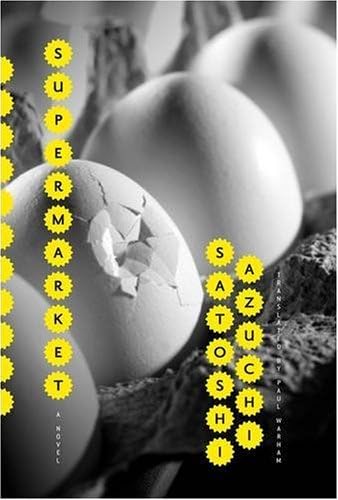

Supermarket: A Novel
Product ID: 243868859
Supermarket: A Novel [Azuchi, Satoshi, Warham, Paul] on desertcart.com. *FREE* shipping on qualifying offers. Supermarket: A Novel Review: Supermarkets: book & film - Azuchi Satoshi (real name: Arai Shinya) is a retired executive from the Japanese food supermarket industry, at one of the firms that helped transform that segment of retailing there. He is also a well-known novelist, with one other book translated into English ( Shoshaman: A Tale of Corporate Japan (Voices from Asia) , UCal 1991). So it's good to have another one of his books available to a wider audience. Another reviewer provided comments on the plot, which includes succession issues in a family-owned business, weak management that allowed malfeasance, and contrasts between the old and the new in retail. Now in places the plot is a bit contorted, and some of the characters aren't convincing. That's characteristic of the Japanese "business novel" -- a genre largely lacking in contemporary English-language fiction (cf. Arthur Hailey's Hotel). Again, only a couple items out of hundreds have been translated. Again, that makes this translation welcome. I may use it in the (college) classroom; I will certainly show the film that's based loosely on the novel, Supermarket Woman , released in Japan in 1996 and directed by Itami Juzo of Tampopo fame. If you read the book, the film provides the visuals for things that might not seem significant to someone who's not lived in urban Japan. As with Itami's other films, it is full of satire and slapstick yet accessible to viewers unfamiliar with Japan. They make a good summer pair, neither heavy nor dull and with enough meat (yes, the book features Kobe beef) to reward the reader. Review: Straightforward story-telling set in business setting in post-war Japan - This is a classic that has been on my list for a while. After reading it, I wonder whether the straightforward and understated narratives of business and personal intrigues represent the style for business stories, or if something was lost in translation. What I liked most was the hero's persistence and passion in implementing innovations in the supermarket's approach to pricing and marketing. Also, the suspense in the major plot lines, like the identity of the thief, and whether the innovations and the supermarket itself would succeed, kept my attention.
| ASIN | B0043RTBFG |
| Best Sellers Rank | #159,178 in Historical Fiction (Books) |
| Customer Reviews | 3.5 3.5 out of 5 stars (21) |
| Dimensions | 5.83 x 1.18 x 8.46 inches |
| Edition | First Edition |
| Item Weight | 1 pounds |
| Language | English |
| Print length | 336 pages |
| Publication date | February 3, 2009 |
| Publisher | Thomas Dunne Books |
S**A
Supermarkets: book & film
Azuchi Satoshi (real name: Arai Shinya) is a retired executive from the Japanese food supermarket industry, at one of the firms that helped transform that segment of retailing there. He is also a well-known novelist, with one other book translated into English ( Shoshaman: A Tale of Corporate Japan (Voices from Asia) , UCal 1991). So it's good to have another one of his books available to a wider audience. Another reviewer provided comments on the plot, which includes succession issues in a family-owned business, weak management that allowed malfeasance, and contrasts between the old and the new in retail. Now in places the plot is a bit contorted, and some of the characters aren't convincing. That's characteristic of the Japanese "business novel" -- a genre largely lacking in contemporary English-language fiction (cf. Arthur Hailey's Hotel). Again, only a couple items out of hundreds have been translated. Again, that makes this translation welcome. I may use it in the (college) classroom; I will certainly show the film that's based loosely on the novel, Supermarket Woman , released in Japan in 1996 and directed by Itami Juzo of Tampopo fame. If you read the book, the film provides the visuals for things that might not seem significant to someone who's not lived in urban Japan. As with Itami's other films, it is full of satire and slapstick yet accessible to viewers unfamiliar with Japan. They make a good summer pair, neither heavy nor dull and with enough meat (yes, the book features Kobe beef) to reward the reader.
M**S
Straightforward story-telling set in business setting in post-war Japan
This is a classic that has been on my list for a while. After reading it, I wonder whether the straightforward and understated narratives of business and personal intrigues represent the style for business stories, or if something was lost in translation. What I liked most was the hero's persistence and passion in implementing innovations in the supermarket's approach to pricing and marketing. Also, the suspense in the major plot lines, like the identity of the thief, and whether the innovations and the supermarket itself would succeed, kept my attention.
J**Y
A pleasant surprise
This book was much better than a novel about a department store has any right to be. (And yes, I know the title is "Supermarket" and not "Department Store," but that's because Japanese people change the meaning of English loanwords.) The characters were easy to keep straight, and the book was just long enough. The plot passed just quickly enough, not feeling rushed but not actually slow either. Highly recommended.
K**R
Interesting but not
I started reading the sample of this book and got hooked enough to buy it but wasn't really sure about it. In many places it's like a fictionalisation of a business manual. The characters have long passages of speech that seem to be paraphrasing of business manifestos rather than natural speech. The depiction of everyday life in Japan at the times rings true and I like that everything isn't neatly resolved.
T**L
Is your produce fresh?
A novel about the grocery business in the Japan of forty years ago? Yes, that's the premise of this strangely enjoyable book. The surface story has shenanigans taking place in the fresh foods and clothing departments of one of Japan's new venture into 'supermarkets'. Our protagonist, Kojima, has taken the leap from banking to an industry he knows nothing about. We follow him and his fellow employees through several years as they try to turn a profit from this new type of store that they copied from America. Writing in a spare style, we learn only what we need to know to advance the story. I got the sense that the author and translator worked together to put this into English; and it resulted in a well written story. 'Supermarket' is a relaxing low key look at a section of Japanese life catching up with the west after the 1940's. Some of the underlying story is about moral and ethical issues that add depth to the book. This is definitely a book with a unique plot. I enjoyed it.
T**T
It is an interesting look into behind the scenes of the operation of a supermarket.
M**E
Unusual Japanese novel but it keeps you turning the pages
Trustpilot
5 days ago
3 weeks ago