
Desertcart purchases this item on your behalf and handles shipping, customs, and support to Senegal.
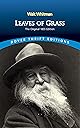
In 1855, Walt Whitman published — at his own expense — the first edition of Leaves of Grass , a visionary volume of twelve poems. Showing the influence of a uniquely American form of mysticism known as Transcendentalism, which eschewed the general society and culture of the time, the writing is distinguished by an explosively innovative free verse style and previously unmentionable subject matter. Exalting nature, celebrating the human body, and praising the senses and sexual love, the monumental work was condemned as "immoral." Whitman continued evolving Leaves of Grass despite the controversy, growing his influential work decades after its first appearance by adding new poems with each new printing. This edition presents the original twelve poems from Whitman's premier 1855 publication of Leaves of Grass . Included are some of the greatest poems of modern times: "Song of Myself," "I Sing the Body Electric," and "There Was a Child Went Forth" (which in the first editions of Leaves of Grass were still nameless), works that continue to upset conventional notions of beauty and originality even today. Review: Original Edition of Whitman’s “Leaves of Grass”. Poetry at its most powerful! - Walt Whitman rewrote many versions of his iconic, superb poem “Leaves of Grass” throughout his long and richly nourishing life. I find this original version to be his best work — fresh, exuberant, utterly unadulterated by time and changed perspectives. Highly recommend buying this edition. Put aside enough time to gobble this edition all at once, if possible. Reading or rereading Whitman’s original 1855 edition is like nothing else you will ever experience. Keep a pen or pencil handy: you’ll want to emphasize passages and phrases you find especially wonderful or memorable. Audio versions are available and worthy, but you must read this masterpiece as a book of paper. Our minds process information seen or heard differently — try both if you wish. Trust me. This book may change your life. Review: Theres' some well- written erotica for which the author was punished for in the mid 1800's - It is a touching poignantly written masterpiece of a classic I go back and back to over the years!


| Best Sellers Rank | #55,057 in Books ( See Top 100 in Books ) #9 in Nature Poetry #12 in Poetry Literary Criticism (Books) #32 in Literary Criticism & Theory |
| Customer Reviews | 4.5 out of 5 stars 4,166 Reviews |
J**N
Original Edition of Whitman’s “Leaves of Grass”. Poetry at its most powerful!
Walt Whitman rewrote many versions of his iconic, superb poem “Leaves of Grass” throughout his long and richly nourishing life. I find this original version to be his best work — fresh, exuberant, utterly unadulterated by time and changed perspectives. Highly recommend buying this edition. Put aside enough time to gobble this edition all at once, if possible. Reading or rereading Whitman’s original 1855 edition is like nothing else you will ever experience. Keep a pen or pencil handy: you’ll want to emphasize passages and phrases you find especially wonderful or memorable. Audio versions are available and worthy, but you must read this masterpiece as a book of paper. Our minds process information seen or heard differently — try both if you wish. Trust me. This book may change your life.
M**E
Theres' some well- written erotica for which the author was punished for in the mid 1800's
It is a touching poignantly written masterpiece of a classic I go back and back to over the years!
J**N
My hero
I sing the inspiration of Whitman. I crave the leaves of grass. To feel its coolness in the morning hours. Before the cruel heat of the day.
F**N
Worth the effort.
Like listening to a very good friend who drones on and on, but you listen because you know he is going to say something really worth waiting for. I knew little about Whitman or Leaves of Grass. I had read or heard some quotes which I liked, so I started reading. At first it was very annoying! He used exclamation points at the end of every sentence! (Or if not an exclamation, he put it all in parentheses.) Again and again with the exclamation points! (Again and again with the parentheses.) And the subjects I did not find that interesting, or the wording very well formed. The first 3rd of the book is a collection of random thoughts, mostly about how great America is. On and on about things he might just have read about in the newspaper, with very little evidence of personal experience. List after list. And when he was not writing about America, he was writing about being gay. Now I don't know if he was or was not, I only know what I read; and it sure seemed gay to me. I just did not see what was so great about this book. What I did not realize at the time was that I was being introduced to his voice, his individual way of expressing himself. The middle 3rd of the book has as its subject the Civil War. Here he comes into his own. I could feel his horror, his empty numbness, his pride and his despair. Nearly every poem is a gem, nearly every thought, a revelation. One exception is "O Captain! My Captain!, which although great poetry, is not written in the voice I had come to know. It seems to me to have been written for general consumption, not in the private, personal style of the rest of the book. The last 3rd of the book is the recovery from, or rather ghosts from, the Civil War; and also about becoming old. Again here, I had to be patient and wade through quite a few verses to find something that spoke to me. The wounds from the war were real, the dreams acquiring the patina of chivalry. Also, as with most folks now growing old, he was old a long time. He tended to repeat himself and complain about the maladies of being old again and again... as we do. This is a personal life's journey of one man, in his unique voice. I am glad he shared it with me. (The kindle edition I read had some formatting issues, but the Amazon website indicates that is being corrected).
C**Y
I am very happy that inexpensive versions of Leaves of Grass are available ...
I am very happy that inexpensive versions of Leaves of Grass are available again. I have purchased eight different versions to compare. Many are very poorly put together - almost like scanned versions simply plopped into a word processor and uploaded to Amazon - and selling for $10 - $1. What I find most fascinating is this one - by Martino Fine Books (listed as Leaves of Grass ; {exact Facsimile of the 1855 Edition] - it is very fine, and is an exact facsimile. I love holding it and looking at it as close to the original 1855 edition as humanly possible. The only caveat is the cover - which features the older Walt, who had published six more versions by the time the cover photo was taken. No matter, the inside is what's important. Another one I bought that I recommend is from cholla needles press (listed as Leaves of Grass: 1855) - they use a facsimile of the original cover, and have made the choice to clean up the line breaks for readability purposes. The cholla edition is easy to sit down and read, the martino edition is beautiful to look at. The good news is I bought them both for less than $10 and find that reasonable enough to give them both to friends and relatives as gifts this year.
R**N
The Benefit of Loafing and Inviting My Soul
Whitman wrote as if to me personally. He picked me out as someone many years hence from his perspective, in order to share his world in sufficient detail for me to insert myself into his skin. Through what he put down he came forward more than a hundred years. He is sauntering, noticing the sounds, sights, smells, how he lit up with joy, bittersweetness, fear, self doubt and at times loneliness. He carried me along the river bank at any pace I wanted to go. He would not miss a stride as he adapted to my pace. He taught me how to recline in the summer grass in the cemetery not much more than a stone's throw from where I live, and meditate on his leaf of green summer grass, inviting my soul to enter our picture. I am writing this as a message, an invitation for you, my reader, to get to know Walt Whitman. Don't join the crowd of hate and be put off by the fact that he was gay. I am learning much about making healthy connections, being myself one of the dots I am connecting. I do a little Lazarus raising activity in the cemetery two or three times a week, as I bring back to life my parents, my mother's parents, and her mother's mothers parents. They are in my mind, what I remember and imagine of them, increasingly clearly. There is so much more good will, mutual respect and intimacy aware to me now. I even have group therapy with them. I learned a lot about how to do this from carrying on with Walt Whitman!
U**T
Literary Curiosities Lovers
Walt Whitman Leaves of Grass poetry collection are loosely connected and each represents a celebration of his philosophy of life and humanity. This books discussion of delight in sensual pleasures during a time when such candid displays were considered immoral. Where much previous poetry, especially English, relied on symbolism, allegory, and meditation on the religious and spiritual, Leaves of Grass (particularly the original edition) exalted the body and the material world. Whitman's poetry praises nature and the individual human's role in it. Whitman does not diminish the role of the mind or the spirit; he elevates the human form and mind, deeming both worthy of poetic praise. With one exception, the poems do not rhyme or follow standard rules for meter and line length. Among the poems in the collection are "Song of Myself", "I Sing the Body Electric", "Out of the Cradle Endlessly Rocking". On May 15, 1855, Whitman registered the title Leaves of Grass with the clerk of the United States District Court, Southern District of New Jersey, and received its copyright. The first edition was published in Brooklyn at the Fulton Street printing shop on July 4, 1855. Whitman paid for and did much of the typesetting for the first edition himself. The book did not include the author's name, instead offering an engraving by Samuel Hollyer depicting the poet in work clothes and a hat, arms at his side. Early advertisements for the first edition appealed to "lovers of literary curiosities". The first edition was very small, collecting only twelve unnamed poems in 95 pages. Whitman said he intended the book to be small enough to be carried in a pocket. "That would tend to induce people to take me along with them and read me in the open air: I am nearly always successful with the reader in the open air." Bound in its trademark green cloth cover. The poems of the first edition, which were given titles in later issues, were "Song of Myself," "A Song For Occupations," "To Think of Time," "The Sleepers," "I Sing the Body Electric," "Faces," "Song of the Answerer," "Europe: The 72d and 73d Years of These States," "A Boston Ballad," "There Was a Child Went Forth," "Who Learns My Lesson Complete?", and "Great Are the Myths." The title Leaves of Grass was a pun. "Grass" was a term given by publishers to works of minor value and "leaves" is another name for the pages on which they were printed. Originally written at a time of significant urbanization in America, Leaves of Grass responds to the impact urbanization has on the masses. When the book was first published, Whitman was fired from his job at the Department of the Interior after Secretary of the Interior read it and said he found it offensive. Poet John Greenleaf Whittier was said to have thrown his 1855 edition into the fire. Thomas Wentworth Higginson wrote, "It is no discredit to Walt Whitman that he wrote 'Leaves of Grass,' only that he did not burn it afterwards." Critic Rufus Wilmot Griswold reviewed Leaves of Grass in the November 10, 1855, issue of The Criterion, calling it "a mass of stupid filth" and categorized its author as a filthy free lover. Griswold also suggested, in Latin, that Whitman was guilty of "that horrible sin not to be mentioned among Christians", one of the earliest public accusations of Whitman's homosexuality. Whitman included the full review, including the innuendo, in a later edition of Leaves of Grass. Emerson urged Whitman to tone down the sexual imagery in 1860. On March 1, 1882, Boston district attorney demanded the removal of the poems "A Woman Waits for Me" and "To a Common Prostitute", as well as changes to "Song of Myself", "From Pent-Up Aching Rivers", "I Sing the Body Electric", "Spontaneous Me", "Native Moments", "The Dalliance of the Eagles", "By Blue Ontario’s Shore", "Unfolded Out of the Folds", "The Sleepers", and "Faces". Whitman rejected the censorship, "The list whole & several is rejected by me, & will not be thought of under any circumstances." The poet believed the controversy would increase sales, which proved true. Though banned by retailers went through five editions of 1,000 copies each. Its first printing, sold out in a day.
P**L
Fantastic!
A perfect place to start! This original edition is very raw and wonderful!
E**I
A very beautiful book
A great poet. A wonderful book. I recommend it.
W**A
Excellent edition!
This is an excellent edition of Leaves of Grass. I was looking specifically for the poem Song of the Open Road, and was disappointed that it isn't included in this version, but came to learn that Whitman produced several successive editions of the book, with changes and additions in each newer version. So, I'll keep looking for a book that includes that poem.
C**N
The original edition of 'Leaves of Grass' is wonderful, it's one of the greatest books ever written
The original edition of 'Leaves of Grass' is wonderful, it's one of the greatest books ever written. The one thing I don't like about this particular edition is the way the editor removed Whitman's famous fourth ellipsis. That drives me crazy. In the first edition, Whitman used four ellipses rather than the standard three and I wish the editor of this copy would have stayed true to the original publication. However, the segments of 'Song of Myself' are not divided (which is true to the 1855 edition), so that saves this copy a bit.
L**D
Awesome collection of poems by Walt Whitman. Must have.
PFA 1. The cover. 2. The back. 3. The contents page (I highlighted that area and that pencil mark is mine) 4. The first page of the book. 5. A random page to show the font (with my hand as reference). No issues with binding. Beautiful. I have had this book for months and no issues over time. Very easy to read because it's free verse (Walt Whitman is called the father of free verse poetry).
C**A
Ótimo
Ótimo
Trustpilot
1 month ago
2 weeks ago