

Desertcart purchases this item on your behalf and handles shipping, customs, and support to Senegal.
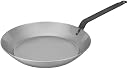
Review: Glorious skillet - Passes the egg test easily. Melts the fats from my lamb chops without adding a single drop of oil. Review: Buy it!! - The best! Amazing pan. This opened up the door to carbon steel cooking and Iโm never going back. The handle is ergonomic, the sides are perfectly sloped. It seasons beautifully and is now totally nonstick. If youโre struggling with it go the CarbonSteel subreddit and ask for help. I own a smaller one (7 or 8โ) and the 11โ and they both get used daily. Iโve even been giving them as house warming gifts. I love this pan so much I made a guide to carbon steel cooking. See below: Intro: Carbon steel (CS) is basically the same as cast-iron, just lighter. It is the same material (iron alloy with carbon added) - but instead of being poured into a cast during manufacturing it is "punched" out of a circular sheet of carbon steel. Getting started with your new CS pan: 1. Removing the manufacturer's coating You have to remove the thin clear (almost invisible) wax layer on the cooking surface that is placed by the manufacturer. Start by scrubbing the cooking surface with some rubbing alcohol. Then scrub the cooking surface with soap and hot water. The layer should now be gone and you're ready to "blue" and season. 2. "Bluing" your pan Before seasoning you want to "blue" your pan. This will make it more rust resistant and easier to season. You are going to super-heat your pan and this will create a blue colored oxide layer (tri-iron tetroxide)( Fe3O4) that helps prevent rust. Wipe off all the water on your pan. Place your pan on your stove on the highest heat. Watch the pan turn orange, and then blue from the inside out (usually 5-10 minutes). Keep the pan on the heat until the blue goes all the way up the sides of the pan and the whole pan is blue. You're now done "bluing" your pan and you're ready to season. Let your pan cool down for a few minutes before the next step. 3. Oven seasoning Seasoning is creating a layer of polymerized oil on your pan surface, which is basically a self-healing "non-stick" layer. It also prevents rust. You need to oven season this particular pan first. You will automatically season the cooking surface while cooking, but because you have a raw steel handle (not plastic) you need to oven season the handle and the under-surface of the pan to "seal" those areas from rust. In order to create the polymerized oil layer, the oil has to burn, or smoke. So you have to heat the pan slightly above its smoke point for at least a few minutes. Grapeseed oil is commonly used for seasoning. It has a smoke point of 421F. To get started, apply a thin layer of grapeseed oil with a paper towel all over your pan, underside, and handle. Now use a new paper towel and vigorously try to wipe off all the oil. You want an imperceptibly thin layer of oil. Too thick of an oil layer will crust or season unevenly. You want a slight sheen to your pan but it shouldn't be glimmering with oil. Now place the pan in the oven upside down (cooking surface down) and turn the oven to 450F. To account for different oven thermometers, you want to turn the temperature slightly above your smoke point. Leave the pan in the oven for 45 minutes. Now carefully take the pan out, let it cool for a few minutes, and apply another oil layer. Again thoroughly wipe off the oil layer with a paper towel so it is as thin as possible (almost gone entirely). Put it back in the oven at 450F for 45 minutes and take it out. Your pan is now seasoned. 4. Stovetop Seasoning To maximize the non-stick, you want to season the cooking surface a few more times. This is most easily done on the stove instead of the oven, but is basically done the same way. Apply a thin layer of oil to the cooking surface of the pan and wipe it off with a dry paper towel. Put the pan on the stove and heat it to medium high just until the oil starts to smoke (you'll see smoke). Let it smoke for 1-2 minutes. Now take the pan off, let it cool, and apply another oil layer, and wipe it off. Put it back on the heat until it smokes and repeat. You can do this 3-4 times to have a super slick cooking surface. ====== Cooking tips for your CS pan: You can cook with any oil, including olive oil. They say olive oil has a low smoke point but that may not be true based on some industry research. Start cooking with a moderate amount of oil and once your pan is better seasoned, you can start using very little oil. Using a spray bottle (you can use a glass refillable spray bottle) is a nice way to get the oil on the pan You can cook on medium heat. You do not need to use high heat like with stainless steel. Low heat can be tricky and can cause some sticking, but generally medium heat works well Just like with cast iron, you can vigorously scrape your pan with a metal spatula to get crusted food off either while cooking or afterwards. Scraping won't remove your seasoning. You can clean your pan with soap and water and sponges. This will not remove your seasoning. That is a myth. Same applies to cast iron. The important thing is that water cannot be sitting on your pan. Don't leave it in the sink - it will rust. Dishwasher probably isn't great either. Don't let water sit on the pan for a long time. Wipe off all the water and leave it out to dry after you're done cleaning it. Some people will stove heat the pan and wipe with oil to protect from rust. You can cook acidic foods like tomatoes. It will strip your seasoning and stick to your pan but that is okay. Your pan will reseason over time. If you're having issues with things sticking to your pan, you can try this traditional Chinese cooking method of ๆป้ or "longyau" (aka "swirling oil"). This method is basically seasoning your pan every time you cook with it. You apply a generous amount of oil (pour a thick layer) to your pan and heat it up to high heat. Once the oil starts to smoke, you can pour off the excess oil into a glass container (and keep it for future cooking) and let the pan cool down to the desired cooking temperature. Your pan has just been quickly seasoned. Now you can cook with whatever oil remains on the pan. Don't worry about the color or spots on the pan. It will look funky as you cook in it over time - doesn't matter and won't affect performance. Enjoy your indestructible non stick pan. If it warps you can hammer it out. If it rusts, you can sand off the rust. It will probably outlive us.


| ASIN | B00077H56I |
| Brand | Matfer |
| Capacity | 1 Liters |
| Colour | Black |
| Customer Reviews | 4.5 out of 5 stars 892 Reviews |
| Enclosure Material | Steel |
| Global Trade Identification Number | 03334490620019 |
| Handle Material | Alloy Steel |
| Has Nonstick Coating | No |
| Included Components | Frying Pan |
| Is Oven Safe | Yes |
| Is the item dishwasher safe? | No |
| Item Weight | 2.71 Pounds |
| Manufacturer Part Number | 62001 |
| Material | Steel |
| Model number | 62001 |
| OutputCapacity | 1 Liters |
| Product Care Instructions | Hand Wash Only |
N**L
Glorious skillet
Passes the egg test easily. Melts the fats from my lamb chops without adding a single drop of oil.
G**A
Buy it!!
The best! Amazing pan. This opened up the door to carbon steel cooking and Iโm never going back. The handle is ergonomic, the sides are perfectly sloped. It seasons beautifully and is now totally nonstick. If youโre struggling with it go the CarbonSteel subreddit and ask for help. I own a smaller one (7 or 8โ) and the 11โ and they both get used daily. Iโve even been giving them as house warming gifts. I love this pan so much I made a guide to carbon steel cooking. See below: Intro: Carbon steel (CS) is basically the same as cast-iron, just lighter. It is the same material (iron alloy with carbon added) - but instead of being poured into a cast during manufacturing it is "punched" out of a circular sheet of carbon steel. Getting started with your new CS pan: 1. Removing the manufacturer's coating You have to remove the thin clear (almost invisible) wax layer on the cooking surface that is placed by the manufacturer. Start by scrubbing the cooking surface with some rubbing alcohol. Then scrub the cooking surface with soap and hot water. The layer should now be gone and you're ready to "blue" and season. 2. "Bluing" your pan Before seasoning you want to "blue" your pan. This will make it more rust resistant and easier to season. You are going to super-heat your pan and this will create a blue colored oxide layer (tri-iron tetroxide)( Fe3O4) that helps prevent rust. Wipe off all the water on your pan. Place your pan on your stove on the highest heat. Watch the pan turn orange, and then blue from the inside out (usually 5-10 minutes). Keep the pan on the heat until the blue goes all the way up the sides of the pan and the whole pan is blue. You're now done "bluing" your pan and you're ready to season. Let your pan cool down for a few minutes before the next step. 3. Oven seasoning Seasoning is creating a layer of polymerized oil on your pan surface, which is basically a self-healing "non-stick" layer. It also prevents rust. You need to oven season this particular pan first. You will automatically season the cooking surface while cooking, but because you have a raw steel handle (not plastic) you need to oven season the handle and the under-surface of the pan to "seal" those areas from rust. In order to create the polymerized oil layer, the oil has to burn, or smoke. So you have to heat the pan slightly above its smoke point for at least a few minutes. Grapeseed oil is commonly used for seasoning. It has a smoke point of 421F. To get started, apply a thin layer of grapeseed oil with a paper towel all over your pan, underside, and handle. Now use a new paper towel and vigorously try to wipe off all the oil. You want an imperceptibly thin layer of oil. Too thick of an oil layer will crust or season unevenly. You want a slight sheen to your pan but it shouldn't be glimmering with oil. Now place the pan in the oven upside down (cooking surface down) and turn the oven to 450F. To account for different oven thermometers, you want to turn the temperature slightly above your smoke point. Leave the pan in the oven for 45 minutes. Now carefully take the pan out, let it cool for a few minutes, and apply another oil layer. Again thoroughly wipe off the oil layer with a paper towel so it is as thin as possible (almost gone entirely). Put it back in the oven at 450F for 45 minutes and take it out. Your pan is now seasoned. 4. Stovetop Seasoning To maximize the non-stick, you want to season the cooking surface a few more times. This is most easily done on the stove instead of the oven, but is basically done the same way. Apply a thin layer of oil to the cooking surface of the pan and wipe it off with a dry paper towel. Put the pan on the stove and heat it to medium high just until the oil starts to smoke (you'll see smoke). Let it smoke for 1-2 minutes. Now take the pan off, let it cool, and apply another oil layer, and wipe it off. Put it back on the heat until it smokes and repeat. You can do this 3-4 times to have a super slick cooking surface. ====== Cooking tips for your CS pan: You can cook with any oil, including olive oil. They say olive oil has a low smoke point but that may not be true based on some industry research. Start cooking with a moderate amount of oil and once your pan is better seasoned, you can start using very little oil. Using a spray bottle (you can use a glass refillable spray bottle) is a nice way to get the oil on the pan You can cook on medium heat. You do not need to use high heat like with stainless steel. Low heat can be tricky and can cause some sticking, but generally medium heat works well Just like with cast iron, you can vigorously scrape your pan with a metal spatula to get crusted food off either while cooking or afterwards. Scraping won't remove your seasoning. You can clean your pan with soap and water and sponges. This will not remove your seasoning. That is a myth. Same applies to cast iron. The important thing is that water cannot be sitting on your pan. Don't leave it in the sink - it will rust. Dishwasher probably isn't great either. Don't let water sit on the pan for a long time. Wipe off all the water and leave it out to dry after you're done cleaning it. Some people will stove heat the pan and wipe with oil to protect from rust. You can cook acidic foods like tomatoes. It will strip your seasoning and stick to your pan but that is okay. Your pan will reseason over time. If you're having issues with things sticking to your pan, you can try this traditional Chinese cooking method of ๆป้ or "longyau" (aka "swirling oil"). This method is basically seasoning your pan every time you cook with it. You apply a generous amount of oil (pour a thick layer) to your pan and heat it up to high heat. Once the oil starts to smoke, you can pour off the excess oil into a glass container (and keep it for future cooking) and let the pan cool down to the desired cooking temperature. Your pan has just been quickly seasoned. Now you can cook with whatever oil remains on the pan. Don't worry about the color or spots on the pan. It will look funky as you cook in it over time - doesn't matter and won't affect performance. Enjoy your indestructible non stick pan. If it warps you can hammer it out. If it rusts, you can sand off the rust. It will probably outlive us.
B**W
Get yeh right size for your stove.
Wonderful pan. Thick and we'll balanced. Welded not riveted so it stays smooth on the inside of the pan. Great for 2-3 eggs.
L**E
Nice Pan
Solid good quality frying pan
M**N
Great Non-Stick Pan - Highly Recommended
I have been looking for a new pan for a while that has non-stick properties. Last year I bought two new non-stick pans and about a month later read a news report that they cause cancer so I stopped using them and had to learn how to cook in my stainless steel all clad pans without food sticking. It has been okay, but not a great experience. This really is a great pan. The first thing I noticed when I opened the box and took the pan out is how heavy it is for it's size. I got the 8 5/8" version for eggs because I have a lid that fits it perfectly and I like my eggs basted. I watched some videos that made me concerned about seasoning the pan on my electric stove so I contacted the manufacturer and they emailed me some instructions on how to season the pan in the oven. In the end I decided to do it on the stove using the method with the potato peels, salt, and oil. I also saw some videos where people said it was difficult to scrub off the initial factory coating and the manufacturer sent me some detailed instructions on how to do that, as well. It turned out to be much easier than others made it out to be. Per the manufacturers suggestions, I went to the store and bought some Scotch Bright copper scrubbing pads. I filled the sink with hot water and soap and scrubbed the pan for about 5 minutes until all of the coating was removed inside and out. Then I dried the pan with a towel and put it on the stove with a preheated burner set to the #3 setting. While it was warming up on the burner, I peeled two potatoes, prepared 1/2 cup of salt and 1/4 cup of canola oil. Then I added the salt, oil, and potato peels and set a timer for 15 minutes. I gradually increased the heat one setting at a time until I got to setting #7, to slowly get the pan hot. Once I got to setting #7, I backed off to setting #6 and then #5 and left it there. At about 12 of 15 minutes, the potato peels were a little burnt so I stopped and dumped everything out and wiped the pan as clean as I could get it and repeated the process. The pan turned a nice golden copper color. Once that was complete, I put a little canola oil on a paper towel and wiped the pan down inside and out with a very fine layer of oil. This morning I cooked up a couple of the potatoes that I peeled and made hash browns using grape seed oil. I put in the potatoes, some bell pepper and onion and nothing stuck. Then, I wiped out the pan, added some butter and put in two eggs. I added a little water and put a lid on the pan, waited about two minutes and the eggs were done. The eggs barely stuck in a couple of places but easily released once I slid a spatula under them. I'm not concerned as I know the pan will get better over time. Once again, I wiped out the pan with a paper towel, put a little oil on another paper towel and wiped it down inside and out. I think that is easier than washing and drying a pan. It was probably better than using a non-stick pan. It was like cooking on ice. When I cooked hash browns in my stainless steel pan, I always had a layer of potatoes stuck and burnt to the bottom of the pan. I figured out how to cook eggs in a stainless steel pan without them sticking but could never figure out the potatoes. The Matfer Bourgeat pan makes cooking much easier. I've heard these pans can warp on electric or induction stove tops, especially the larger pans. That is why I wanted to take is slow with the heat and not shock the pan. The manufacturer said that is another advantage of the oven seasoning method is that it tempers the pan. I'm buying a larger version from Amazon today and I may try the oven method with that one. I would highly recommend this pan.
Trustpilot
5 days ago
1 month ago