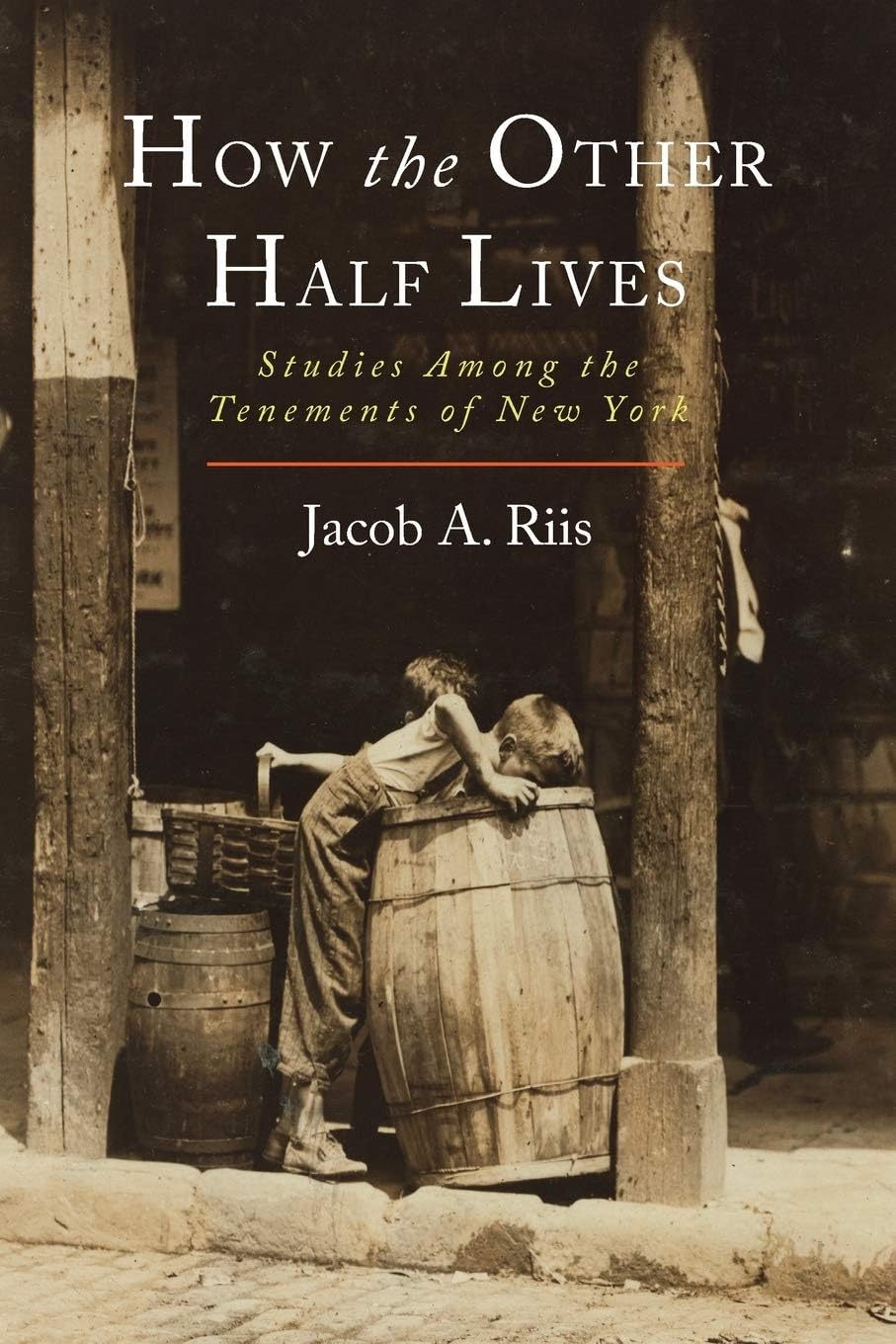
How the Other Half Lives: Studies Among the Tenements of New York
Product ID: 22481263
Desertcart purchases this item on your behalf and handles shipping, customs, and support to Senegal.
2015 Reprint of 1957 Edition. Full facsimile of the original edition, not reproduced with Optical Recognition Software. Originally published in 1890, this is the classic indictment of slum life, written by one of the most famous reformers of the nineteenth century. "How the Other Half Lives: Studies Among the Tenements of New York" explained not only the living conditions in New York slums, but also in the sweatshops in some tenements which paid workers only a few cents a day. The book explains the plight of working children; they would work in factories and at other jobs. Some children became garment workers and newsies (newsboys). The effect was the tearing down of New York's worst tenements, sweatshops, and the reform of the city's schools. The book led to a decade of improvements in Lower East Side conditions, with sewers, garbage collection, and indoor plumbing all following soon after, thanks to public reaction. Our edition reprints the 1957 edition, without the photo illustrations done mostly by Riis himself. Review: Five Stars - fine edition of this classic social study, but as the publisher indicates in the description, without the illustrations. Review: The immigrant experience at the turn of the century. - This book is still a classic . It presents the immigrant experience dramatically. It display the lower east side of New York. This needs to read because it demonstrates why immgration needs to be welcome.
| Best Sellers Rank | #80,582 in Books ( See Top 100 in Books ) #2 in Housing & Urban Development Law (Books) #15 in Urban & Land Use Planning (Books) #20 in Urban Planning and Development |
| Customer Reviews | 4.3 out of 5 stars 325 Reviews |
A**R
Five Stars
fine edition of this classic social study, but as the publisher indicates in the description, without the illustrations.
J**N
The immigrant experience at the turn of the century.
This book is still a classic . It presents the immigrant experience dramatically. It display the lower east side of New York. This needs to read because it demonstrates why immgration needs to be welcome.
A**R
How to water down the How the Other Half Lives, Schools ignoring the benefits of teaching this book
This isn't a bad copy of this text. However, Many Urban Historians such as myself look to this piece in order to gain an understanding of the environment in the tight ghettos of the lower east side of Manhattan. This piece is something that I would chronicle as being an important piece of urban literature, among the likes of Upton Sinclair's The Jungle. Jacob Riis took a long time and effort in providing illustrations and photographs in his original copies. However this copy contains no photographs, thus removing a monumental element of the effectiveness of this piece. When this piece was first released, the images provided sent a chill into the readers. Simply due to the fact of knowing that there were young immigrants, mainly children who were living in squalor six blocks beyond their comfortable abodes. Lack of Photographs aside, this is an important and historical piece of work in American, Urban American, and New York History. Unfortunately many schools neglect to included this in required reading, which is honestly disgraceful. If I were to turn back to teaching, I would include this in my syllabus. This should be required reading for all!
M**A
A detailed look at poverty and tenements in late 19th Century New York City
If your Irish or Italian or Jewish or German ancestors lived in New York City at the end of the 19th Century, you will meet them, or people they knew, in these pages.
T**E
This version doesn't have pictures
Riis is known for his pictures of the tenements, but this version has omitted those pictures. Riis as an auther can be rambly, racist, and judgy; without the accompanying photos, I don't think you get the whole picture. Definitely read this book, but pick another version.
O**N
Important book about immigrants and how, historically, white ...
Important book about immigrants and how, historically, white Americans are jerks to them. I wish we'd learn from our mistakes
J**N
But it was a good read.
Came quickly and was used for my lecture and then forgotten. But it was a good read.
P**Z
There are zero photos in this book.
It was my understanding this was a book of photos exposing slum life in the 1890s. There are zero photos in this book.
T**C
No photos
Pésima calidad de las imágenes. "Fully illustrated", yes, but barely any photo. 3 I think and quality is less than that of a bad photocopy. Not worth it
F**O
J Riis
Ce livre ne concerne pas l’œuvre photographique de J. Riis
W**S
False advertising. Not really illustrated.
It is advertised as Illustrated, but in fact almost all the illustrations Riis included are missing. This is, with a couple of exceptions, a plain text. Buy a version that has either Riis' illustrations or the original photos he based his illustrations on.
C**T
Good read
My husband enjoyed this book particularly as we visited New York last year.
R**E
History
Not easy to read, was written in the 19th century and a bit dry.
Trustpilot
2 weeks ago
1 month ago