
Desertcart purchases this item on your behalf and handles shipping, customs, and support to Senegal.
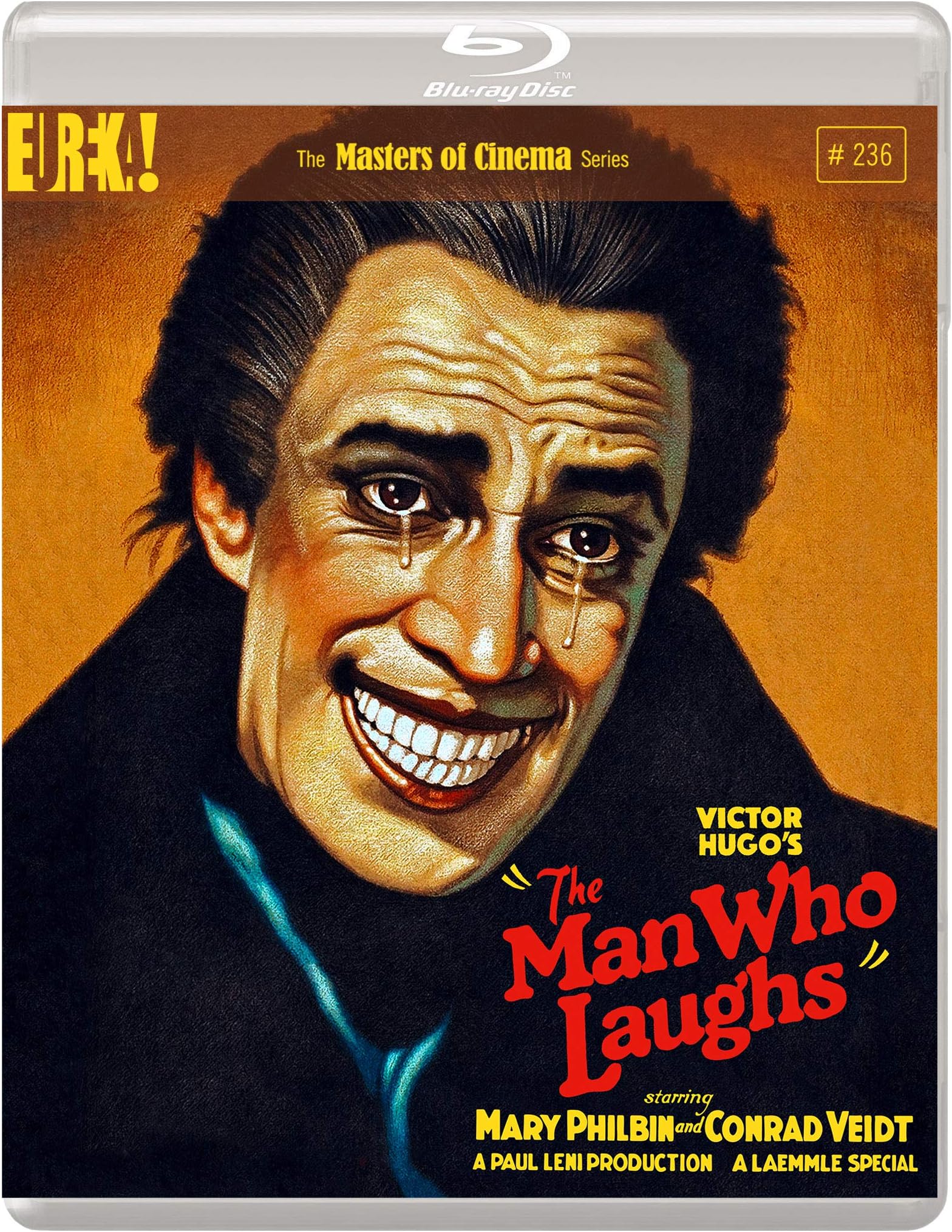
One of the most visually striking of all the later silent films, The Man Who Laughs reunites German Expressionism director Paul Leni and cinematographer Gilbert Warrenton from their horror hit the previous year, The Cat and the Canary (1927). Both films are often considered to be among the earliest works of legendary horror classics from Universal Studios, yet the undeniably eerie The Man Who Laughs is more accurately described as a Gothic melodrama. However, its influence on the genre and the intensity of the imagery art director Charles Hall and makeup genius Jack Pierce would go on to define the look of those 1930s Universal horror landmarks have redefined it as an early horror classic, bolstered by one of the most memorable performances of the period. Adapted from the Victor Hugo novel, The Man Who Laughs is Gwynplaine (an extraordinary Conrad Veidt ), a carnival sideshow performer in 17th-century England, his face mutilated into a permanent, ghoulish grin by his executed father's royal court enemies. Gwynplaine struggles through life with the blind Dea (Phantom of the Opera's Mary Philbin ) as his companion though she is unable to see it, his disfigurement still causes Gwynplaine to believe he is unworthy of her love. But when his proper royal lineage becomes known by Queen Anne, Gwynplaine must choose between regaining a life of privilege, or embracing a new life of freedom with Dea. The startling makeup on Veidt was the acknowledged direct inspiration for The Joker in the 1940 Batman comic that introduced the character, and film versions of The Joker have been even more specific in their references to Leni's film. While The Man Who Laughs contains powerful elements of tragedy, doomed romance, and even swashbuckling swordplay, its influence on horror cinema is most pronounced. Leni died suddenly at the age of 44 a year after this film (with Veidt also unexpectedly passing away too soon in 1943), and The Man Who Laughs endures as one of the most haunting and stylish American silent films, made just as that era was coming to a close. The Masters of Cinema Series is proud to present the film on home video for the first time ever in the UK. BLU-RAY SPECIAL FEATURES PRESS: "The Man Who Laughs is a truly great, a devastatingly beautiful film. " TIME Magazine "One of the final treasures of German silent Expressionism. " Roger Ebert "Leni's pictorial genius -- aided here by what must have been an enormous budget -- marks the film as one of the most exhilarating of late silent cinema. " Time Out Review: Very important film no one knows much about. - I expected this to be interesting. But frankly I was bowled over by just how good a film it was. Certainly a quirky narrative and both male and female leads where exceptional and drew me in to the point I’d forgotten it was a silent film by the end and was just going with the flow. Definitely recommended. Also for those Batman fans. Watch the film and see the origins of the Joker character. Tim Burton pays homage with his Joker in regards to the nerves on his face being severed making the rictus grin. But frankly this is done way better and Conrad Veidt manages to look so much more disturbing. Different sort of character but Veidt manages to convey every emotion through with only his eyes. Absolute master. Review: Best thing I've seen on Prime. Homo is the real star! - A great dramatic film. I don't know anything about the history of this film.. I'm a casual Prime Streaming viewer who's exhaused the B&W horror/monster flicks available and stumbled upon this cracker. I was interested to see in the credits that Victor Hugo wrote the original novel. Although the speech is displayed as text in a silent movie format, there's a fantastic soundtrack with loads of incidental and background sounds. Very strong characterisation and not TOO overplayed. Obviously, Gwynplaine the protagonist was well played but I thought The Queen was a standout as well. Of course, Homo is the REAL star! A really dramatic and quite thrilling film towards the end. A remarkable production. Best thing I've seen on Prime for a while.


| Contributor | Conrad VEIDT, Mary PHILBIN, Paul LENI |
| Customer Reviews | 4.5 out of 5 stars 457 Reviews |
| Format | Anamorphic, Animated, Blu-ray, Box set, Closed-captioned, Dolby, Dubbed, HiFi Sound, Surround Sound, THX, Widescreen Format Anamorphic, Animated, Blu-ray, Box set, Closed-captioned, Dolby, Dubbed, HiFi Sound, Surround Sound, THX, Widescreen See more |
| Genre | Horror |
| Language | English, French, German, Italian, Spanish |
| Manufacturer | Eureka Entertainment Limited |
| Number of discs | 1 |
| Runtime | 1 hour and 50 minutes |
| Studio | Eureka Entertainment LTD |
J**Y
Very important film no one knows much about.
I expected this to be interesting. But frankly I was bowled over by just how good a film it was. Certainly a quirky narrative and both male and female leads where exceptional and drew me in to the point I’d forgotten it was a silent film by the end and was just going with the flow. Definitely recommended. Also for those Batman fans. Watch the film and see the origins of the Joker character. Tim Burton pays homage with his Joker in regards to the nerves on his face being severed making the rictus grin. But frankly this is done way better and Conrad Veidt manages to look so much more disturbing. Different sort of character but Veidt manages to convey every emotion through with only his eyes. Absolute master.
P**S
Best thing I've seen on Prime. Homo is the real star!
A great dramatic film. I don't know anything about the history of this film.. I'm a casual Prime Streaming viewer who's exhaused the B&W horror/monster flicks available and stumbled upon this cracker. I was interested to see in the credits that Victor Hugo wrote the original novel. Although the speech is displayed as text in a silent movie format, there's a fantastic soundtrack with loads of incidental and background sounds. Very strong characterisation and not TOO overplayed. Obviously, Gwynplaine the protagonist was well played but I thought The Queen was a standout as well. Of course, Homo is the REAL star! A really dramatic and quite thrilling film towards the end. A remarkable production. Best thing I've seen on Prime for a while.
P**S
Glorious
This is - as you'd expect from the Masters of Cinema series - a brilliantly restored film. It's possible to sit back and enjoy this without once being distracted by jerky edits or similar drops in quality. Instead, you get to focus on the film itself, and find a visually stunning and emotionally moving piece of cinema. You don't have to be a film buff to enjoy this, it's genuinely engaging in its own right.
D**N
Enjoyable and engaging.
An enjoyable romp featuring a great performance by Conrad Veidt, and who wouldn't be up for that? A very good bluray print with an excellent set of notes/essays included with the early editions. Glad that I've seen it and a film that I will watch again.
M**G
good bluray
Conrad Veidt excellent as always. Good picture quality for a film nearly a 100 years old. Historical romance drama about a disfigured man.
M**K
great vintage viewing.
really enjoyed this movie,it holds up surprising well for an 90 year old film with very moving performances from both conrad veit in the title role and mary philbin who is probably best remembered by silent film fans as christine from the lon chaney phantom.recomended.
B**N
More like the man who smiles a lot
Great and classic silent movie from 1928, chilling and eerie! Great movie and must see for any fan of black & white or silent movies. The main character said to be the main inspiration for the classic version of the 'Joker'. DVD very hard to get hold of.
B**A
Masters of Cinema strike again!
I will say nothing about this truly great film itself - you can read that elsewhere. This release by Master of Cinema is truly gorgeous and a print that defies belief that this film is coming up for almost 100 years old. A beautiful and informative booklet make this my favourite release from MoC for quite some time. Simply sublime.
F**N
El hombre que rie
Gracias
J**4
Victor Hugo-Verfilmung mit Conrad Veidt
"The Man who Laughs" ist ein amerikanischer Stummfilm aus dem Jahr 1928 des deutschen Regisseurs Paul Leni (1885-1929), der in Hollywood unter dem Produzenten Carl Laemmle entstand. Es handelt sich um eine Verfilmung des Victor Hugo-Romans "L`Homme qui rie", ein Melodram mit Anleihen aus dem Grusel- bzw Horrorgenre, mit dem die Filmfirma Universal Pictures damals große Erfolge feierte. Mit Conrad Veidt ("Das Cabinet des Dr. Caligari", "Casablanca", 1893-1943) konnte ein damals sehr bekannter und beliebter Schauspieler für die Titelrolle des Gwynplaine gewonnen werden. Mit Mary Philbin(1902-1993) und Olga Baclanova (1896-1974) spielten zudem auch zwei sehr schöne Frauen mit. Die Handlung beginnt im Jahr 1690 in England, wo Gwynplaine als Sohn eines Edelmanns heranwächst. Dieser ist jedoch so töricht den König James II. zu beleidigen und wird hingerichtet. Gwynplaine wird durch einen Chirurgen ein immerwährendes irres Grinsen ins Gesicht operiert: Er soll sein Leben lang über seinen törichten Vater lachen. Gwynplaine irrt umher und findet im Schneesturm ein Baby, das blinde Mädchen Dea. Beide können bei dem fahrenden Spielmann Ursus unterkommen und wachsen heran. Gwynplain ist als "der Mann der lacht" die Hauptattraktion geworden und Dea liebt ihn über alles. Er selbst findet sich jedoch häßlich und nicht wert von Dea geliebt zu werden. Es existiert auch noch das Vermögen seines Vaters, von dem Gwynplain gar nichts ahnt. Dieses wird von der Herzogin Josiana verwaltet. Die Königin befiehlt ihr, Gwynplain zu heiraten, wenn sie weiterhin im Luxus leben will. Dieser wird zum Spielball politischer Interessen und mit Gewalt von Dea getrennt. Verzweifelt versucht er zu Dea zurückzufinden, die ihn mittlerweile tot glaubt... Mit über einer Million Dollar Produktionskosten gehörte der Stummfilm damals zu den teuersten Produktionen überhaupt, was man ihm an den Massenszenen und opulenten Studiobauten auch durchaus ansieht. . Leider war er damals kein besonders großer Erfolg, da die Stimmung des Films dem Publikum zu morbide war. Heute gilt er als Schlüsselwerk des expressionistischen Films, der viele andere Werke beeinflusste. So diente die Figur des Gwynplain als Inspiration für die Erschaffung des Jokers, des Erzfeindes von Batman. Die Tonspur des Films ist eine Art Kompromiss aus Stummfilm und den Anfängen des Tonfilms. Dieser wurde stumm mit englischen Zwischentiteln gedreht und mit sehr guter Musik von Walter Hirsch, Lew Pollack und Erno Rapee versehen. Sogar zwei Arien werden von Frauenstimmen gesungen. Dazu gibt es einige wenige Toneffekte / Geräusche, und in den Massenszenen Stimmengewirr, das fast wie realer Tonfilm wirkt. Diese spanische DVD-Pressung enthält den nahezu 109 Minuten langen Film im englischen Original ohne Bonusmaterial. Das Bild ist wechselhaft und zwischendurch etwas unscharf, aber überwiegend ganz okay
N**E
Swapable cover
I love this movie. And I love that the blu-ray insert offers an alternative cover. Because despite it not being a horror film, that grin is uncanny and disturbing. Brilliant film from the end of the silent era.
J**Y
Ravie.
Reçus rapidement. Un DVD qui nous ramène a cette histoire incroyable écrite par Victor Hugo. Un classique . Émouvant bien que moins prenant que le livre .
B**D
An underrated masterpiece of silent cinema
"The Man Who Laughs" is one of those near-forgotten silent films that deserve much more praise and attention, especially as it was well received in the late 1920s following the success of "The Hunchback of Notre Dame" and "The Phantom of the Opera" which are in a similar category. In fact, Lon Chaney would have suited this role of yet another pitiful grotesque mutant, but due to his contract with MGM, the German-born producer, Carl Laemmle, chose a German crew which resulted in a definite German Expressionist flavour to this film. In the lead is Conrad Veidt, playing perhaps his best ever role as the mutilated man with a permanent grin on his face, and next to Mary Philbin, who starred in "The Phantom of the Opera", Veidt's performance is most moving and impressive. Unable to move his mouth due to the huge, grotesque grin, Veidt expresses the character's deep and strong emotions with his eyes and body language, for which the silent film is the perfect medium. The story for this unusual film is based on a 17th century French novel, but several changes were made to adapt it to the screen and win over American audiences especially. The scene is still 17th century with good sets and costumes of the period, and the overall mood is reminiscent of the gloomy, shadowy German Expressionist cinema of the 1920s, but Conrad Veidt's character demands viewers' full attention and almost detracts from the rest of the film's fine qualities. Working closely with fellow-German director Paul Leni (who directed "Waxworks", an earlier successful Expressionist film) Veidt manages to convey all the emotions of a man laughed at and treated like a clown due to his freakish face, at the same time struggling to feel worthy of a woman's love. Apart from this superb expressive character portrayal, the story is rich in royal court intrigues, not unlike stories such as The Three Musketeers and The Iron Mask, with treacherous assistants to the King, and a reckless, seductive duchess. `The Laughing Man', as he is called in his circus/freak show, becomes a pawn for the corrupt characters of the royal house, which separates him from his love and his circus show partner, Dea; the blind girl. There are some very stirring and beautiful scenes between these two players, and one of them is highlighted with the original Movietone soundtrack song, which was becoming all the fashion in the late 1920s. Restored to good-as-new condition like the picture quality, this soundtrack made for the film is well-suited and sounds very much like the music of early sound films. There are also a number of bonus features on this DVD such as a 20-minute short "the making of" documentary, a short candid home video of Veidt and other European stars such as Jannings and Greta Garbo, as well as extensive photo galleries of stills, photos and all kinds of promotional material concerning the film. There is also an insert with a good article written by the author of various books about early films and Conrad Veidt so that anyone from serious fan to general curious viewer should be well satisfied. While not as popular as Chaney's films `the Hunchback' and `the Phantom', "The Man Who Laughs" definitely deserves a place up there along with other top quality productions from the late silent era.
Trustpilot
1 month ago
1 month ago