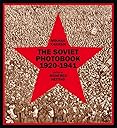
The Soviet Photobook 1920-1941
Product ID: 20568915
Desertcart purchases this item on your behalf and handles shipping, customs, and support to Senegal.
The Soviet Union was unique in its dynamic use of the illustrated book as a means of propaganda. Through the form of the book, the USSR articulated its utopian (and eventually totalitarian) ideologies and expressed its absolute power through avant-garde writing and radical graphic design that was in full flower during the 1920s and 1930s. No other country or political system advanced its cause by attracting and employing acclaimed members of the avant-garde. Among them were writers such as Semion Kirsanov, Vladimir Mayakovsky, Ilya Selvinsky, Sergei Tretyakov and Kornely Zelinsky; artist designers such as Gustav Klutsis, Valentina Kulagina, El Lissitzky, Sergei Senkin, Varvara Stepanova, Solomon Telingater and Nikolai Troshin; and photographers such as Dmitry Debabov, Vladimir Griuntal, Boris Ignatovich, Alexander Khlebnikov, Yeleazar Langman, Alexander Rodchenko and Georgy Petrusov, not to mention many of the best printing plants and bookbinders. Gorgeously produced, edited and designed, The Soviet Photobook 1920-1941 presents 160 of the most stunning and elaborately produced photobooks from this period and includes more than 400 additional reference illustrations. The book also provides short biographies of the photobook contributors, some of whom are presented for the first time. Review: Five Stars - I am very impressed with every aspect of this book. Review: Revolution in print - When I first saw this book and noticed that it only considered titles to 1941 I thought there must be a second volume but having read the introduction it seems that the best Soviet photobooks are in the twenties and thirties. Though it doesn't say so books from the early forties onwards relied on social realism for the photos and the layouts had completely lost the revolutionary and Constructivist design fervour that is on display in so many of these photobooks. The Russian Revolution of 1917 swept away traditional ways of producing print media and with European artists and designers experimented with Futurism and Constructivism (and probably other 'isms', too) especially in the use of photographs. With print this was the ideal medium to put across a message in the new Soviet Union. Chapter three: The lessons of Constructivism shows some amazing spreads from photobooks published in 1929-1932 with photos angled, butted together, overlapping and bold use of headlines and page graphics, especially solid blocks of black and red. These books look so different and exciting compared to the traditional illustrated European titles of the period. Several designers developed the photomontage as a clever and convincing graphic technique and they appear in so many books here. There are several dramatic montages in 'The industry of socialism' from 1935 and the introduction says that this publication was perhaps the finest example of Stalinist picture propaganda. Designed by El Lissitzky with 312 pages (plus lots of inserts and fold-outs) spread over seven books in a slipcase. Fifty-seven pages from these books are shown so you can see just how impressive it looked. Other publication designers like Valentina Kulagina, Varavara Stepanova, Solomon Telingater and Nikolai Troshin morphed photos from Vladimir Griuntal, Yeleazar Langman, Alexander Rodchenko (the husband of Stepanova) and Georgy Petrusov to great effect (and all before Photoshop). I mentioned that Soviet photobooks (and publications in general) after 1941were probably rather dull looking compared to those from the previous two decades but by the late thirties the visual lies took ever greater proportions, Stalin's purges and mass starvation clearly were not things the average citizen should know about, agricultural and industrial statistics became state secrets and an official myth of plenty was developed with the help of photobooks. Chapter fifteen: Socialism's film set -- The All-Union agricultural exhibition in Moscow 1939-1940 features fourteen books which look at food and farms (which by this time had been a collective failure). The revolutionary photomontages had by now given way to one photo spreads and fold-outs showing vistas of cornfields and livestock tended by smiling females. Books on pig and sheep breeding, grain, cotton, sub-tropical crops, fruit all had titles available at the exhibition. Photographers were instructed to capture the countryside in the best possible light. The intro makes a relevant point. The writers, photographers and designers threw their creative efforts into producing these extraordinary books in the early years of the Soviet Union believing in the new world order but near the end of the thirties this enthusiasm had evaporated in so many of them. The book's production is as heroic and monumental as the contents. Designer Mikhail Karasik has created an impressive 636 page publication with 1860 illustrations (all with a slight drop-shadow to make them stand out on the page) and nicely used some design motifs throughout the book from these historical books. One hundred and sixty are considered, each with technical details, a long essay about the book's intentions and how the photos, graphics and printing put it across. This is followed by a very generous helping of spreads from each book which are big enough to appreciate the photos and graphics. Mikhail Karasik also contributes a first class illustrated introduction and the back pages have a twenty-two page biography section of all the writers, designers and artists, followed by a comprehensive index. I was struck by how much better this book looks when compared to Badger and Parr's three volume 'History of photobooks' published by Phaidon. These have rather small text types and an excessive amount of white page space which really should have been filled with pages from the photobooks. This book will appeal to anyone interested in mass persuasion and the importance of photography during the early years of the Soviet Union. Look at some inside pages at Westread Book Reviews then click 2015 and October.
| Best Sellers Rank | #1,143,981 in Books ( See Top 100 in Books ) #323 in Book Design #692 in Photography Collections & Exhibitions (Books) #1,959 in Travel Photography (Books) |
| Customer Reviews | 4.7 out of 5 stars 17 Reviews |
K**T
Five Stars
I am very impressed with every aspect of this book.
R**N
Revolution in print
When I first saw this book and noticed that it only considered titles to 1941 I thought there must be a second volume but having read the introduction it seems that the best Soviet photobooks are in the twenties and thirties. Though it doesn't say so books from the early forties onwards relied on social realism for the photos and the layouts had completely lost the revolutionary and Constructivist design fervour that is on display in so many of these photobooks. The Russian Revolution of 1917 swept away traditional ways of producing print media and with European artists and designers experimented with Futurism and Constructivism (and probably other 'isms', too) especially in the use of photographs. With print this was the ideal medium to put across a message in the new Soviet Union. Chapter three: The lessons of Constructivism shows some amazing spreads from photobooks published in 1929-1932 with photos angled, butted together, overlapping and bold use of headlines and page graphics, especially solid blocks of black and red. These books look so different and exciting compared to the traditional illustrated European titles of the period. Several designers developed the photomontage as a clever and convincing graphic technique and they appear in so many books here. There are several dramatic montages in 'The industry of socialism' from 1935 and the introduction says that this publication was perhaps the finest example of Stalinist picture propaganda. Designed by El Lissitzky with 312 pages (plus lots of inserts and fold-outs) spread over seven books in a slipcase. Fifty-seven pages from these books are shown so you can see just how impressive it looked. Other publication designers like Valentina Kulagina, Varavara Stepanova, Solomon Telingater and Nikolai Troshin morphed photos from Vladimir Griuntal, Yeleazar Langman, Alexander Rodchenko (the husband of Stepanova) and Georgy Petrusov to great effect (and all before Photoshop). I mentioned that Soviet photobooks (and publications in general) after 1941were probably rather dull looking compared to those from the previous two decades but by the late thirties the visual lies took ever greater proportions, Stalin's purges and mass starvation clearly were not things the average citizen should know about, agricultural and industrial statistics became state secrets and an official myth of plenty was developed with the help of photobooks. Chapter fifteen: Socialism's film set -- The All-Union agricultural exhibition in Moscow 1939-1940 features fourteen books which look at food and farms (which by this time had been a collective failure). The revolutionary photomontages had by now given way to one photo spreads and fold-outs showing vistas of cornfields and livestock tended by smiling females. Books on pig and sheep breeding, grain, cotton, sub-tropical crops, fruit all had titles available at the exhibition. Photographers were instructed to capture the countryside in the best possible light. The intro makes a relevant point. The writers, photographers and designers threw their creative efforts into producing these extraordinary books in the early years of the Soviet Union believing in the new world order but near the end of the thirties this enthusiasm had evaporated in so many of them. The book's production is as heroic and monumental as the contents. Designer Mikhail Karasik has created an impressive 636 page publication with 1860 illustrations (all with a slight drop-shadow to make them stand out on the page) and nicely used some design motifs throughout the book from these historical books. One hundred and sixty are considered, each with technical details, a long essay about the book's intentions and how the photos, graphics and printing put it across. This is followed by a very generous helping of spreads from each book which are big enough to appreciate the photos and graphics. Mikhail Karasik also contributes a first class illustrated introduction and the back pages have a twenty-two page biography section of all the writers, designers and artists, followed by a comprehensive index. I was struck by how much better this book looks when compared to Badger and Parr's three volume 'History of photobooks' published by Phaidon. These have rather small text types and an excessive amount of white page space which really should have been filled with pages from the photobooks. This book will appeal to anyone interested in mass persuasion and the importance of photography during the early years of the Soviet Union. Look at some inside pages at Westread Book Reviews then click 2015 and October.
E**W
Cell 21K72 needs you to know about Russia
As I sat down with my newly bought Soviet book I was overwhelmed with excitement. Being an American in the Navy I was curious about the other Realms that I wish to visit. With nothing but respect for the other countries, their freedoms and all that they endure I opened the book with admiration. I grew up with simple concept of manifest destiny but at the same time I asked myself, "Who are we to deny ourselves the knowledge to learn about other cultures?" As I took a sip of my Absolut Vodka I was overwhelmed with the blinding light and deafening sound of a flashbang grenade. I coward behind my chair to find the FBI storming my house. American flag in hand they ran up to me and kicked me multiple times in in the stomach. After I was incapacitated they began shotgunning Budweiser over my body. I will never forget the sting as I felt the beer find its way into my open wounds. "We're on to you, Communist!" they said. As I took my last breath before fainting I whispered, "No collusion." I could barely hear myself over the high pitched ringing in my ear. I was taken, never to be seen again. I hope you fare better than me my friend. And as I write to you on this toilet paper I ask one favor. Please post my story on Amazon for others to hear and know. So they might escape my ill fated departure from this world. I don't know you cell 21K73, but I love you.
A**R
Fantastic compilation!
This book is *huge* and it's absolutely a treasure trove! Every page is a treat; it's filled with hundreds (or possibly thousands) of beautiful posters, wonderful ephemera & old photos, and lots of very interesting information. Steidl has really outdone themselves with this book!
G**O
Bellissimo
Interessantissimo e con qualità di stampa molto buona
R**T
Great product
Absolutely amazing! Worth every penny
S**I
fantastico!
consegna esemplare, come al solito. libro comprato per fare un regalo, mi semra che sia piaciuto molto, interpellata (proprio per questa recensione), la destinataria del regalo mi ha detto : Fantastico!
M**A
Figata
Figata troppo cioè veramente una SUPERSTORIA di libro costa tanto ma ne vale il prezzo ottimo per sfondare le vetrine
Trustpilot
2 months ago
1 month ago