
Desertcart purchases this item on your behalf and handles shipping, customs, and support to Senegal.
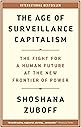
An exposé of the unprecedented form of power called “surveillance capitalism,” and the quest by powerful corporations to predict and control our behavior “Groundbreaking, magisterial, alarming.” – Financial Times The heady optimism of the Internet’s early days has turned dark. Surveillance capitalism has deepened inequality, sown societal chaos, and undermined democracy. The fight for a human future has never been more urgent. Shoshana Zuboff argues that we still have the power to decide what kind of world we want to live in: Will we allow surveillance capitalism to wrap us in its iron cage as it enriches the few and subjugates the many? Or will we demand the rights and laws that place this rogue power under the democratic rule of law? Only democracy can ensure that the vast new capabilities of the digital era are harnessed to the advancement of humanity. The Age of Surveillance Capitalism is a deeply original, exquisitely reasoned, and spell binding examination of our emerging information civilization and the life and death choices we face. Review: a giant of a book - The subject matter covered in this book was an interest of mine, so I bought this with great anticipation. When it arrived I realized this was an undertaking, the book is long, dense and deals with complicated issues. Within 100 pages I was pleased with my decision. By 200 I was mesmerized and totally taken in by this masterful work. The subject matter is simultaneously granular (like something as close to me as my hand) and beyond the scope of my comprehension (like a galaxy so far away no telescope can view it). But Dr. Zuboffs ability to take the reader down a pathway of insight and learning is masterful and a gift which I wish I possessed. Don't get me wrong this book is longgggg. But unlike what some reviewers have said about it being too long - I would take a different point of view. This topic is so important , so far reaching and of such great importance that it requires literary expansiveness to fully do justice to these points. The manner in which she weaves together seemingly unconnected events into a shockingly clear picture of just how manipulated we are by the companies controlling our online experience is masterful. Her understanding of the topic and the ability to provide the reader with a clear understanding of the manipulative nature of social media and big tech in general is evident. The conclusions one draws at the end are (IMHO) a chilling and sad indictment of where humanity has come and for what the future holds. She takes the reader on a journey of discovery and understanding. I truly enjoyed this book Review: A siren call - Pros: 1. This book is very informative and the information is supported by research data. 2. It is an URGENT communication to the public on the future of this country. 3. It exposes the eerie impact of digital technology specially on the younger generation. 4. It reveals the price we pay for the convenient online search vs the non-stopped tracking of our online footsteps for the purpose of economic gain in billions, with blatant disregard of their civic responsibility 5. It unveils the technocrats’ silent, behind-the scene molding of the public psyche toward an alternative psycho-socio-political-economic reality, a governing system towards techno-socialism. 6. It translates the digital technology lingo into understandable, digestible information for the general public. 7. It shows how the technocrats is about to materialize B.F. Skinners’ dream. Is this where we want to go? 8. It is a plea to the public of how we are losing our right to privacy, individualism, freedom, and the democratic process as technocrats generate big data from the IOTs in our homes/offices and feed the collected data from the IOTs into robots to generate an algorithmic, systematic solution to societal problems and dictations of how we should live and operate. The goal is to shape behavior to specific outcome to ensure economic gain. Con: Very redundant, perhaps the author is trying to drill into the readers’ psyche the seriousness of this matter. My 2-cents: What happens to civic responsibility? Are schools today putting enough emphasis on civic duties and responsibilities? Why do so many people no longer exercise freedom responsibly and respect boundary? Every social issue arises and is always in response to the zeitgeist of the period. Every system reaches a diminishing return eventually. Has democracy reached a diminishing return in this country? This country is currently being torn apart. We are, also, in the midst of digital revolution; many people are left out and more will be left out as automation takes over and the technocrats join the 0.1% wealthy and exert control on our psycho-socio-political-economic futures. What is our personal responsibility to the future of this country?

| Best Sellers Rank | #23,090 in Books ( See Top 100 in Books ) #1 in Free Enterprise & Capitalism #2 in Marketing & Consumer Behavior #2 in Privacy & Surveillance in Society |
| Customer Reviews | 4.5 out of 5 stars 4,091 Reviews |
S**S
a giant of a book
The subject matter covered in this book was an interest of mine, so I bought this with great anticipation. When it arrived I realized this was an undertaking, the book is long, dense and deals with complicated issues. Within 100 pages I was pleased with my decision. By 200 I was mesmerized and totally taken in by this masterful work. The subject matter is simultaneously granular (like something as close to me as my hand) and beyond the scope of my comprehension (like a galaxy so far away no telescope can view it). But Dr. Zuboffs ability to take the reader down a pathway of insight and learning is masterful and a gift which I wish I possessed. Don't get me wrong this book is longgggg. But unlike what some reviewers have said about it being too long - I would take a different point of view. This topic is so important , so far reaching and of such great importance that it requires literary expansiveness to fully do justice to these points. The manner in which she weaves together seemingly unconnected events into a shockingly clear picture of just how manipulated we are by the companies controlling our online experience is masterful. Her understanding of the topic and the ability to provide the reader with a clear understanding of the manipulative nature of social media and big tech in general is evident. The conclusions one draws at the end are (IMHO) a chilling and sad indictment of where humanity has come and for what the future holds. She takes the reader on a journey of discovery and understanding. I truly enjoyed this book
J**A
A siren call
Pros: 1. This book is very informative and the information is supported by research data. 2. It is an URGENT communication to the public on the future of this country. 3. It exposes the eerie impact of digital technology specially on the younger generation. 4. It reveals the price we pay for the convenient online search vs the non-stopped tracking of our online footsteps for the purpose of economic gain in billions, with blatant disregard of their civic responsibility 5. It unveils the technocrats’ silent, behind-the scene molding of the public psyche toward an alternative psycho-socio-political-economic reality, a governing system towards techno-socialism. 6. It translates the digital technology lingo into understandable, digestible information for the general public. 7. It shows how the technocrats is about to materialize B.F. Skinners’ dream. Is this where we want to go? 8. It is a plea to the public of how we are losing our right to privacy, individualism, freedom, and the democratic process as technocrats generate big data from the IOTs in our homes/offices and feed the collected data from the IOTs into robots to generate an algorithmic, systematic solution to societal problems and dictations of how we should live and operate. The goal is to shape behavior to specific outcome to ensure economic gain. Con: Very redundant, perhaps the author is trying to drill into the readers’ psyche the seriousness of this matter. My 2-cents: What happens to civic responsibility? Are schools today putting enough emphasis on civic duties and responsibilities? Why do so many people no longer exercise freedom responsibly and respect boundary? Every social issue arises and is always in response to the zeitgeist of the period. Every system reaches a diminishing return eventually. Has democracy reached a diminishing return in this country? This country is currently being torn apart. We are, also, in the midst of digital revolution; many people are left out and more will be left out as automation takes over and the technocrats join the 0.1% wealthy and exert control on our psycho-socio-political-economic futures. What is our personal responsibility to the future of this country?
D**Y
Stopping the Encroachment of Surveillance on all Aspects of our Life
This is a very important book which alerts us to the dangers of losing our privacy, independent decision-making and democracy in the impending age of Surveillance. The digital age promised to give us a world of personalized information, communication, shopping and entertainment at our finger-tips and we were enticed by the prospect of instant gratification. At the same time we were completely unaware that more and more private information about our habits, likes and dislikes was being mined from our internet searches and sold off to the highest bidder. Shoshana Zuboff traces this intriguing story of the step by step transformation of what was to be an age of personalized information into an age of surveillance. Apple's iTunes Store was opened in 2003 and quickly became the world's largest online music service, with over 25 billion downloads by 2013. Personalized digital music was here to stay. Google set out to make profits from its personalized Adwords and Adsense after its Search application proved immensely successful with its users but generated no revenue. While learning to improve predictions of user clicks and "likes", Google and later Facebook discovered a gold-mine in trading user's behavioral surplus, which turned both companies into "fortune-telling giants" "This was all based on accumulating more and more user data because" Google’s machine intelligence capabilities feed on behavioral surplus, and the more surplus they consume, the more accurate the prediction products that result" Serving its users was no longer Google's main priority but became a means to a far more lucrative end .Our lives became the raw materials for this new process of production. Shoshan Zuboff writes "Google would no longer mine behavioral data strictly to improve service for users but rather to read users’ minds for the purposes of matching ads to their interests, as those interests are deduced from the collateral traces of online behavior. With Google’s unique access to behavioral data, it would now be possible to know what a particular individual in a particular time and place was thinking, feeling, and doing." This "digital dispossession" took place in secret and paved the way to more ambitious goals which pried much deeper into the details of our offline lives. Larry Page, one of the co-founders of Google expressed it this way :" "People will generate enormous amounts of data. . . . Everything you’ve ever heard or seen or experienced will become searchable. Your whole life will be searchable.” With Google Maps and Street View privacy has been further reduced. After "cookies" to track our online browsing, the next step is pervasive emotion scanning and emotional analytics based on our "likes" , recordings of our voice and our facial expressions. This is not science fiction. At least one company, Emoshape.. produces a microchip which delivers “high performance machine emotion awareness” which.. can classify twelve emotions with up to 98 percent accuracy." In addition "Samsung acknowledges that the voice commands aimed at triggering the TV’s voice-recognition capabilities are sent to a third party". There are now toy dolls that can spy on us, robot floor cleaners that sell our floor plans to third parties and its getting more and more difficult to opt out because even if you can read and understand the complicated click-through agreements which manufacturers provide and opt out of the right to sell your information to third parties, you end up with degraded products with much reduced functionality. The technology of surveillance advances much faster than legislation and since 911 governments have been more desperate to catch terrorists than protect privacy. Cyberspace has become the new "wild west" a lawless frontier. The next two stages are even more frightening: "ubiquitous computing" and behavioral control. Ex Ceo of Google, Schmidt sees the internet disappearing in future because sensors and devices will be everywhere including wearables and the walls of every room so we will be permanently online. Behavioral control starts with little nudges to manipulate us and "fake news" that has already swayed our election results. The Pokemon game showed a way to nudge users to particular locations where businesses would pay for each visit .In future we will have individual insurance policies based on monitoring our driving with sensors, and then giving reduced premiums to careful drivers while switching off the engine of dangerous drivers .Maybe we will have fridges that automatically shut to prevent gluttony because we are overweight. There is also the Microsoft automatic factory which integrates machine and human behavior automatizing both. There is no doubt that Shoshana Zuboff is right about the need for action and legislation to preserve our freedom before it is too late. Unfortunately, having presented all the facts, she dwarfs the real problem with ideology by claiming that surveillance capitalism is the major problem, a vampire devised to exploit us and impoverish us by giving an unfair advantage to rogue capitalists who distort the classic market (where the future is unknown) by manipulating consumers and employing so few workers. She writes "Most startling is that GM employed more people during the height of the Great Depression than either Google or Facebook employs at their heights of market capitalization." It makes no sense to blame Google and Facebook who pay higher wages than other companies for contributing towards the increasing inequality of income in capitalist societies in the last 50 years. Automation is probably the main cause of depressing wage incomes and increasing income from capital. The surveillance economy is still a very small part of our economy and cannot be blamed for all the unrest of the last 50 years. She writes: "The surveillance capitalists reverse the normal sequence of theory and practice. Their practices move ahead at high velocity in the absence of an explicit and contestable theory. The only way to grasp the theory advanced in their applied utopistics is to reverse engineer their operations and scrutinize their meaning, as we have done throughout these chapters." In other words, she uses the very absence of an ideology or guiding theory in surveillance capitalism to justify inventing one, using the predictions of a few leading data scientists. Since Plato's concept of philosopher kings, there have always been some philosophers, writers and now scientists who preferred enlightened despotism to democracy. This doesn't entitle Shoshana Zuboff to marry Skinner's ideas of totalitarian rule by scientists (for the "greater good") to surveillance capitalism in general. Even worse, the few pages that this book devotes to the surveillance state and its foremost exemplary China are enough to show that real totalitarianism is very easy to spot. This brings me to my most important criticism of this book. We are in danger of living in a surveillance society and every crisis in this overcrowded world, like the corona crisis brings solutions which further encroach on our privacy (e.g a health passport) with more personal monitoring. There are too many reasons to use surveillance technology which are not connected to the profit motive. The Chinese are already living in a state where your every move is surveyed by camera and you are granted a social grade for your behavior. Adopting unsuitable friends can lower your social grade which will block you from buying a train ticket. At the end of the day, the problem is not an economic one of "surveillance capitalism" but how to avoid the encroachment of surveillance on all aspects of our life and preserve our rights to privacy and democracy.
H**K
A masterful description of our world.
The importance of this book cannot be overstated. The book shows that we are living in a bad, new, and dangerous world. The changes wrought by Google and Facebook have profoundly changed life in every imaginable way. The book is long, because the author is forced to describe the historical changes that democracy, capitalism, and society have gone through in order to put the significance of the current era into perspective. In comparison to the most significant changes that humanity has ever gone through -- for instance Fascism, Stalinism, democracy, capitalism -- what is going on now is more earth-shattering. The most helpful review of this book (with 328 votes so far) was from a person who read 100 pages of the book and found some of the language too flowery. That is a shame. I feel the opposite is true. The author had so much truly basic material to get through, that this is why the book is so long. Here is an example from page 377: "Forget the cliche that if it's free, "You are the product." You are not the product; you are the abandoned carcass. The "product" derives from the surplus that is ripped from your life. I found the book to be wall-to-wall truths about how the world has changed into something that is without precedent, dangerous and unrecognizable. Far from needing an editor, I found it to be a very tight description. I doubt anything could be edited out without omitting something important. This is probably the most significant and important book written this century. I bought it in audiobook, listened to it, and then bought the Kindle version so I could highlight it. John Locke described why a government is a good idea. I'm sure that was earth-shattering at the time. This is a book whose importance is on the same level. It describes why everything we have done in the past is irrelevant. It is as if you wake up on Planet Claire, and the trees are red.
W**E
Book of the Decade
This book tackles the debilitating effects of surveillance capitalism from almost every angle: political, personal, social, cultural, economic. The author’s declarations are an indignant line in the sand, drawn boldly and without apology, as she takes back what has been stolen from us from big tech while we played on our phones. It reframes the debate around data mining in terms of human rights and human agency, clearly defining what is at stake: the right to determine our own futures free of the one-way mirror of surveillance capitalism. This mirror distorts not only our reflections, but distorts *us* until we become the reflections themselves, our desires and thoughts unwittingly shaped by technology that is both invisible and inaccessible to us. Zuboff deftly incorporates a century of economics, philosophy, behaviorism, social psychology. She offers us a warning that we ignore at our own peril. Just as the maladies of the industrial revolution (global warming, the poisoning of the environment, cancer) went largely unseen in nature for decades, so do the effects of surveillance capitalism on human nature. What’s at risk this time, though, is nothing short of the future of the human mind. This is an opus. If you don’t give it your full attention, it can feel like too much - but that is a small quibble for what is clearly the result of decades of thought and analysis. The writing is dense but the author has the literary flair to keep it surprising readable given the subject matter. So settle in, turn off your phone, add get out a highlighter.
P**U
I was interested but dubious. Now I'm interested and hooked.
Having read a raving review and always being interested in the influence of the digital economy on our lives (I have kids) I bought this book as part of my relentless quest for sense in this crazy world. Honestly at first reading the jacket I thought Shoshana Zuboff was overplaying her hand. It just took her the half hour I needed to read the introduction to captivate me with her thesis. I am currently about a third through the book and so far on every topic she broached the opinion she proposes, however surprising, was carefully propped up. The introduction does a great job at laying out the general thesis and a rough idea of the argument, so I know what's coming at least in general terms if not in the details. The book does not cover many fascinating and controversial aspects of the digital economy such as its effect on kids' (and adults'!) learning abilities and social acumen, or the energy cost of this supposedly clean economy (more on that off topic below if you are interested). When it comes to describing in details the evolution of the GAFAM business model, on the other hand, it is absolutely stellar. (GAFAM: Google, Amazon, Facebook, Apple and Microsoft) If all you are interested in this review is this book, then please note my five stars and procure the book. It will be part of the few that I buy several of to give away to friends and influencers I know. Now, and this is indeed off topic but I can't help but share this information: I just read two months ago a report commissioned by the French government about the energetic and therefore environmental cost of the digital economy and it is depressing. We were supposed to have there a non-polluting economy but its energy consumption is far from negligible. Watching a youtube video in 1080p, for instance, when you factor all network, storage etc, amounts to about 1kW, i.e. the power of a big microwave oven or a vacuum cleaner. I don't know for your kids but left to their own device mine would spend hours a day doing just that. Considering that world-wide the grid electricity is still 80% carbon-based, the CO2 emissions related to the digital economy in 2018 corresponded to about half those of the world cars. Unlike cars, which grow a decreasing 4% a year and are transitioning to electrical, the digital economy grows an exponential 30% a year and is not considered an issue - this means that by 2025, all other things being equal, it will have overtaken all the world's cars as a source of CO2. Some things could be done, for instance some aspects of the digital economy consume a disproportionate amount of energy (e.g. blockchain and therefore cryptocurrencies) but solutions will only be possible once there is widespread understanding of the magnitude of the problem and political will behind solutions. Hence my taking two minutes of your time for my rant. Thanks for having read this far. Again, "The age of surveillance capitalism" is a must read for anyone interested in understanding our crazy world.
P**R
Pretty to read, but what's truly new?
I appreciate Zuboff's eloquence, and that she dares problematize capitalism (as a business school professor, no less), let alone her strenuous efforts to innovate social theory on the nature of contemporary capitalism. But I'm skeptical as to whether she has contributed much which hasn't been said before, in different parts and ways, from Marx, to the Frankfurt School, to Stuart Ewen and other critics of consumer capitalism, to the many authors currently sounding the same alarms about the perils of our still developing digital economy. Further, I think Zuboff is wrong about a number of her specific arguments, most notably those around the originality and "rogue" nature of "surveillance capitalism." For instance, a couple of quotes, then my critique: "Surveillance capitalism is not technology; it is a logic that imbues technology and commands it into action. Surveillance capitalism is a market form that is unimaginable outside the digital milieu, but it is not the same as the 'digital.'" (p.15, Kindle Edition) Also, this: "Surveillance capitalism employs many technologies, but it cannot be equated with any technology. Its operations may employ platforms, but these operations are not the same as platforms. It employs machine intelligence, but it cannot be reduced to those machines. It produces and relies on algorithms, but it is not the same as algorithms. Surveillance capitalism’s unique economic imperatives are the puppet masters that hide behind the curtain orienting the machines and summoning them to action." (p. 16, Kindle Edition) Thus, Zuboff strangely insists that what's unique about "surveillance capitalism" is not the technology, but its masters. Beyond the fact that these masters or internet execs make so much more money in the internet era, what's unique about them? I don't see how they're different from prior capitalists besides precisely the new tech (internet, cell phones, social media and probably most portentously, and still developing...the internet of things) at their disposal which makes so much more profit, knowledge and control possible. The tech -- not the "logic" or "puppet masters" -- is what's new! Further, goods, services and consumers are still vital to surveillance capitalists, contrary to Zuboff's claims. The Big Five (Google, Amazon, Facebook, Apple, Microsoft) all make significant profits from hawking goods and/or services. Facebook is free but it's a consumer service essential to their ability to collect and sell consumer data. And, the surveillance and control of individual consumers -- not the companies that buy the info -- are at the heart of the profit of and problems with surveillance capitalism. I could go on. I don't question the facts that Zuboff is pointing out, which are indeed alarming, though plenty of others are sounding those alarms (e.g., I hear such facts discussed frequently on NPR). I do question the novelty and accuracy of Zuboff's arguments -- the specific claims she makes as she tries to pulls those facts together into an original theory of surveillance capitalism.
W**R
This book is a game-changer
I admit, I've always been skeptical of galloping hi-tech and all of its self-serving, pie-in-the-sky promises. But I never really understood why I felt this way. Until this book came along. I liken this book to a transcript of a criminal prosecution. The author presents her opening arguments in the introduction. Digital technology coupled with data science evolved and expanded in depth and scope which enabled 'Big Other' -- all the devices, platforms and apps labeled 'smart'. Big Other, while not intrinsically evil, was exploited by various capitalists for its money-making potential. Many early products were customer friendly, practical and worthy. But that was not enough. In pursuit of greater profits, Big Other was used to create and capture surplus data -- the more, the better -- that could be rendered into behavioral prediction products. At this point, the 'customer' became a resource. This was all done without our knowledge or consent. Surveillance capitalist (and State) interests, facing resistance, have gone to the 'dark side'. They observe from a distance, rely on secrecy, experiment at will, and are willing to pay hefty fines for malfeasance. They press on; predicting human behavior is a lot easier if you can influence or modify human behavior. And why stop there; there's no need for prediction once behavioral control is attained. The author presents all the evidence to support her claims. Just like a dogged prosecutor, she leaves nothing out, no stone unturned. For this reason the book is long, and at times repetitive. But along the way she connects all the dots, leaving the reader little to doubt, let alone challenge. In her final arguments, the author lays out the implications for privacy, personal autonomy, free will, democracy, freedom, and basic human existence. The implications are chilling to say the least. Admittedly, remedies are few. But resistance may not be futile. If you care about the future and are tired of being used, read this book.
V**R
Gift
Product was a present but they were very happy with the book.
I**Y
This is the most important book I have read this entire decade.
None have come close to the significance of this book. Zuboff is a brilliant and gifted writer. She explains that surveillance capitalism is not satisfied with just commoditizing our experiences; it also seeks to control and direct our behaviour through predictive algorithms. This unprecedented threat has shifted from a totalitarian “Big Brother” state to instrumentation architecture: a “Big Other” operating in the interests of surveillance capitalism. She suggests that surveillance capitalism is more insidious than market capitalism, where the means of production are subordinated to an increasingly complex and widespread means of behavioural modification. Vast wealth and power are accumulated from our behavioural surplus, which is done at the expense of democracy, freedom, and humanity. This book had quite a lot of overlap with some of the other books and articles I read about algorithms, capitalism, and datafication, but it presented them in a much more comprehensive, complete, and frankly anxiety-inducing way.
流**本
この種の作品は翻訳されないね...
ネット社会の裏面に大胆かつ哲学的にアプローチするこの種の作品は日本で話題になることはまれだ。数年前に読んだEvgeny Morozofの作品もその重厚な内容にもかかわらず、日本ではとうとう翻訳されることはなかった。この作品はどうなのだろう。Financial Times のBusiness Book of the year 2019にショートリストされているので、もしかしたら翻訳されるかもしれない。でも日本では,その独特の風土の下で, 「軽い」そして奇妙な技術と進歩信仰がメディアのど真ん中で大手を振っているので、どうもこの種の作品は受けが悪いのだろう。 さて、この作品だが、全編で500ページ強、注は150ページ以上だ。レヴューでは「冗長だ、半分以下に圧縮できる」などの技術的な批判をいくつか目にしたが、怒りと憂慮がペンを動かした作品というのは大なり小なり、繰り返しが多くなり、長くなってしまうものだ。これは読み手の好悪にも左右される。今年の初めにhardboundで出版されたようで、読もうか、どうか、だいぶ迷っていたのだが、John GrayがNew Statesmanにレヴューを書いたのを見て、paperbackになるのを待って読むことと相成った。というわけで、英語が読める方は、このJohn grayのレヴューを読んでくれた方が手っ取り早いのだが......... 著者が対象とするのは、Surveillance Capitalism(SI)の担い手でもあるGoogle, Facebook, MicrosoftなどのIT企業だ。このSurveillance Capitalismという言葉、どう訳したらいいのだろう、「監視資本主義」とでもいうのだろうか、ちょっとニュアンスが中国共産党を想像させる。むしろ「観察資本主義」とでも言ったほうがいいのかもしれない。その定義は本書の冒頭に掲げられている。「中身検索」の最初で見れるので見ていただきたい。 つまるところは、「人間の行動や経験を抽出、予測、販売という隠された商業活動のためにタダで資源として利用することを核心とする新しい経済秩序」と定義されている。こうまとめてしまうと、何となく「ビッグデータを操る新種のビジネスモデル」という日経新聞流の脳天気な印象を与えてしまうのだが、この秩序形成の背後には「人間性の改変」をも狙いとする根本的な思想的な挑戦が潜んでいるというのが、著者の主張なのだ。 本書では既存の民主主義に与えるこのSIの挑戦が多面的な側面から解析されている。もはやSIの活動は、新しいビジネスモデルという通俗的な理解にとどまるものではなく、むしろそれが突きつける哲学的並びに思想的な脅威を含めた全体として理解すべき「魔物」ということになってくる。そうこの作品は、一種の「共産党宣言」の冒頭を彷彿とさせる作品なのだ。そしてその解明には社会学、法哲学、社会心理学、政治学や人類学を含む様々な議論が援用されていく。この議論の幅は西欧の思想に内在する基本的な考え方の「型」についての相当な予備知識が読み手に要求するのだ。 本書の構成は三つに分けられている。第一部はいわゆるオンラインというvirtualな世界を対象としている。そこでは、behavioral surplusという概念が提示されている。マルクスの剰余価値説にヒントを受けた用語だろう。ユーザーのネットへのアクセスを通じて蓄積されたデータはshadow textとして蓄積され、膨大な蓄積とalgorithmの下で、宣伝・広告のデータ、つまり「予測商品」として使われるというわけだ。userのアクセスは其の同意を得ることなく、userのprivacyを無視し、当初は想定もしていなかった使われ方をされ、広告収入として膨大な利益をSIにもたらしているというわけだ。 第二部は、当初はネットのみを舞台とするvirtualな空間でのSIの活動が、その量だけでなく質的に進化していくプロセスが取り扱われる。そうIOT (Internet of things)だ。もはやVirtualな空間のみにその活動は限定されることなく、人間の現実の生活空間つまりreality businessの世界にまでその触手が伸びてくるというわけだ。車、テレビ、健康アプリ、レストランの選択や消費活動、家庭セキュリティサービズなど様々な人間の生活に手をのばし、そこでは人間の行動だけでなく表情、感情の揺らめきまでもが、ある種のモデルの下でデータとして処理されるというわけだ。となると人間という存在はその全体がSIによって把握されることにより、その網の目が拡大・深化することにより、そのデータのcertaintyが高まるというわけだ。ここまで来ると、人間の行動は予測されるというよりは、むしろ行動を改変させることによりモデルがもたらす予測に合致させるというグロテスクな腐臭を漂わせる。そしてそこでは、個人の行動はネットの広告や宣伝の精緻化により、絶え間なく商品が売り込まれるというわけだ。ここまで来ると人間という存在の核ともいうべき自由意志や未来の持つ不確定性そして聖地ともいうべきprivacyというものは否定されていくというわけだ。 第三部は、このようなSIのビジネスモデルに内在している世界観が解剖されていくことになる。著者の立ち位置は西欧の啓蒙主義の古典版(リベラル版)ともいうべき個人と人間性の尊重という立場だ。この古典的な考え方のよって立つ基盤がSIによって徹底的に破壊され、そこに新しく出現する社会は、「radical indifference」と「Instrumentarian Power」という考え方に規定される、dystopiaというわけだ。そこでは、人間のすべての行動はその価値をはぎ取られデータ化されることにより、人間存在の法則なるものがcomputationとalogorithmの下で発見され、新しいpriestともいうべきdata scientistによって、そしてその一握りのdata scientistのために、集産主義的な計画社会ともいうべきものが管理されていくのだ。この考え方の先駆者としてskinnerとその現代版ともいうべきPentlandの考え方が詳しく紹介される。 そう、ネットという無法地帯での自由を追求した果てに待ち受けていたのは、共産主義社会も真っ青の「計画社会」だっとというparadoxなのだ。そう共産主義とアメリカのSIとの間の距離は思ったほど離れてはいないのだ。John Grayが指摘する通り、両者ともに啓蒙主義の変種(非リベラル版)である実証主義(positivism)のたどり着く先だったというわけだ。技術は前の時代までの蓄積をもとに永遠に進歩していく、しかし人間や社会は決して単線的に進歩していくことはない。中国共産党がそのいい例だ。さてここからどうなるのか。核兵器と同じく、一度、発明(invent)されたものはもはや捨てる(disinvent)ことは不可能だ。飼い馴らしていくしかないのだが、その観点から展開される著者の提言は、これまでの分析とは打って変わって、抑えられたものだ。 ここまで、だいぶ大急ぎで紹介してきた本作品だが、本書の射程や論点は非常に幅広いものであり、深い思索を促す作品である。本書で新しく提示された用語は、あまりわかりやすく定義されていないものも多く、西欧のリベラル派の独特の思考回路を如実に反映したものであり、どうもその種の伝統にはいい意味でも悪い意味でもなじみのない日本人には、くどいと思われる部分も散見される。上記に紹介した以外にも、様々な読み込みや批判が可能であり、ぜひ一読していただきたい。
T**G
We know that big others were no saints
For sure we know that big others are no saints and the examples in the book often give a deja vu feeling. Yet we keep on trudging on without thinking. This book shifts your already information overloaded brain into gear to the point of realization and the realization hits hard and is very uncomfortable to the reader. Privacy is about control of your data. We are on the verge to lose that control forever. Time to read this book and act.
A**A
Very interesting read
This book opens a dimension into the readers thought and makes them rethink the path of our collective journey. It emphasizes on our ability to distinguish things that are changing (countering the normalization of the trend) and the risks these changes pose to not just our society, but even to our very personal spaces. It also highlights on several occasions the erosion of a sanctuary (our home) in cyber spaces, invasion and erosion of our personal identity by constant surveillance and nudging, threat to unity and many other issues that are clearly visible in today’s society. This is to be cherished and read multiple times, for it to be understood fully a single read isn’t enough. I really enjoyed the perspective of the author and am very informed by her. After a long time, this book will be looked upon as a very significant one. Whether it serves as an ignored warning or something that turns the tide, only future can tell. The best one can do is to spread the concepts of this book.
Trustpilot
1 month ago
3 days ago