


🎧 Elevate Your Audio Game!
The FiiO Headphone Amps Portable DAC is a high-performance audio device featuring a powerful 200 mW output, precision ALPS volume control, and versatile gain settings, making it the perfect companion for audiophiles seeking superior sound quality on the go.


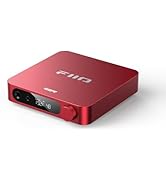


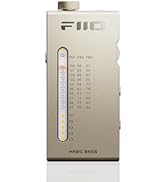


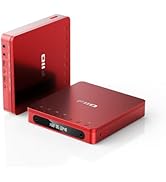

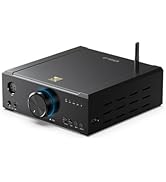


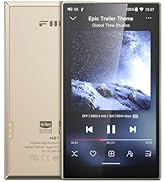



| ASIN | B00LP3AMC2 |
| Best Sellers Rank | #246,676 in Electronics ( See Top 100 in Electronics ) #335 in Headphone Amps |
| Brand | FiiO |
| Brand Name | FiiO |
| Compatible Devices | All Headphones |
| Customer Reviews | 4.4 out of 5 stars 5,269 Reviews |
| Global Trade Identification Number | 06953175711070 |
| Included Components | NO |
| Interface | Coaxial, USB |
| Interface Type | Coaxial, USB |
| Item Type Name | headphone amps |
| Item Weight | 77 Grams |
| Manufacturer | FiiO |
| Material Type | Metal |
| Maximum Supply Voltage | 7.39 Volts (AC) |
| Model | E10K |
| Mounting Type | Portable |
| Number of Channels | 2 |
| Number of Pins | 4 |
| Part Number | E10K |
| Smart Home Compatibility | Not Smart Home Compatible |
| UPC | 701980441950 |
| Unit Count | 1.0 Count |
| Warranty Description | 2 years |
T**.
You don't need to spend a lot for great sound
This is a fine dac/amp. Not the greatest by any means, but for the price it gets the job done. You don't need anything expensive to get great sound. By default this dac/amp has a nice clean sound, and it gets loud enough on it's own (though the volume on the PC has an impact on this). But I'll share a little secret that some of you probably do not know about. I'll begin with saying that some people probably get bummed out if they get a dac/amp and they don't 100% enjoy it's overall sound signature, or disappointed with it's bass boost, or other EQ's that dac/amp's might come with. Now I will share with you on how to fix all of this. Simply put, get foobar2000 and Equalizer APO (both are free). Foobar2000 has it's own built in equalizer, and unlike some equalizers that are on your PC right now, it can communicate with your dac/amp through output settings. Just be sure to set up layout mode and replace one of the UI's as equalizer (it will be on the bottom of the UI list). Equalizer APO will be the real treat though, it's sound is a lot more clean when using it's equalizer, but I tend to play with both of the above mentioned software since they both have a certain something to offer. This is the for sure way to get the sound you're looking for out of your dac/amp without having to spend additional money, or having to upgrade your dac/amp. The reason why I say that Equalizer APO in particular has a cleaner sound when using it's equalizer, is because even though it's managed in Windows, it installs directly to your dac/amp and optionally any other audio source you may have on your PC (though you can only install to one source at a time without restarting your PC). It has a built-in (software) preamp that can increase your volume as well, with a total of 3 methods to increase your overall volume, which are 1.) Your PC's volume, since it has an impact on this particular dac/amp's overall volume. 2.) The physical volume knob on the dac/amp itself (4 methods if you want to include the L/H Gain switch). 3.) And of course, the preamp on Equalizer APO (that can set the dB extremely high). With that said, I must warn you that with Equalizer APO you can set not only the preamp dB rather high, but any of the 31 frequencies it has listed as well, which does not seem to have a dB limit. So please, keep the dB under 15, or 20 at the most, or you could destroy your headphones and/or dac/amp by volume overload. This is just merely to show you how you can get the most out of your sound without spending a lot, but it does not come with drawbacks. So please, use Equalizer APO with extreme caution. Foobar at least has a 20 dB limiter on it's equalizer, but doesn't sound as clean (especially when comparing to APO installed on a dedicated dac/amp), and doesn't have as many frequencies to choose from (18 vs 31). Also, a couple more things to add - APO will change the sound of EVERYTHING, not just music, or what's playing on foobar, but everything running in Windows, period (so keep that in mind). It can act a little weird if you play around with it too much and will stop adding effects or volume changes, so be sure when you set what you like that you go to file on the top left of the APO software and select 'Save as' so you can make a settings backup file, but you must know that any backup file will not be 'played' because APO is a little stubborn with file names apparently. So what I do, is I make my settings, make and save a backup file with whatever name I want (especially if you want multiple EQ presets/settings). Then save it again, except this time save it over the default config file and overwrite it. This is the only way to get it to work, especially when it doesn't want to play nice. Once everything is up and running you don't have anything to worry, it only does this if you're messing around with the frequencies and preamp for a while and seems to just bog up the software, but other than that it's terrific. I know this seems to be more of a review on software rather than the dac/amp I bought that is hardware, but I feel that more people should know about this sort of thing. You don't have to spend a lot to get a lot. But other than that, the FiiO E10K is a fine dac/amp, especially the price you pay for it and it can tolerate a lot with what I throw at it. It does get a little warm when I push it to the max (I do mean PUSH), but stays cool with it's all metal construction. I try not to push it like that often and only for a short period of testing, because well, any hardware has it's limits and you don't want to do that really. It's small and compact which makes it very portable, travel friendly, feature rich and most importantly, well built. All and all, this is a very nice dac/amp for what you pay for. Sure it's not the greatest, and there is definitely better, but for more cash. Your decision :) At least this way I have shown you a way to change the overall sound signature of pretty much ANY external dac/amp and not having to settle with it's own EQ's, or it's own sound signature. I have given you a way to change the sound how you like it, and that an external dac/amp will provide superior cleaner sound when using this method over onboard from your motherboard due to electrical interference. Thank you for baring with me. I hope this helps a lot of people. PS : For those running Windows 10, please do not use the FiiO ASIO drivers from their website, it doesn't really place nice with this particular OS. It works but you might BSOD on occasion, especially when you suddenly unplug/stop the device while it's in use i.e. listening to music etc. Just simply use whatever driver Windows automatically installs for it and it will run fine. If you have already downloaded the ASIO driver from FiiO, please delete the driver zip/rar file package. Reason being is because when Windows automatically installs a driver, it searches locally on your PC, not just online. It will automatically assume that the FiiO driver is the best driver for it, naturally. On Windows 10, this is not the case.
J**L
Great starter amp for computer AND phone
As a college student, getting into headphones is a pretty expensive endeavor. That being said, from forum threads, I decided that this would be one of the best amps I could get to start out. I am definitely pleased! This is an upgrade from my previous amp, the Syba SD-DAC63093. I was greatly pleased with that, if you're really looking for a budget amp. I currently use this amp to drive my Sennheiser Momentum 2.0 headphones and Audio Technica AUD ATHWS55BK and the majority of music I listen to is EDM. I never need to past 4 on the dial on low gain so it definitely has the power for these headphones. I definitely notice the increase in sound quality from the DAC compared to my previous amp and I haven't had any distortion issues in any of the ranges. The bass has a very composed (or reserved) and tight feel to it without turning on the bass boost. After turning it on, the music sounds a little warmer and colorful without muddling anything so the amount of boost it gives is right in the sweet spot, in my opinion. I read a lot of people saying that it's not a good portable amp but I haven't had any issues with that. I currently have a Galaxy S7 Edge with a pretty old battery (lasts around 4-5 hours with heavy use and a day if I'm lucky with little use). Maybe it's because I don't use the high gain function but I haven't noticed this amp sucking up large amounts of power from my phone when I'm on the go; it's been very efficient for me. If that's deterring anyone from getting this amp, I would encourage you to go for it unless you have the money for the fiio A5 which was designed with portability in mind. The only complaint I have is that the micro USB end of the power cable isn't very secure when plugged into the amp (it doesn't click in like it should) so when I use it with my computer, bumping into the amp can loosen it enough for the music to cut off instantly (cable is still in the port, it just isn't making contact). It's possible that I just got a bad cable with mine so don't buy a replacement until testing it out first! Since that's only an issue when I use it with my computer, I don't see it as a major inconvenience so this still gets 5 stars from me! TL;DR Great sound and build quality for a low end amp. Very efficient so it should work with your phones, considering it works with mine! Only complaint is that the stock cable doesn't have a snug fit in the amp so it can cut off music if you bump into the amp too hard but placement can easily remedy this.
E**X
I'm glad to find no discernible lag added to sound output ...
Pleasantly surprised by this USB DAC/amp combo. I purchased it to drive a pair of Sennheiser HD555 headphones for music on my PC, which don't need a whole lot of amplification at 50 ohms, but come to life given ample power (and sound flat otherwise.) My goal was to get clean sound with minimal to no latency, and while the words "USB sound card of sorts" crossed my mind a few times, I'm glad to find no discernible lag added to sound output from this device. The sound is also very clean and well driven for these particular headphones, with plenty of room to grow. Using a system volume of ~99% and the amp on "low gain" setting, comfortably loud listening is obtained at "4" on the potentiometer (out of 8, 1 o'clock) but your results may vary based on the power needs of your headphones. Even when "maxing it out" (high gain, max volume) there is no noise transmitted through the circuitry, which is nice to (not) hear. This was with no playback, mind you! Works just fine plugging in and using default OS drivers in both Windows 7 x64 and OS X 10.4 El Capitan. No fuss in either case, and recognized as "E10K." Construction looks good, and has a nice solid metal feel to it. Contacts are all gold, and outside of the included flimsy micro USB cable, it exudes quality craftsmanship. Volume knob feels nice and has a suitable resistance to it. Gain and bass boost switches have a nice, solid click to them. Cannot comment on the alternate outputs (coaxial, auxiliary line out) because I have not used them, but do know that these are passthroughs that are not amplified -- only the front-facing headphone port is. Comes packaged with 6 small plastic feet that can be applied to the device wherever you wish. It is also small and light enough to be mounted just about anywhere (e.g. over/under a desk.) No real complaints to speak of; I'm not a fan of the bass boost function, but it's just icing on the cake to me. Be aware that this is not a stand-alone DAC/amp, and essentially acts as an external USB sound card. I've read of it working on rooted Android devices that can deliver enough power via their battery, but this is an edge case, and I otherwise wouldn't recommend it to someone looking to use it outside of a PC. Edited: Sennheiser HD555 are 50 ohm, not 32 ohm. Update 01/09/17: Still using and loving this USB DAC/amp. I've since delved a little deeper into the rabbit hole of headphones and bought a "few" new pairs, all of which are powered quite well by this product. All of the following headphones worked great: AKG K702 and K712/K7XX, Audio-Technica ATH-M40x and ATH-M50x, Beyerdynamic DT880 Pro (80 ohm version,) Fostex T50RP Mk. III, and Sennheiser HD600. The latter two pairs seem to be the "limit" of what this DAC/amp can successfully power. With the Fostex, I need to use high gain with the knob at about 75% for comfortable listening, and 100% for loud-and-slightly-uncomfortable action. I wouldn't hesitate to recommend this DAC/amp to anyone, unless I knew they were pairing it with absolute top shelf monsters of headphones that cost (way) more than thrice the price of the E10K.
P**.
A bit disappointed, but it's $75 and it performs well for the price
It's a good product. Works as advertised and extremely easy to use. However I'm slightly disappointed with the audio performance. I spent good amount of time auditioning various devices driving my HD580. (I used to be able to hear 19-20KHz but now I think i'm at around 18-19KHz). iphone6 -> HD580 ------------------------ sounds flat and underpowered as expected. macbook pro retina 15" late 2013 -> HD580 ---------------------------------------------------------- surprisingly it sounds pretty good. Clarity at the high end is very good. Bass isn't super impressive as expected. I can crank up the volume until my ears can't handle, without clipping or distortion. When I play complex sounds each instrument is clear which makes stereo separation sound good. Maybe macbook pro 15" is quite capable? macbook pro retina 15" late 2013 USB -> FiiO E10k -> HD580 (high gain mode) ---------------------------------------------------------------------------------------------------------- Low end probably beats the 3.5mm jack on the mbp. However mbp 3.5mm jack wins in clarity. macbook pro retina 15" late 2013 -> headphone jack -> CMOY -> HD580 ------------------------------------------------------------------------------------------------- Low and mid end pretty strong, but lacks the clarity. Way better than iPhone but not as good as FiiO E11K Yamaha S90 synthesizer/keyboard -> HD580 ------------------------------------------------------------ Clarity is amazing from low end to high end. Bass is strong too. I've been trying to chase this sound for my desktop. Disclaimer: not exactly fair because I'm not comparing the exact same music source. Conclusion --------------- I'm disappointed that this isn't a clear winner compared to the 3.5mm jack from macbook pro. In fact, I might even prefer the macbook pro's builtin headphone dac/amp. Perhaps time to upgrade to something more fancy.
B**N
Great little Headphone Amp
The FiiO Headphone Amps Portable DAC E10K-TC is a great choice for anyone looking to improve the sound quality of their headphones. It is small and portable, making it easy to take with me. It also has a number of features that make it a great value for the price. One of the best things about the E10K-TC is its sound quality. It uses the flagship XMOS XUF208 for better USB decoding, and it supports PCM up to 32 bit/384kHz sampling rates. This means that I can enjoy my music in the highest possible quality. The E10K-TC also has a number of other features that make it a great value. It has two gain levels, so I can adjust the output to match my headphones. It also has a bass boost switch, which adds some extra oomph to my music. Overall, the FiiO Headphone Amps Portable DAC E10K-TC is a great choice for anyone looking to improve the sound quality of their headphones. It is small and portable, has great sound quality, and a number of other features that make it a great value for the price. Here are some of the pros and cons of the FiiO Headphone Amps Portable DAC E10K-TC: Pros: Small and portable Great sound quality Supports PCM up to 32 bit/384kHz sampling rates Two gain levels Bass boost switch Affordable
L**E
Great all around, good for linux!
Reasoning: The audio port on the back of my motherboard had died, so I was in need of a good solution to my problem. The issue was that I was on linux, an operating system that has a particular issue when it comes to DACs. Packaging: Its a bit simple. You get the DAC, Instructions, and the rather ugly blue microusb cable. There was no packing materials in the product box, so there is a high likelihood that the product could be damaged if delivered incorrectly. Though, I didn't have this issue. Construction: The dam thing is very weighty. Its made out of aluminum for the most part, including the volume dial. nothing feels like it would break. all of the buttons have a satisfying click and have tight tolerances along with a gold plated audio jack. The volume dial is sturdy and doesn't flex. the bass switch has a satisfying click to it. the micro usb port is standard, and doesn't have the best connection to the unit. But that's a problem with micro usb as a standard rather than the device itself. All around, it looks and feels excellent. I will admit that the product does look bigger on the marketing rather than in person. this thing can fit in the palm of my hand! Features: The unit has a 3.5mm audio jack, bass switch, and volume knob on the front. the back only has a usb input. Its powered only by the usb interface. The bass switch is only an on/off button with no adjustment. There is a blue indicator light that will turn on whenever the device is in use. Its rather simplistic, but works well. Audio Quality: I'm no audiophile, I just want my stuff to work. the quality won't blow anyone away. I would say that its probably better than what was on my motherboard, though I really can't say for certain. what I do notice is that there is a lot more detail in what I'm listening to. I can hear footsteps better and with more clarity. the bass boost option just makes things louder, but its a welcome improvement. Though, since this DAC does not have its own power supply, its subject to interference from other devices on your computer. Compatibility: I've tested this device on windows 10 and fedora 34. Both operating systems detect the audio device and default to it when there is no other audio device detected. For fedora specifically, the DAC works 99% of the time. I can switch to it using an audio output extension whenever I need to. Audio is good, and the device will show up even after I would reboot the device. However, updates may interfere with the device. if it didn't show up, I would just unplug and replug the DAC. If that didn't work, then I would just reboot. This did not happen often, so just keep that in mind. I cannot say whether other Linux Distros would work, but it does seem like they would based upon my understanding. Conclusion: A great device that is built well, has simple features, and just works. I would highly recommend this device to anyone with broken motherboard audio who are looking for an upgrade. Also to linux users who need an external DAC for their setup.
D**E
Great audio quality, best for this price for games music, and movies!
Just got the E10K after purchasing a new pair of headphones (Fidelio X2) and went with this over other choices because of the sound quality and Bass Boost as I primarily use this on my gaming PC. The audio separation and quality is great! Coming from my Sound Blaster Z soundcard I immediately could hear a difference in music and games, picking out details I hadn't heard before and especially with the Bass the E10K can dish out is unique. Eventually I will be picking up the Schiit v2 Amp and DAC combo just for listening to music but for gaming and movies I think its hard to beat the E10K in this price range. For Music this is still a great choice. I found myself keeping the bass boost on always because I am usually listening to music while playing games, but even when just listening to a movie or music the E10K sounds a little 'sterile' without the bass boost. Some may like it as it is very neutral but for me personally there just isnt enough bass without the boost option on. For gaming I think this is the Amp/Dac to go with unless you want to spend at least double the cost of the E10K. Bass Boost is amazing for games and the audio separation allows for great positioning and surround sound supplied by the game audio. This relies on your headphones too but this DAC is definitely capable of delivering convincing surround sound and with the booming bass for gunshots and explosions it really makes a difference in the enjoyment and immersion of my games. YOU DO NOT NEED A 'SURROUND SOUND' headset or audio card!!! The PC I built came with a sound blaster z sound card with the motherboard I bought as part of a deal at the store so until the E10K I had been using that exclusively with my HD 598s. It was decent and using the 'surround sound' software was nice and until I did more research I thought that you needed software like that to have surround sound at all. But with ANY decent DAC and headphones that have good audio separation and sound stage you will get surround sound in games because the game audio software automatically provides it to you. Switching between the sound blaster z card with 'surround sound' at 100% and the E10K I prefer the E10K audio quality and it actually offers much better positional audio. Plus you don't want surround sound being faked on music as it changes the sound profile and music is meant to be left and right audio. For movies so far I have not been able to tell a difference and I think it is the same as games where if the movie has good positional audio you will get surround sound without having software interface besides good separation. I wish I had bought this sooner! The audio quality difference over any dedicated sound card will be noticeable and you still get all the benefits of surround sound for gaming and movies when the E10K is paired with a good pair of headphones. This is actually cheaper than most sound cards that are marketed as gaming oriented and is easier to use as it just plugs into a USB.
B**K
Meh.
Don't know what you have until you try something else. Have a gigabyte ga-970a-ud3 motherboard with Realtek 889 for the audio along with Grado SR80e headphones that I recently purchased. So the benchmark I am measuring against is on the onboard 889 and what appears to be a pair of relatively modest headphones. Music source is music I ripped using FLAC on a computer running ubuntu 14.04. I built the computer using the best components I could buy. I have a quality power supply driving an 8 core AMD processor with 16G of ram. Storage is two Samsung 128G evo SSD and a 500G 7200rpm drive for storage. It really is a nice machine overall. I have a 4T NAS for storage. The onboard audio is fine. Sounds great in fact. Very clear, no noise, and nothing weird going on. Music is mostly jazz and classical. But I was thinking 'better' sound is available using an off-board DAC/Amp. Hence the Fii0 E10K. Not too expensive, but something nice. The FiiO is plug and play on ubuntu, however the device will initially show as 'Analog Output, DigiHug USB Audio' in sound settings. DigiHug is not a typo. So the DAC isn't being used, just the amp. The audio sounds no different to me at all when compared to the onboard 889. At all. In order to get digital out to the FiiO I had to reboot the computer in order for it to see 'Digital Output (S/PDIF), Digihub USB Audio' in sound settings. At this point I am now using the FiiO DAC and Amp and the only obvious difference is the lack of volume compared to the analog output. There is a high/low gain switch on the FiiO that needs to be set to high to get any appreciable volume. I have the volume on the computer turned up all the way as well as the volume on the FiiO turned up all of the way to get get a decent listening volume. When I switch to the analog output of the FiiO I need to turn the gain down by more than half on the computer. Aside from that, I simply cannot tell the difference in sound quality. I am somewhat surprised at this since everything I have read on-line seems to favor external DAC/Amp over anything that is on-board. On a side note there is a on/off bass switch on the front of the unit. Currently have it off. When on it tries to boost the low end a bit but to me it mostly seems to muddy the sound. Maybe it is the Grado's? Sounds better off to me. Seriously considering returning the FiiO as there seems to be absolutely no improvement over what I get out of the motherboard. Will do some research this weekend to see if there is something I am doing wrong, was really expecting more though.
T**E
Brilliant purchase for music lovers.
This is my first DAC I've owned. I thought I loved music before, but now I've heard it through one of these. Ever since a young age I've always had a huge obsession with music and now, at age 20, I'm no different. Aged 13, when I first got a Sony Walkman MP3 player for my birthday, I'd always have earphones in which got me in a lot of trouble in school. I never really paid interest into the mainstream music - my interest has always been in underground UK music but I have an appreciation for all types and genres. I've previously invested in good headphones and earphones which have usually been focused on bass which is a huge feature of UK music styles. I generally look for high quality music copies, using a spectrum analyser so make sure it's as good as Windows claims. What I never stopped to think about was how the audio was being processed. I assumed it would all come out of the faithful 3.5mm jacks all the same but I've realised how wrong I was. It started when I chose electronics for my A levels and we covered amplifiers. My teacher told me how different configurations can result in different qualities, noise levels etc. I did my research into this and discovered standalone DACs which people were preaching great things about. I did a little looking around reviews and forums and realised the consensus was that this is a cheap but high quality product and I agree totally. The packaging immediately gave me high hopes as you could tell effort had been made with it. I continued into the box to find a surprisingly weighty product which screamed high quality. It came with a USB cable and rubber feet to prevent slipping. I immediately fired up my laptop and plugged it in. I was happy to find out it was plug-and-play - no software was forced upon me at all. I put my Sony MDR-XB500's in, opened a high quality music piece and was blown away. Wow. I've never heard clarity like it with such rich bass as well. I heard subtleties in the songs that I hadn't heard for the years I'd been listening to them. I couldn't stop listening so I cycled through a whole variety of tracks and continued to be amazed at each one I heard. I then switched to another set of my headphones (I currently own my Sony MDR-XB500s, JVC HAFX1X IEMs, Plantronics GameCom 388 and Turtle Beach x32s for use with my Xbox). I listened to a whole range of music ranging from Ludovico Einaudi's pieces in FLAC down to early dubstep songs - I noticed a huge improvement with every single one while using this product. I've actually resorted to streaming my Xbox through my PC on maximum quality and using the Windows Xbox app for chat, just to hear the vastly improved sound during gaming. Directional sounds seem so much clearer which applies to games and music. I found that bass now wasn't drowning out the other sounds in the song, even with the bass boost enabled. It's completely changed my view on music and I loath the day I have to leave my DAC at my university accommodation when travelling around. If you've only ever heard music from the built in audio of your phone or laptop, or have never listened through high quality equipment, I whole-heartedly recommend this product to you.
A**R
Preis-Leistungs-König
Da mein Onboardsound des Computer die unerträglichen Störgeäusche sehr ausgeprägt weitergab, brauchte ich eine USB-Lösung oder eine dedizierte Soundkarte. Ich entschied mich gegen die Soundkarte aufgrund der Ausgangsimpedanz, die bei diesen zu hoch für meine InEar-Kopfhörer ist. Nach langem Suchen entschied ich mich für diesen D/A-Wandler mit integriertem Kopfhörerverstärker und einer Impedanz von etwa 1 Ohm, da dieser egal wo immer gut bewertet wird. Wirklich erstaunlich ist die Größe des Geräts! Es ist wirklich winzig, aber für mich umso besser, da es so gut wie kein Platz am Schreibtisch wegnimmt. Wichtiger ist aber, was es kann: Ich habe ehrlich gesagt keinerlei klangliche Verbesserung erwartet, da der Onboard-Chip sehr aktuell und gut ist. Der FiiO sollte lediglich den Onboardsound ersetzen und die Störgeräusche der Schaltkreise umgehen, welche gerade wenn die Grafikkarte am arbeiten ist unerträglich laut werden. ABER: Der Sound verbesserte sich erheblich, das hätte ich wirklich nicht gedacht. Der Bass wurde definitiv satter und präziser auch ohne Bassboost, welchen ich nur sehr selten verwende, da der Bass dann etwas in die Mitten einschreitet. Falls mehr Bass gewünscht ist, empfehle ich eher ein gutes Equalizer-Programm. Zudem verbesserte sich die Bühne: Ich höre jetzt Dinge, die zuvor entweder nicht wiedergegeben wurden oder durch das Rauschen überdeckt wurden. Beim Olympus kann ich keinerlei Störgeräusche oder Rauschen feststellen ("Blanke" Audio-Aufnahme bei voller Lautstärke mit Grafikkarte unter Last). Der FiiO bietet Einiges an Anschlüssen: Mit dem Koax oder Line out kann man einen anderen Verstärker anschließen und den E10K als DAC nutzen oder das Gerät mit der Soundkarte verbinden (nur zu empfehlen,falls störungsfrei). Er funktioniert aber nicht ohne USB-Verbindung, da er keinen Akku hat (hier kann man zum FiiO Q1 greifen - mehr oder weniger gleiches Gerät nur portabel mit Akku). Die Anschlüsse sitzen alle fest drin und weder das Lautstärkepotentiometer noch irgendein Stecker wackeln. Die Schalter für Gain und Bassboost scheinen zwar nicht ganz so stabil, sie sind es aber bis jetzt (beide werden jedoch nur selten verwendet). Wird es heiß? Nein, in meinem Fall wird der FiiO höchstens lauwarm, es riecht auch nie verbrannt. Verläuft die Lautstärkeregelung linear? Ich habe nicht nachgemessen, aber es ist gefühlt linear, was mir ausreicht. Übliche Mankos? Nein: es riecht nicht nach irgendetwas, hatte keine Kratzer und die Antirutschfüße kleben gut. Mag sein, dass es in dieser Preisklasse Konkurrenten gibt, die in Sachen Klang als besser empfunden werden oder mehr Verstärkerleistung erbringen, aber diese weisen meiner Meinung nach nicht dieselbe Qualität wie der FiiO auf! Ich habe schon oft gelesen, dass dieser viele Jahre ohne jegliche Probleme läuft, wo so manche Produkte innerhalb von 6 Monaten schon nicht mehr richtig funktionieren. Bis jetzt habe ich nichts gefunden, das mich am Gerät stört. Man kann natürlich immer sagen, dass das mitgelieferte USB-Kabel nicht super hochwertig ist, aber es ist gut genug. Ich werde diese Rezension nach 6-12 Monaten mit Langzeiteindrücken aktualisieren. TL;DR / Zusammengefasst: Einwandfreies Gerät, das meinen Klang am Computer um ein gutes Stück verbessert hat. Durch den USB-Anschluss umgeht man den Onboardsound, welcher oft wie bei mir durch Störgeräusche unangenehm ist. Bassboost ist ok, Anschlussmöglichkeiten sowie allgemeine Verarbeitungsqualität in dieser Preisklasse hervorragend! Für knappe 80€ erhält man hier einen wahren "Jack of all trades".
N**I
Contentissimo
Per il momento credo di aver trovato una combinazione di software-dac-cuffie che mi soddisfa molto. Lo sto provando con Audirvana plus per Mac (che si integra alla perfezione in iTunes) e delle cuffie Grado SR125. Queste in ogni caso sono solo le mie prime impressioni. Premetto che per il momento non ho trovato difetti se non la scarsa qualità del "bass boost" presente sulla parte anteriore accanto alla manopola per il volume. Portando il selettore su "on" la qualità del suono peggiora in modo abbastanza evidente. Il prezzo è davvero il suo punto forte. Vale ogni centesimo di quello che costa. Su Mac le possibilità di regolazione sono tante e sono tutte efficaci. Con Audirvana Plus si può addirittura usare l'interfaccia di iTunes escludendogli però la possibilità di mettere mano sul file in riproduzione, inviandolo direttamente al DAC pulito, senza elaborazioni intermedie. La qualità costruttiva è ottima per essere una "cinesata" e anzi è ottima in senso assoluto. Bella e comoda la ghiera per il volume. La qualità del suono è ottima, sono molto contento. Tuttavia per ora posso dire poco, aggiornerò più avanti la mia opinione con qualche considerazione in più. Per ora mi limiterò ad esprimermi esclusivamente circa l'ascolto in cuffia. Innanzitutto ogni frequenza viene riprodotta bene, nessuna prevale e nessuna distorce ad alto volume, nemmeno al massimo. Il suono è molto pulito e in particolare ho apprezzato molto la pulizia alle basse frequenze, la cosa che più mi ha colpito rispetto alla scheda integrata del mio mac. Rispetto a quest'ultima in ogni caso il miglioramento è evidente. L'ho provato anche con un ampli Marantz 1060, ma è ancora troppo presto per ogni considerazione. Insomma indipendentemente dalle analisi più approfondite che farò con il tempo, questo è sicuramente un prodotto BEST-BUY. Consigliatissimo.
J**N
Sensacional
Si bien tenía buenas referencias del ampli, algunos comentarios del producto me hicieron dudar a la hora de comprarlo pero en cuanto lo encendí mis dudas se disiparon; es sensacional para su precio. Antes de nada hay que tener en cuenta que es en unos auriculares de cierto nivel donde vais a aprovechar todo el potencial del aparato, no espereis que unos auriculares de botón se conviertan en unos orejeros de mil euros gracias al ampli. En mi caso tengo unos Fidelio x2 que hacen una pareja perfecta con el Fiio; el sonido es nítido, claro y con presencia en toda la gama. COn estos auriculares no es necesario subir los graves y/o la ganancia, y el volumen es más que suficiente (al máximo te puede dejar sordo). Lo he comprado para el PC pues no acababa de convencerme la tarjeta de sonido (Sound Blaster, antigua todo hay que decirlo) y el cambio ha sido brutal. Ahora escucho Spotify o flacs con una mejora más que evidente. Lo he conectado con el móvil con un cable OTG USB y funciona perfectamente, pero no sé cuánto tiempo tardaría en drenar la batería del teléfono, pues según especificaciones necesita 500mA. De todas formas, mi móvil es muy bueno en audio y la mejora que aporta el Fiio (que la hay) es mas sutil que con el PC, sobre todo en agudos. En definitiva, para ser un DAC/Ampli de gama de entrada, en mi opinión, su relación calidad precio es soberbia.
B**N
Love it
I use this with my PC headphones and as i like a bit of headbanging music nice and loud which adds a loud annoying hum , buying different headphones didnt fix it ....... THIS UNIT DID and it removes the HUM completely i Love it.
Trustpilot
3 weeks ago
1 week ago