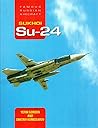
Sukhoi Su-24: Famous Russian Aircraft
Product ID: 18774686
Desertcart purchases this item on your behalf and handles shipping, customs, and support to Senegal.
Developed in the Soviet Union in the 1960s, the Su-24 tactical bomber has become one of the most successful aircraft in its class. Featuring delta wings and auxiliary lift engines meant to improve its field performance, the first prototype turned out to be more of a liability than an asset and the aircraft was redesigned to have variable geometry wings. The Su-24 had its baptism of fire in the Afghan War and was also exported to Iraq, Iran, Algeria, Libya and Syria, seeing action in some of these countries. At home, Russian Air Force Su-24s were heavily involved in the first and second Chechen campaigns and the type has undergone a mid-life update allowing it to carry precision-guided munitions, and is still going strong. Illustrated with over 750 photographs, many previously unpublished, as well as line drawings, color side views, insignia, unit badges and nose art this latest addition to the Famous Russian Aircraft series will be of interest to aviation enthusiasts and scale modelers alike. Review: Welcome back, Famous Russian Aircraft! You've been missed. - One of the casualties of the financial troubles of Ian Allan Publishing was the "Famous Russian Aircraft" series by the Ian Allan imprint Midland Publishing. The last title came out in 2012. Fortunately, the series has made its way over to Crecy Publishing and seems poised for a comeback. If this volume is any indication the series hasn't missed a beat during the hiatus. The book does full justice to the "Soviet F-111" as the Su-24 was sometimes styled. The influences of western types like the F-111 and the British TSR.2 are acknowledged here. The authors however are clear that Soviet requirements, the urgent need of a replacement for the Il-28 and Yak-28 bombers, drove the design. The construction of both lift jet and variable sweep wing prototypes underscore this. The book is organized just like others in this series. The book begins with a chapter covering the background of the aircraft and the influences which brought it into being. This is followed by a chapter describing the construction and testing of the prototypes. Then there is a long chapter detailing the various versions of the Su-24 including the most recent upgrades and obscure, never built projects. Then we have the obligatory "The Su-24 in detail" chapter (certainly my favorite) which minutely describes the aircraft and is well supported by photographs, drawings, and tables. Then there are two chapters describing the service of the aircraft in peacetime and combat respectively. The final chapter, "Su-24 operators", takes us through a nation by nation (and service by service) tour of operators. The book closes with two appendices, a production list and a list of losses due to accidents, and five pages of line drawings. A nice addition, and the first volume in this series to feature this, is an index. It is not a general index but a number of specialist indices covering Aircraft Types, Bombs and Missiles, Engines, Locations, NATO Reporting Names, Numbered Factories/Plants, Numbered OKBs, Soviet and Russian Air Force and Navy Units, and Test/Research Establishments. Complaints are few. This book needed more than five pages of line drawings; the ones we get seem to have been recycled from the Aerofax title covering the Su-24 of some years back. The authors' have a Russian centric view of the various conflicts described (Chechnya, Georgia, Ukraine, etc.) which might be off putting to some but for myself I appreciate getting these viewpoints. Sometimes the authors include a chapter that compares the titular aircraft with western contemporaries. They didn't do that this time; a comparison to the F-111 and Tornado would have been welcome. The trade dress is almost identical to the Midland one except for the spine. A glance at your shelf will tell you what was published by Midland and what was published by Crecy. As always, the translation by coauthor Komissarov is a delight. The text and captions are well written, engaging, with nice touches of humor. Highly recommended. Two more books in this series (Mig-17, Il-28) have been announced; I'm especially looking forward to the Il-28 one. I only hope another Midland series, the one that covers the various OKBs (design bureaus), can also make a comeback. Review: Outstanding look at Sukhoi Su-24 (Fencer) low-altitude attack bomber - In January 1970, the Soviet Union flew the first prototype Sukhoi Su-24 (Fencer) low-altitude attack bomber. As the author notes, "the Su-24 embodied a number of new technologies and provided a considerable improvement in capability over its predecessors, including the ability to use guided air-to-surface weapons. Although it had its share of development problems and its test cycle was long and arduous, in the mid-170s, the Su-24 became the main tactical bomber in service with the Soviet Air Force (VVS)." (p 7). Not only this achievement but it would remain in production for 23-years and then begin an upgrade program, despite tight economic conditions in the post-1991 Russia and its military budgets. The Su-24M (Fencer-D) was the product of extensive test and development and is the version most often encountered in the current Russo-Ukrainian war. The book is organized in chapters, including: * Antecedents and precursors * Changing wings: Prtotypes and trials (p. 19) * Su-24 versions * The Su-24 in detail (p. 153) * The Su-24 in service - Peacetime operations * The Su-24 in war (p.255) * Su-24 operators (Russia and foreign users) * Appendix 1 - Production List (p331) * Appendix 2 - Accident attrition * Line Drawings (p. 345) * Index As with the author other books of the Famous Russian Aircraft series, the book is heavily illustrated, with hundreds of color & B&W photos, including cockpit view, weapon releases, static ramp and flying photos, and those ever desired air-to-air photos; and, 3-view color drawings. The "in war" chapter begins with the aircraft use during the Afghanistan war followed by the Chechen wars (in the Chechen-Ingush ASSR), with both the First and Second Chechen wars covered; the Russo-Georgian ar (p. 271), and a final section dealing with its use in other wars, including the Libyan Civil War. For many, the details provided in the Operators section - beginning with Russia (including construction and tactical codes / registration) and production variant and unit notes - will be the most intriguing. This includes those assigned to Russian naval aviation (AVMF). Foreign operators include Belarus, Azerbaijan, Kazakhstan, Ukraine (mostly Su-24M/MRs and a few -MPs - Fencer A & B); Uzbekistan; Algeria; Angola; Iran; Iraq; Libya; India; Sudan; and, Syria (20xSu-24MK). What intrigues this writer is the apparent failure of self-defense system (BKO-2 Karpaty, that includes a new SPS-161 Gherkin-1FU or SPS-162 (-2F) active jammers, and the IR missile warning system LO82 May-UL-1 (Poppy)...given the number of Su-24s lost in the current war over the Ukraine. These were mostly Fencer-C defensive systems, the most widely available version to Russian forces at the beginning of the war. The Ukrainians had experience with early A&B-versions in their inventory. But, the number of losses of Fencers in Russian service makes one wonder if these are poorly designed, failures, and the reason for so many losses. During the years of production (1979 - 1992, some 520 (some sources use 480) aircraft were produced. And, its till a relevant aircraft a dozen years after production ended. HIGHLY RECOMMENDED !!!
| Best Sellers Rank | #4,226,406 in Books ( See Top 100 in Books ) #7,189 in Military Aviation History (Books) |
| Customer Reviews | 4.8 out of 5 stars 65 Reviews |
J**S
Welcome back, Famous Russian Aircraft! You've been missed.
One of the casualties of the financial troubles of Ian Allan Publishing was the "Famous Russian Aircraft" series by the Ian Allan imprint Midland Publishing. The last title came out in 2012. Fortunately, the series has made its way over to Crecy Publishing and seems poised for a comeback. If this volume is any indication the series hasn't missed a beat during the hiatus. The book does full justice to the "Soviet F-111" as the Su-24 was sometimes styled. The influences of western types like the F-111 and the British TSR.2 are acknowledged here. The authors however are clear that Soviet requirements, the urgent need of a replacement for the Il-28 and Yak-28 bombers, drove the design. The construction of both lift jet and variable sweep wing prototypes underscore this. The book is organized just like others in this series. The book begins with a chapter covering the background of the aircraft and the influences which brought it into being. This is followed by a chapter describing the construction and testing of the prototypes. Then there is a long chapter detailing the various versions of the Su-24 including the most recent upgrades and obscure, never built projects. Then we have the obligatory "The Su-24 in detail" chapter (certainly my favorite) which minutely describes the aircraft and is well supported by photographs, drawings, and tables. Then there are two chapters describing the service of the aircraft in peacetime and combat respectively. The final chapter, "Su-24 operators", takes us through a nation by nation (and service by service) tour of operators. The book closes with two appendices, a production list and a list of losses due to accidents, and five pages of line drawings. A nice addition, and the first volume in this series to feature this, is an index. It is not a general index but a number of specialist indices covering Aircraft Types, Bombs and Missiles, Engines, Locations, NATO Reporting Names, Numbered Factories/Plants, Numbered OKBs, Soviet and Russian Air Force and Navy Units, and Test/Research Establishments. Complaints are few. This book needed more than five pages of line drawings; the ones we get seem to have been recycled from the Aerofax title covering the Su-24 of some years back. The authors' have a Russian centric view of the various conflicts described (Chechnya, Georgia, Ukraine, etc.) which might be off putting to some but for myself I appreciate getting these viewpoints. Sometimes the authors include a chapter that compares the titular aircraft with western contemporaries. They didn't do that this time; a comparison to the F-111 and Tornado would have been welcome. The trade dress is almost identical to the Midland one except for the spine. A glance at your shelf will tell you what was published by Midland and what was published by Crecy. As always, the translation by coauthor Komissarov is a delight. The text and captions are well written, engaging, with nice touches of humor. Highly recommended. Two more books in this series (Mig-17, Il-28) have been announced; I'm especially looking forward to the Il-28 one. I only hope another Midland series, the one that covers the various OKBs (design bureaus), can also make a comeback.
G**R
Outstanding look at Sukhoi Su-24 (Fencer) low-altitude attack bomber
In January 1970, the Soviet Union flew the first prototype Sukhoi Su-24 (Fencer) low-altitude attack bomber. As the author notes, "the Su-24 embodied a number of new technologies and provided a considerable improvement in capability over its predecessors, including the ability to use guided air-to-surface weapons. Although it had its share of development problems and its test cycle was long and arduous, in the mid-170s, the Su-24 became the main tactical bomber in service with the Soviet Air Force (VVS)." (p 7). Not only this achievement but it would remain in production for 23-years and then begin an upgrade program, despite tight economic conditions in the post-1991 Russia and its military budgets. The Su-24M (Fencer-D) was the product of extensive test and development and is the version most often encountered in the current Russo-Ukrainian war. The book is organized in chapters, including: * Antecedents and precursors * Changing wings: Prtotypes and trials (p. 19) * Su-24 versions * The Su-24 in detail (p. 153) * The Su-24 in service - Peacetime operations * The Su-24 in war (p.255) * Su-24 operators (Russia and foreign users) * Appendix 1 - Production List (p331) * Appendix 2 - Accident attrition * Line Drawings (p. 345) * Index As with the author other books of the Famous Russian Aircraft series, the book is heavily illustrated, with hundreds of color & B&W photos, including cockpit view, weapon releases, static ramp and flying photos, and those ever desired air-to-air photos; and, 3-view color drawings. The "in war" chapter begins with the aircraft use during the Afghanistan war followed by the Chechen wars (in the Chechen-Ingush ASSR), with both the First and Second Chechen wars covered; the Russo-Georgian ar (p. 271), and a final section dealing with its use in other wars, including the Libyan Civil War. For many, the details provided in the Operators section - beginning with Russia (including construction and tactical codes / registration) and production variant and unit notes - will be the most intriguing. This includes those assigned to Russian naval aviation (AVMF). Foreign operators include Belarus, Azerbaijan, Kazakhstan, Ukraine (mostly Su-24M/MRs and a few -MPs - Fencer A & B); Uzbekistan; Algeria; Angola; Iran; Iraq; Libya; India; Sudan; and, Syria (20xSu-24MK). What intrigues this writer is the apparent failure of self-defense system (BKO-2 Karpaty, that includes a new SPS-161 Gherkin-1FU or SPS-162 (-2F) active jammers, and the IR missile warning system LO82 May-UL-1 (Poppy)...given the number of Su-24s lost in the current war over the Ukraine. These were mostly Fencer-C defensive systems, the most widely available version to Russian forces at the beginning of the war. The Ukrainians had experience with early A&B-versions in their inventory. But, the number of losses of Fencers in Russian service makes one wonder if these are poorly designed, failures, and the reason for so many losses. During the years of production (1979 - 1992, some 520 (some sources use 480) aircraft were produced. And, its till a relevant aircraft a dozen years after production ended. HIGHLY RECOMMENDED !!!
I**N
another nice book out of this series
Received item promptly. This is a nice book - I also have the MiG-21 and Su-7/17 book in this series. Lots of pics and airplane stories.
M**.
This is a great book
Like all of his books, this is excellent. Terrific pictures and line drawings, solid information. Exceptional...buy it!
D**R
Pretty solid reference with some minor flaws
Having recently become fascinated by Russian and Soviet military aircraft, I've purchased six books in the "Famous Russian Aircraft" series over the last month. Although this one isn't a totally flawless masterpiece, it's nonetheless a very fine reference which finally gives this aircraft, long derided as an F-111 knockoff in the West, its due. This book follows the same basic format set by the other books in the series. After a brief introduction describing the various proposals set forth in the 1960s for a low-level "tactical bomber," the second chapter focuses on the Fencer's painfully drawn-out development and prototype flight test phase. The third chapter explains the differences between each variant of the Su-24 that was actually produced and flown, along with a number of unbuilt proposals. Chapter four is a technical description of the Su-24, describing in some detail the aircraft's structure, powerplant, major systems, cockpit interior, and weapons load-outs. The fifth and sixth chapters focus on the type's service with the Soviet and Russian Air Forces in peacetime and wartime, with the final chapter looking at its role in the air forces of several former Soviet republics and of numerous export customers. Finally, the appendixes include a full production list, descriptions of all known Su-24 crashes, and a set of 19 drawings from the Aerofax monograph. As with other Crecy titles, the book is lavishly illustrated and features strong production values, with the pages printed on thick glossy paper. This is probably the best illustrated of the FRA books I own, with many excellent color photographs, dozens of color profiles by Victor Mil'yachenko, and sharp close-up external and internal views which are sure to please modelers. A surprisingly large portion of the book is devoted to the development and testing phase, an aspect which has always fascinated me but which tends to be largely ignored in most aircraft histories. There are also quite a few firsthand accounts from Su-24 crewmembers, including a hilarious one relating to an accidental zero/zero ejection (cockpit ergonomics are IMPORTANT!). There are, unfortunately, a few elements that keep me from giving it a full five stars. The last couple chapters can be a slog at times. Much of the material is of the "the (unit), under the command of General Whatshisface was activated in (year) at the (airbase), later relocating to (airbase) in (year), before merging with (other unit) and relocating to (other airbase). Quite a few of the color photographs are obviously sourced from video and are of very poor quality. Finally, there are very few cutaway or sectional drawings, although considering the Su-24 is still in service, that's not terribly surprising. Although this isn't the best of the currently available FRA titles ( Tupolev Tu-95 & Tu-142 probably holds that title), it's almost certainly the best single-volume Su-24 reference currently available, and should please just about anyone looking for more details on the "Fencer."
L**O
Tecnhical specs and detailed images with a thorough description of its development and action makes this book perfect for researchers and aviation lovers alike
All detail that you were expecting and more. Tecnhical specs and detailed images with a thorough description of its development and action makes this book perfect for researchers and aviation lovers alike.
J**S
Definitive book!
The definitive book on the Su-24.
A**L
Un gran libro sobre un gran avión
Aunque la sobre-cubierta haya cambiado un poco, el interior es "Yefim Gordon en estado puro". El libro está lleno de información, fotos, planos, perfiles en color y las siempre útiles listas de producción sobre este fenomenal avión, desgraciadamente de actualidad por haber sido derribado un aparato sobre Siria recientemente. Quizá la única "pega" es que no se haya incluido esta pérdida, por haber tenido lugar cuando ya estaba publicado el libro. Bueno, eso y que el libro se hace corto, el lector se queda con "ganas de más"... pero eso no es una pega... Un excelente trabajo
S**Y
Hervorragend
Dieses Buch ist bis dato das Umfassendste über dieses Lfz. Es schildert bei einer reichlichen Bebilderung seine Entwicklung bis hin zum Kampfeinsatz. Ich kann es nur empfehlen.
S**L
The battle-proven Cy-24 deserves a good reference book!
When it comes to Russian aviation subjects, nobody writes better than Yefim & Dimitriy. A very concise guide on the subject matter from its inception, early design phases, prototypes and most recent upgrades. A good selection of never seen before photos by the author certainly adds value to the book. This not only makes it a good reading for aviation buffs but also a great reference for scale modellers. Highly recommended.
M**O
Top dei testi aeronautici
Peccato che quelli esauriti abbiano prezzi assurdi (alcuni superiori addirittura alle mille euro) ma credo si tratti dei testi più completi e corposi per completezza di informazioni, foto, storia, tenica, etc. Ma d'altronde è scritto da due dei più competenti conoscitori dell'aviazione russa al mondo: Yefim Gordon e Dimitri Komissarov.
C**L
Sukhoi SU24
Wow! I have been waiting for this book for a while now and at long last it has arrived. I have the whole series of these superb volumes by Yefin Gordon on 'Famous Russian Aircraf't and have to say as I was able to obtain at just over half price on Amazon it is the bargain of the century. Mr Gordon and his colleagues have surpassed all previous books in this series with hundreds of superb colour images and some early ones in black and white which is to be expected it is a masterpiece. Apart from two volumes in the series Mig15 and SU7/17 most of the books have risen to amazing prices. Not sure if the high prices are obtained so on the basis this should sell well I would recommend you get while it is at a sensible price.
Trustpilot
2 weeks ago
2 weeks ago