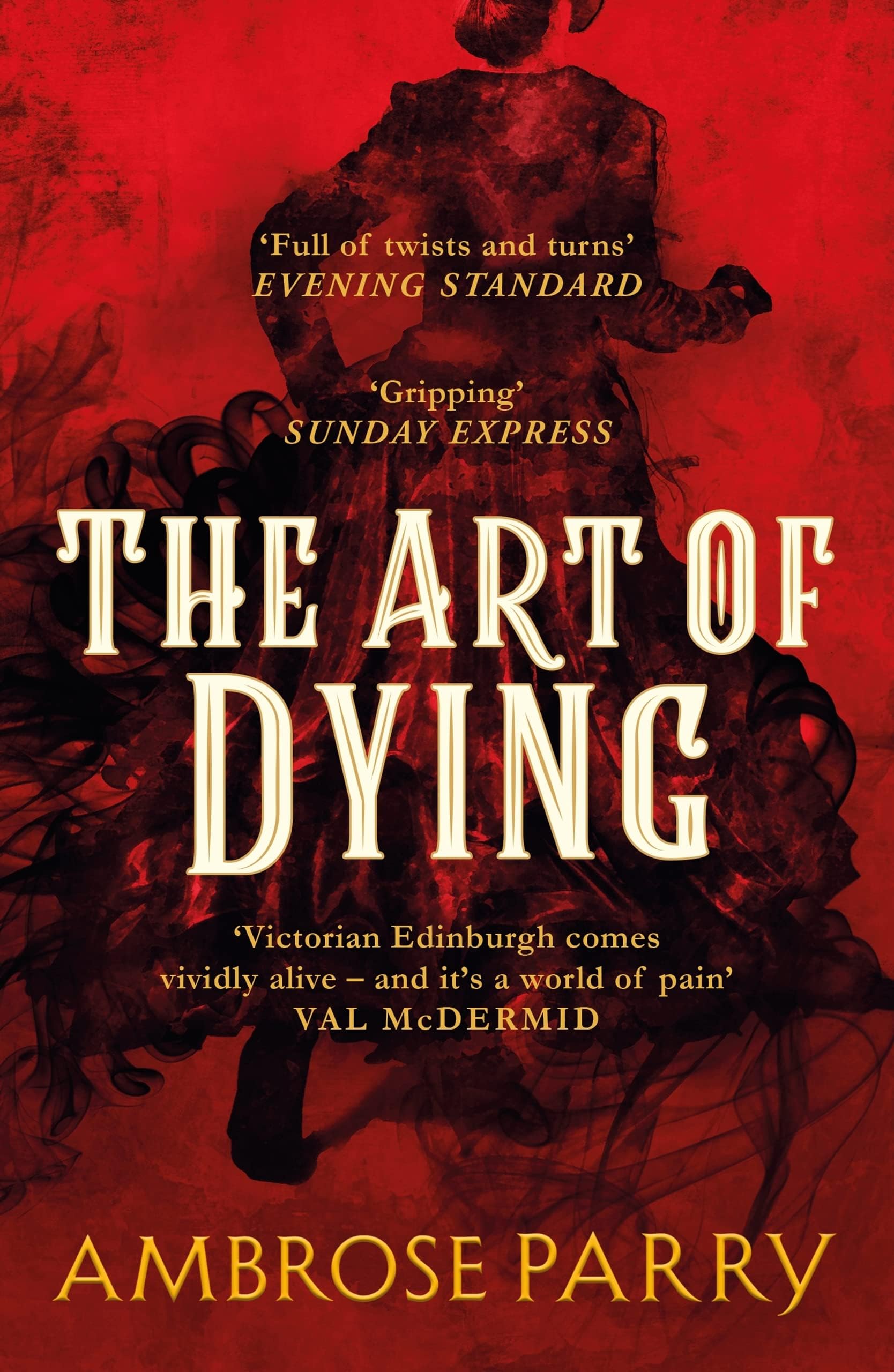
The Art of Dying (Raven and Fisher Mysteries Book 2)
Product ID: 183983372
'Parry's Victorian Edinburgh comes vividly alive – and it's a world of pain' Val McDermid 'Brilliantly conceived, fiendishly plotted' Mick Herron SHORTLISTED FOR THE McILVANNEY PRIZE 2020 A Raven and Fisher Mystery: Book 2 Edinburgh, 1849. Hordes of patients are dying all across the city, with doctors finding their remedies powerless. And a whispering campaign seeks to paint Dr James Simpson, pioneer of medical chloroform, as a murderer. Determined to clear Simpson’s name, his protégé Will Raven and former housemaid Sarah Fisher must plunge into Edinburgh’s deadliest streets and find out who or what is behind the deaths. Soon they discover that the cause of the deaths has evaded detection purely because it is so unthinkable. Review: Absolutely perfect - I took a chance and ordered both of these books (I think more are planned). It paid off because they are fantastic. I'm a Scotsman from the Isle of Skye but I spent a lot of time in Edinburgh and I've read scores of books on its history. These authors (it's a husband and wife team) perfectly capture the classism, misogynistic, blinkered world of Edinburgh in the 1700-1800s. The mystery is real and reminds me of the best of Dickens or Dan Simmons. The characters are fleshed out and real, not cartoons. Loved it. Review: Gripping historical medical murder mystery with a feminist slant - *I received a free ARC of this book, with thanks to the author, NetGalley and Canongate Books. The decision to review and my opinions are my own.* The Art of Dying is both an excellent Victorian medical murder mystery, and an educational and entertaining treatise on the talents and restrictions of intelligent women of the age. I haven’t read The Way of All Flesh (although I certainly want to now!), but that didn’t hinder me from picking up the characters and story here as I went along. The only slight effect I noticed on this book is that it starts with Will Raven in Italy – fighting off assailants, bantering merrily with his friend and enjoying the company of a ladyfriend – clearly in reasonable spirits despite past and current events. I can only presume whether this is the Raven met in the previous book, because most of this story is set after his return to Edinburgh and the sarcastic roisterer is completely subsumed by a morose and pompous man struggling to reconcile his love for a remarkable woman with her lowly position in life. He does not come out well in comparison to Archie Banks on this matter! Sarah Fisher, said remarkable woman, fares much better in reader estimations. She keeps her focus firmly on her patients, the doctors she supports and her family responsibilities; still finds time to aid other women with their health and domestic concerns; and keeps a tight hold on her own hopes and dreams throughout, always open to an opportunity for more from life. Which all makes her the perfect counterpoint to the murderer. We, the readers, get an insider glimpse into the murderer’s thoughts and past, via excerpts from a written account that features later in the plot. As a result, the identity of the murderer, and even their motives, are less the focus of the mystery than the question of whether Raven and Sarah will be able to resolve the matter without either of them being hurt, embarrassed, or imprisoned. The historical medical information presented throughout the book – specifically the information related to anaesthetic and obstetrics – is fascinating and clearly well-researched by the authors. I could definitely read more Raven and Fisher books just for this aspect alone, so engrossing were the insights presented. Conversely, I was less fond of the romantic aspects of the story, as I strongly feel Sarah deserves better than Raven – not because of his self-confessed ‘monstrous person’ doubts, but due to his adherence to status above all, despite (or perhaps because of) his own lack of it. Fans of historical mystery fiction will enjoy this well-written and thought-provoking series. I’m off to catch up the previous book, in preparation for the next one! ‘And once again, here I am, in your company in the bloody aftermath of a fight.’ ‘Maybe you are the one who courts mayhem and you are merely fortunate to have me on hand to assist. Have you thought of it that way?’ ‘Not once. But often have I said you’d be the death of me.’ Raven searched his memory. ‘You have never once said that.’ ‘No,’ he admitted, ‘but I must have thought it. So please prove me wrong. And don’t forget to wash the knife.’ – Ambrose Parry, The Art of Dying Review by Steph Warren of Bookshine and Readbows blog


| Best Sellers Rank | #656,252 in Kindle Store ( See Top 100 in Kindle Store ) #1,397 in Historical Scottish Fiction #2,989 in Historical Thrillers (Kindle Store) #3,714 in Noir Crime |
P**D
Absolutely perfect
I took a chance and ordered both of these books (I think more are planned). It paid off because they are fantastic. I'm a Scotsman from the Isle of Skye but I spent a lot of time in Edinburgh and I've read scores of books on its history. These authors (it's a husband and wife team) perfectly capture the classism, misogynistic, blinkered world of Edinburgh in the 1700-1800s. The mystery is real and reminds me of the best of Dickens or Dan Simmons. The characters are fleshed out and real, not cartoons. Loved it.
S**N
Gripping historical medical murder mystery with a feminist slant
*I received a free ARC of this book, with thanks to the author, NetGalley and Canongate Books. The decision to review and my opinions are my own.* The Art of Dying is both an excellent Victorian medical murder mystery, and an educational and entertaining treatise on the talents and restrictions of intelligent women of the age. I haven’t read The Way of All Flesh (although I certainly want to now!), but that didn’t hinder me from picking up the characters and story here as I went along. The only slight effect I noticed on this book is that it starts with Will Raven in Italy – fighting off assailants, bantering merrily with his friend and enjoying the company of a ladyfriend – clearly in reasonable spirits despite past and current events. I can only presume whether this is the Raven met in the previous book, because most of this story is set after his return to Edinburgh and the sarcastic roisterer is completely subsumed by a morose and pompous man struggling to reconcile his love for a remarkable woman with her lowly position in life. He does not come out well in comparison to Archie Banks on this matter! Sarah Fisher, said remarkable woman, fares much better in reader estimations. She keeps her focus firmly on her patients, the doctors she supports and her family responsibilities; still finds time to aid other women with their health and domestic concerns; and keeps a tight hold on her own hopes and dreams throughout, always open to an opportunity for more from life. Which all makes her the perfect counterpoint to the murderer. We, the readers, get an insider glimpse into the murderer’s thoughts and past, via excerpts from a written account that features later in the plot. As a result, the identity of the murderer, and even their motives, are less the focus of the mystery than the question of whether Raven and Sarah will be able to resolve the matter without either of them being hurt, embarrassed, or imprisoned. The historical medical information presented throughout the book – specifically the information related to anaesthetic and obstetrics – is fascinating and clearly well-researched by the authors. I could definitely read more Raven and Fisher books just for this aspect alone, so engrossing were the insights presented. Conversely, I was less fond of the romantic aspects of the story, as I strongly feel Sarah deserves better than Raven – not because of his self-confessed ‘monstrous person’ doubts, but due to his adherence to status above all, despite (or perhaps because of) his own lack of it. Fans of historical mystery fiction will enjoy this well-written and thought-provoking series. I’m off to catch up the previous book, in preparation for the next one! ‘And once again, here I am, in your company in the bloody aftermath of a fight.’ ‘Maybe you are the one who courts mayhem and you are merely fortunate to have me on hand to assist. Have you thought of it that way?’ ‘Not once. But often have I said you’d be the death of me.’ Raven searched his memory. ‘You have never once said that.’ ‘No,’ he admitted, ‘but I must have thought it. So please prove me wrong. And don’t forget to wash the knife.’ – Ambrose Parry, The Art of Dying Review by Steph Warren of Bookshine and Readbows blog
M**R
Quick delivery
I would order again from the vendor. Delivery was quick and the book was in excellent condition.
J**Y
Great book
I really enjoyed this book. The characters were complex and intriguing. I would highly recommend reading “The Art of Dying”.
A**B
Victorian medical mystery
The Art of Dying is the second book in the early Victorian era mystery series by Ambrose Parry (married writer duo Chris Brookmyre and Marisa Haetzman). Released 7th Jan 2020 by Canongate Books, it's 416 pages and available in hardcover, paperback, audio, and ebook formats. The ebook format includes an interactive table of contents with chapter headings. I've become very fond of interactive ebooks lately. This is an engaging and well written Victorian medical mystery set (mostly) in Edinburgh in 1850. One thing which struct me early on was how meticulously researched both the medical and cultural aspects of the period and place were. The narrative is seamless and well written. Protagonist Sarah Fisher again joins forces with Will Raven (now a qualified doctor) to investigate discrepancies in one of her mentor's previous cases and in his household. She's intelligent and strong and fairly fearless in a world absolutely dominated by men who still hold almost all the power. I did enjoy Sarah's character, intelligence, and conviction. I was less enamored of Dr. Will Raven's character and found myself rolling my eyes at his arrogance and unappealing classist snobbery. He is a patronizing twit. There was also a touch too much romance and mournful regret (especially on Raven's part) for me. Readers who want a shot of romance in their murder mysteries will no doubt disagree with me. The book is undeniably well plotted and the narrative arc is a well engineered thing of beauty. I did enjoy it and it worked well enough as a standalone. The author provides the necessary back-story without relentless info dumping which is nice. Four stars. Entertaining and well written. Disclosure: I received an ARC at no cost from the author/publisher for review purposes.
P**L
Loved portrayal of 19th century Edinburgh
Great story for anyone interested in 19th century history of science or Edinburgh. Will definitely follow this author/writing pair. Felt like I was there.
C**N
Exc citing historical medical mystery
My Recommendation This is a powerful, well-researched book, and a sequel to The Ways of All Flesh. On the surface, it is a gripping, historical medical mystery, but it is much more than that. Set in Edinburgh, 1850, it details medical practices of that time and is based on some real-life historical characters. This atmospheric story highlights the squalid, unhygienic, dangerous lot of the poor, high infant mortality, infectious diseases, and inept policing procedures in a Victorian-era city teeming with criminality. Conservative medical practices, jealousies and rivalries among ambitious doctors, their reluctance to accept innovative new practices and denial that deadly germs could be spread due to lack of sanitation prevailed. What stood out for me was social restrictions imposed on women and the lack of feminist advocates. This works well as a standalone novel, but reading the first gives one a deeper understanding of recurring characters. Sarah had worked as a housemaid, but her keen intelligence, observations, and her study of medical texts while serving in the home of a prominent doctor, made this independent woman a valued assistant to her employer, Dr. James Simpson, renowned for his discovery of chloroform to alleviate pain during surgery. Even Sarah’s competent role as a medical assistant was frowned upon by society including other doctors and most patients. A woman doctor would not only be unacceptable but also unthinkable. Will Raven had been apprenticed to Dr. Simpson. He had formed romantic feelings towards Sarah, but in his arrogance rejected marriage to her, feeling that she was below his social status, and such a marriage would impede his ambition to become a successful doctor. Dr. Will Raven has now completed his medical requirements and has been expanding his knowledge by travelling to centres in Europe for a year, gaining insight from physicians and medical lecturers in cities he visited. Although he rejected marriage with Sarah, he still has feelings for her and is anxious to resume their relationship. He is anticipating a position as a doctor with his mentor, Dr. Simpson on his return to Edinburgh. To his chagrin, he learns that Sarah is now Dr. Simpson’s trusted assistant, but that she married during his absence. He is stunned to discover that her new husband is not only a doctor but a man who encourages his wife’s career in the medical field. Dr. Simpson, having made a name for himself for his discovery of chloroform, is now having his reputation tarnished. He is finding himself unjustly accused of malpractice, causing the death of another doctor’s wife following surgery he performed. Sarah approaches Dr. Will Raven for help in restoring Dr. Simpson’s good reputation. Will is reluctant to work with Sarah in any capacity, being heartsick and jealous of her position as a doctor’s wife and her ongoing work as a medical assistant. Later, he relents, and they try to get to the cause of the rumours and put an end to them. Meanwhile, there is a mysterious new illness that no one can diagnose and cure. It affects entire families killing all those afflicted over a period of time. Will regards this as an opportunity for fame and fortune. He hopes to find a cause and cure for this communicable new epidemic which he thinks will carry his name. Sarah suspects that a cunning serial killer is behind these deaths, arguing with Will that it is not a disease. Will finally realizes that the more vigilant Sarah is correct and that they now have a difficult, relentless task of solving this crime. Will takes a major step in his personal outlook as his arrogance diminishes. As their relationship develops, I expected a different ending after all the twists and revelations. I was surprised and gratified by the next step in Sarah’s heroic story. I am anticipating a sequel focusing on the same main characters. Thanks to NetGalley and Blackthorn Books for this impressive novel in return for an honest review. Highly recommended.
A**Y
Ponderous, repetitive and somewhat boring
Getting through this tome was an arduous task that I forced myself to complete. Way too much verbiage a convoluted plot and a protagonist (Raven) who was hard to like. No surprise it was "shortlisted" for a prize. Any time a writer veers into literary fiction rather than creating a good mystery, the critics laud the novel. I will read book one in this series since a number of readers said it was far superior to this very contrived effort.
L**D
Thrilling and deeply involving
The Art of Dying allows us to get to know Will Raven and Sarah Fisher better as they cope with a number of new mysteries and their own changing circumstances. I like the historical context for medicine as it finally begins to use science for healing and the dangerous, criminal streets of Edinburgh.
K**R
Another excellent book.
Christopher Brookmyre has always been brilliant, but his writing relationship with his wife, Marisa Haetzman, has given us a whole new basket of delights to enjoy. I was a nurse in Edinburgh for several years and can visualise both the city and it's institutions. I worked in the Royal Infirmary when it was in Laurieston place and so much of it's history was etched into the fabric of the building it's difficult to believe medics no longer walk through its corridors. I remember looking out of a window early one morning and seeing George Heriots shining in the dawn light, a sight that had changed little in the previous century. The descriptions of life in 19th century Edinburgh are gritty and realistic as well as the elitism of the Edinburgh medical world. When a wonderful plot and great characters are added you know it is going to be a good read.I I'm really hoping we haven't heard the last of Sarah Fisher, Will Raven or the Simpson household.
D**E
Historischer Krimi
Eines der besten Bücher, die Geschichte, in diesem Falle Medizingeschichte, glaubhaft und textlich hervorragend erzählt.
M**L
Not all murders are as they seem.
I moved straight from reading the first book in this series to this book, the second in the series. I enjoyed the first book ( see earlier review) and the second book maintains a high standard. The setting is the same as are the principal characters. For long periods I did feel that this book was something of a rehash of its predecessor but I forgave the authors because of an excellent and tense ending. Often the ending of a murder mystery is the hardest part to get right, but the husband and wife team managed this very well. The background research has clearly been meticulous and this is confirmed by the historical notes provided at the end. I'll pause now but will almost certainly read number three in due course.
D**E
overall good second book
this was a nicely written and done second book in the series. but it took me a while to find my footing in this story - it set a good while after the ending of the first and the exact changes that happens with each of the characters throughout the story aren’t very well explained, instead they are mostly sprinkled throughout the entire book. not my favorite type of continuation in a series where each book feels like i need to be reintroduced to all the characters, their behaviors and reasons. the mystery in this was interesting but felt a bit dragged out and in the end the solution of it came too easily to everyone especially considering that they all didn’t see it before. i disliked the reintroduction of the person that Raven had owned money too but was supposed to have been cleared up at the end of book one but for no real reason brought back in this book. everything in this story could have happened as it did just without those added scenes and to me it would have been more enjoyable to read that way. nor did i see the need to include or drag out the stuff that happened in berlin. why was that even in this book? the ending it self…. it seems that we get yet again a time jump and characters going to very different places. which isn’t bad in itself i just hope it will be handled a little better in the next installment as it has been dealt with in this one. all in all? it was good. i loved the historical moments and historical medical info was interesting and always and i liked the characters in the book. i really enjoy the Simpsons household. but i am also a little disappointed that this book could have also have been the first book in a series with how little it actually continued and build on the first book. only thing that kept going was the strange little thing of will they/ won’t they that’s happening between sarah and will. still not a bad book. but i do hope the next one will be a bit better.
Trustpilot
1 day ago
1 month ago