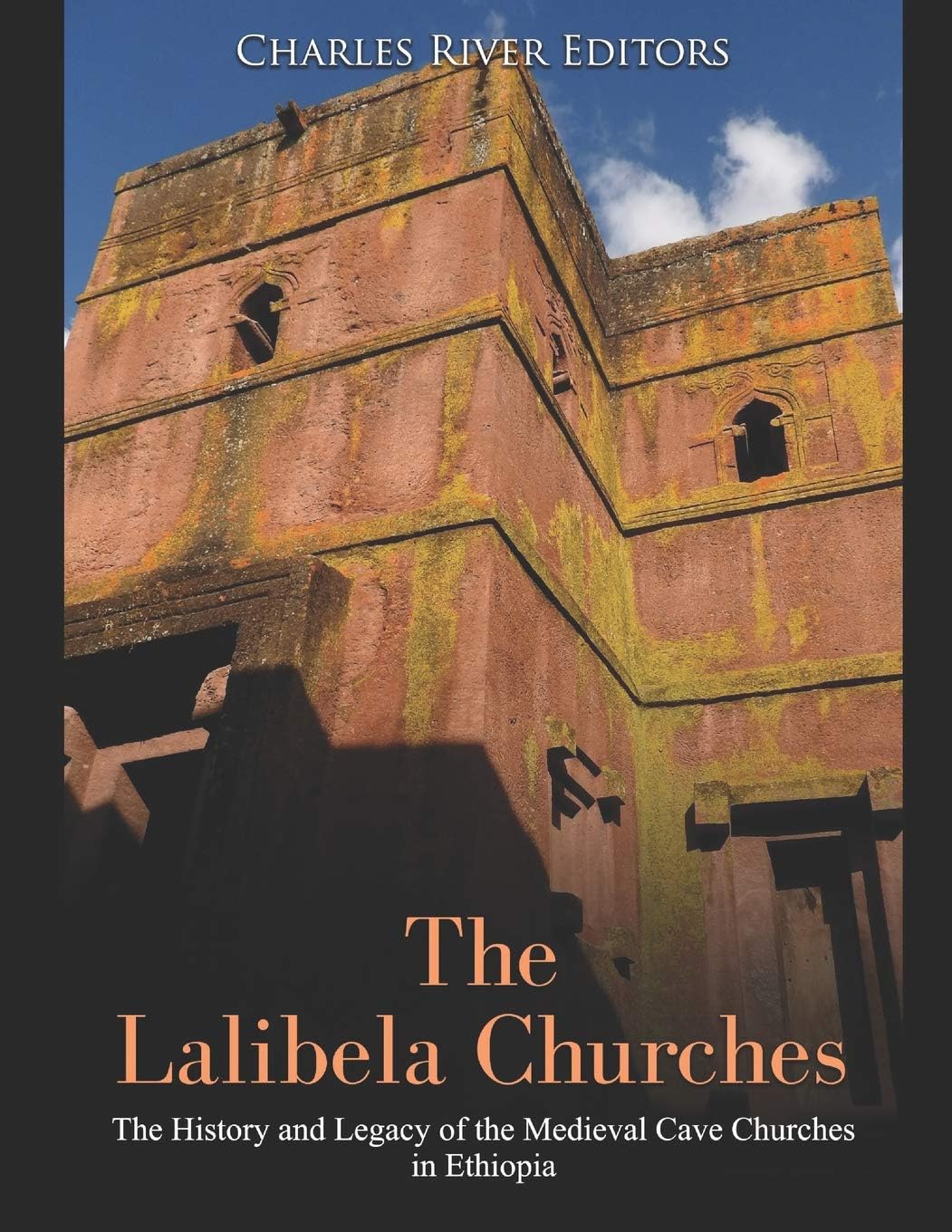
The Lalibela Churches: The History and Legacy of the Medieval Cave Churches in Ethiopia
Product ID: 182857733
Desertcart purchases this item on your behalf and handles shipping, customs, and support to Senegal.
*Includes pictures *Includes a bibliography for further reading “I weary of writing more about these buildings, because it seems to me that I shall not be believed if I write more...I swear by God, in Whose power I am, that all I have written is the truth.” – Francisco Álvares In the Lasta Mountains of northern Ethiopia, high on an arid plateau in the foothills, the settlement of Lalibela slumbered for centuries as little more than a pilgrimage site at the end of a long and weary footpath. The ancient trade routes between the Eritrean coast and the central highland redoubts that would later coalesce as the imperial capital of Addis Ababa passed fifty miles to the east of Lalibela, and from the early thirteenth century, after the passing of Gebre Mesqel Lalibela himself, the site slipped into decline. The focus of imperial government shifted south, under the influence of successive emperors, as the holy sites of Roha faded from the popular consciousness. Only the occasional band of pilgrims made the journey over the rugged mountain passes, and across the waterless high valleys to repose at the mythical site, now known only to a handful of faithful acolytes. The site first came to European attention when it was visited in the early 16th century by the Portuguese explorer Pêro da Covilhã, who struck inland from Zeila on the Somali coast in a quest for the legendary Kingdom of Prester John. He was received by the Emperor Eskender, but he was effectively held a prisoner in Ethiopia for 30 years. During that time, he visited and briefly recorded his impressions of Lalibela. Also in search of the Kingdom of Prester John was the Portuguese missionary Francisco Álvares, who arrived in Ethiopia in 1515 as part of an ambassadorial mission authorized by the Portuguese King Manuel I. There, in the court of the Emperor Dawit II, he met numerous sundry Europeans, including Pêro da Covilhã, and Nicolò Brancaleon, the Venetian painter who settled in Ethiopia in 1480 and whose artistic influence remains visible in ecclesiastical imagery all over the country. It was Alvarez who described in detail the monuments of Lalibela in his exhaustive travelogue, A True Relation of the Lands of Prester John of the Indies. The explorer wrote, “At a day's journey from this church of Imbra Christo are edifices, the like of which and so many, cannot, as it appears to me, be found in the world. They are churches entirely excavated in the rock, very well hewn. The names of these churches are these: Emanuel, St. Saviour, St. Mary, Holy Cross, St. George, Golgotha, Bethlehem, Marcoreos, the Martyrs. The principal one is Lalibela. This Lalibela, they say, was a King in this same country for eighty years, and he was King before the one before mentioned who was named Abraham. This King ordered these edifices to be made. He does not lie in the church which bears his name, he lies in the church of Golgotha, which is the church of the fewest buildings here.” By the dawn of the 17th century, Portuguese influence in Africa fell into decline, and the occasions of European contact with Ethiopia became very few and far between. It would be another three centuries before another European would venture into the holy precincts of Lalibela as part of a British military expedition mounted in 1867. Thus, the “rediscovery” of the remarkable churches and the story of Christianity in Ethiopia would only be recently written. The Lalibela Churches: The History and Legacy of the Medieval Cave Churches in Ethiopia chronicles the remarkable construction and history of the churches. Along with pictures and a bibliography, you will learn about the Lalibela Churches like never before. Review: History, Legacy, legends and the European discovery of the Lalibela Churches in Ethiopia - After reading this e-book, I think I’m going to add visiting the Lalibela City and Medieval Cave Churches to my bucket list. The Lalibela Churches are at least in theory, under the protection of the United Nations Educational, Scientific and Cultural Organization (UNESCO). Even though I would like to visit the Lalibela Churches cultural site, the site is deteriorating because of nature and human visitation. The book described the history of how the Kingdom of Aksum and Ethiopia was converted to Christianity. The Lalibela Churches were built during the Zagwe Dynasty under Gebre Mesqel Lalibela (the Servant of the Cross) who is also known as (Gebre Meskel (Defender of the Cross). The e-book indicated that the Christianity of Lalibela differed from the Christianity of Rome as it was cut off from that branch of Christianity for hundreds of years. At the Lalibela site, there are 12 churches. The churches were carved out of the solid rock. There is a description of each church, their connections to each other, how they were built and decorated. There does not appear to be any documentation that explains the imagery of the site and the churches. There is a lot of supposition from archaeologists, and others have to why the church site and churches were created. The book has many pictures and a good reference list. Unless I can find a better book, this e-book will probably be as close to the Lalibela Churches have I can get since I do not want to be a party to the destruction of the site. Review: bridges cultures and time - Very interesting book. It will get most people thinking about the development of Christianity, its relationship to many cultures and religions, and even the universe.
| Best Sellers Rank | #2,283,106 in Books ( See Top 100 in Books ) #267 in Ethiopia History #2,110 in History of Civilization & Culture #206,569 in Religion & Spirituality (Books) |
| Customer Reviews | 4.1 out of 5 stars 54 Reviews |
M**S
History, Legacy, legends and the European discovery of the Lalibela Churches in Ethiopia
After reading this e-book, I think I’m going to add visiting the Lalibela City and Medieval Cave Churches to my bucket list. The Lalibela Churches are at least in theory, under the protection of the United Nations Educational, Scientific and Cultural Organization (UNESCO). Even though I would like to visit the Lalibela Churches cultural site, the site is deteriorating because of nature and human visitation. The book described the history of how the Kingdom of Aksum and Ethiopia was converted to Christianity. The Lalibela Churches were built during the Zagwe Dynasty under Gebre Mesqel Lalibela (the Servant of the Cross) who is also known as (Gebre Meskel (Defender of the Cross). The e-book indicated that the Christianity of Lalibela differed from the Christianity of Rome as it was cut off from that branch of Christianity for hundreds of years. At the Lalibela site, there are 12 churches. The churches were carved out of the solid rock. There is a description of each church, their connections to each other, how they were built and decorated. There does not appear to be any documentation that explains the imagery of the site and the churches. There is a lot of supposition from archaeologists, and others have to why the church site and churches were created. The book has many pictures and a good reference list. Unless I can find a better book, this e-book will probably be as close to the Lalibela Churches have I can get since I do not want to be a party to the destruction of the site.
T**D
bridges cultures and time
Very interesting book. It will get most people thinking about the development of Christianity, its relationship to many cultures and religions, and even the universe.
A**E
Wait a minute...who is that?!!
In this book on Ethiopia's churches, there is exactly one photo of a person (in the entire book mind you), prominently displayed in all his pompous glory and taking up the better part of a page. Is it an Ethiopian king? an Emperor? an historical figure perhaps, involved in building the churches? No. The creature displayed is none other than (drumroll...) Mussolini! Baldy McDuće himself. For a book where everything is in cost-reducing black-and-white, which is fine, and having scant number of pages, the last thing I expected to see in the middle is an oversized color Mussolini staring back at me. He defiantly dominates the book, making me wonder if perhaps comically I misread the thrust of the book. Was it printed during the occupation? What genius ran out of things to illustrate and chose that clown as a major part of Ethiopian church history, I do not know, but it sways the whole presentation of the book into joke territory and distracts from what is otherwise a decent essay on Christianity in Ethiopia.
D**S
Great Information | Horribly Published
This book has excellent information about Lalibela’s churches, and was very helpful during my trip there. That said, it is by far and away the most poorly published book I have ever come across. No table of contents, no page numbers, no index, etc. It looks like it was put together by a middle schooler who had one semester of MS Word. The author and publisher really need to clean up the copy.
C**I
Incredibly inadequate photos
I bought copies of this book for me and 2 young adult grandsons and was very disappointed. A site so beautiful and amazing as Lalibela with not one color photo, except for the cover, to show it. A few small unclear photos in black and white was all there was of this wonderful site.
P**R
A Waste of Money
Looked and read like a high school essay…cheap cheap cheap
M**N
Building from the top down!
If you have not seen this location, you are missing an architectural wonder. This is not just a fabulous picture presentation, but the mysterious background.
Trustpilot
2 weeks ago
2 months ago