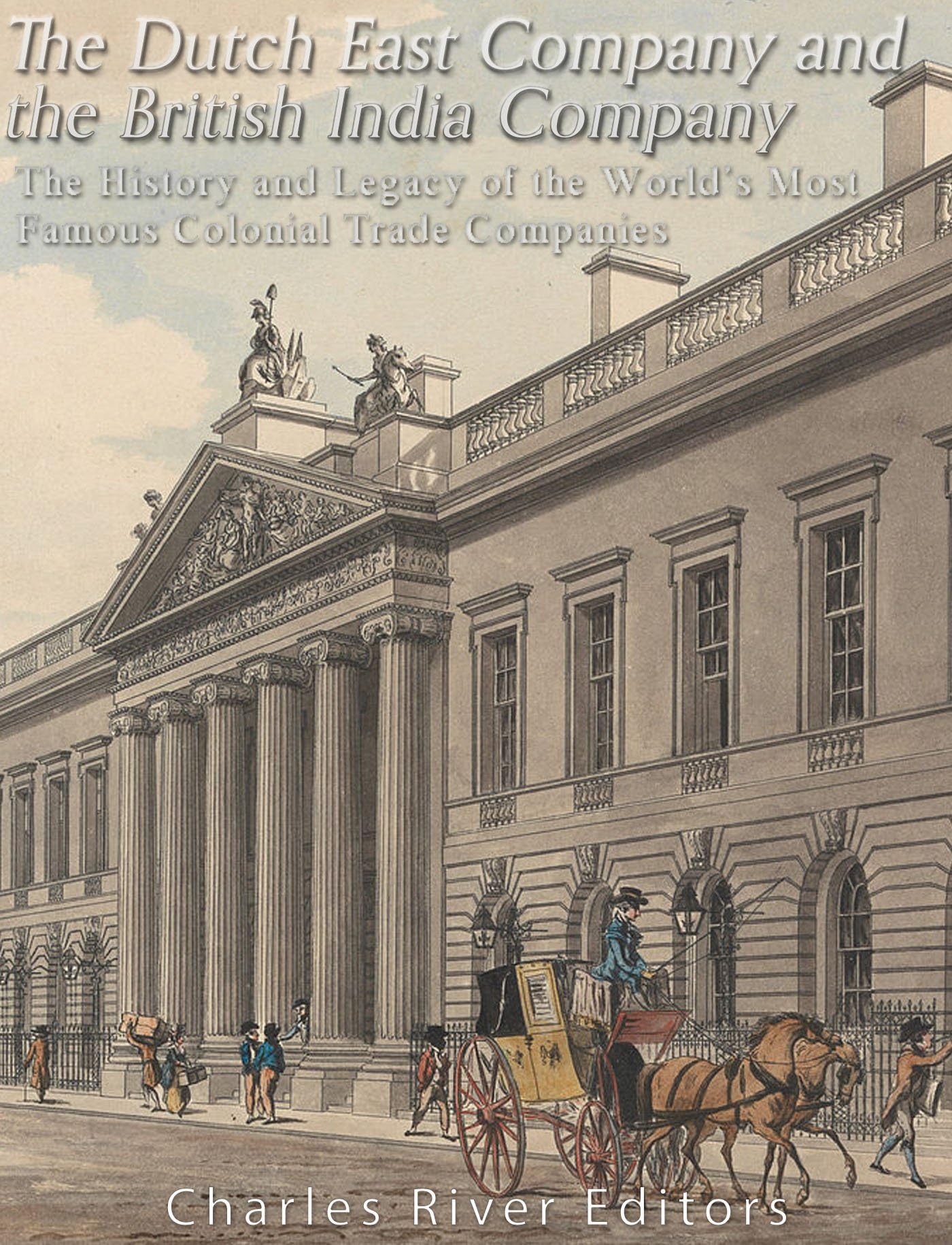
The Dutch East India Company and British East India Company: The History and Legacy of the World’s Most Famous Colonial Trade Companies
Product ID: 174707018
Desertcart purchases this item on your behalf and handles shipping, customs, and support to Senegal.
*Includes pictures *Includes contemporary accounts of the companies *Includes a bibliography for further reading From classic grilled meat to exotic and savory 5-star dishes, pepper has long been the ultimate staple spice. While bulk pepper may be readily stocked in supermarkets and convenience stores today, there was once a time when the common spice was considered one of the most valuable commodities in the world. Merchants tripped over one another to get their hands on the tiny black beads, which live in colorful clusters of berry-like shells reminiscent of Christmas lights. They were so precious that an uncountable number of men crossed the turbulent and uncharted seas for them. In fact, the tropical spice was so highly sought after that blood was shed over the edible gold. To many, the mention of maritime merchants evokes an imagery of growling pirates donned in their stereotypical hats and a colorful parrot perched upon their shoulders. These nautical rascals wander the high seas in search of treasure and adventure. Though that imagery may be inaccurate, the real life companies that once dominated international waters operated on a similar thirst for conquest and riches. Perhaps the most famous – or as many would put it, infamous – of these naval corporations was the Dutch East India Company, also known as VOC. Established around the beginning of the 17th century, this nautical behemoth of a corporation was determined to squeeze everyone else out of the market. Vested with the power to wage war and exterminate any who dared stand in their way, the rest of the world stood by as the unstoppable force took over the whole of international maritime trade. The company would crush its opponents on the way to the top, establishing a monopoly on the global spice trade that would not only rock the world but forever change the course of modern business history. The British East India Company served as one of the key players in the formation of the British Empire. From its origins as a trading company struggling to keep up with its superior Dutch, Portuguese, and Spanish competitors to its tenure as the ruling authority of the Indian subcontinent to its eventual hubristic downfall, the East India Company serves as a lens through which to explore the much larger economic and social forces that shaped the formation of a global British Empire. As a private company that became a non-state global power in its own right, the East India Company also serves as a cautionary tale all too relevant to the modern world’s current political and economic situation. Beyond its obvious influence in areas like trade and commerce, the East India Company also served as a point of cultural contact between Western Europeans, South Asians, and East Asians. Quintessentially British practices such as tea drinking were made possible by East India Company trade. The products and cultural practices traveling back and forth on East India Company ships from one continent to another also reconfigured the way societies around the globe viewed sexuality, gender, class, and labor. On a much darker level, the East India Company fueled white supremacy and European concepts of Orientalism (See Said, Orientalism). One of the major reasons that the East India Company remains the subject of intense interest is that the consequences of its influence remain visible in India, Britain, and other parts of the world to this day. While the British Crown eventually replaced the East India Company as the governing authority of India, the systems of production they had established remained intact. More than half a century after India declared independence from the British Empire, the economic and cultural effects of this colonial system of production remained apparent. Review: Maritime and Business - The east India Company employed thousands of people. It brought trade to Britain on the Clipper Ships. Review: Really interesting - This book is well written. I explains all the major points in a clear and concise fashion. It has some great quotes to support the information. Worth reading to increase your knowledge of an important part of history.
| Best Sellers Rank | 1,139,686 in Kindle Store ( See Top 100 in Kindle Store ) 10,061 in UK History 16,624 in European History (Kindle Store) |
B**N
Maritime and Business
The east India Company employed thousands of people. It brought trade to Britain on the Clipper Ships.
K**R
Really interesting
This book is well written. I explains all the major points in a clear and concise fashion. It has some great quotes to support the information. Worth reading to increase your knowledge of an important part of history.
H**T
High Level Overview
This is a high level overview that sets the scene but lacks detail. There are also some errors, for example it refers to the British House of Lords when it should have said House of Commons.
G**N
Good read
A short and snappy account of the two vast companies histories. Covered what i needed to know. Enjoy this book
S**.
Five Stars
Great for my friends birthday gift
M**L
Nothing Changes
This is a really good book for those of us who, not only care about history, but are intimately involved in international trade today. These two companies, seemingly similar on the surface, with seemingly similar business models, actually had totally different purposes and intentions. And therefore whose governments now have totally different legacies - and reasons to hang their heads in shame - in the modern day mayhem of global socio-economic politics that we are forced to endure today. The VoC was motivated ONLY by profit, and therefore by commercial imperatives, economics, supply chain management and monopolisation, cashflow, and all those good things related to business performance that were at the heart of their day to day activities. And they excelled at these things for 200 years, until they slipped up and lost control of their expenditures at the Cape of Good Hope which technically bankrupted the company, forcing it to shut its doors on 31st December 1799. For a very long time they were managed by a ruthlessly efficient Board of commercially minded Directors, called the Heeren XV11, with minimal interference from the Dutch government. They were, after all, a publicly traded company, ultimately owned by its shareholders. On the other hand, the BEIC, was none of these things. They operated under the conditions of a so-called Royal Charter, which means for all intents and purposes they were owned by the Crown and operated by employing yes-men managers who reported to the British Government, who in turn reported to the Sovereign of the day. Their mission was Political, first and foremost. They were there to enforce the geographic expansion of the British Empire - through invasion of foreign lands - subjugation of foreign weaker people - normally through the barrel of a gun - all in the name of colonisation. Obviously this dream of world domination needed to be funded, so they had no option but to involve themselves in 'trade' but only on their terms, enforced by the fact that in those days they had the world's most powerful navy, who simply pulverised weaker people into submission if they put up any form of resistance, then laid claim to their lands, and then hoodwinked them into accepting that all of this was for their own good. Through organs like the BEIC, the British became the most successful colonizers in history. But the BEIC itself (and all their other Chartered companies) was never anything more than a department of the civil surface. A good read none the less, made more interesting by a look in the rear view mirror through rose tinted spectacles.
C**T
Fond à voir, forme pas top
Pas encore lu mais en effet les caractères sont grands. S'en est même assez désagréable. Le format quasi A4 n'est pas non plus le bienvenu cumulé à une mise en page vraiment pas au top. Je noterai le fond plus tard mais pour la forme peut faire (beaucoup) mieux
M**H
1st year university essay
While this book provided basic information itappears it was 2 1st year university essays joined together. Referencing is inadequate and it doesn't flow as it should.
N**A
Four Stars
to read
N**N
nice “not deep dive” into the history of these companies
This is an easy read with enough references to allow you to the option of digging further into details if you want.
Trustpilot
4 days ago
2 days ago