
Desertcart purchases this item on your behalf and handles shipping, customs, and support to Senegal.
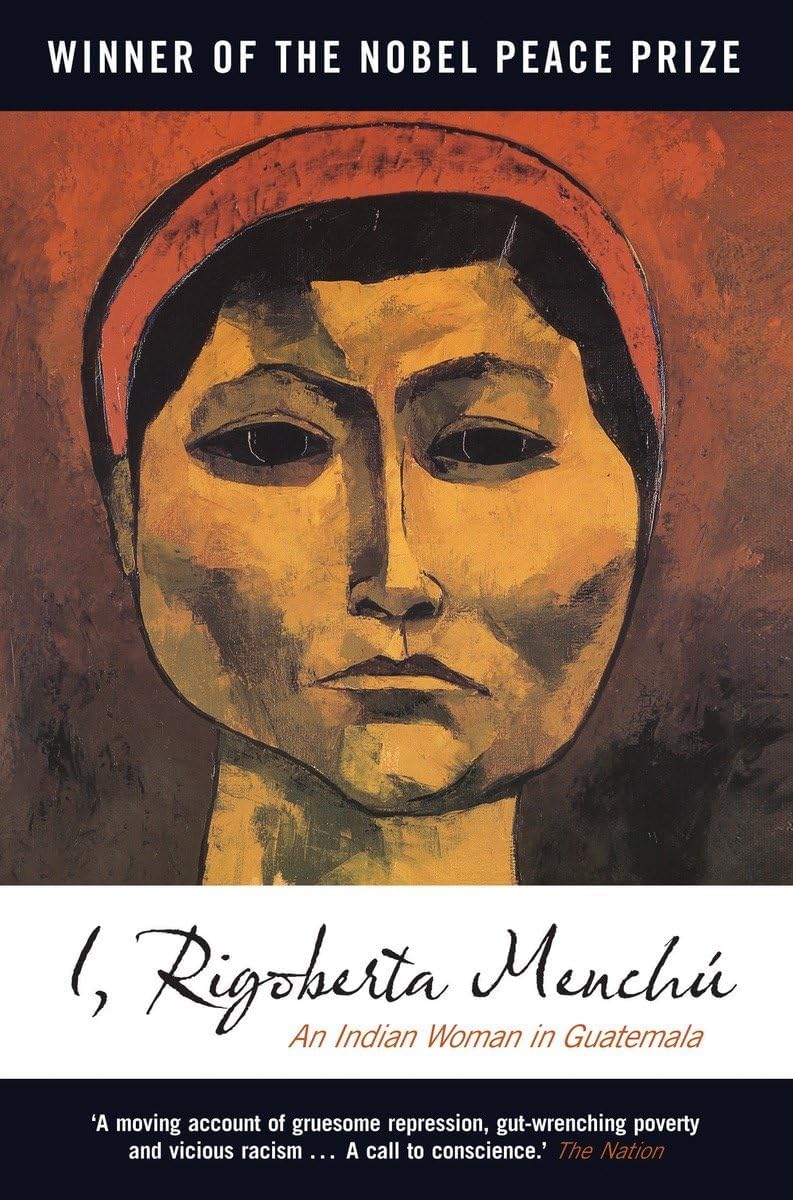
A Nobel Peace Prize winner reflects on poverty, injustice, and the struggles of Mayan communities in Guatemala, offering โa fascinating and moving description of the culture of an entire peopleโ ( The Times ) Now a global bestseller, the remarkable life of Rigoberta Menchรบ, a Guatemalan peasant woman, reflects on the experiences common to many Indian communities in Latin America. Menchรบ suffered gross injustice and hardship in her early life: her brother, father and mother were murdered by the Guatemalan military. She learned Spanish and turned to catechistic work as an expression of political revolt as well as religious commitment. Menchรบ vividly conveys the traditional beliefs of her community and her personal response to feminist and socialist ideas. Above all, these pages are illuminated by the enduring courage and passionate sense of justice of an extraordinary woman.
| Dimensions | 5.52 x 0.78 x 8.26 inches |
| Edition | Second Edition |
| Isbn 10 | 1844674185 |
| Isbn 13 | 978-1844674183 |
| Item Weight | 13.6 ounces |
| Language | English |
| Print Length | 320 pages |
| Publication Date | January 12, 2010 |
| Publisher | Verso |
User
Amazing true story!
What an amazing and strong woman Rigoberta Menchu is, to share her life story of survival and helping her fellow community and people by informing not just her country but the world of the atrocities her people were living under. Very inspiring. It stirred my spirit!
User
The story of a.wise and courageous woman
I lived in Guatemala for about a year. My only regret is that I didn't read this book first. Fear of the military was spread to the expat community. Because we knew no indigenous people that also spoke Spanish we didn't understand the Mayan culture. The strength of the indigenous people was evident every day. I was horrified to see the tiny women and men who strapped wood, water and other things to their heads while they walked barefoot and had babies on their back while walking long distances barefoot. The nobility of the Guatemalan Mayan communities was obvious and the treatment they received at the hands of the ladinos was truly horrible. The banks had cat walks with soldiers pointing guns at the customers. The poor Mayans could stand in line for long periods of time because whenever a ladino came in they jumped the line in front of the poor Mayans. Guatemala is a truly beautiful country marred by the racist behaviors of the ladino population. This book really touched me and it is obvious why Rigoberta received a Nobel Prize. Her wisdom,intelligence and courage is an inspiration. It's one of the best books I've ever read....and I read 2 or 3 books a week. She is inspirational.
User
The book was in good condition and came quickly in the mail
I received a different version than the one pictured, but still received the correct book. The book was in good condition and came quickly in the mail. The book itself is a testimonio from a Guatemalan Native and is not for the faint of heart. It is a book that does not hold back detail of torture and pain and has many moments that will make your stomach turn. I would not recommend it for all audiences.This is a powerful, moving recounting of the events that happened to Rigoberta Menchu and the other natives in Guatemala during the late 20th century.
User
Brutal Honesty on the Dismantaling of a Beautiful Culture
Beautiful, but terrible. This is the story of Rigoberta Menchu Tum and her life as a native Guatemalan struggling to survive amidst poverty, encroaching industrial logging interests, political corruption, and racism. Born to a family of subsistence farmers and itinerant workers, Menchuโs life was balanced on the razorโs edge of starvation. She saw family members lose their lives from hunger and from the brutal treatment received from supervisors at the coastal farms (including spraying pesticides from airplanes with complete disregard to the workers--and children!--laboring in the fields). Menchu survived and learned Spanish in order serve as an advocate for other native people. She helped to form and organize parties of political resistance as well as taught native people methods of self defense. The style of the writing is perhaps what proves to be most captivating about the book. Having learned to write in Spanish only three years before penning this book, Menchuโs style is simple, frank, and honest. The translator has taken pains to retain the vocabulary and style of the original text even including much of Menchuโs repetition. This lends the text a raw, journalistic feel.I enjoyed reading this book. Though some of the political tensions and actions may have been beyond my grasp, I thoroughly enjoyed learning about Menchuโs native customs and beliefs. The book starts with an explanation of her tribeโs birth, marriage, and death ceremonies. These underscore the close bonds of community that exist throughout the village--bonds that are tragically torn asunder as the book progresses. While the text has a clear bias, it was nonetheless quite eye opening to the difficulties natives of Guatemala faced and sheds light on an all too easy to overlook population.B+
User
Humbling and beautiful
This story will inspire you and make you take a good, hard look at just how fortunate most of us are who live in the United States. We can never truly know the experiences of another unless we walk in their shoes. Rigoberta Menchu will take you places that will disturb and enlighten. I have been fascinated with Guatemala and its Mayan people and because of this book, look at life a little differently now. If you have a passion for learning about other cultures, this is a must read.
User
A powerful first-person narrative of poverty and injustice
Iโve been non-stop reading this book about the remarkable yet humble indigenous woman, who emerged out of oppressive poverty and ethnic discrimination by educating and empowering herself, and eventually won the Nobel Peace Prize. It is hard to put the book down once you have opened it. It makes you aware and makes you cringe at the hardships, injustices and the layers of oppression against the hardworking and less educated poor, not only in Guatemala but also elsewhere in the world. I highly recommend this book, especially for those of us who want to learn about poverty from the โwormโs eye viewโ (i.e., first-person narratives, in addition to from the โbirdโs eye viewโ of statistical analyses โ both are very important).
User
Considering this book as the genre of "Testimonio" in Latin American Literature
It's a good book that describes the struggles of the Mayan population in Guatemala. It is best to read in conjunction with different articles that criticize this book and also the foreword. This was not written by Rigoberta and it is important to consider the politics of translation as well as transcription. She gave her testimony to Elizabeth Burgos, who collected the information from the interview in Spanish and created the text. At the time when Rigoberta gave her testimony, she only had been speaking Spanish for three years.I read this for one of my college classes at Princeton and I just discussed this book at my book club.Another thing to consider is the genre that this book falls in. It is not a memoir or an autobiography. It falls under the category of latin american literature known as tesimonio. This differs from the direct translation of testimony. I recommend readers do some research on the politics of testimonio and whether or not all that is said is needed to be true.It is a great book to start a conversation on the politics of ethnicity and whether books like these are needed to be entirely truthful or factual!
User
Courageous Mayan Woman fought the Genocidal Guatemalan Military and Government for her People
Wonderful book about the struggle of the Mayan people in Guatemala in the 1980's. Amazing that over 200,000 Indians were killed by the government and the military with the support of the US government. Menchu is very humble. Her story is incredibly painful. She lost both parents in the struggle, also her brothers. This is an extremely moving story. It helps one understand why Rios Montt, former President of Guatemala, was recently convicted of genocide of over 1,000 Mayans and sentenced to jail for the rest of his life. The first time a former president has been tried and convicted of genocide in his own country.
User
Now this is a book
What a revelation! You get to find out the terrible things the Indians in Guatemala have gone through and the mental resistance and heart that they fight back with. Incredible vivid snaps of their culture, traditions about love, death, baptism....Rigoberta is one of my heroes now and she will always be.Thank you for this book!
User
A 'Must Read' if you are thinking of visiting Guatemala
This book was recommended reading by the tour company we are going to Guatemala with, so I thought it would be a good insight into the ways of the indigenous people of Guatemala as we are visiting many of the villages on our trip. Yes, I think it's helped me a lot preparing for the trip but more importantly it's a wonderful story, beautifully written, about the life of one woman and one HUGE EYE OPENER!!. I couldn't put it down and as I came towards the end of the book I stayed up until three in the morning because I needed to finish the story. If there is one small criticism I think that as the book was written a few years ago now, it would have been nice to have a footnote to say if Rigoberta is still alive, in Guatemala, or what has happened in the intervening years.
User
A must read for people interested in womens' narratives and Guatemalan history.
Superb expose of Guatemala's horrific times.
User
GOOD BOOK
Should read.
User
excellent
Wonderful book . Thought provoking, informative and brave.
Trustpilot
1 month ago
3 days ago
2 weeks ago
1 month ago