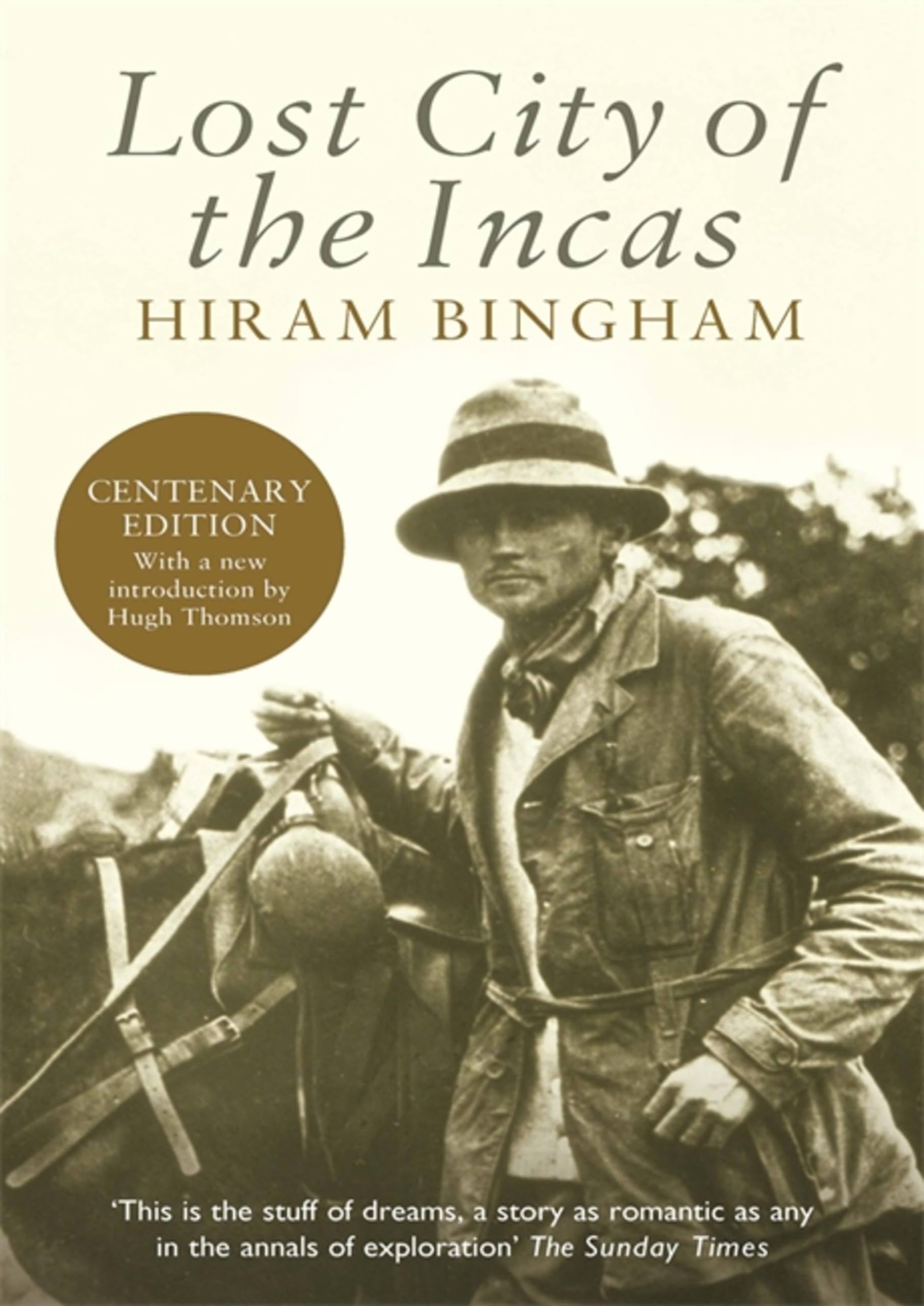
Lost City of the Incas (Phoenix Press)
Product ID: 1705690
Desertcart purchases this item on your behalf and handles shipping, customs, and support to Senegal.
A special illustrated edition of Hiram Bingham's classic work captures all the magnificence and mystery of the amazing archeological sites he uncovered. Early in the 20th century, Bingham ventured into the wild and then unknown country of the Eastern Peruvian Andes--and in 1911 came upon the fabulous Inca city that made him famous: Machu Picchu. In the space of one short season he went on to discover two more lost cities, including Vitcos, where the last Incan Emperor was assassinated. Review: Read about History Unfolding... - I had started this book before leaving for our Machu Picchu trip, but got distracted reading other things about the trip and did not finish it beforehand. I did finish the book a couple of weeks after returning, which in hindsight, is the best way to absorb the material. After having travelled through the Sacred Valley, through Ollantaytambo and along the Urubamba River and witnessing firsthand the marvelous scenery and geography of Peru, it was so much more meaningful to read about Bingham's adventures in locating the Lost City of the Incas. The steep cliffs and valleys, thick jungle vegetation and narrow passes are still foreboding today, let alone over 100 years ago without the benefit of highways and GPS ! Additionally, it was useful to read the book after having heard from our professional Peruvian guides how they feel about Bingham's adventures. The Peruvians seem to have a love/hate relationship with Bingham. They acknowledge him as the "scientific discoverer" of the ruins, but they also state that the Indians were living and farming at the ruins and knew about them all along. Many of the gravesites had already been plundered over the centuries. They also acknowledge that Bingham's determination and commitment essentially created the modern tourism industry in Peru. They also believe that Bingham and his crew took away valuable artifacts (perhaps gold and silver) which were never accurately catalogued and disclosed. It was interesting to read about the excavation and process of discovery of landmarks in the ruins that we had had a chance to see firsthand. The pictures were particularly fascinating as they demonstrated how challenging it was to clear the ruins of the hundreds of years of jungle growth and try to discover the use and meaning of each dwelling and structure. For all the criticism lodged against Bingham over the years, he documented the site thoroughly with over 12,000 photos and drawings and kept meticulous records. His writing was also clear and thorough and concise, and he had a great reverence for the significance of this wonderful sanctuary. Highly recommended for anyone who is about to visit Machu Picchu or has already visited. You can't go there without understanding the impact of Bingham on the modern history of Peru. Review: Interesting read pre- or post-trip to Machu Picchu - I recently came back from Machu Picchu and had an interest in learning about its discovery directly from Hiram Bingham. I thought it was overall an interesting read. A majority of the book gives you a history of the Incas and how they fell from power. Hiram also speaks about his desire to locate what he knew to be Vilcabamba, the last Inca holdout before the Spanish Conquistadors ended the Inca rule for good. It's important to note that although it's mentioned in Hiram's book, some of his theories about the purpose of Machu Picchu were later disputed. The most important one was the fact that Machu Picchu was NOT the last stronghold of Tupac Amaru. I know some people disagree over whether it's better to read the book before or after visiting Machu Picchu, but I'm honestly glad I read it after my trip. It was interesting to go through the last chapter on his excavations and think to yourself: "I know EXACTLY where he's talking about!" I can picture his route there because the trip was still fresh in my mind and I had a great understanding of the altitude and appreciation for climbing through the jungle for more than an hour to get to the top of Machu Picchu. The most interesting read to me was about his companion who attempted to climb Huayna Picchu. I was fortunate enough to get the opportunity to climb it during my trip and that was honestly the most challenging thing I've ever done. Huayna Picchu is a vertical hike and it took tremendous effort to climb all the way to the top. That makes me appreciate the time it took Bingham's companion, Mr. Heald, to get there even more. Apparently Mr. Heald had to cut his way through lots of jungle and fell at one point, badly hurting his arm. When I got to the top of Huayna Picchu I saw lots of home structures built into the side of the mountain. What I find most fascinating is the fact that Hiram Bingham mentions that when he and his men first explored Huayna Picchu in 1912 there were NO structures on Huayna Picchu, simply several stairs, a few terraces and three caves. That means all of the home structures on Huayna Picchu were built later by the modern Peruvian government. The best part of the book, however, were copies of original photos taken by Hiram Bingham in 1912. You get to see what Machu Picchu looked like when he discovered the ruins and began his excavations. It's amazing to compare his photos side-by-side with what the Peruvian government has done today. Several of the structures were literally rebuilt but there are still a few that haven't been touched and are in their original form from 600+ years ago. At least one of the structures is an altar that the Inca used for animal sacrifices. The right portion of the structure has crumbled, and I easily spotted it in Bingham's original photo. I'm pleased to say that as of 2012 there were no changes and it looked exactly as it did when Hiram saw it in 1911. For any history buff, this is certainly a good read. It's perfect for the Machu Picchu visitor.
| Best Sellers Rank | #110,350 in Books ( See Top 100 in Books ) #5 in Ancient Incan History #29 in Central America History #46 in South American History (Books) |
| Customer Reviews | 4.3 out of 5 stars 518 Reviews |
J**Y
Read about History Unfolding...
I had started this book before leaving for our Machu Picchu trip, but got distracted reading other things about the trip and did not finish it beforehand. I did finish the book a couple of weeks after returning, which in hindsight, is the best way to absorb the material. After having travelled through the Sacred Valley, through Ollantaytambo and along the Urubamba River and witnessing firsthand the marvelous scenery and geography of Peru, it was so much more meaningful to read about Bingham's adventures in locating the Lost City of the Incas. The steep cliffs and valleys, thick jungle vegetation and narrow passes are still foreboding today, let alone over 100 years ago without the benefit of highways and GPS ! Additionally, it was useful to read the book after having heard from our professional Peruvian guides how they feel about Bingham's adventures. The Peruvians seem to have a love/hate relationship with Bingham. They acknowledge him as the "scientific discoverer" of the ruins, but they also state that the Indians were living and farming at the ruins and knew about them all along. Many of the gravesites had already been plundered over the centuries. They also acknowledge that Bingham's determination and commitment essentially created the modern tourism industry in Peru. They also believe that Bingham and his crew took away valuable artifacts (perhaps gold and silver) which were never accurately catalogued and disclosed. It was interesting to read about the excavation and process of discovery of landmarks in the ruins that we had had a chance to see firsthand. The pictures were particularly fascinating as they demonstrated how challenging it was to clear the ruins of the hundreds of years of jungle growth and try to discover the use and meaning of each dwelling and structure. For all the criticism lodged against Bingham over the years, he documented the site thoroughly with over 12,000 photos and drawings and kept meticulous records. His writing was also clear and thorough and concise, and he had a great reverence for the significance of this wonderful sanctuary. Highly recommended for anyone who is about to visit Machu Picchu or has already visited. You can't go there without understanding the impact of Bingham on the modern history of Peru.
M**T
Interesting read pre- or post-trip to Machu Picchu
I recently came back from Machu Picchu and had an interest in learning about its discovery directly from Hiram Bingham. I thought it was overall an interesting read. A majority of the book gives you a history of the Incas and how they fell from power. Hiram also speaks about his desire to locate what he knew to be Vilcabamba, the last Inca holdout before the Spanish Conquistadors ended the Inca rule for good. It's important to note that although it's mentioned in Hiram's book, some of his theories about the purpose of Machu Picchu were later disputed. The most important one was the fact that Machu Picchu was NOT the last stronghold of Tupac Amaru. I know some people disagree over whether it's better to read the book before or after visiting Machu Picchu, but I'm honestly glad I read it after my trip. It was interesting to go through the last chapter on his excavations and think to yourself: "I know EXACTLY where he's talking about!" I can picture his route there because the trip was still fresh in my mind and I had a great understanding of the altitude and appreciation for climbing through the jungle for more than an hour to get to the top of Machu Picchu. The most interesting read to me was about his companion who attempted to climb Huayna Picchu. I was fortunate enough to get the opportunity to climb it during my trip and that was honestly the most challenging thing I've ever done. Huayna Picchu is a vertical hike and it took tremendous effort to climb all the way to the top. That makes me appreciate the time it took Bingham's companion, Mr. Heald, to get there even more. Apparently Mr. Heald had to cut his way through lots of jungle and fell at one point, badly hurting his arm. When I got to the top of Huayna Picchu I saw lots of home structures built into the side of the mountain. What I find most fascinating is the fact that Hiram Bingham mentions that when he and his men first explored Huayna Picchu in 1912 there were NO structures on Huayna Picchu, simply several stairs, a few terraces and three caves. That means all of the home structures on Huayna Picchu were built later by the modern Peruvian government. The best part of the book, however, were copies of original photos taken by Hiram Bingham in 1912. You get to see what Machu Picchu looked like when he discovered the ruins and began his excavations. It's amazing to compare his photos side-by-side with what the Peruvian government has done today. Several of the structures were literally rebuilt but there are still a few that haven't been touched and are in their original form from 600+ years ago. At least one of the structures is an altar that the Inca used for animal sacrifices. The right portion of the structure has crumbled, and I easily spotted it in Bingham's original photo. I'm pleased to say that as of 2012 there were no changes and it looked exactly as it did when Hiram saw it in 1911. For any history buff, this is certainly a good read. It's perfect for the Machu Picchu visitor.
M**A
Read it in advance!
Last summer I had the opportunity to visit the Lost City of the Incas. Unfortunately I hadn't got enough time to prepare myself with the basic information about Machu Picchu and the Inca history. Even wihtout that background knowledge it was a very exciting and impressive place but only after reading the book of Hiram Bingham I was able to valuate what I've seen. I'm extremely sorry that without all the info given by the book I "just" visited the place but did not have the opportunity to study thorougly all parts of the Lost City. Of course our guide gave us the possible deepest info but it was too much for a one-day visit and the place was fully packed with tourist from all parts of the world and it was a little bit contradictionary with the spirit of the place. I think that I should go back sometime in the future, prepared with all the details written in this really enjoyable "tourist-guide".
V**O
An historical account of the discovery of Machhu Picchu and ...
An historical account of the discovery of Machhu Picchu and the relation between the conquerors and the locasl. A must read for those who want to dive in the Inca History;May while preparing to visit or during the visit to enrich the trip you will find yourself in Urubamba valley and that`s for sure!
R**A
Peru here we come
Just came back with my 9 year old son and 13 year old daughter from a 3 week trip to PERU (we visited machu picchu twice). I was homeschooling them while on this trip. So before we left i ordered a bunch of fiction and non fiction books about Peru (some to read before, during or after this trip) That being said, this book was interesting to my daughter. I also enjoyed learning more It was informative and it helped prepare my kids for this trip. No issues with seller or shipping. Book was as described.
M**S
Just know how to read
Just started reading the book but it looks like a great story.
C**O
Pleasant journey to read
People who has visited Machu Pichu will better value this book since is not the best depicting book of the marvels of the site - moreover a storytelling of what Bingham remembers from his journeys.
S**G
Great Historical Perspective of the Incas
Though this book is an early account by an "Indiana Jones" type explorer from a different age, I felt that Bingham's perspective gave great insight to the Inca and the discoveries of their Cities in Peru. Entertaining and Informative. Best if read with other more recent accounts. Read before going to Peru and "Machu Picchu" to experience the real thing.
K**J
The best world historic site today described how it was discovered.
Reading this book is tantamount to understanding how Machu Picchu was discovered and restored to its current majestic viewing. A single man's drive to find the hideout of the last Inka king lead to its discovery. A great read and also a great gift.
A**M
Must read
A must read before an adventure in Peru!
た**ま
マチュピチュ発見の苦労話
マチュピチュに詳しい人なら聞いたことのある名前、マチュピチュの発見者とされているHiram Bingham、の探検物語です。 前半はスペイン侵攻後のインカ王たちの悲しい顛末が侵攻したスペイン人や宣教師たちの年代記に基づいて記述されています。 そしてその資料を基にクスコを追われた王たちの幻の都を探す物語が後半に続きます。 急流、凄い崖、悪天候などに悩まされながらも、がんばって道なき道を進んだ、と書かれています。 物語としてはとても面白く読み応えがあると思います。 但し、写真や動画が氾濫している現代では、建物の構造や壷の形などを文章で説明されても何かシックリきません。 それから然したる考古学的検証も無くマチュピチュの人口の多くは女性だった、とか、、色んなことを想像で決め付け過ぎているようにみえます。 要は、この本は探検物語、として読むべきでインカの正しい知識を知りたければ別の本を探すべきです。 でもインカ道を歩いてマチュピチュやビトコスなどを訪れてみたいと思わせてくれる本です。 英語は少し古めかしいですが慣れれば読み易いと思います。
U**S
Gutes Buch für den Insider
Gut verständliches Englisch, gibt alles in allem das her was man an Information erwarten würde. Der Schreibstil von Mr. Bingham ist allerdings nicht gerade fesselnd.
F**K
Indispensável para quem está viajando para Machu Picchu
Indispensável para quem está indo para o Peru!!! Faz toda a diferença ao visitar os sítios arqueológicos Inca!!!
Trustpilot
5 days ago
4 days ago