
Buy anything from 5,000+ international stores. One checkout price. No surprise fees. Join 2M+ shoppers on Desertcart.
Desertcart purchases this item on your behalf and handles shipping, customs, and support to Senegal.
๐ฅ Speak to Inspire, Not Just Inform!
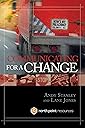
Communicating for a Change is a bestselling guide ranked #5 in Christian Preaching, offering 7 transformative keys to craft emotionally compelling sermons. With over 1,600 glowing reviews, it challenges traditional preaching norms by promoting a fresh, audience-centered approach and advanced preparation techniques that keep listeners engaged and eager for more.

| Best Sellers Rank | #33,705 in Books ( See Top 100 in Books ) #5 in Christian Preaching (Books) #8 in Christian Sermons (Books) #11 in Religious Sermons |
| Customer Reviews | 4.7 out of 5 stars 1,605 Reviews |
B**V
The essential guide for all preachers
Summary: This is the book every preacher should read This book has transformed the way I preach and teach. I wish I had this book when I started preaching, and from now on I will recommend it to anyone exploring a calling to preach. It starts off with a creative story that gets the main learning points into your head easily. Then the second half of the book explains the theory in a bit more detail. This structure really helps to keep the book in your hands. It recommends a basic structure (Me-We-God-You-We) that can be applied to nearly any talk or sermon. It espouses the one-point sermon, which was so refreshing for me. I have grown up on three-point sermons and I was relieved to have someone challenge that idea! "The... problem with preaching points is that it doesn't reflect the world we live in. We don't live our lives by points. We live our lives by emotions. We respond to what we see, taste and feel. So there's no compelling reason to remember points... Even the preacher knows this. That's why he or she has to refer to their notes. They haven't even bothered to memorise their own points." It challenged my style of preaching (basically reading from a script) by explaining the need to "internalise the message". This has really impacted by preparation, and reminded me of the need for my sermons to first speak to me, and then to my audience. When it comes to Scripture, Stanley take us out of our usual "read Scripture - preach - send them home" approach. I have always tried to make the Scriptures more interesting, but the book takes this to the next level: "Make it so fascinating that they are actually tempted to go home and read it on their own." It has significantly raised the bar for my preparation. Stanley shares at the end of the book how he is usually prepared 3 weeks in advance. Not bad for a guy that preaches nearly every week! "It's our preparation and presentation that will keep people engaged" "Communicating for a Change" is the essential guidebook for preachers, whether you are a rookie or an old hat.
S**N
Engaging, Practical, Insightful - Just Like My Preaching...Now!
To poke the elephant in this "room" right out of the gate: I'd put myself in the category of "highly suspicious" when it comes to Andy Stanley. He's not really a guy I emulate or follow when it comes to ministry. And I read this book after those most unfortunate "unhitch the OT" comments. That said, I'm giving this books five stars. Despite my concerns about the author, I have to be honest about the book: it's really good. As a growing preacher and pastor, it was recommended to be by some older trusted mentors, who, like me, would not typically run in the same tribes as the seeker-pragmatic churches that tend to follow Stanley. That said, this has made a world of difference in evaluating and improving my own communication techniques. You may not agree with everything, but it's really worth the read. I really could not put this book down, which is worth noting considering it's about communication. He simply, engagingly, and winsomely helps "declutter" your mind and effectiveness when it comes to teaching. He truly has a way of exposing some of the clunky ways we justify poor style and communication techniques in the pulpit. Many of us are trapped in our own minds and are trying too hard to prove our intellectual prowess instead of serving our congregations with simplicity and clarity. This book is a really a game changer, read it discerningly, I think he'll actually disarm some of your most powerful excuses. If we keep doing the same things we'll keep getting the same results, but if we want to preach to see change, this is a helpful tool to add to your arsenal.
J**N
Book Review: Communicating for a Change
Andy Stanley is a well-known pastor, author, leader, and communicator. He knows that communicating is both an art and a science. In his book Communicating for a Change, originally published in 2006, Stanley tells his readers about his particular practice of communicating. Every leader will eventually find him or herself in a situation where they will need to communicate their ideas to others. The question they must ask is, "Do I want to communicate or do I want to communicate for a change?" I originally purchased this book years ago when I was just starting out in ministry. I was serving on a church staff and was asked to preach even though I didn't have any experience. Stanley was a communicator that I enjoyed listening to, so I found a copy of Communicating for a Change and began to prepare for my first communicating experience. The book is divided into two parts. The first half is a fictional story about a preacher who finds himself unhappy with his communication. The story is written by one of Stanley's ministry partners, Lane Jones. Honestly, the first half of the book is OK, but the real gold is found in part two. This is where Stanley get's to the nuts and bolts of how he communicates. The key takeaway for most people in this book will be Stanley's preaching outline: Me-We-God-You-We. If you've ever seen Stanley speak, you've probably noticed that he doesn't use a manuscript and rarely uses any notes. The secret to his memorization has been revolutionary for my preaching. Stanley recommends dividing up your sermon or talk into five sections. The "Me" section opens your talk with a personal example that sets up a problem that you're wanting to solve. The first "We" section then draws the audience in by relating to them with real life examples of how they've experienced the same problem. The "God" section is where you go to the Bible and see how the problem is to be solved according to the Scriptures. The "You" section is the personal application challenge to the audience. This is where you drive home what they should do in light of the problem they've experienced and the truth that is found in the Bible. The final "We", my personal favorite, is where you have the audience dream with you. You paint a picture of what could and should be if everyone together obeyed the Scripture in regards to the problem. What would happen if we collectively took a step of obedience in light of what we've seen in the Bible today. I've found this outline to work well in all sorts of preaching environments. It is also effective whether I'm preaching topically or through a book of the Bible. If you're looking for a book that will improve your communication skills so that you audience is not only engaged, but driven to act on what you talk about, be sure to read Communicating for a Change by Andy Stanley. Thanks to Waterbrook/Multnomah for publishing such a great book.
Z**.
Andy Stanley's keys to communication success
Andy Stanley is no doubt one of the best communicators in Evangelical Christianity today. In his book, "Communicating for change" Andy teams up with fellow North Point ministry leader Lane Jones to help pastors everywhere understand what they are communicating and why. This is laid out in Stanley's 7 imperatives that define his approach to challenging people's minds in order to change their lives. The 7 imperatives are as follows: (1) Determine your goal, (2) Pick a point, (3) Create a map (4) Internalize the Message, (5) Engage Your Audience, (6) Find your Voice, and (7) Start all over. The book is split into two parts, Part 1 is written by Jones and is 71 pages of one giant illustration of the seven points. Part 2 is Stanley's input as he fleshes out the meaning of all 7 imperatives. An evaluation of each part, including strengths, weaknesses, and conclusion, follows. Part 1: How's my preaching? Part one is written by Lane Jones who is the campus director of Browns Bridge Community Church, which is a North Point ministries campus. In part one, Jones tells an elaborate story (made up I presume) in parable fashion of a down-and-out pastor named Ray, who is struggling with communicating to his congregation. Ray knows a man named Peter Harlan who is a wealthy sports owner who has "invested" in Ray in order to help him with implementing new strategies that will refresh Ray's church. There are 7 steps that Pete gives Ray to follow, but Ray struggles with remembering what they are despite the encouraging progress he has seen in his ministry since implementing them. Ray decides to call Peter back after a 6 month hiatus of no contact, because his communication is still struggling. Peter recommends Ray to a friend named WILLY Graham (The name is purposefully confused with Billy Graham, as Peter says his friend Willy is a better communicator than Billy), but Ray is very skeptical as Pete plans an unexpected trip for Ray to visit Willy in Atlanta. Willy and Ray don't exactly hit it off, but Willy gives Ray the 7 imperatives for better communication by way of open road trucking illustrations. Ray seems confused most of the time, but eventually gets the hang of the 7 imperatives and is excited about heading back to his church and implementing the imperatives. The parable of Ray and Willy was quite engaging and offered some helpful insights into good story telling. The story set up well for the second half of the book as Andy Stanley will draw out the implications of the 7 imperatives. The story did cause me to want to skip to the second half of the book, as I kept asking "What is the point?" but I understood that Jones was laying the ground work for Stanley's section. It seemed a bit unnecessary to write such a long story/parable just to lay the ground work for Andy. Part 2: Communicating for a change Part two begins Stanley's section on the implications of the story of Ray and Willy. This part was much more engaging than the first and acted as the "application" section of the book. Andy also shares some of his "secrets" to great communicating in this section. It was full of golden nuggets for learning better communication to any audience, Christian or non. In chapter 1 of this section, Andy explains the first imperative: determine your goal, with the purpose of answering the question "What are you trying to accomplish?" The point of this chapter is to help pastors and communicators engage better with why they are doing what they're doing; is it for the purpose of life change? Attitude change? To get your congregation to understand something better? In Andy's view, these are the essential questions the pastor needs to be asking when evaluating the purpose of their communication. At the end of the chapter he offers the 3 main points for takeaway: (1) Our approach to communicating should be shaped by our goal in communicating, (2) Our goal should be life change. Specifically, to teach people how to live a life that reflects the values, principles, and truths of the Bible, and (3) When you commit to preach for life change, preparation is not complete until you have answered two very important questions: So what and Now what? (pg.100). The next chapter focuses on picking a point, while answering the question "What are you trying to say?" This chapter seeks to show the pastor how to garner the one main point of a sermon from the text and then build a message around it. Andy calls this the "one point message." The takeaway from the chapter illustrates the process: (1) In a one point message it is essential for the communicator to know the answer to two questions: What is the one thing I want my audience to know? What do I want them to do about it? (2) For most communicators the biggest challenge will not be finding one idea, but eliminating the other three. (3) The process of developing a one point message is as follows: 1. Dig until you find it 2. Build everything around it and 3. make it stick (117). The third imperative is creating a map, answering the question What's the best route to your point? In this chapter Stanley lays out "the outline that revolves around 5 words, each of which represents a section of the message" (119). The words are: Me, We, God, You, Me. Each of the words correspond to an element of the passage: Me = orientation, We = identification, God = illumination, You = application, and We = inspiration. The point of these categories is to get the people in a given congregation to think about these questions in regards to what the sermon says about each area. In Stanley's view, abstracting up must occur in order to properly evaluate each area. The takeaway of the chapter is: (1) An outline built around your relationship with the audience, rather than the content, best matches the way they naturally process information. (2) ME-WE-GOD-YOU-WE. (3) Begin writing these five words in the margin where they apply in your current way of outlining. Add sections you are missing. The next chapter deals with internalizing the message, answering the question: what's your story? This was is a key chapter for all pastors everywhere, in my opinion, and it seems that way to Stanley as well. The takeaways are: (1) Before you stand to deliver a message, you must own it. (2) Reduce your entire message down to five or six pieces. Not points, pieces or sections of information. (3) If something doesn't support, illustrate, or clarify the point, cut it. The last two chapters deal with engaging your audience, and finding your voice as a preacher. Strengths and weaknesses As I stated before, Andy Stanley is a tremendous communicator and this book proves why that is the case. The strengths of the book are self evident in that it gives the lay preacher or pastor, as well as the trained preacher or pastor, a bevy of ideas to implement into their communication style. Certainly, this book is helpful for the first time preacher as well as the seasoned veteran. It also presents pastors with very practical application. So many pastors really are like Ray, the character in the first half of the book, who struggle to be refreshed in their preaching and communication with their congregation. But I would say this book is not just for pastors. It has a wealth of information that could be implemented in several areas of life outside of the church. Moreover, this book would be great for staff meetings, especially in the church. As a minister myself, staff meetings tend to be boring and disengaging. Just by way of a pastor learning to communicate better could help with presenting the information of a staff meeting in a more engaging way. The weaknesses of the book pertain mostly to Stanley's method. While I see a tremendous amount of value in his 7 imperatives, I find that a few of them have some serious flaws. The first flaw I find is more general and could apply to the first 3 imperatives (determine your goal, pick a point, and create a map). I do appreciate that Stanley desires pastors to effectively communicate by giving the congregation one main point of a message. However, this could prove to be difficult in that not every biblical passage can be boiled down to one main point. This could also lead to poor hermeneutics and, I believe, a misinterpretation and misapplication of any given biblical authors main point of a particular passage. This is a serious thing to consider, especially when preaching. I do believe the goal of preaching is to get people a main point and tell them what to do with it, but not at the cost of determining the biblical authors main intent. the text of the bible takes precedence over that of application and "points." This, I believe, is the main flaw of "big idea" preaching, of which Andy is a major proponent. The second flaw pertains to what is not mentioned in the book, but I want to be careful that I do not commit the fallacy of an argument from silence. I understand the main intention of the book was to give pastors steps to better communication, but what about the process of getting there? it would have been helpful for both Stanley and Jones to lay out what a typical week looks like for them in relation to their formation of a sermon. What does this look like on short weeks? Holidays? Holy week? when you preach a few times in a week? How do all of these questions relate to exegesis of the text? In other words, it would have been helpful for Stanley and Jones to lay out their exegetical process and how they got to the points they got. Conclusion Though there are some serious flaws in my opinion, I would still recommend this book to the pastor, lay or trained, who is struggling with how to better communicate with their church. Stanley shows why he is such a great communicator in this book, but be careful in taking everything as gold here. This is the process that works for Stanley, it may not be what works for you. Regardless though, if you are wanting to learn from one of Christianity's greatest communicators, buy this book!
A**R
Communicator Must Have
If youโre a new or aspiring communicator, this is a must read. It is a very easy read and is filled with common sense tips to assist you in grabbing the attention of any audience.
M**N
Excellent resource for any communicator!
I have created a summary of this book using the "Net out" method, that I learned from Michael Hyatt @ [...] Quick Summary This book unpacks 7 imperatives to communicating for a change, which include: Determine your goal, pick a point, create a map, internalize the message, engage your audience, find your voice, and start all over. Overall, the book really hits on a one point message, and building everything around that point. Key Insights * Determine your goal: Preaching for life change should answer two questions: 1) So what? 2) Now what? * Picking a point: Consider implementing a one point message. It's a short simple statement that summarizes the entire message. On selecting a key point answer two questions: 1) What is the one thing I want my audience to know? 2) What do I want them to do about it? To further assist, we need to: 1) Dig until we find the point. 2) Build everything around it, and 3) Make it sick. Speaking from memory isn't difficult to do if you're telling a story. Don't make it difficult by trying to communicate X number of points. When you focus on telling points you try hard not to forget any of them, with a story things come about naturally. * Create a map: Use the MEWEGODYOUWE method for structuring your talk. o ME - orientation, We - Identification, God - Illumination, You - Application, We - inspiration. o With the ME, you introduce a dilemma that you have faced or are struggling with and make sure it connects with the audience (letting folks know you can identify with this message), from there you transition and find common ground with the audience (WE) as they are likely facing the same dilemma or have, after this you transition to the Bible (GOD) and have the text shed light on what God says about this tension or question I've introduced (Tension is key!), then you challenge your audience to act on what they have just heard (YOU), lastly you close with a vision statement(s) of what could happen in the church, community, or world if we embraced this truth (WE). o On the WE, do not transition from this section until you have created a tension that your audience is dying for you to resolve. In other words, focus on the question you are intending to answer until you are confident your audience wants it answered. A good example is waiting for the results of an MRI, you want to hear the results, the tension is thick! o On the GOD section, engage the audience with the text, don't simply read it. o On the YOU section, just pick one point of application that you can challenge folks to embrace. It might be challenging people to try something for just one week, or maybe just one day, potentially a month. We want this to be a habit at the end of the day. o On the WE (or closing), try to wrap it up with a emotionally charged story that punctuates the main point and leaves the audience gasping for breath and reaching for their Kleenex. This is really casting a vision on what could and should be. * Internalize the message: When you're able to tell someone your sermon in 5 minutes from memory, you are ready to communicate it. A good summary is "What are the big pieces of your message? Give me your introduction in one statement? What's next? What text are you using? Summarize the application. Give me your closing thought. When you can quickly review the five or six major pieces of your message in your head, you're ready to communicate it without being dependent on your notes." Write out your main point on an index card and put it by your bible when you preach. * Engage your audience: Tension creates a hunger for information. To raise the need and create tension, pose a question your audience wants answered or point to a mystery they have been unable to solve. Before transitioning to the next point, give folks a warning and don't make it abrupt. Pick a central text, and teach it. Lead people through the text. Voice your frustrations or skepticism about the text if any. Deliberately read the text wrong, to highlight why it was written the way it was written. Summarize the text with a well-crafted statement. Use visuals when you can (and not just ppt). Plan something unexpected to really grab their attention (i.e., shut all the lights off, have someone interrupt, etc...). Rather than read from a manuscript, carry on a conversation with your audience by asking the questions your audience would ask and then answering them. * Find your voice: Ask myself "What works? What works for me?" * Start all over: Go through these checklist questions for your sermon: What do they need to know (INFOPRMATION)? Why do they need to know it (MOTIVATION)? What do they need to do (APPLICATION)? Why do they need to do it (INSPIRATION)? How can I help them remember (REITERATION)? For making it stick, craft a single statement or phrase that makes the message stick with people (make it as memorable as possible). A good strategy for this is take your entire message and narrow it down to a well-crafted statement (repeat this statement throughout your sermon). * When stuck with your message, the first thing to do is pray. God am I headed in the wrong direction, is there a flaw in the point I picked, etc...The second thing to do is go through a checklist to ensure you're on the right path (see personal application point 4). * When preaching, think through your entire audience (i.e. single mom, single dad, broken families, drug addicts, etc...). The people we are preaching to are one step away from making decisions they can't take back. * When a communicator rushes through material, it sends a very specific message: "I am more concerned about covering my material than I am about communicating with my audience." * The pace of our words communicates the importance of our words. * There are really only three things you need to commit to memory, "ME WE and WE." Personal Application 1. I will apply the MEWEGODYOUWE method on my next sermon. 2. I will intentionally think about my audience by thinking through how this message might impact each of them, and how to raise the tension and essentially answer it with scripture. 3. I will filter my go through the checklist of questions to ensure my message will give them the information they need, the motivation for knowing the information, how to apply the information practically, the inspiration of how their lives can change if they apply it, and how I can help them remember this information by using reiterating a well-crafted statement throughout the sermon. Meaningful Quotes * "Before you start to communicate, determine your goal (pg. 33)" * "I've always thought of a sermon, or any talk for that matter, as a journey. You start somewhere, you go somewhere, and ultimately you wanted to go? Now you can drive around willy-nilly and hope you end up somewhere interesting, or you can decide before you get behind the wheel - or the pulpit - where you're going. I'm talking about taking your audience on a journey. Taking them to a place where they discover a truth that will change their lives (pg. 38)" * "If you give people too much to remember, they won't remember anything. They'll have forgotten all your points before they're out of the church parking lot. (pg.39)" * "If you're thirsty, don't go to a fire hydrant. You'll drown yourself before you ever manage a swallow." You've got to narrow the focus of your message to one point (pg.39)" * "It's interesting that the group who knew the Old Testament Scriptures best were the very ones who considered Jesus a blasphemer and arranged for his crucifixion. Know isn't enough (pg.95)" * "Preaching for life change requires far less information and more application. Less explanation and more inspiration (pg.96)" * "If you preach from your weakness, you will never run out of material (pg.124)" * "Often we think we need new content to keep people engaged. Not true. We need fresh presentations (pg. 148)" * "Experience doesn't make you better. Only evaluated experience makes you better (pg.179)"
J**.
Fantastic book!
This is one of the best books on communication I've read in a long time. So much so that I've taught some of the things it discusses in classes about teaching and communication because this book does a better job than most textbooks on the topic. I've owned this book at least three times now, I gave away my first copy, had my second one lost or stolen, and bought it a third time. It's an easy read with a powerful message on how to communicate better and is useful for everyone in my opinion.
K**P
A great resource for improving your communication skills
Communicating for Change is an easy read. Mine was delivered about 9:30 or so on a Thursday morning, I was done by 6:00pm that afternoon (and I had some interruptions in the middle). However don't let the size fool you, the principles are thought provoking and powerful when applied. I'll admit, I reworked my sermon for that following Sunday using the methodology he lays out in the book, and I was impressed. I was impressed at how people reacted to the sermon (which I shouldn't have been when you consider how much time this method applies to connecting to the audience. I was also very impressed with how easy it was to follow the flow of the "road map" he suggests. I will say this, for me many of the principles were things I was already trying to do (at least from time to time when I would think about it). What this book did for me was give me a good framework to hang my hat on. If your current speaking style is not "conversational" you might feel like a fish out of water right at first, but I suggest you give it a try. You might surprise yourself and your audience. Some have suggested that to follow the principles lined out in this book is simply to try to imitate Andy Stanley's style. I think they are wrong. Methodology and style are two different things. If anything following (or adapting) this methodology allows for your own personality to come out even more, helping to make you more relatable to your audience and more genuine in your messages. Also don't think that preaching a "one point sermon" somehow means there is less content and more fluff. In fact the opposite is true. Preaching a one point sermon actually requires more study time and the willingness to cut the fluff and filler. Anyway, a very good book from which I think any communicator could take away some beneficial principles.
Trustpilot
2 months ago
3 days ago