
Desertcart purchases this item on your behalf and handles shipping, customs, and support to Senegal.
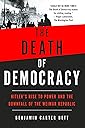
Named "Book of the Week" by CNN's Fareed Zakaria GPS "At a time of deep distress over the stability of democracy in America and elsewhere, Benjamin Carter Hett's chronicle of the collapse of the Weimar Republic and the rise of Adolf Hitler could not be more timely. ' The Death of Democracy ' makes for chilling reading." โ The Washington Post A riveting account of how the Nazi Party came to power and how the failures of the Weimar Republic and the shortsightedness of German politicians allowed it to happen. Why did democracy fall apart so quickly and completely in Germany in the 1930s? How did a democratic government allow Adolf Hitler to seize power? In The Death of Democracy , Benjamin Carter Hett answers these questions, and the story he tells has disturbing resonances for our own time. To say that Hitler was elected is too simple. He would never have come to power if Germanyโs leading politicians had not responded to a spate of populist insurgencies by trying to co-opt him, a strategy that backed them into a corner from which the only way out was to bring the Nazis in. Hett lays bare the misguided confidence of conservative politicians who believed that Hitler and his followers would willingly support them, not recognizing that their efforts to use the Nazis actually played into Hitlerโs hands. They had willingly given him the tools to turn Germany into a vicious dictatorship. Benjamin Carter Hett is a leading scholar of twentieth-century Germany and a gifted storyteller whose portraits of these feckless politicians show how fragile democracy can be when those in power do not respect it. He offers a powerful lesson for today, when democracy once again finds itself embattled and the siren song of strongmen sounds ever louder. Review: Warning signs of democracy in severe distress - This is an extremely effective analysis of how the Nazis subverted Weimar democracy written by one of our finest younger historians who teaches at Hunter College in New York City. It manifests the acute judgment and incisive analysis we have come to associate with Professor Hett from his three prior books on German history. Why write on such a well examined topic?--only do so if you can bring some unique perspectives and theories supported by research in the latest available sources. This is precisely what the author does. I think the book is best seen as a more general analysis of how democracy can be subverted, not just in Weimar Germany. Among the Nazis' prime techniques were to bitterly attack and intimidate the press, including allegations of "false news;" portray immigrants and refugees as dangerous enemies who needed to be foreclosed from the borders ; derail law and the legal system; reject the idea of objective truth and engage in frequent lying; and dismiss compromise as a way to resolve disputes. The Nazis were quite effective in using myths ("the stab in the back") to incite emotions in the citizenry. And they invested heavily in constant effective propaganda. Their use of racial stereotypes to generate scapegoats with which to incite public emotions is also well known. The author offers some interesting new theories of what was happening. He sees the Nazis as engaging in a protest again globalism and the financial power of primarily the Anglo-American and French nations. The financial weaknesses of Germany were reflected in tariffs on food imports, the impact of the gold standard on international currency, and the threat of continued mandatory reparation payments. In some ways, the Nazis embraced the idea of "autarky," or the concept of in effect building a wall around the country so that it would be self-sufficient from economic exploitation. Of course, as the author points out, such a tactic would necessitate war for "Lebensraum" to gain sources of raw materials, such as by grabbing Russian territory. So the book not only details effectively what happened between 1918 and 1933, it casts some interesting new light on why these events transpired. We also gain some interesting new insights into Weimar, its direct outgrowth from the first war, and the inherent lack of stability in proportional representation systems. The Nazis only had about a third of the Reichstag seats, but that was enough to allow them to manipulate crises and their opposing parties. In addition to extensive research notes, the author helpfully also has included a valuable "Cast of Characters" (to help keep all the players straight) and a representation of "Important Political Parties in the Weimar Republic" to increase clarity. The author has given us a lot to think about in his 265 pages, including pointing out some important warning signs of democracy in decline. Review: A detailed look at the rise of Hitler - great companion to In the Garden of Beasts. - The Death of Democracy explains the conditions and events that brought Hitler to power. It is a very readable history book. Each section begins with a short narrative that captures from the first person perspective a pivotal scene to bring history to life, then goes into a more traditional historical view of the events leading up to that moment. It begins with the fall of 1919 - the revolution that brings down the Kaiser, the defeat of the German army, and the rise of a new democracy, the Weimar Republic. It explains all the economic and political forces of the Weimar Republic and the many factions and internal tensions that the new Germany had to contend with. It describes in depth the various Chancellors who tried to build coalitions and balance the competing factions of communists and nationalists that were fighting for control of the German parliament, and then ultimately how the Nazis were at first brought in by other actors, but then took over, and consolidated power after the Reichstag fire and ending with the Night of the Long knives. What it does not provide is an in-depth biography of Hitler. Instead this is focused on Germany. I picked this up after reading In the Garden of Beasts, which is more of a first person account of the rise of Hitler as viewed by the American Ambassador who was living there. I recommend both and they are great companion pieces. The End of Democracy is a more complete history that explains all the events and conditions. In the Garden of Beasts gives a great feeling of what it felt like at the time. If you want to understand what happened in Germany that allowed a democracy to turn into a fascist regime, then this book is great. It was exactly the historical context I was looking for. Easy to read but complete.


| Best Sellers Rank | #85,676 in Books ( See Top 100 in Books ) #47 in Fascism (Books) #70 in European Politics Books #84 in Democracy (Books) |
| Customer Reviews | 4.7 out of 5 stars 997 Reviews |
R**K
Warning signs of democracy in severe distress
This is an extremely effective analysis of how the Nazis subverted Weimar democracy written by one of our finest younger historians who teaches at Hunter College in New York City. It manifests the acute judgment and incisive analysis we have come to associate with Professor Hett from his three prior books on German history. Why write on such a well examined topic?--only do so if you can bring some unique perspectives and theories supported by research in the latest available sources. This is precisely what the author does. I think the book is best seen as a more general analysis of how democracy can be subverted, not just in Weimar Germany. Among the Nazis' prime techniques were to bitterly attack and intimidate the press, including allegations of "false news;" portray immigrants and refugees as dangerous enemies who needed to be foreclosed from the borders ; derail law and the legal system; reject the idea of objective truth and engage in frequent lying; and dismiss compromise as a way to resolve disputes. The Nazis were quite effective in using myths ("the stab in the back") to incite emotions in the citizenry. And they invested heavily in constant effective propaganda. Their use of racial stereotypes to generate scapegoats with which to incite public emotions is also well known. The author offers some interesting new theories of what was happening. He sees the Nazis as engaging in a protest again globalism and the financial power of primarily the Anglo-American and French nations. The financial weaknesses of Germany were reflected in tariffs on food imports, the impact of the gold standard on international currency, and the threat of continued mandatory reparation payments. In some ways, the Nazis embraced the idea of "autarky," or the concept of in effect building a wall around the country so that it would be self-sufficient from economic exploitation. Of course, as the author points out, such a tactic would necessitate war for "Lebensraum" to gain sources of raw materials, such as by grabbing Russian territory. So the book not only details effectively what happened between 1918 and 1933, it casts some interesting new light on why these events transpired. We also gain some interesting new insights into Weimar, its direct outgrowth from the first war, and the inherent lack of stability in proportional representation systems. The Nazis only had about a third of the Reichstag seats, but that was enough to allow them to manipulate crises and their opposing parties. In addition to extensive research notes, the author helpfully also has included a valuable "Cast of Characters" (to help keep all the players straight) and a representation of "Important Political Parties in the Weimar Republic" to increase clarity. The author has given us a lot to think about in his 265 pages, including pointing out some important warning signs of democracy in decline.
J**.
A detailed look at the rise of Hitler - great companion to In the Garden of Beasts.
The Death of Democracy explains the conditions and events that brought Hitler to power. It is a very readable history book. Each section begins with a short narrative that captures from the first person perspective a pivotal scene to bring history to life, then goes into a more traditional historical view of the events leading up to that moment. It begins with the fall of 1919 - the revolution that brings down the Kaiser, the defeat of the German army, and the rise of a new democracy, the Weimar Republic. It explains all the economic and political forces of the Weimar Republic and the many factions and internal tensions that the new Germany had to contend with. It describes in depth the various Chancellors who tried to build coalitions and balance the competing factions of communists and nationalists that were fighting for control of the German parliament, and then ultimately how the Nazis were at first brought in by other actors, but then took over, and consolidated power after the Reichstag fire and ending with the Night of the Long knives. What it does not provide is an in-depth biography of Hitler. Instead this is focused on Germany. I picked this up after reading In the Garden of Beasts, which is more of a first person account of the rise of Hitler as viewed by the American Ambassador who was living there. I recommend both and they are great companion pieces. The End of Democracy is a more complete history that explains all the events and conditions. In the Garden of Beasts gives a great feeling of what it felt like at the time. If you want to understand what happened in Germany that allowed a democracy to turn into a fascist regime, then this book is great. It was exactly the historical context I was looking for. Easy to read but complete.
H**N
I previously told the author that his book was on my list but I already had enough books on Hitler to fuel a nice bonfire. Apparently we don't share the same sense ...
The book is excellently written and even though a work of history sometimes has the quality of an intricate novel. The cast of characters and the summary of political parties at the beginning of the book are very helpful. I would like to publish a more extensive review at a later time but this will have to do for now. To start with a minor point, nearly every biography or in this case biographical sketch of Adolf Hitler argues that Hitler might not have risen to power had his father not been legitimized from Schicklgruber to Hitler. Itโs stated in one form or another that the idea of masses of Germans shouting Heil Schicklgruber is too comically absurd to contemplate. All these historians resemble old borscht belt comedians who felt compelled to tell the same stale joke even though their audiences must have long ago tired of it. In addition, Hitlerโs rise to power was in any case an absurdity, albeit a tragic one, that could conceivably have occurred even with the comic handicap of Schicklgruber. A more serious issue is Dr. Hettโs tie in of present day concerns about globalization with international trade problems in Weimar Germany. Now globalization encompasses a wide range of aspects but in the United States political arena the aspect of globalization that has overwhelmingly garnered the most attention is the loss of American jobs to workers in low wage countries. On page 106 Dr. Hett displays this astonishing quote from Hitlerโs 1928 sequel to Mein Kampf (not published until after WWII). โThe German people have no interest โฆ a German financial group or a German shipyard establishing a so-called subsidiary shipyard in Shanghai to build ships for China with Chinese workers and Chinese steelโ. Hitler was remarkably prescient about the course future globalization. However, in the 1930โs there was no audible sucking sound (to uses Ross Perotโs terminology) of German jobs being dispatched to foreign lands. Now its true that part of the Nazi party program involved autarky, that is German economic self sufficiency. The role of foreign trade was to be replaced by German domination of conquered inferior peoples. This scheme strikes me as pretty hair brained, even for Nazis, and I doubt this portion of their program generated much in the way of sales to the German electorate. Dr. Hett identifies two major globalization issues in the Weimar republic. The first was a regime of low tariffs on agricultural imports. This had the effect of lowering food prices which helped urban dwellers but hurt German farmers. There should be little doubt that this contributed to the considerable support the Nazis acquired in the rural areas of Germany. The second globalization issue involved reparations and the gold standard. The peace settlement ending WWI imposed on Germany the payment of substantial reparations. Not only were these reparations an affront to German pride but they also blew huge holes in the German governmentโs budget. In addition, Germany was obligated to maintain the gold standard. The combination of the gold standard and reparations made it very difficult for the German government to take measures to combat the depression which began in the late 20โs. However, in my view, a comparison of the effect of globalization on Weimar Germany and its effect on our present world adds little if anything to the discussion. The bulk of the book is of course a discussion of how Hitler and the Nazis came to power. The authorโs view can be summarized as follows. The Nazis by capturing the niches of Protestant rural and middle class voters were able to secure 30 to 40 percent of the vote in elections for the Reichstag. Due to a structural stratification of the German electorate their share of of the vote became a ceiling until they actually attained power. The Nazis became the largest party in the Reichstag but they remained short of a majority. A governing majority in the Reichstag could only be achieved by coalition. The German right exclusive of the Nazis wished to exclude the socialist parties, that is the Social Democrats and the Communists and the Nazis. For awhile they did this by more or less dispensing with representative democracy altogether and ruling by Presidential decree. When things reached a pass where this no longer seemed feasible German right wing politicians decided to deal with the Nazis and ultimately made Hitler chancellor. Now this is not the first book to blame the German right wing politicians for the Nazi acquisition of power. However, it occurred to me that even if Hitler had not assumed power through a back room cabal he might have subsequently entered through the front door. Hitler was appointed Chancellor on January 29, 1933. Suppose that never happened. President Paul von Hindenburg died on August 2, 1934. It seems to me that Hitler would have won the presidential election following Hindenburgโs death. The powers of the German president were enormous with the inevitable result that Hitler and the Nazis would in this scenario also have acquired totalitarian power. A major failure of the book is its failure to adequately explain the speed of light like transition from Hitler as chancellor to Hitler as totalitarian dictator. Part of the explanation (which the author does express) is that the Nazis had detailed plans on how to expand power once they acquired it. Three events occurred in early 1933 which cemented Hitlerโs hold on power. The first was the February 4th presidential decree for tor the Protection of the German people which curtailed the activities of the socialist parties and restricted freedom of speech and assembly. This was followed by the Reichstag Fire Decree which eliminated almost all civil liberties. Finally, in March of 1993 the Reichstag passed an Enabling Law which empowered Hitler for a period of four years to enact laws without the input of either the legislature or the president. Now the Enabling Decree was passed with the Nazis literally holding guns to the heads of legislators of the other parties. The Reichstag Fire was undoubtedly a response to the crisis posed by the Reichstag fire (a crisis probably created at least in part by the Nazis themselves). What was the presidential decree for the Protection of the German People (which started the boulder rolling) all about, that is where did it come from? More importantly why was the German republic in January 1933 a rotten tree ready to be blown away at the first burst of wind. Richard Evans, in โThe Coming of the Third Reichโ, in my opinion, does a better job of illuminating us as to the source of the rot. The main sources were: 1) The prevalence of paramilitary violence throughout the history of the Weimar Republic. (Dr Hett also discuss this problem) 2)The fact that the German Republic never attained legitimacy in the eyes of substantial portions of the German population. 3)Related to #2 was the presence large number of conservative and ex-military elements in the police and judiciary. Justice and law enforcement in the Weimar Republic was biased in favor of the right and against member of the socialist parties. The police and judiciary were all too ready to betray the republic rather than defend it. These and other criticisms aside this well written book is well worth your time and money.
H**)
Great Political History, A Good Intro Book to the Subject
I enjoyed this book because it primarily focused on Germany's political landscape in the 20s and how all the key players maneuvered within the system. It detailed some aspects of the Weimar Constitution and how it either left the door open to totalitarianism or how specific clauses were leveraged by the Nazis in order to launch themselves into power. It is a good introductory history to the period and is mostly chronological. I also liked how the author included snippets of primary documents before each chapter. As far as similarities go, I think no comparison is perfect and there are some key differences between the rise of the Nazis and the modern alt-right, however I don't believe Hett belabors the point too much. The similarity of the rhetoric and aspects of the ideology, outrage at "the system," anti-globalism, preference for conspiracy theories and alternative explanations, vehement anti-communism, reacting to a migrant crisis, etc., is I think the strongest comparison to be made. Hett wrote this book for a reason and he did a great job of just letting the facts speak for themselves. Why else do we study history if not to contextualize our own times? After Jan 6th, 2021, I think Hett has only been vindicated, considering he published this book in 2018. I read this for an episode of my podcast, Hard Fried History.
A**Y
Read this and don't let history repeat itself.
There are frightening parallels between the events described in this book, chronicling how Hitler destroyed democracy in Germany, and what the Trump administration is attempting today. The book serves as a chilling warning. Learn from it and make sure democracy in our country does not die. Those who don't learn from history are doomed to repeat it.
W**N
Excellent overview of Germanyโs lost democracy and how it happened. Timely.
Just in case you wondered about parallels with modern history - they are here if you choose to see them. This is an excellent book that documents the death of a fledging democracy due to the political machinery that was supposed to support democracy. The author does an excellent job of detailing how the erosion of trust in the electoral system along with the jockeying for power undermined Germany at a critical time in its history allowing the rise of the Naziโs and right wing extremists. Wanting to use Hitler to manipulate voters who liked him and hoping to discard him as soon as the right wing was in power, the political machinery of Germany failed to see Hitler take the party entirely and reshape it to his will. This is an essential book-why? Because without it, we will miss it when it comes again. History doesnโt need to be repeated and it only is repeated if we ignore all of the signs of recurrence.
M**S
Great read for history buffs
My dad is a world war 2 buff and he totally enjoyed listening to this book.
R**I
I know more about the fall of the Weimar Republic thanks to this book
Mostly riveting, though I deducted a star for a couple of places where the pace lagged and I got a little lost in the names and machinations. This was well-researched and had some clearly stated theses. My favorite part was the exciting point near the end where Papen gave his speech on the Hitler wing of the party.
A**N
It's important to understand how fascism happens
This book give a complete look at what the fall of the Weimar Republic and the rise of fascism looked like. Extremely important to know. If you are worried about the rise of fascism in the world, read it!
ไธ**่ฉณ
ใณใกใณใ้ใ
ใณใกใณใ้ใใง่ฏๅฅฝ
M**K
One of the best books on the rise of Nazism
This is the best book I have read discussing the rise of Nazism in Germany. Particularly appreciated are the explanations of the Weimar constitution. The book is highly recommended for its parallels to today's political situation.
C**S
Extremely lucid
I've read a lot about the run up to WWII, especially the history of Weimar. Hands down this is one of the best. Such a great, clear writer.
A**R
Good introduction to late Weimar Republic and Early Nazi History
Good introduction into the late stage history of the Weimar Republic, and early stage Nazi regime. Definitely learned some things. Depicts the story of a group of bitter militaristic thugs turned politicians fighting off everything they believe lost them the great war. As nationalist groups jockie for positioning, the Nazi's come out at the top by hook or by crook destroying everything in their path that threatens their power.
Trustpilot
3 weeks ago
1 month ago