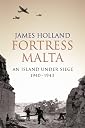
Fortress Malta : An Island Under Siege@@ 1940-1943
Product ID: 145182852
Desertcart purchases this item on your behalf and handles shipping, customs, and support to Senegal.
In March and April 1942, more explosives were dropped on the tiny Mediterranean island of Malta ' smaller than the Isle of Wight ' than on the whole of Britain during the first year of the Blitz. Malta had become one of the most strategically important places in the world. From there, the Allies could attack Axis supply lines to North Africa; without it, Rommel would be able to march unchecked into Egypt, Suez and the Middle East. For the Allies this would have catastrophic. As Churchill said, Malta had to be held 'at all costs.' FORTRESS MALTA follows the story through the eyes of those who were there: young men such as twenty-year-old fighter pilot Raoul Daddo-Langlois, anti-aircraft gunner Ken Griffiths, American Art Roscoe and submariner Tubby Crawford - who served on the most successful Allied submarine of the Second World War; cabaret dancer-turned RAF plotter Christina Ratcliffe, and her lover, the brilliant and irrepressible reconnaissance pilot, Adrian Warburton. Their stories and others provide extraordinary first-hand accounts of heroism, resilience, love, and loss, highlighting one of the most remarkable stories of World War II. Review: Great Read. Incredibly Important Story of Devastation, Tenacity, and Heroism - A fantastic telling of the really quite incredible Siege of Malta during WWII. From the broad strategic strokes and senior decisionmakers to the fine detail of pilots, submariners, and Malta residents trying to live their lives and have families even as the Luftwaffe and Italian forces try to bomb the island into oblivion with all their might--its all here. Sometimes the book felt over-long, but I couldn't put it aside until I'd read the final postscript. This is a story of courage and heroism and suffering and despair, and in some ways belongs up there with the Battle of the Bulge or the Siege of Stalingrad or Midway as among the greatest battle moments of a vast war. Without Malta there would have been no victory against Rommel and no turning of the tide against the Axis. Yet at great cost to the Allies, immense frustration to Kesselring and Rommel, and near complete destruction of the island's historic buildings and infrastructure. Highly recommend. Review: Interesting Book - A great book, really in depth and interesting.
| Best Sellers Rank | #132,251 in Books ( See Top 100 in Books ) #1,814 in European History (Books) |
| Customer Reviews | 4.6 out of 5 stars 1,255 Reviews |
B**U
Great Read. Incredibly Important Story of Devastation, Tenacity, and Heroism
A fantastic telling of the really quite incredible Siege of Malta during WWII. From the broad strategic strokes and senior decisionmakers to the fine detail of pilots, submariners, and Malta residents trying to live their lives and have families even as the Luftwaffe and Italian forces try to bomb the island into oblivion with all their might--its all here. Sometimes the book felt over-long, but I couldn't put it aside until I'd read the final postscript. This is a story of courage and heroism and suffering and despair, and in some ways belongs up there with the Battle of the Bulge or the Siege of Stalingrad or Midway as among the greatest battle moments of a vast war. Without Malta there would have been no victory against Rommel and no turning of the tide against the Axis. Yet at great cost to the Allies, immense frustration to Kesselring and Rommel, and near complete destruction of the island's historic buildings and infrastructure. Highly recommend.
A**R
Interesting Book
A great book, really in depth and interesting.
M**Y
Fascinating read with some discrepancies with other sources. A bit wordy without being conclusive
Malta did not have any military air presence. I am particularly interested in the period June 10 – June 21, 1940 when 3 antiquated Gladiator biplanes (Faith, Hope, and Charity) with non-military pilots defended Malta against the entire Italian air force of 55 Italian bombers and 21 fighters! Until the Hurricanes arrived. I found discrepancies on the number of biplanes, the number of pilots, and the length of time the biplanes defended Malta before the Hurricanes arrived. This is critical information given that this is a non-fiction account of being greatly outnumbered by the Italian air force when losing the island could mean losing the war, Malta being a very important strategic point for both the Axis and Allied powers. Holland does address Malta's importance very thoroughly, which I appreciate. James Holland states there were 7 biplanes, with no more than 2 flying at a time and that there were 8 Pilots. Kenneth Poolman in “Faith, Hope, and Charity” states there were 4 biplanes with 7 pilots. ALL other accounts I read said there were THREE biplanes flying at any given time. Hence the names Faith, Hope, and Charity. One would think there would be agreement on these points: how many biplanes and how many pilots. The facts matter as the numbers are a central part of the narrative: 3 biplanes against the ENTIRE Italian air force, 55 Italian bombers and 21 fighters! It is critical to know how many biplanes were in the sky at any given time over that 10 day to 3 week period (accounts vary). Holland does go into a great deal of detail, so he could be right that there were only 4 biplanes on Malta although it doesn’t appear to match any other source that I could find. * I find throwing around all these numbers confusing and would like some solid, clear, concise summary statements. Maybe the answer to the basic question: How many biplanes were there on Malta during the Seige of Malta? is in here somewhere. * It also doesn’t make sense to me that only two planes were flown at a time as Malta would want to fly the MAXIMUM amount of planes possible given the incredibly unfavorable odds. Also, the Maltese named the planes “Faith, Hope, and Charity”. Why would they give 3 names to 2 planes? However, even 8 pilots would not allow for 3 planes on continuous shifts if they were 8 hour-shifts. It would have to be 3-3-2. The discrepancies abound. I found 3, 4, 6, 12, and 18 biplanes in the literature. Seriously, I did. The famous 3 planes were “Faith, Hope, and Charity”. What makes the most sense to me is that 12 Gloster Sea Gladiator biplanes were found in crates. 10 were assembled and 2 were kept for parts. The reason only 3 planes were referred to (Faith, Hope, and Charity) is, for the period from June 10 – June 21, 1940 there were only 8 volunteer pilots. Obviously these 8 pilots couldn’t fly 24 hours every day, they had to fly in shifts. So the decision was made to fly 3 at a time (a suicide mission at best against the entire Italian air force of 55 Italian bombers and 21 fighters!), then the next shift would go up. They had to sleep sometime. The people of Malta named the 3 planes they always saw in the sky as “Faith, Hope, and Charity”. At least one of the biplanes was gunned down and replaced. I give 5 stars for the comprehensive story of Malta's involvement in World War II and 3 for the confusion over central facts/accuracy discrepancies/need for concise summary statements. Of course, in the end Holland could be right and all the others wrong. Part of the problem may be something gets on the internet and it gets repeated over and over as the truth (or until it becomes the truth in everyone’s mind), instead of going to the original documents. It’s very frustrating as a reader to have discrepancies and confusion over this extremely exciting non-fiction narrative in which the numbers are a critical feature. * Holland on the number of gladiators: “It was Maynard's chief administrative officer who tipped him off about the sea gladiators lying in crates at the RAF seaplane station of Kalafrana. 24 of these Royal Navy biplanes had arrived there the previous March. For a variety of reasons 18 of them were still there the following spring, and it was agreed that they would be assembled and eight of them flown to the aircraft carrier HMS Glorious and 10 to HMS Eagle. The eight for Glorious were duly dispatched but it was the 10 for Eagle that Maynard was told about. Maynard asked Cunningham if he could borrow them, to which the Admiral readily agreed. In early April the pre-war civil airfield of Hal Far just a mile west of Kalafrana was given a Station Fighter Flight and four of the 10 gladiators were finally transferred over to the RAF.” “On 23rd of April 1940 the Malta fighter flight was born even though Maynard had no trained fighter pilots on the island. Undeterred, Maynard asked for all volunteers of which his personal assistant George Burges was one. Within 24 hours Maynard had his eight new fighter pilots. Basic training began but no sooner had it started but they were told that a transport ship was coming to collect the ten gladiators after all. Just six days after the Malta Fighter Flight had been formed it was dissolved, and the plains dismantled and put back in crates ready for shipping.” “The farce continued when a few days later the Navy decided they only needed three of the planes.” (so 10-3=7) “On 4 May the fighter flight was reformed after all. The gladiators were reassembled and stripped of their naval modifications. Armor plating was added along with a number of other improvements.” “The fight or flight was split into two flights of three so as to operate in shifts with no more than two planes in the air at any given time. Enthusiastic and dedicated as the pilots were, however, bravado and courage were not enough to take on the full might of the Italian air force. The harsh reality was, they lacked any form of operational experience, were desperately short of supplies and the gladiators were virtually obsolete against Italians faster fighter aircraft.” I'm still not sure what is being said here.
E**N
Heroes and Heroines galore in this easy read
I have read other books by Mr Holland and he is good at this. It has always been a "bucket list" thing for me to visit Malta (for all the history that the island has witnessed and suffered from). And so we are adding 3 nights on the island during an Italy trip this spring. This was background reading for me. Mr Holland does his research and personalizes these traumatic times as well as any WW2 author - from the desperation of island citizens to the crazy-brave flyers and the stoic submariners to the senior officers. Thank God for Hitler's blunder into Russia or he would have obliterated Malta on his way to No Africa. Hitler's mistakes and the amazing grit of the Brits kept Europe alive until Dec 7, 1941 put the US in all the way.
J**K
A Excellent book about Malta during WW 2 by James Holland
A Excellent book about Malta during WW 2 by James Holland. This is not talked a lot in the states but the impact on the North Africa Campaigns is undeniable and is laid out here in this book, a book you will not put down till you are done reading cover to cover. James Holland excels at the telling this story.
D**W
Great reading.
Lots of information regarding the war on Malta.
M**E
An Outstanding Historical Narrative
This is a truly outstanding book and is history at its finest. It is well written and researched, but also fascinating and at times gripping to read. History is not so much about places and events as it is about people, and this comes across strongly in Mr. Holland's book: while telling the story of Malta's ordeal in World War II, he manages to bring to life the citizens and soldiers on the island and their personal ordeals, tragedies, and triumphs. One is left with a reverent admiration for the people of Malta and the British soldiers, sailors, and fliers who defended her during 1940-1943. Very highly recommended.
B**A
Nice read that covers Malta's resistance in WW2 with a focus on the British/Maltese perspective
Nice narrative history of Malta while it was under threat of Axis invasion during WW2. Holland weaves in a number of individual stories (soldiers, airmen, sailors, and non-combatants) to help provide some perspective on the impact. This book is very much from the British/Maltese perspective - Holland provides some discussion of German and Italian planning, action, and intent but does not go into great depth. A nice read that tells the remarkable tale of Malta's resistance to the Axis in WW2.
E**A
Batalha de Malta
Mais um excelente trabalho de James Holland. Uma obra extensa de pesquisa sobre a batalha travada entre Ingleses e Alemães pelo controle da Ilha de Malta, peça chave no controle do trafego entre os portos Italianos e do Norte da África durante a campanha da África na Segunda Guerra.
D**O
Incredible amazing story of WW2 Malta
This is a real great history that is so well written and engaging it reads like a novel. James Holland has done a masterful job telling the story of Malta by focusing on people rather than stats and kill rates ( although there is some of that too) He follows the stories of ordinary Maltese citizens, RAF pilots, Naval personnel, hard partying housewives, actresses and other luckless people who become trapped on the island when WW2 broke out. You will laugh and cheer as you read their personal victories and cry when they are killed . The personal stories are superbly woven within the framework of the larger events occurring and they help tell an amazing story of oddballs, weirdos and other types who in any other part of the world would be kicked out or minimized and yet on Malta they become heros. I am staggered by the detail that the author brings to his history and each person he talks about is like a mini biography. Exceptional work! An excellent read ....
K**.
Eine gleichwohl akribische wie fesselnde Veröffentlichung
Eine gleichwohl akribische wie fesselnde Veröffentlichung über das Leben der sowohl militärischen wie zivilen Einwohner Maltas während der Belagerung der Insel im 2. Weltkrieg mit wichtigen Hinweisen auf das Vorgehen der Achsenmächte. Man staunt darüber, dass aus einer anfänglich mangels Versorgung mit Militärgütern kaum zu verteidigenden Insel ein starkes, unbezwingbares Bollwerk wurde. Strategisches und taktisches Verhalten (Änderung der Verteidigungsanstrengungen unter W. Churchill) bzw. Fehlverhalten (z.B. italienische Marine und Luftwaffe) werden akribisch aufgelistet und zwar in einer überaus fesselnden Darstellung. Dieses Taschenbuch ist sein Preis allemal wert.
A**T
Gripping and historically accurate account
I have already read some other books by James Holland (Dam Busters, Big Day, Battle of Britain) so I knew what to expect. The book is hard to put down - and it takes you on a roller coaster - the defiance of Malta, the despair as Malta sinks under ever increasing bombing raids and shortages, and finally, the triumph of Malta. Rather than just give a bird's eye view of the siege, the author also delves into stories of many individuals, and their accounts make the story easier to comprehend, and bring it down to a more human scale. An immense amount of research has gone into this work, and the writer's command of the subject is very evident. This is one of the most authoritative yet enjoyable books I have read on one of the major theatres/campaigns of WW-2.
A**L
Totally gripping!
I bought this book because I love reading WW2 history. I hadn't read any by Mr Holland before - I know, I know...How could I not? I don't know, okay? - but I will not be so remiss in future. I read the reviews on this book and couldn't find a bad one, so that AND the fact that I realized I knew absolutely nothing about Malta's part in WW2 - other than it held the dubious title of, 'The Most Bombed Place On Earth' at one time - so decided to give it a go... What a read! What history! What characters! What a people! This book reads like a fictional, historical epic BUT it's all true. The author (now one of my 'must read' list toppers), writes in an uncomplicated style: yes there are facts but they serve to supplement the story, NOT smoother it. This book not only taught me history, it engaged me....How to convince you? Maybe the highest praise this amateur historian can allocate this book is to say, it's up there with ANYTHING written by Anthony Beever or Max Hastings - surpassing many of those stalwart's titles. I now wish to visit this island, to SEE the place, to FEEL the atmosphere and meet the inhabitants that carry the genes of those that inspired this book. If you ANY interest in WW2 history and if, like me, you know only little of the part played by this Mediterranean island, in the scheme of that conflict, BUY THIS BOOK! If you're not enthralled by it, tell me and I'll buy it from you. I can not recommend this book highly . Amazing!
Trustpilot
3 days ago
1 day ago